Photo: Wikipedia
Political ClimatePolitical Climate in Hood County
Showing district-level results — no local-only data available.
Local Political AnalysisPolitical Analysis of Hood County
Hood County, Texas, is about as reliably conservative as it gets in the Lone Star State, with a Cook Partisan Voting Index (PVI) of R+18. That’s a deep red, and it’s been that way for a long time. While the rest of Texas has been shifting—the state as a whole sits at R+4, which is still red but a lot closer to purple—Hood County has held the line. The county voted for Donald Trump by a massive margin in 2020 and 2024, and local races rarely see serious Democratic competition. But don’t think it’s a monolith; there are real differences between the towns here, and those differences tell you a lot about where the county is headed.
How it compares
Compared to Texas as a whole, Hood County is a fortress of traditional values. The state’s R+4 PVI means it’s still Republican-leaning, but you’ve got major urban centers like Houston, Dallas, and Austin pulling it left. Hood County doesn’t have that problem. Granbury, the county seat and largest town, is the heart of the conservative vote—think church potlucks, gun-friendly signs in windows, and a city council that’s not afraid to push back on state mandates. Acton and DeCordova are similarly solid red, with Acton being a particularly stronghold for the GOP base. The only real variation is in Lipan, a smaller, more rural community that leans even further right than the county average—it’s the kind of place where folks are skeptical of any government overreach, from mask mandates to property tax hikes. There aren’t any blue-leaning towns to speak of; the closest you’ll get is a handful of precincts near the lake where retirees from more liberal areas have moved in, but those haven’t shifted the needle much. The county’s trajectory is stable—if anything, it’s getting redder as people flee the chaos of big cities for the freedom they find here.
What this means for residents
For anyone living here, the political climate means a government that mostly stays out of your business. Property taxes are a constant concern, but the county commissioners have historically been more focused on keeping them in check than expanding services. You won’t see the kind of progressive overreach you’d find in Austin or Dallas—no talk of defunding the police, no heavy-handed zoning rules, and no pressure to adopt woke policies in schools. The school board in Granbury has fought hard to keep curriculum focused on basics, not social agendas. That said, there’s a growing unease about state-level trends. Texas’s shift toward R+4 means the state government is more vulnerable to pressure from urban Democrats, and that’s a red flag for folks here. If the state starts caving on things like Second Amendment rights or school choice, Hood County will likely push back hard. For now, residents enjoy a sense of community where your neighbor’s politics match yours, and you don’t have to worry about your kids being indoctrinated at school.
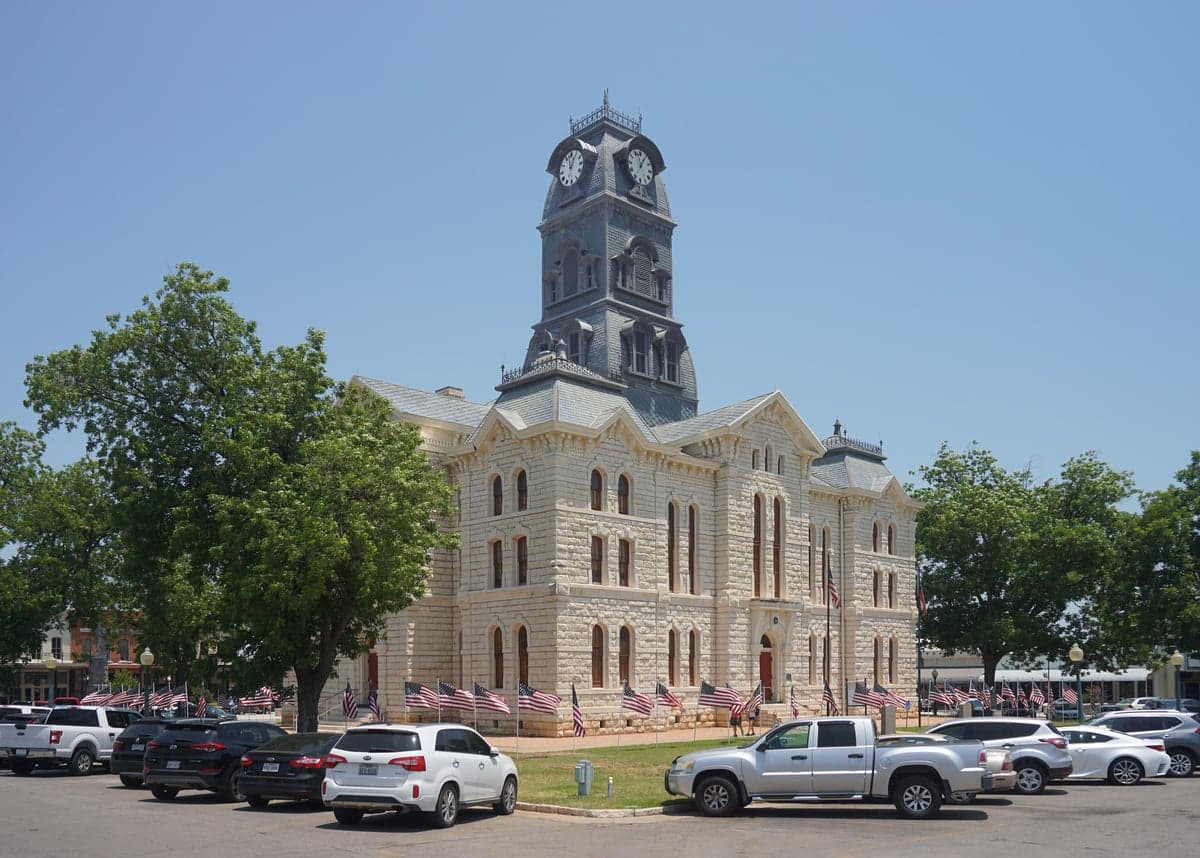
One cultural distinction worth noting: Hood County has a strong tradition of local control, especially around land use and water rights. The county fought off a proposed high-voltage transmission line a few years back, citing property rights, and there’s a general distrust of federal and state mandates. Granbury’s historic square is a gathering spot for conservative events, from candidate meet-and-greets to Second Amendment rallies. The long-term outlook is solid—as long as the county keeps electing leaders who prioritize freedom over bureaucracy, it’ll stay a refuge for those tired of government overreach. If you’re thinking of moving here, just know you’ll be in a place where your rights are respected, but you’ll also need to be ready for a community that expects you to pull your own weight.

State Political ClimatePolitical Climate in Texas
State Political AnalysisPolitical Environment in the State
Texas has been a reliably Republican state for decades, with a Cook PVI of R+4, but the coalition that holds that majority is shifting in ways that matter deeply for anyone considering a move here. The dominant political force remains a blend of fiscal conservatives, social conservatives, and libertarian-leaning independents, but the last 10-20 years have seen a slow, steady erosion of that dominance in the fast-growing urban cores. While the state hasn't flipped, the trajectory is real: in 2024, Donald Trump still won Texas by about 9 points, but that margin was down from 11 points in 2020 and 16 points in 2016, driven almost entirely by the explosive growth of the Austin, Dallas, Houston, and San Antonio metros.
Urban vs. rural divide
The political map of Texas is a stark checkerboard. The vast, sparsely populated rural counties—places like Lubbock in the Panhandle, Midland in the Permian Basin, and the sprawling ranchlands of West Texas—vote Republican by margins of 70-80% or more. These areas are the bedrock of the state's conservative majority. The major metros, however, are a different story. Austin (Travis County) is a deep-blue stronghold, voting for Biden by over 50 points in 2020. Dallas (Dallas County) and Houston (Harris County) have flipped from purple to reliably blue over the past two cycles. The real battleground is the suburban ring around these cities—places like Collin County (north of Dallas) and Fort Bend County (southwest of Houston). These suburbs were once solidly red, but they are now competitive, with Collin County voting for Trump by only 10 points in 2024, down from 20 points a decade earlier. El Paso remains a Democratic stronghold, while San Antonio (Bexar County) is trending blue but still more moderate than Austin. The rural-urban divide is the single most important factor in Texas politics today.
Policy environment
Texas's policy environment is defined by a low-tax, low-regulation posture that is a major draw for conservative-leaning movers. There is no state income tax, a constitutional cap on property tax growth (enacted via Proposition 4 in 2023), and a business-friendly regulatory climate. Education policy has been a flashpoint: the state has a school voucher-like program (the Texas Education Savings Account program, passed in 2023) that allows parents to use state funds for private or homeschool expenses, a major win for parental rights. Healthcare is a mixed bag: Texas has not expanded Medicaid, keeping the state's budget lean, but this also means higher uninsured rates. Election laws were tightened in 2021 with SB 1, which banned drive-through voting, added ID requirements for mail ballots, and restricted early voting hours—a move that drew national scrutiny but was defended as election integrity. The state also has a near-total ban on abortion (trigger law from 2021, effective 2022) and a permitless carry law (HB 1927, 2021) for firearms. For a conservative, the policy environment is largely aligned with limited government principles, though property taxes remain a persistent complaint.
Trajectory & freedom
On the freedom front, Texas has been a mixed bag in recent years. On the positive side for conservatives, the state has expanded gun rights significantly: permitless carry (HB 1927) and the "Second Amendment Sanctuary" movement that saw dozens of counties pass resolutions against federal gun control. Parental rights were bolstered by the 2023 school choice law and the "Save Women's Sports Act" (SB 15, 2023), which bans transgender athletes from competing in girls' sports. However, there are concerning trends. The state government has increasingly used its power to override local control, particularly in blue cities. The "bathroom bill" debate (SB 6, 2017) and the 2021 law banning mask mandates (SB 968) were seen by many as government overreach into private business and local decision-making. More recently, the 2023 law banning certain drag performances (SB 12) was struck down by a federal judge as unconstitutional, raising free speech concerns. The state's aggressive use of the Texas National Guard to bus migrants to sanctuary cities (Operation Lone Star) is popular with conservatives but has also drawn lawsuits over civil liberties. The trajectory is toward more state-level intervention in local affairs, which some see as protecting conservative values and others see as government overreach.
Civil unrest & political movements
Texas has seen its share of political flashpoints. The 2020 Black Lives Matter protests in Austin and Dallas were large and sometimes violent, leading to a backlash that helped fuel the 2021 election integrity law. Immigration politics are the most visible daily issue: the border crisis has led to a massive state-led enforcement effort, including the busing of migrants to New York City, Chicago, and Washington, D.C. This has created a permanent political theater that a new resident will see on the news constantly. There is a small but vocal secessionist movement (the "Texit" movement), but it remains fringe. Election integrity remains a hot-button issue: the 2020 and 2024 elections saw no major fraud in Texas, but the controversy over the 2020 results in other states has kept the issue alive. The most visible organized movements are on the right: the Texas GOP's platform has become more explicitly conservative, including calls for a convention of states to limit federal power. On the left, groups like the Texas Democratic Party and the Working Families Party are organizing in the suburbs. A new resident will notice a palpable tension between the state's conservative leadership and the increasingly progressive city councils in Austin and Houston.
Projection
Over the next 5-10 years, Texas is likely to remain a Republican-controlled state, but the margin will continue to narrow. The in-migration from blue states (California, New York, Illinois) is a double-edged sword: many of these newcomers are conservative-leaning or moderate, but a significant portion bring their progressive voting habits with them. The suburbs of Dallas and Houston will be the key battlegrounds. If the GOP can hold these areas, the state stays red. If they flip, Texas becomes a swing state. The state's demographics are also shifting: the Hispanic population, historically more conservative on social issues but trending Democratic on economic issues, is growing. The state's policy environment will likely see continued fights over school choice, property tax reform, and energy policy (Texas is the nation's largest oil and gas producer, but renewable energy is booming). The biggest wildcard is the border: if the federal government fails to secure it, Texas will continue to act unilaterally, which could lead to constitutional clashes. For a conservative moving in now, expect a state that is still solidly red but with a growing blue undercurrent in the cities.
For a new resident, the bottom line is this: Texas offers a low-tax, business-friendly environment with strong protections for gun rights and parental choice in education. You will find a state that largely respects personal liberty, but you will also see increasing government intervention at the state level to override local progressive policies. The political climate is vibrant and often contentious, but the overall direction is still conservative, especially outside the major urban cores. If you value limited government and individual freedom, Texas is still one of the best bets in the country, but you should be aware that the fight to keep it that way is intensifying every election cycle.
* Values derived from national, state, county, city and local statistics and may differ in a specific area. Last updated: 2026-06-06T08:43:49.000Z
Narrative content on this page is AI-generated and may contain mistakes. Verify any details that matter before acting on them.
ReloMaps may earn a commission from affiliate links at no extra cost to you.

