Photo: Wikipedia
Quality of Life in Hood County
A livable area that tracks near national norms for affordability, walkability, and neighborhood health.
What does Quality of Life tell us?
Quality of Life measures an area by evaluating factors like cost of living, nearby amenities, country club access, airport proximity, socioeconomic signals and neighborhood character. For large states, this is a general average — quality of life can vary dramatically between metro areas, suburbs, and rural communities within the same state.
What does this tell us?
Quality of Life measures an area by evaluating factors like cost of living, nearby amenities, country club access, airport proximity, socioeconomic signals and neighborhood character. For large states, this is a general average — quality of life can vary dramatically between metro areas, suburbs, and rural communities within the same state.
Cost of Living
13% above national average
108%
The Real Cost of Living in Hood County for 2026
| Tier | Individual | Family (4) |
|---|---|---|
| Survival | $23k | $42k |
| Comfortable | $55k | $80k |
| Luxury | $152k+ | $236k+ |
| Elite (Top 5%) | $179k+ | $278k+ |
Quality-of-Life Analysis
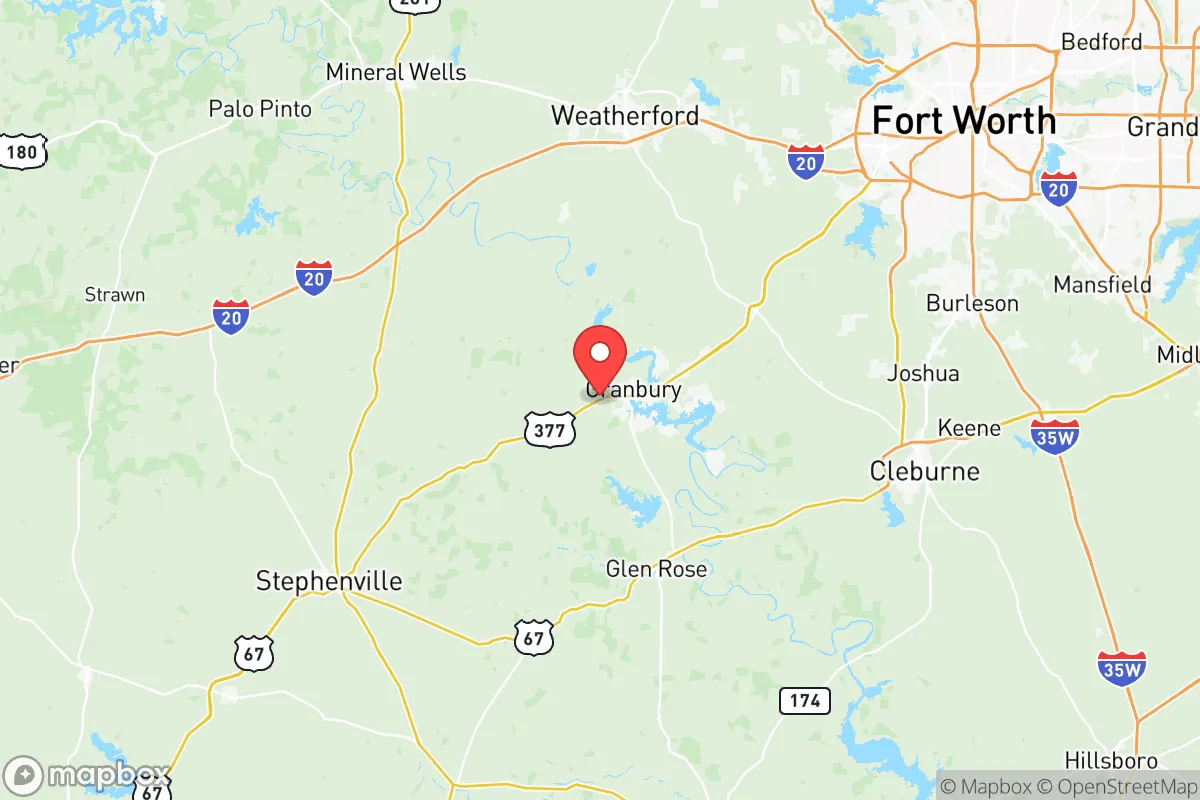
Hood County, Texas, offers a broad quality-of-life spectrum that ranges from the amenity-rich lakeside city of Granbury to quiet, unincorporated crossroads and working-ranch country. The county’s character shifts noticeably within a 20-minute drive: retirees and second-home owners cluster near the Lake Granbury waterfront, families and commuters fill the suburban-style subdivisions around Granbury’s outer edges, and long-time agricultural residents occupy the sparsely populated eastern and southern precincts around Tolar, Lipan, and the rural stretches of State Highway 51. This mix means a single county can feel like three distinct worlds, each with its own pace, housing stock, and daily routines.
Largest town(s) & population centers
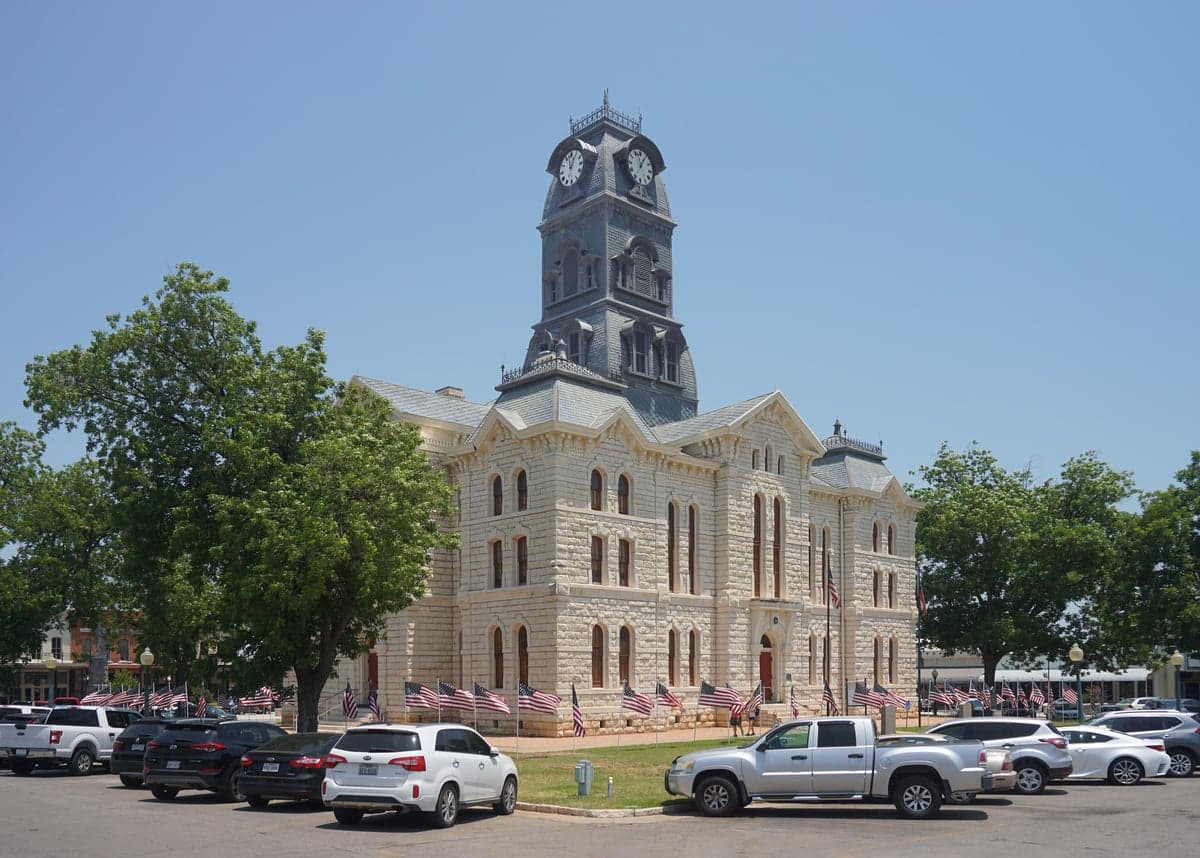
Granbury is the county seat and by far the dominant population center, home to roughly 10,000 residents within the city limits and serving a much larger trade area of about 60,000 countywide. Daily life here revolves around the historic downtown square — anchored by the 1886 Hood County Courthouse — and the adjacent Lake Granbury waterfront, which draws boaters, anglers, and tourists to venues like the Granbury City Beach Park and the Granbury Opera House. The town has a full set of big-box retail along U.S. Highway 377 (Walmart, H-E-B, Lowe’s), a regional hospital (Lake Granbury Medical Center), and a growing medical-services corridor. Commuters make up a notable share of the workforce: the average one-way commute in Hood County is 33.7 minutes, with many residents driving east into Fort Worth (about 45 minutes via U.S. 377 or State Highway 171) or south to the Cleburne industrial corridor. Granbury’s newer subdivisions — such as Pecan Plantation, DeCordova Bend Estates, and the gated lakefront communities — cater to retirees and telecommuters seeking a slower pace without sacrificing grocery-anchored convenience.
Smaller towns & rural pockets
Outside Granbury, Hood County’s smaller communities offer a markedly different lifestyle. Tolar (population roughly 900) sits 12 miles south of Granbury along U.S. 377; it has a single stoplight, a small independent school district, and a handful of local businesses — most residents drive to Granbury or Stephenville for groceries and services. Lipan (population about 500) lies 15 miles southwest of Granbury on State Highway 4; it is a classic Texas farm-and-ranch town with a grain elevator, a volunteer fire department, and a K-12 school that anchors community life. Acton, technically an unincorporated area just east of Granbury, is notable for the Acton State Historic Site (the burial place of Elizabeth Crockett, wife of Davy Crockett) and a mix of acreage properties and newer subdivisions. The far eastern edge of the county, along the Brazos River bottom near the unincorporated community of Palo Pinto, remains almost entirely open ranchland with very few services. These areas lack municipal water and sewer in many spots, and high-speed internet can be inconsistent, though Starlink satellite service has improved connectivity for remote workers.
Cost & lifestyle range
The cost of living in Hood County is above the national average — the overall cost-of-living index sits at 113 (100 equals the U.S. average) — but the spread within the county is wide. At the high end, lakefront homes in Granbury’s gated communities (DeCordova Bend Estates, Pecan Plantation) routinely list between $500,000 and $1.2 million, with some custom builds exceeding $2 million. The median home value countywide is $281,300, and median rent is $1,414, but those figures are pulled upward by Granbury’s waterfront and suburban stock. At the low end, older homes on acreage in the Tolar and Lipan areas can be found for $180,000–$220,000, and small rental houses in rural pockets often rent for $900–$1,100. Property taxes are a significant factor: Hood County’s combined tax rate (county, school, city, hospital district) typically runs 2.3%–2.6% of assessed value, meaning a $281,300 home carries an annual tax bill of roughly $6,500–$7,300. The lifestyle trade-off is clear: Granbury offers walkable downtown events, lake access, and medical infrastructure, while the rural communities offer larger lots, lower purchase prices, and quiet — but require longer drives for most errands and lack municipal utilities.
Who thrives in Hood County? Retirees and second-home buyers who want lake recreation within an hour of Fort Worth will find Granbury’s waterfront neighborhoods a strong fit. Commuters willing to accept a 30–40 minute drive for lower home prices and more land gravitate toward Tolar or the acreage tracts along FM 167. Families seeking a tight-knit school community often choose Lipan or Tolar ISDs, where class sizes are small and extracurricular participation is high. Remote workers and creative professionals are increasingly drawn to the historic homes near Granbury’s square, where fiber internet is available in parts of the downtown district. The county’s political and cultural character leans conservative and property-rights-oriented, which appeals to those seeking minimal regulation — but newcomers should be prepared for limited public transit, high summer heat, and the reality that most of the county’s best amenities are concentrated in a single town.

Crime in Hood County
Crime rates similar to the national median for U.S. locations.
Violent CrimeViolent Crime Analysis
Property CrimeProperty Crime Analysis
Crime Analysis
Hood County, Texas, reports a violent crime rate of 344.4 incidents per 100,000 residents and a property crime rate of 1,791.9 per 100,000, placing it in a moderate safety tier relative to other Texas counties. While these figures are below the national average for violent crime, the property crime rate is notably higher than the statewide median, particularly in unincorporated areas and smaller communities like Lipan and Tolar. The county’s overall safety picture is shaped by its rural-urban mix, with the city of Granbury serving as the primary population center and the location of most reported incidents.
Crime in context
Hood County’s violent crime rate of 344.4 per 100,000 is approximately 15% lower than the national average of 398.5 and roughly 20% below the Texas state average of 433.5 per 100,000. However, the property crime rate of 1,791.9 per 100,000 is about 10% higher than the Texas average of 1,628.3, driven largely by theft and burglary in Granbury’s commercial corridors along U.S. Highway 377 and in the Lake Granbury area. For comparison, neighboring counties like Johnson County (2,100 property crimes per 100K) and Somervell County (1,500 per 100K) show similar patterns, while more rural counties like Erath County report lower property crime rates near 1,200 per 100K. The disparity reflects Hood County’s status as a growing exurban destination, where transient traffic and seasonal tourism around the lake contribute to higher property crime volumes.
What residents experience
Residents in Granbury’s historic downtown and newer subdivisions near Acton and DeCordova generally report feeling safe, with most violent crimes concentrated in specific rental-heavy neighborhoods and along the highway corridor. The Granbury Police Department and Hood County Sheriff’s Office maintain a visible presence, but property crimes like vehicle burglaries and package thefts are common complaints, especially in areas with easy highway access like the intersection of U.S. 377 and FM 167. The Hood County District Attorney’s office, operating under a conservative judicial philosophy, has historically pursued aggressive prosecution for repeat offenders, which helps keep violent crime in check. However, residents in outlying communities like Lipan and Tolar often rely on limited local patrols, leading to slower response times and higher rates of unreported theft. The county’s proximity to the Dallas-Fort Worth metroplex means that some property crime is linked to transient offenders traveling from larger cities, a pattern that local law enforcement monitors closely.
Neighborhood-level variation
Safety varies significantly across Hood County’s 432 square miles. The unincorporated areas around Lake Granbury—particularly the Pecan Plantation and Indian Harbor subdivisions—report violent crime rates below 200 per 100,000, among the lowest in the county, due to gated access and active homeowners’ associations. In contrast, the city of Granbury’s central district, especially near the courthouse square and along Pearl Street, sees higher rates of assault and theft, with some blocks reporting violent crime rates exceeding 500 per 100,000. The town of Tolar, with a population under 1,000, experiences minimal violent crime but struggles with agricultural equipment theft. The Hood County Sheriff’s Office publishes annual crime maps showing that the highest property crime rates cluster within a 2-mile radius of the U.S. 377 and FM 51 intersection, while the western rural areas near the Palo Pinto County line remain the safest by all metrics. Prospective residents should consult local crime reports and visit neighborhoods at different times of day to assess their specific area of interest.
* Values derived from national, state, county, city and local statistics and may differ in a specific area. Last updated: 2026-06-06T08:43:49.000Z
Narrative content on this page is AI-generated and may contain mistakes. Verify any details that matter before acting on them.
ReloMaps may earn a commission from affiliate links at no extra cost to you.

