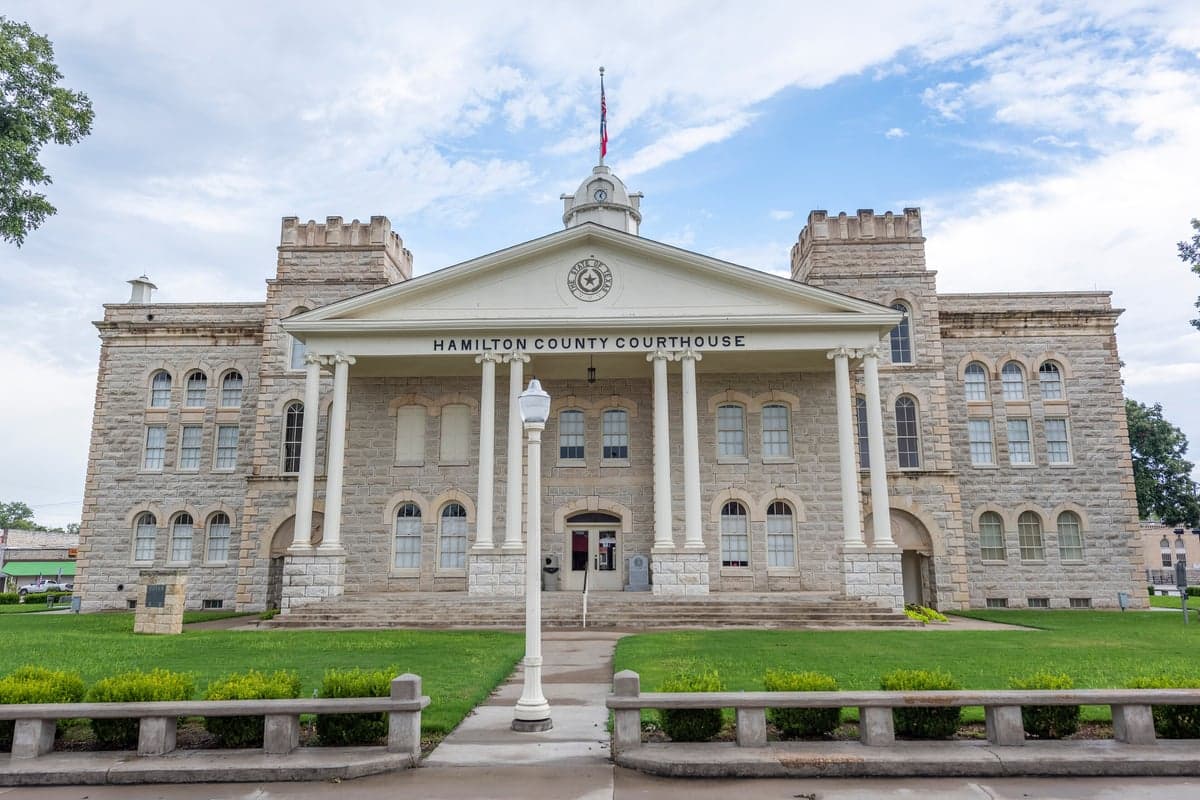
Photo: Wikipedia
Strategic Assessment of Hamilton County
Strong survivability profile. Good buffer from population centers, with manageable environmental and tactical risks.
What does the Strategic Assessment tell us?
Our Strategic Assessment grades tactical survivability of an area. Major population centers, military targets, fallout zones, natural disasters, and border exposure all drive risk — lower exposure means a more defensible position in a crisis.
This is heavily inspired by Joel Skousen's Strategic Relocation book. Highly recommended you checkout the book ($)What does this tell us?
Our Strategic Assessment grades tactical survivability of an area. Major population centers, military targets, fallout zones, natural disasters, and border exposure all drive risk — lower exposure means a more defensible position in a crisis.
This is heavily inspired by Joel Skousen's Strategic Relocation book. Highly recommended you checkout the book ($)Strategic Pillars
Key Distances
Strategic Assessment Analysis
Hamilton County, Texas, sits in a sweet spot for a relocator thinking about resilience: far enough from the major metros to avoid their worst-case scenarios, yet close enough to real infrastructure that you aren't truly isolated. The county seat, Hamilton, anchors a rural area of roughly 8,200 people, and the county’s position along the Interstate 35 corridor between Waco and Fort Worth gives it a practical edge that pure West Texas towns lack. For a single person or family weighing disaster readiness, this is a place where the strategic calculus favors quiet survivability over urban convenience.
Geographic position and natural advantages for long-term stability
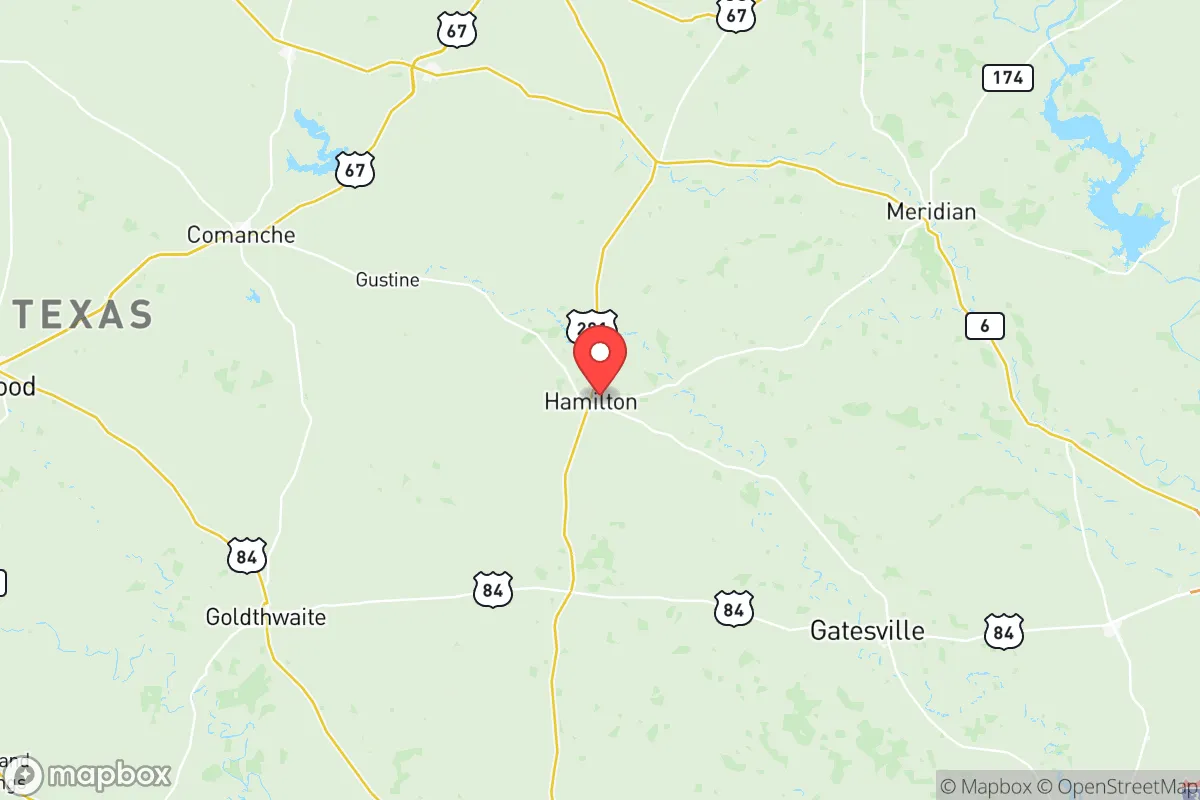
Hamilton County sits on the western edge of the Texas Hill Country, where the rolling limestone terrain begins to flatten into the West Texas plains. That transition matters. The county is roughly 45 miles southwest of Waco, 70 miles north of Austin, and about 90 miles south of Fort Worth, placing it within a two-hour drive of three major population centers without being in their blast radius. The nearest military installation of note is Fort Cavazos (formerly Fort Hood) in Killeen, about 60 miles to the south — close enough to indicate a stable regional economy, but far enough that the county isn't a target-adjacent community.
The terrain itself is a defensive asset. The Lampasas Cut Plains and the northern edge of the Edwards Plateau provide natural drainage, elevation changes, and numerous spring-fed creeks, including the Leon River which runs through the county. This is not flood-prone bottomland; the elevation ranges from roughly 1,000 to 1,400 feet, and the limestone substrate provides excellent groundwater filtration. The county's position on the Balcones Fault Zone's northern edge means it gets the reliable rainfall of Central Texas — about 32 inches annually — without the hurricane storm surge risk that plagues coastal communities. For a relocator, the practical takeaway is simple: the land drains well, the water table is accessible, and the climate is temperate enough for year-round food production.
Risk profile: exposure to natural and man-made threats
No place in Texas is entirely risk-free, and Hamilton County has its own set of vulnerabilities. The primary natural threat is wildfire, particularly in the western and southern parts of the county where juniper and mesquite dominate the landscape. The 2011 Central Texas fire season burned thousands of acres in the region, and the county's volunteer fire departments remain the first line of defense. Drought is the second chronic risk; the region cycles through multi-year dry spells that stress both agriculture and private wells. Flash flooding is a localized concern along the Leon River and its tributaries, though the county's elevation makes catastrophic flooding far less likely than in low-lying areas downstream.
Man-made risks are comparatively minimal, which is the point. Hamilton County has no refineries, no chemical plants, no nuclear facilities, and no major military targets. The nearest significant industrial corridor is the Waco area, roughly 45 minutes away, which hosts a mix of manufacturing and distribution centers but nothing that would draw a strategic strike. The county is also well outside the fallout plume zones of any major Texas population center. For context, a relocator fleeing the Houston-Galveston refinery corridor or the Dallas-Fort Worth metroplex would find Hamilton County to be a dramatically lower-risk environment — not because Texas is a target-rich environment, but because this specific county sits in a relative dead zone of strategic value. The main infrastructure vulnerability is the power grid; like most of Texas, the county relies on the ERCOT grid, and the February 2021 winter storm Uri demonstrated that extended outages are possible. However, the county's rural character means most residents already have some level of self-sufficiency baked into their daily lives.
Practical resilience: food, water, energy, and defensibility
For a relocator serious about self-sufficiency, Hamilton County delivers on the fundamentals. Water is the strongest asset. The Trinity Aquifer underlies the county, and private wells in the area typically produce good-quality water at depths of 150 to 400 feet. The Leon River provides surface water, and the county's numerous spring-fed creeks offer natural sources that predate modern infrastructure. Unlike many West Texas counties where water is a constant struggle, Hamilton County's groundwater is reliable enough that a well-equipped property can achieve genuine water independence. Municipal water in the city of Hamilton comes from the Leon River and is treated at the city's plant, but the rural character of the county means most acreage properties can support a private well.
Food resilience is equally strong. The county sits in the heart of Texas cattle country, with the Hamilton County Livestock Commission auction in Hamilton serving as a regional hub for livestock trading. For a relocator, this means local access to meat, dairy, and agricultural supplies that urban dwellers take for granted. The county's blackland prairie soils in the eastern sections are productive for row crops, while the western limestone soils support improved pasture for grazing. The Hamilton Farmers Market operates seasonally, and the surrounding counties of Bosque, Comanche, and Coryell provide additional agricultural depth. In a prolonged disruption scenario, this is a county that could feed itself — a claim that cannot be made for most of suburban Texas.
Energy resilience is the weakest link, but it is manageable. The county has no natural gas production of note, and the ERCOT grid is the sole electrical source for most properties. However, the region's high solar insolation — roughly 5.5 peak sun hours per day — makes off-grid solar a practical option. The county's building codes are minimal, and there are no restrictive homeowners associations in the rural areas, meaning a relocator can install solar panels, battery storage, and a backup generator without bureaucratic friction. Propane is widely available through local suppliers, and the county's rural fire departments maintain mutual aid agreements with neighboring departments.
Defensibility is a function of the county's geography and social structure. The limestone hills and creek valleys provide natural chokepoints, and the county's low population density — about 12 people per square mile — means that a prepared household has significant buffer from neighbors. The county seat of Hamilton has a police department, and the Hamilton County Sheriff's Office covers the rural areas, but the reality is that in a true emergency, residents are expected to be their own first responders. The county's strong hunting culture means firearms ownership is common, and the local gun culture is a practical asset for a relocator who values self-defense capability. The nearest major medical facility is in Waco, with a Level II trauma center at Baylor Scott & White Hillcrest, but the county has a critical access hospital in Hamilton that can handle stabilization and basic emergency care.
The strategic picture for a relocator
Hamilton County offers a rare combination for the resilience-minded relocator: genuine rural self-sufficiency potential, proximity to real infrastructure, and a risk profile that is dramatically lower than Texas's urban corridors. The county is not a prepper fantasyland — it has real vulnerabilities in the power grid and wildfire risk — but it is a place where a prepared individual or family can build a genuinely defensible position. The trade-off is the absence of urban amenities: no major airport, no high-end shopping, no cultural institutions. But for someone whose priority is strategic positioning rather than convenience, Hamilton County represents one of the better-balanced options in Central Texas. The land is affordable, the water is accessible, the community is self-reliant, and the county sits far enough from the state's major targets to offer genuine margin in a worst-case scenario. It is not the most remote county in Texas, and that is precisely its strength.

* Values derived from national, state, county, city and local statistics and may differ in a specific area. Last updated: 2026-10-30T19:29:37.000Z
Narrative content on this page is AI-generated and may contain mistakes. Verify any details that matter before acting on them.
ReloMaps may earn a commission from affiliate links at no extra cost to you.

