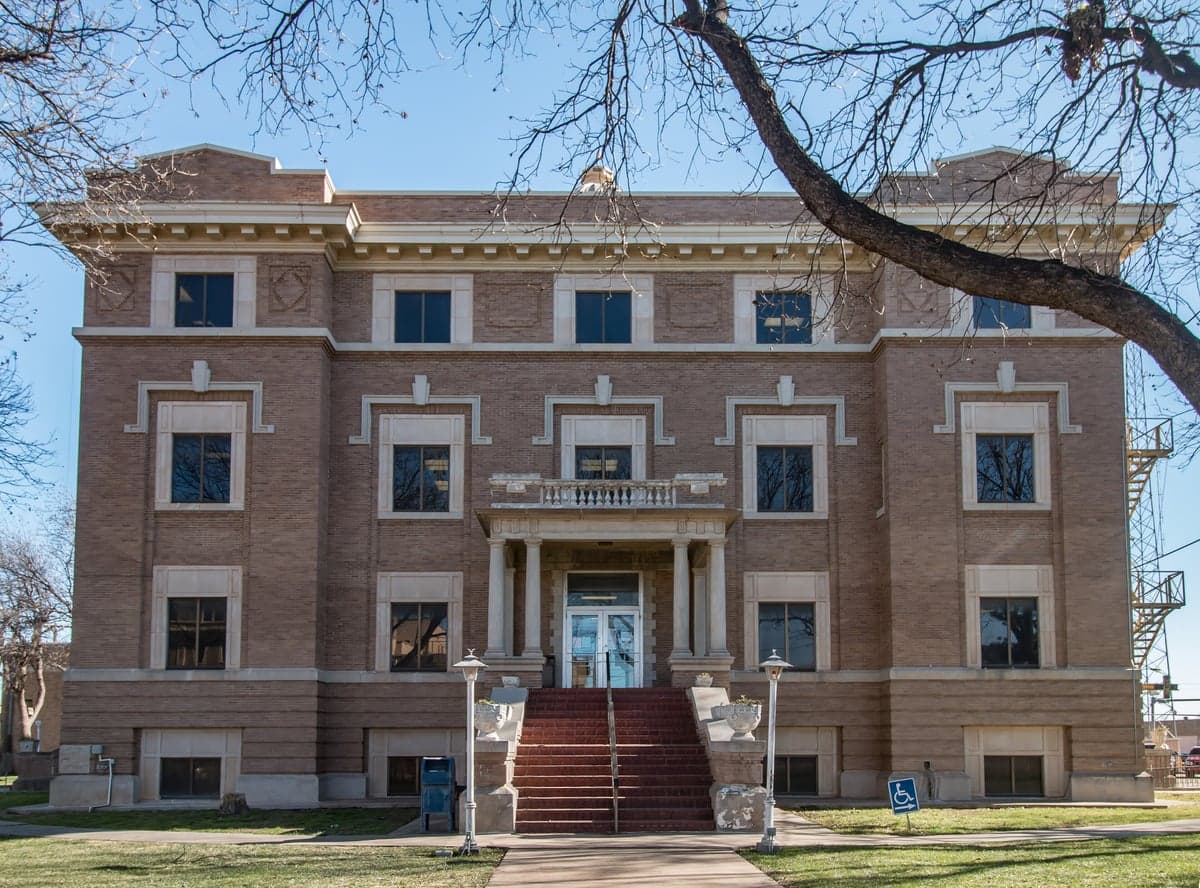
Photo: Wikipedia
Demographics of Hale County
Affluence Level in Hale County
A below-average socioeconomic profile. Incomes, home values, and educational attainment trail the U.S., with higher poverty and unemployment.
People of Hale County
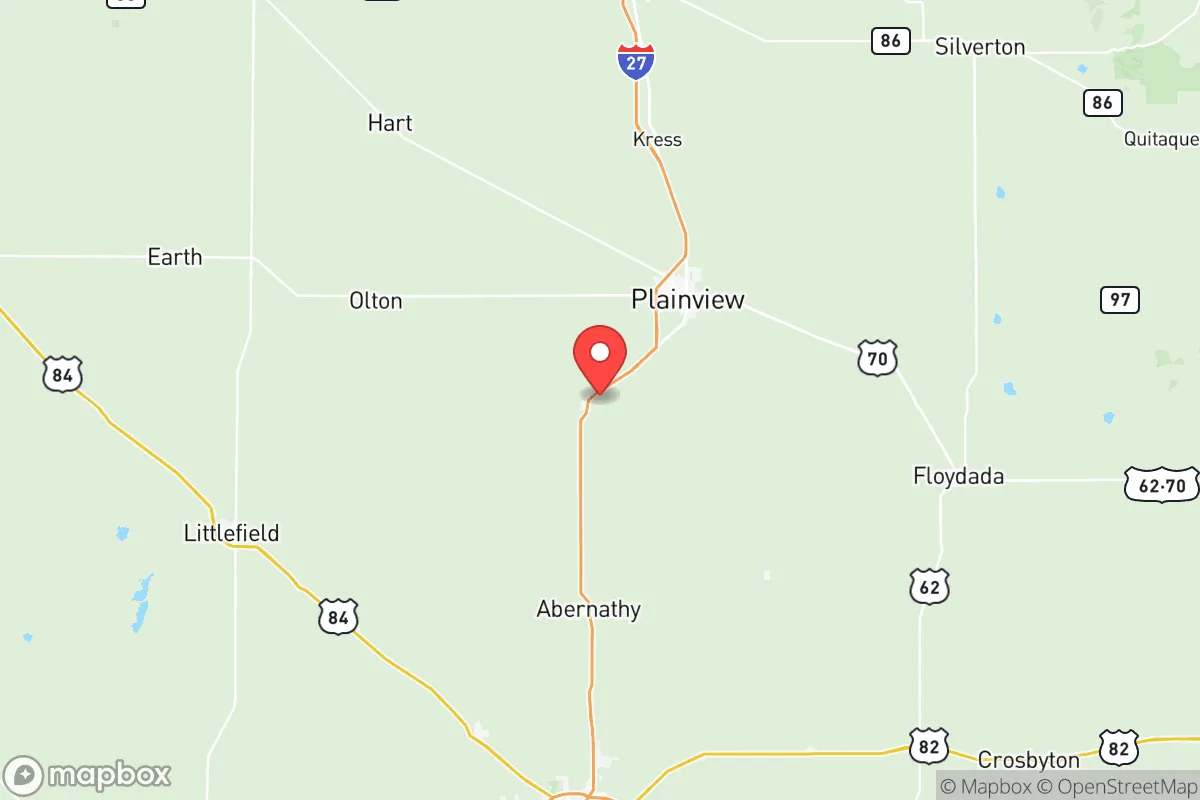
Hale County, Texas, is a predominantly Hispanic and rural community of 32,247 residents, where a 60.8% Hispanic majority shapes daily life and local culture, while the White non-Hispanic population stands at 32.1%. The county is characterized by its agricultural roots, a relatively low foreign-born share of 6.3%, and a modest college attainment rate of 15.6%. The population is concentrated in the county seat of Plainview, with smaller communities like Hale Center, Petersburg, and Abernathy serving as agricultural hubs. Distinctive identity markers include a strong sense of local tradition, a deeply rooted ranching and farming economy, and a growing but still small Black (4.0%) and Asian (0.4%) presence, with Indian-subcontinent residents making up just 0.2%.
Settlement & growth (pre-1960)
Before American settlement, the area that is now Hale County was part of the vast Llano Estacado, a region inhabited by nomadic Plains tribes, primarily the Comanche and Apache. These groups followed the buffalo herds across the high plains, leaving little permanent settlement. Spanish explorers and later Mexican authorities claimed the territory, but no permanent European colonies were established in what is now Hale County during the Spanish or Mexican periods. The region remained largely untouched by non-Native peoples until after the U.S. annexation of Texas in 1845 and the subsequent defeat of the Comanche in the Red River War of 1874-1875.
American settlement began in earnest in the 1880s and 1890s, driven by the expansion of the railroad. The first major wave consisted of Anglo-American ranchers and farmers from the Deep South and Midwest, who were drawn by the promise of cheap land and the open range. The town of Plainview, founded in 1887 as a railroad stop, quickly became the county's commercial and political center. These early settlers were predominantly of English, Scots-Irish, and German descent, establishing a ranching economy that later transitioned to irrigated cotton farming after the discovery of the Ogallala Aquifer in the 1930s. The towns of Hale Center (founded 1906) and Petersburg (founded 1907) grew as agricultural service centers for the surrounding farms.
A second significant wave arrived during the Dust Bowl and Great Depression of the 1930s. Thousands of displaced farmers, often called "Okies" and "Arkies," migrated from Oklahoma, Arkansas, and the Texas Panhandle to Hale County, seeking work in the cotton fields. These migrants, largely of Anglo-American stock, settled in rural areas and small towns like Abernathy and Cotton Center, where they provided a cheap labor force for the expanding cotton industry. By 1950, the county's population had grown to over 28,000, with Plainview serving as a regional hub for cotton ginning and processing.
The third major pre-1960 wave was the arrival of Mexican-American laborers, beginning in the 1910s and accelerating through the 1940s and 1950s. These workers were recruited to fill labor shortages in the cotton fields, especially during World War II and the post-war boom. They initially settled in segregated neighborhoods in Plainview, such as the area around West 5th Street, and in smaller communities like Edmonson. This wave laid the foundation for the county's current Hispanic majority, as families grew and established permanent roots in the agricultural economy.
Modern era (post-1965)
The 1965 Hart-Cellar Act had a limited direct impact on Hale County, as the region did not attract large numbers of post-1965 immigrants from Asia, Africa, or Latin America. Instead, the county's demographic transformation since 1965 has been driven primarily by domestic migration and natural increase among the existing Hispanic population. The foreign-born share of 6.3% is relatively low, and most foreign-born residents are from Mexico, working in agriculture or related industries.
The most significant demographic shift since 1965 has been the steady growth of the Hispanic population, which rose from roughly 30% in 1970 to over 60% today. This growth is largely due to higher birth rates among Hispanic families and continued migration from other parts of Texas and Mexico. The White non-Hispanic population has declined in both absolute numbers and share, as younger Anglo residents have moved to larger cities like Lubbock and Amarillo for education and employment. The Black population, historically small, has remained stable at around 4.0%, concentrated in Plainview. The East/Southeast Asian population (0.4%) and Indian-subcontinent population (0.2%) are tiny, with no significant enclaves; these residents are typically professionals in healthcare or education at Plainview's hospital or school district.
Suburbanization has been minimal in Hale County, as the region lacks a major metropolitan center. Plainview has experienced some suburban-style development on its outskirts, but the county remains overwhelmingly rural. The decline of the cotton industry due to groundwater depletion and commodity price fluctuations has led to population stagnation, with the county's population peaking at around 36,000 in 1960 and declining to 32,247 today. The towns of Hale Center and Petersburg have seen population losses, while Abernathy has held steady due to its proximity to Lubbock.
The future
Hale County is projected to become more Hispanic and older over the next 10-20 years. The White non-Hispanic population will likely continue its gradual decline, while the Hispanic share may approach 70% by 2040, driven by higher birth rates and continued in-migration from other parts of Texas. The Black and Asian populations are expected to remain small, as the county's agricultural economy does not attract the diverse labor pools seen in urban Texas. The foreign-born share may rise slightly but will remain below 10%, as most growth will come from natural increase among U.S.-born Hispanic families.
New communities are unlikely to form, as the county's population is already concentrated in existing towns. The most likely growth area is the southern part of the county near Abernathy, which benefits from commuting access to Lubbock. The cultural identity of Hale County is evolving from a historically Anglo-dominated ranching and farming society to a bilingual, bicultural community where Hispanic traditions—such as quinceañeras, Spanish-language church services, and Tex-Mex cuisine—are mainstream. The county's political leanings, historically conservative, are shifting slightly as the Hispanic electorate grows, though local elections remain dominated by conservative candidates.
For someone moving in now, Hale County offers a low-cost, family-oriented rural lifestyle with strong community ties, but limited economic diversity and a shrinking population. The county is becoming a predominantly Hispanic, working-class agricultural community, where the pace of life is slow and the values of hard work and faith remain central. New residents should expect a place where the past—cotton fields, railroad towns, and Dust Bowl resilience—still shapes the present, and where the future will be defined by the next generation of Hispanic families who call it home.

* Values derived from national, state, county, city and local statistics and may differ in a specific area. Last updated: 2026-09-08T17:24:20.000Z
Narrative content on this page is AI-generated and may contain mistakes. Verify any details that matter before acting on them.
ReloMaps may earn a commission from affiliate links at no extra cost to you.

