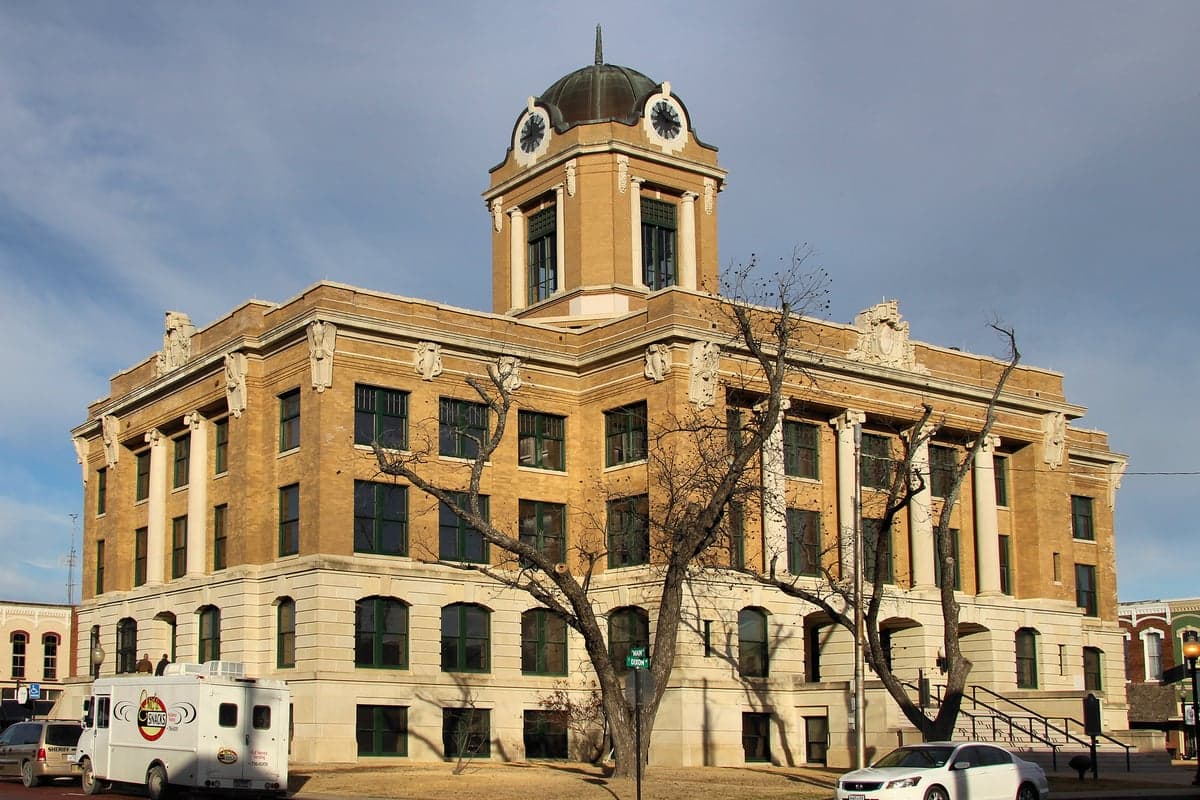
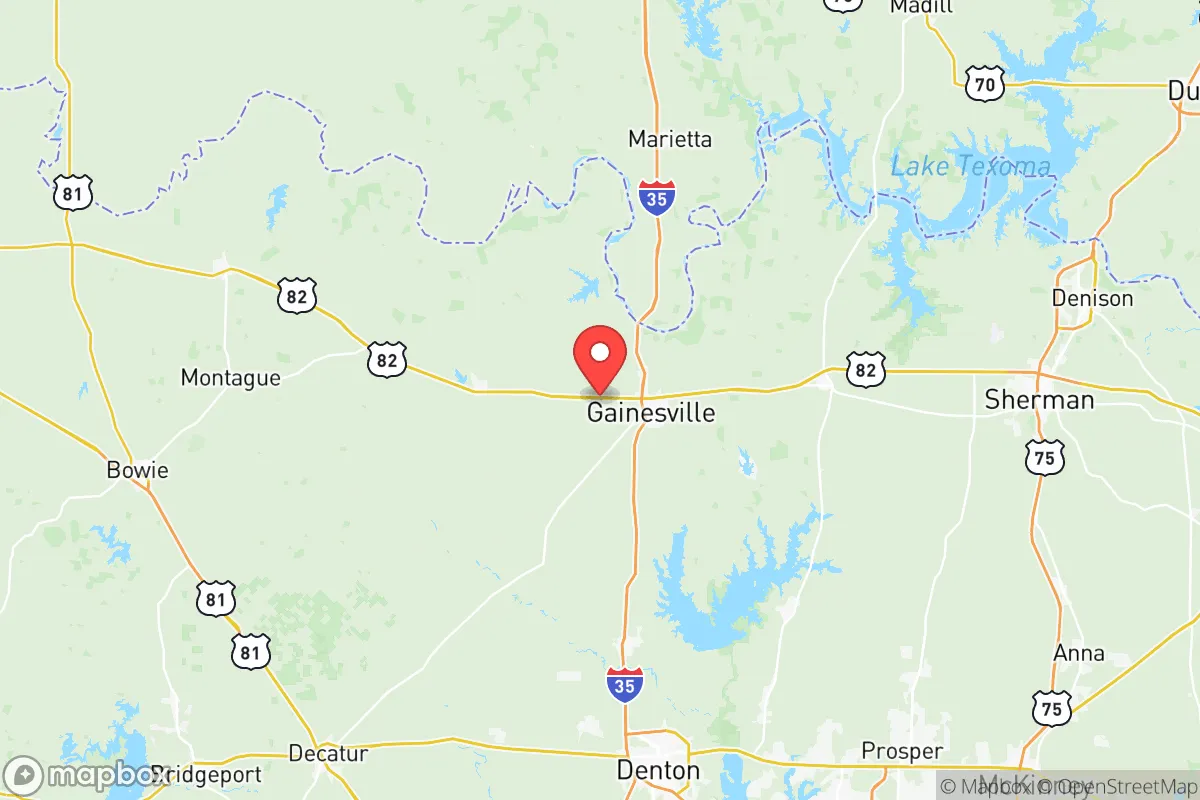
Photo: Wikipedia
Political ClimatePolitical Climate in Cooke County
Showing district-level results — no local-only data available.
Local Political AnalysisPolitical Analysis of Cooke County
Cooke County is a rock-solid conservative stronghold, with a Cook PVI of R+11 that puts it well to the right of Texas as a whole (R+4). This isn't a recent shift—this area has been reliably red for generations, and while the rest of the state has seen some suburban drift toward the center, Cooke County has held firm. The county voted for Trump by over 30 points in 2020, and local races rarely see serious Democratic competition. That said, there are subtle variations across the county worth knowing about if you're considering a move here.
How it compares
The R+11 rating means Cooke County is significantly more conservative than Texas overall. To put it in perspective, the state's R+4 already leans Republican, but Cooke County is roughly twice as red. The biggest difference is in the rural precincts versus the small towns. Gainesville, the county seat and largest town, is still deeply conservative but has a few precincts near the downtown and the university (North Central Texas College) that are slightly less so—think 60-40 Republican instead of 80-20. Muenster and Lindsay are among the most conservative pockets in the entire state, with German Catholic roots that translate into rock-ribbed Republican voting and a strong emphasis on local control. Valley View and Whitesboro are similarly deep red, with little to no organized Democratic presence. The only place you might see a hint of blue is in a few precincts around Lake Kiowa, where some retirees from more moderate areas have settled, but even there it's a drop in the bucket.
What this means for residents
For folks who value limited government and personal freedoms, Cooke County is a breath of fresh air. The local culture is one of self-reliance—people here don't expect the government to solve their problems, and they get uneasy when it tries. Property taxes are a perennial concern, but the county commission and school boards are generally focused on keeping spending in check. You won't see the kind of progressive policy experiments happening in Austin or Dallas here. Mask mandates, vaccine passports, and DEI initiatives are non-starters. The sheriff's office is pro-Second Amendment without apology, and the local school districts (Gainesville ISD, Muenster ISD, etc.) emphasize traditional values and parental rights. If you're worried about government overreach into your personal life—whether it's health choices, how you raise your kids, or what you can say—this is a place where those concerns are taken seriously by elected officials.
That said, there are some cultural distinctions worth noting. The German Catholic heritage in towns like Muenster and Lindsay means a strong community focus on family, church, and local festivals (Muenster's Germanfest is a big deal). This isn't the "cowboy" conservatism you might picture—it's more rooted in small-town, agrarian values. The downside for some? Diversity is limited. The county is over 80% non-Hispanic white, and while there's a growing Hispanic population in Gainesville, the political culture hasn't shifted much. If you're looking for a place where conservative principles are still the norm and the progressive wave hasn't crashed ashore, Cooke County is one of the last holdouts in North Texas. The trajectory? Steady as she goes—don't expect any flips anytime soon.

State Political ClimatePolitical Climate in Texas
State Political AnalysisPolitical Environment in the State
Texas has been a reliably Republican state for decades, with a Cook Partisan Voting Index of R+4, but the political landscape is far from monolithic. The dominant coalition is a mix of rural conservatives, suburban moderates, and a growing number of libertarian-leaning independents, though the state has seen a slow but steady leftward drift in its major metros since the early 2000s. Over the last 10-20 years, the GOP’s grip has tightened in rural areas and exurbs while slipping in fast-growing urban centers like Austin, Dallas, and Houston, creating a state that feels like two different countries depending on where you stand.
Urban vs. rural divide
The political map of Texas is a stark checkerboard. The big cities — Austin, Houston, Dallas, San Antonio, and El Paso — are deep blue, with Austin’s Travis County voting +40 points for Biden in 2020. These metros are driven by a mix of tech transplants, university populations, and minority voters, and they’ve been trending left for two decades. Meanwhile, the rural and exurban counties — places like Lubbock, Midland, and Tyler — are solidly red, often voting +50 to +70 points Republican. The real battleground is the suburbs: Collin County (north of Dallas), Fort Bend County (southwest of Houston), and Williamson County (north of Austin) have all shifted left in recent cycles, with Collin County flipping from +18 R in 2012 to +3 R in 2020. This suburban drift is driven by college-educated professionals and families moving from blue states, and it’s the single biggest factor in Texas’s slow purple-ward trend.
Policy environment
Texas’s policy environment is a mixed bag for conservatives. On the plus side, there’s no state income tax, a right-to-work law, and a regulatory climate that’s generally business-friendly. Property taxes are high (averaging 1.6-2.0% of home value), but the state caps appraisal increases at 10% per year for homesteads. Education policy is a flashpoint: the state funds public schools through a Robin Hood system that redistributes property tax revenue, and school choice bills have repeatedly failed in the legislature. Healthcare is largely unregulated, with no state-run exchange and limited Medicaid expansion, which keeps costs lower for private payers but leaves rural hospitals struggling. Election laws tightened after 2020 with Senate Bill 1, which banned 24-hour and drive-through voting, added ID requirements for mail ballots, and empowered poll watchers. The state also passed a near-total abortion ban (trigger law) in 2021, which took effect after Dobbs. For a conservative, the policy environment is generally favorable on taxes and guns, but frustrating on school choice and property tax relief.
Trajectory & freedom
On personal freedom, Texas is a mixed story trending in two directions. Gun rights have expanded: in 2021, the state passed permitless carry (HB 1927), allowing adults to carry handguns without a license or training. Parental rights were strengthened with a 2023 law requiring school districts to notify parents of any changes to a child’s mental or physical health, effectively limiting gender-transition support without consent. Medical autonomy took a hit with the abortion ban, but the state also passed a 2023 law protecting doctors who refuse to perform procedures based on conscience. Property rights are strong, with no statewide zoning and limited eminent domain abuse. On the downside, COVID-era mandates saw significant government overreach, including business closures and mask mandates in some counties, though the legislature later banned vaccine mandates for private employers. The state’s energy grid failure in 2021 (Winter Storm Uri) exposed a lack of regulatory oversight, leading to a push for weatherization mandates that some see as a new regulatory burden. Overall, Texas is becoming freer on guns and family issues, but less free on taxation and energy regulation.
Civil unrest & political movements
Texas has seen its share of political flashpoints. The 2020 Black Lives Matter protests in Austin were among the largest in the country, with some turning violent and leading to property damage. The city council later cut police funding, which sparked a backlash that helped Republicans flip several local seats in 2021. On the right, the “Texas Nationalist Movement” (Texit) has gained some traction, with a 2022 poll showing 18% support for secession, though it remains fringe. Immigration politics are a constant: the state launched Operation Lone Star in 2021, deploying state troopers and National Guard to the border, and busing migrants to sanctuary cities like New York and Chicago. This has been popular with conservatives but has drawn lawsuits from the Biden administration. Election integrity remains a hot-button issue, with ongoing audits in Harris County (Houston) and lawsuits over mail ballot procedures. A new resident would notice the strong police presence at the border, the “Don’t Mess with Texas” attitude, and the occasional protest in downtown Austin, but overall, civil unrest is localized and not a daily concern outside of major cities.
Projection
Over the next 5-10 years, Texas will likely continue its slow shift from solid red to competitive purple, driven by in-migration from California, New York, and Illinois. The state is adding roughly 1,000 new residents per day, and many of them are moderate or left-leaning professionals. The suburbs of Dallas, Houston, and Austin will keep trending blue, while rural areas will stay deep red. This could lead to a state where statewide races (like governor and Senate) are within 2-3 points by 2030, and the state legislature may flip to Democratic control by 2032 if current trends hold. However, the state’s conservative infrastructure — including gerrymandered districts, voter ID laws, and a strong rural base — will slow this shift. A new resident moving in now should expect to see more competitive elections, more policy fights over school choice and property taxes, and a growing cultural divide between the urban cores and the rest of the state. The freedom trajectory will likely see more battles over medical autonomy (especially around gender and vaccines) and property rights, with the legislature trying to preempt local progressive ordinances.
For a new resident, the bottom line is this: Texas is still a great state for conservatives who value low taxes, gun rights, and a business-friendly environment, but it’s not the solid red fortress it was 20 years ago. You’ll find your values reflected in the state legislature and in most rural and suburban communities, but you’ll also encounter growing progressive influence in the cities and suburbs. If you’re moving for freedom, pick a county like Collin, Denton, or Montgomery — not Travis or Harris. The state is changing, but it’s still a place where you can build a life without the government breathing down your neck, as long as you choose your neighborhood wisely.
* Values derived from national, state, county, city and local statistics and may differ in a specific area. Last updated: 2026-05-21T10:23:16.000Z
Narrative content on this page is AI-generated and may contain mistakes. Verify any details that matter before acting on them.
ReloMaps may earn a commission from affiliate links at no extra cost to you.

