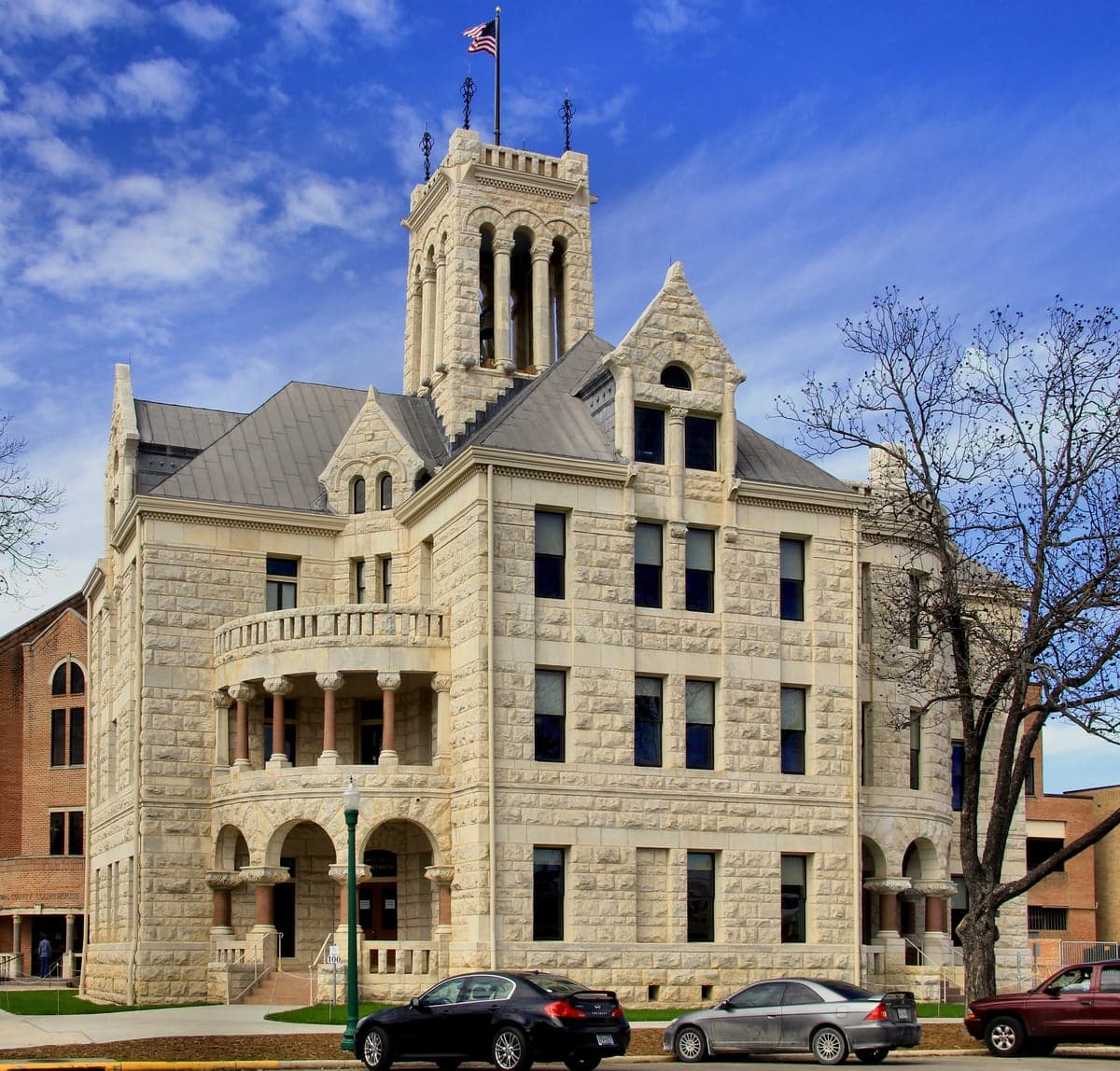
Photo: Wikipedia
Political ClimatePolitical Climate in Comal County
Showing district-level results — no local-only data available.
Local Political AnalysisPolitical Analysis of Comal County
Comal County, Texas, is a reliably conservative stronghold with a Cook Partisan Voting Index of R+11, making it significantly more Republican than the state of Texas as a whole, which sits at R+4. The county has voted for the Republican presidential candidate by wide margins in every election since at least 2000, and that trend has only intensified in recent cycles. While the county’s overall lean is deeply red, there are meaningful pockets of political variation, especially in the southern reaches near the San Antonio metro area, where suburban growth is beginning to shift some precincts toward a more purple hue.
How it compares
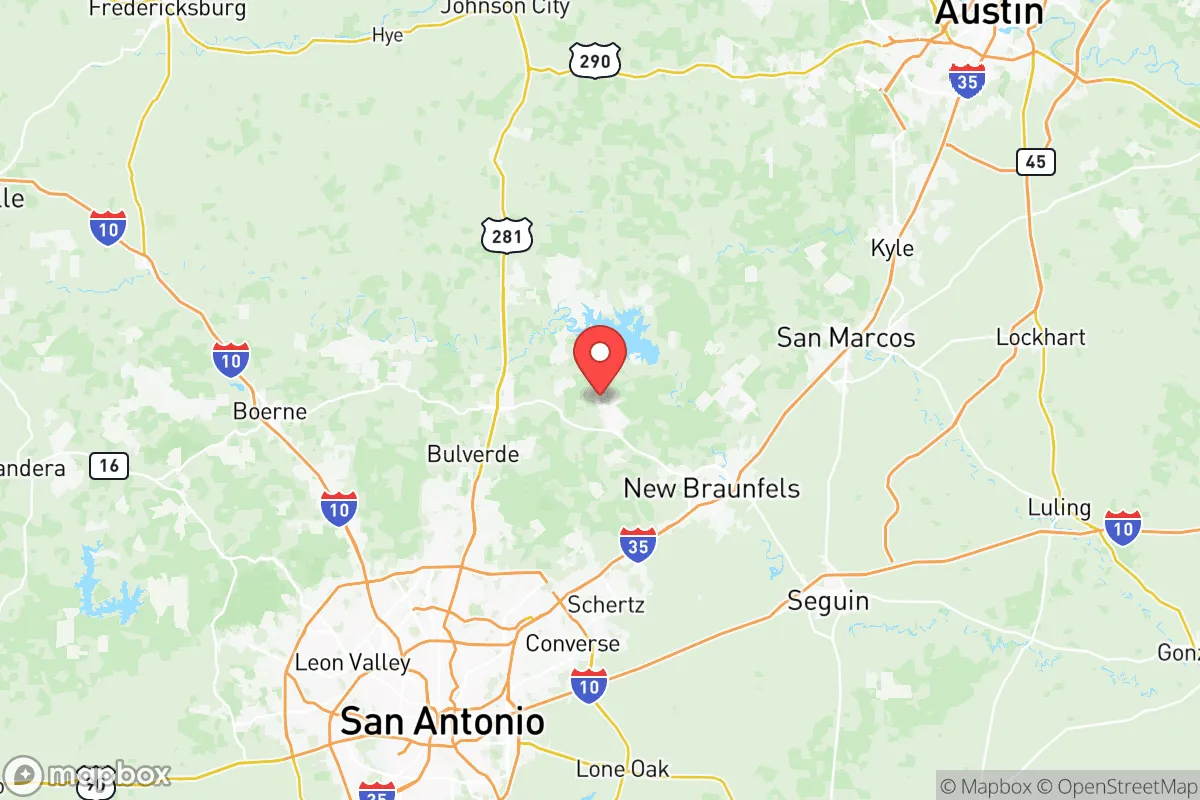
Comal County’s R+11 rating places it among the most conservative counties in the I-35 corridor between Austin and San Antonio. For context, neighboring Bexar County (San Antonio) leans Democratic, while Hays County to the north has become a competitive swing county in recent years. Within Comal County itself, the political geography is not monolithic. The city of New Braunfels, the county seat, remains solidly Republican, but its southern precincts—particularly around the Creekside area and along the I-35 frontage—have shown signs of bluing as transplants from California and Colorado arrive. Meanwhile, Canyon Lake and the rural communities of Bulverde and Spring Branch are among the most conservative parts of the county, often delivering 75-80% of the vote for Republican candidates. The small town of Garden Ridge, an affluent enclave just north of San Antonio, leans Republican but has a noticeable independent streak, with some precincts flipping to Democratic candidates in local races. The swing precincts are concentrated in the fast-growing areas around Fischer and Startzville, where new subdivisions are drawing a mix of retirees, remote workers, and young families who don’t always align with the county’s traditional GOP machine.
What this means for residents
For conservative residents, Comal County offers a political environment where their views are the clear majority. Local government, school boards, and law enforcement leadership tend to reflect conservative priorities, from low taxes to Second Amendment protections. Republican primary voters effectively decide most local elections, as general elections are rarely competitive outside a handful of precincts. For liberal or moderate residents, the reality is more nuanced. While they are a clear minority, they are not without representation. The growing southern corridor near San Marcos and the Gruene area has produced a small but vocal Democratic presence, and local advocacy groups like the Comal County Democratic Party have become more active in recent cycles. However, progressive residents should expect to encounter a community where conservative values dominate public discourse, from church involvement in local politics to strong support for gun rights and limited government. The county’s rapid growth—population has surged past 170,000—is slowly diversifying the electorate, but the political culture remains deeply rooted in Texas conservatism.
Culturally, Comal County stands apart from the state’s major urban centers. The county’s German heritage, celebrated through events like Wurstfest and the preservation of historic districts in New Braunfels, fosters a distinct identity that values tradition and community self-reliance. Policy-wise, the county has been a battleground over growth management, with debates over water rights, development regulations, and school funding often splitting along lines of “keep it rural” versus “embrace growth.” The county’s conservative lean means that property taxes remain relatively low compared to urban Texas counties, but the trade-off is limited public transit and fewer social services. For anyone moving here, understanding that Comal County is not a political microcosm of Texas—it is a more conservative, more rural, and more culturally cohesive version of the state—is essential to setting realistic expectations about daily life and civic engagement.

State Political ClimatePolitical Climate in Texas
State Political AnalysisPolitical Environment in the State
Texas has been a reliably Republican state for over three decades, with a Cook Partisan Voting Index of R+4, but the political reality on the ground is far more complex than that single number suggests. The state’s dominant coalition is built on a foundation of rural and suburban conservatives, pro-business interests, and a growing evangelical voting bloc, yet the past 10-20 years have seen a steady, slow leftward drift driven by explosive population growth in the major metros. While no one would mistake Texas for a swing state in 2026, the trajectory is clear: the Republican advantage that felt unshakeable in the 2000s and early 2010s is now being tested by the sheer scale of in-migration from blue states and the political maturation of the state’s fast-growing Hispanic and Asian populations.
Urban vs. rural divide
The political map of Texas is a story of two worlds. The state’s five largest metros — Houston, Dallas-Fort Worth, San Antonio, Austin, and El Paso — now contain over 70% of the state’s population, and they are pulling in opposite directions. Austin and El Paso are reliably Democratic strongholds; Travis County (Austin) gave Biden over 71% of the vote in 2020, while El Paso County has been blue for decades. The real action is in the suburban rings around Houston and Dallas-Fort Worth. Counties like Collin County (north of Dallas) and Fort Bend County (southwest of Houston) have flipped from solid red to competitive or even blue in recent cycles — Fort Bend went for Biden in 2020 after backing Trump by 6 points in 2016. Meanwhile, rural West Texas and the Panhandle, places like Lubbock and the Permian Basin, remain deeply conservative, often voting 80-90% Republican. The divide isn’t just geographic; it’s cultural and economic, with the urban cores and inner suburbs trending left while the exurbs and rural areas dig in harder on the right.
Policy environment
Texas’s policy environment is defined by a low-tax, low-regulation posture that has been consistent for decades. There is no state income tax — a major draw for relocators — and property taxes are high to compensate, averaging around 1.6-1.8% of assessed value depending on the county. The state’s regulatory climate is famously business-friendly, with minimal zoning in many cities and a right-to-work law that limits union power. On education, Texas has leaned into school choice and charter expansion, though a major voucher-like program (Education Savings Accounts) failed to pass in 2023 due to a coalition of rural Republicans and Democrats. Healthcare policy remains a flashpoint: Texas is one of the 10 states that has not expanded Medicaid under the Affordable Care Act, leaving roughly 1.5 million low-income adults in a coverage gap. Election laws have tightened in recent years, with the 2021 passage of SB 1, which restricted mail-in voting, added ID requirements, and expanded poll watcher access — a direct response to the 2020 election controversies.
Recent policy direction
The last five years have seen Texas move decisively in a conservative direction on several fronts, even as the state’s demographics shift. On gun rights, Texas became a permitless carry state in 2021 (HB 1927), allowing most adults to carry a handgun without a license or training. On abortion, the state passed SB 8 in 2021, the "heartbeat bill" that effectively banned abortion after six weeks via a novel private enforcement mechanism, and then a near-total ban (trigger law) took effect after Dobbs in 2022. Parental rights in education gained traction with the 2023 passage of HB 900, which restricts "sexually explicit" content in school libraries, and the ongoing push to ban diversity, equity, and inclusion programs at public universities. On property rights, Texas has strong homestead protections against creditors but has seen tension between landowners and the state’s use of eminent domain for infrastructure projects like the proposed high-speed rail between Dallas and Houston. Voting access has tightened, as noted, but turnout in 2020 and 2022 hit record highs, suggesting the restrictions haven’t suppressed participation overall. The state has also leaned into privacy and surveillance debates, passing a 2023 law (HB 4) that bans local governments from contracting with companies that "discriminate" against firearm or ammunition businesses — a move framed as protecting Second Amendment rights but criticized as limiting local procurement discretion.
Civil unrest & political movements
Texas has seen its share of political flashpoints in recent years. The 2020 George Floyd protests in Austin and Houston were among the largest and most sustained in the country, leading to a significant backlash in the 2021 legislative session, where the Republican majority passed a "defund the police" ban that penalizes cities that cut police budgets. Immigration politics are a constant presence, especially along the border in places like El Paso and the Rio Grande Valley. Governor Greg Abbott’s Operation Lone Star, launched in 2021, deployed state troopers and National Guard to the border, bused migrants to Democratic-led cities, and led to legal battles with the Biden administration over border enforcement authority. The state has also seen a rise in secessionist rhetoric, with the Texas Nationalist Movement gaining some visibility, though it remains a fringe position with no realistic path to success. Election integrity remains a live issue: the 2020 and 2022 cycles saw intense scrutiny of Harris County’s election administration, leading to a state takeover of elections in Texas’s most populous county in 2023. For a new resident, the most visible sign of political tension might be the yard signs and bumper stickers in suburban neighborhoods, or the occasional protest at the state capitol in Austin, but daily life for most Texans is not dominated by political conflict.
Projection
Over the next 5-10 years, Texas is likely to remain Republican at the state level, but the margin of control will continue to narrow. The key demographic driver is the growth of the Hispanic electorate, which has been trending toward the GOP in recent cycles — Trump improved his share of the Hispanic vote in Texas from 35% in 2016 to 42% in 2020 — but still leans Democratic overall. The bigger wild card is the continued influx of domestic migrants from California, New York, and Illinois, who tend to be more moderate or liberal than the native-born Texas population. If current trends hold, the state could become competitive at the presidential level by the early 2030s, though the state legislature is likely to remain under Republican control for longer due to gerrymandering and geographic concentration of Democratic voters. Someone moving to Texas now should expect a state that is politically stable in the near term but undergoing a slow, generational shift — the Texas of 2035 will look more like the Texas of 2020 than the Texas of 2000, but it will not be a blue state anytime soon.
For a new resident, the practical takeaway is that Texas offers a policy environment that is broadly conservative on taxes, regulation, and cultural issues, but with significant variation depending on where you live. A family settling in Collin County will experience a very different political climate than one moving to Austin or El Paso. The state’s political trajectory is toward greater competition, but for now, the levers of power remain firmly in Republican hands, and the policy direction reflects that reality. Whether you’re looking for low taxes, strong gun rights, or a business-friendly climate, Texas delivers — but you should also be prepared for high property taxes, limited public transit, and a political culture that is increasingly polarized between its booming cities and its vast rural expanse.
* Values derived from national, state, county, city and local statistics and may differ in a specific area. Last updated: 2026-07-01T16:25:07.000Z
Narrative content on this page is AI-generated and may contain mistakes. Verify any details that matter before acting on them.
ReloMaps may earn a commission from affiliate links at no extra cost to you.

