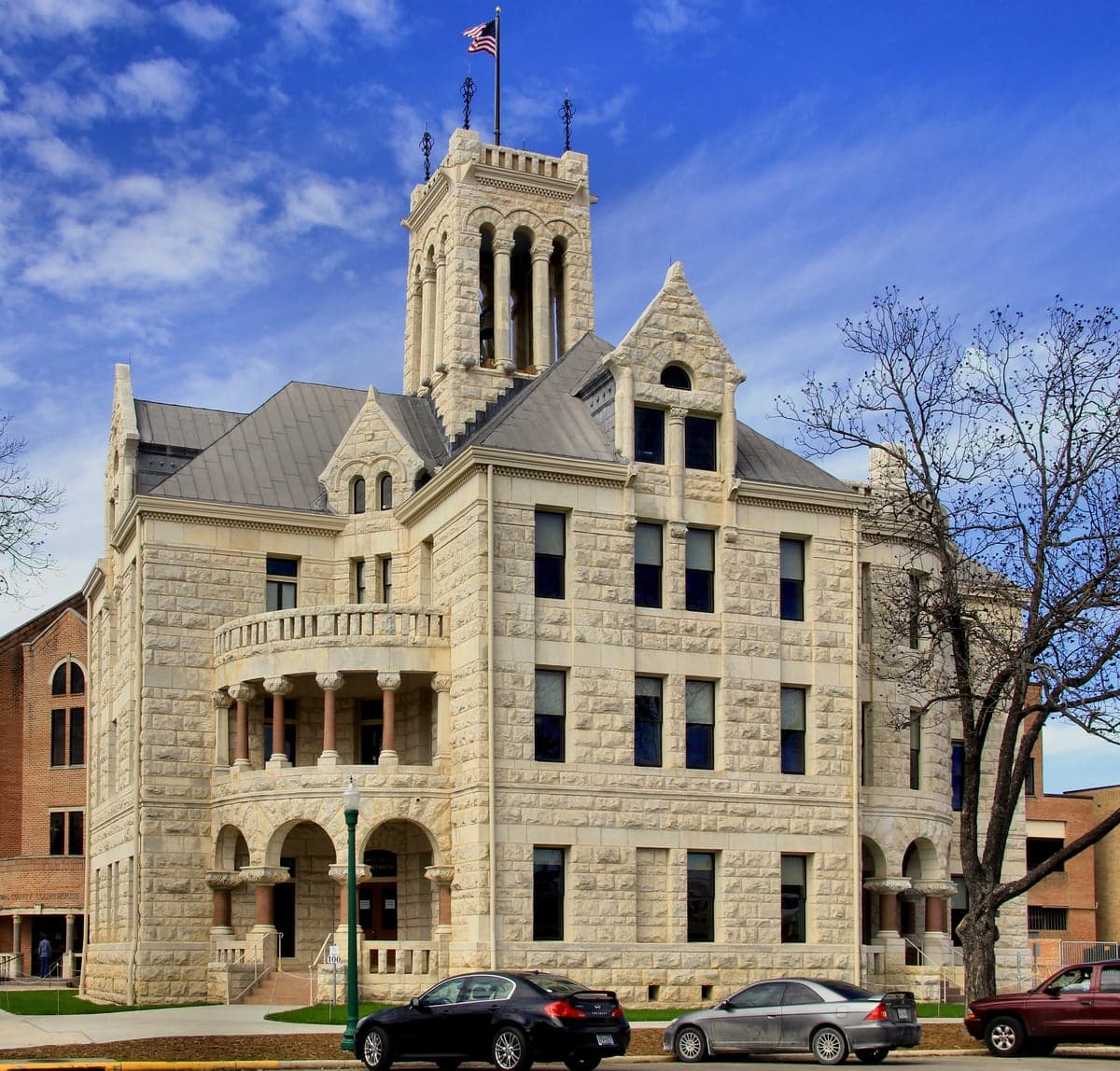
Photo: Wikipedia
Demographics of Comal County
Affluence Level in Comal County
An upper-middle-class area. Household wealth, education levels, and homeownership run ahead of national benchmarks.
People of Comal County
Comal County, Texas, today is a rapidly growing suburban and exurban community of 174,552 residents, anchored by the historic German-Texan town of New Braunfels and stretching toward the San Antonio metro area. The county retains a distinctly Central European cultural character from its 19th-century founding, but is increasingly shaped by domestic migration from other parts of Texas and the United States. With a population that is 64.9% White, 27.9% Hispanic, and a very low 2.6% foreign-born, Comal County is less diverse than the state average, yet its identity is evolving as new subdivisions and master-planned communities draw a more varied, college-educated workforce (42.2% hold a bachelor's degree or higher).
Settlement & growth (pre-1960)
Long before European settlement, the area now known as Comal County was home to the Tonkawa and Lipan Apache peoples, who used the Comal Springs and Guadalupe River as reliable water sources. Spanish and Mexican land grants in the early 1800s brought a handful of ranching families, but the region remained sparsely populated until a pivotal event in 1845: the founding of New Braunfels by Prince Carl of Solms-Braunfels on behalf of the Adelsverein, a German noble society promoting emigration to Texas. This was the single most consequential demographic event in the county's history. Between 1845 and 1850, thousands of German immigrants—farmers, craftsmen, and tradespeople—arrived in Galveston and traveled inland to settle the fertile valleys of the Guadalupe and Comal rivers. They established New Braunfels as the county seat and spread into smaller communities like Gruene (now a historic district within New Braunfels), Canyon Lake (then a rural farming area), and Fischer and Spring Branch in the Hill Country to the north.
The German settlers brought a distinctive culture that persists today: they built limestone churches and dance halls, introduced sausage-making and beer-brewing traditions, and established a bilingual community where German was spoken in homes and churches well into the 20th century. The county remained overwhelmingly White and German-descended through the 1800s, with very few enslaved people—Comal County had only about 200 enslaved individuals in 1860, a fraction of the Black population found in East Texas cotton counties. After the Civil War, a small number of freed African Americans settled in New Braunfels and Garden Ridge, but the Black population never exceeded 5% of the county total. The late 1800s and early 1900s saw modest in-migration of Anglo-Texans from the Deep South, but the German cultural imprint remained dominant. The construction of Canyon Dam in the 1950s and the creation of Canyon Lake reservoir spurred recreational development and the first wave of suburban-style growth, as San Antonio residents built weekend homes along the lake's shoreline.
Modern era (post-1965)
The post-1965 period transformed Comal County from a quiet rural and small-town area into a fast-growing suburban extension of the San Antonio-New Braunfels metropolitan corridor. The 1965 Hart-Cellar Act had a limited direct effect here—the foreign-born share remains just 2.6%, far below the national average—but the indirect effects of national demographic change and domestic migration reshaped the county. The primary driver of modern growth has been domestic migration from other parts of Texas and the United States, particularly from California, the Midwest, and the Rust Belt. Families and retirees seeking lower taxes, more space, and a conservative political environment have poured into new subdivisions in New Braunfels, Cibolo (partially in Comal County), and the unincorporated areas around Bulverde and Spring Branch.
The Hispanic population has grown significantly, rising from roughly 15% in 1990 to 27.9% today. This growth comes primarily from natural increase and migration from South Texas and Mexico, with many Hispanic families settling in New Braunfels's older neighborhoods and in newer subdivisions on the county's southern edge near the Bexar County line. The Black population remains small at 2.4%, concentrated in New Braunfels and the Garden Ridge area. East and Southeast Asian communities (0.9%) and Indian-subcontinent residents (0.4%) are a very recent presence, mostly professionals drawn to the tech and healthcare sectors in San Antonio who choose Comal County for its schools and larger lots. These Asian and Indian households are dispersed rather than clustered in ethnic enclaves, reflecting the county's overall pattern of assimilation into a predominantly White, English-speaking environment.
Suburbanization has been the defining geographic trend. The city of New Braunfels has more than doubled in population since 2000, while formerly rural areas like Canyon Lake and Bulverde have filled with gated communities and golf-course developments. The county's college-educated share of 42.2% reflects the influx of white-collar professionals and remote workers who value the Hill Country lifestyle and proximity to San Antonio's job market.
The future
Comal County is projected to continue growing rapidly, with the population expected to exceed 250,000 by 2040. The county is becoming slightly more diverse—the Hispanic share will likely rise toward 35% over the next two decades, driven by younger families and continued migration from South Texas—but it will remain majority White and culturally anchored in its German-Texan heritage. New communities are concentrating in master-planned developments along the Interstate 35 corridor and near the expanding San Antonio suburbs, while the Hill Country areas north of Canyon Lake are seeing more dispersed exurban development. The foreign-born share is unlikely to rise dramatically, as the county's housing costs and zoning patterns favor domestic migrants over international immigrants. For someone moving in now, Comal County offers a conservative, family-oriented environment with strong public schools, low crime, and a distinctive local culture centered on Wurstfest, the Guadalupe River, and historic German dance halls—but it is a place where newcomers are expected to assimilate into an established social fabric rather than reshape it.

* Values derived from national, state, county, city and local statistics and may differ in a specific area. Last updated: 2026-07-01T16:25:07.000Z
Narrative content on this page is AI-generated and may contain mistakes. Verify any details that matter before acting on them.
ReloMaps may earn a commission from affiliate links at no extra cost to you.

