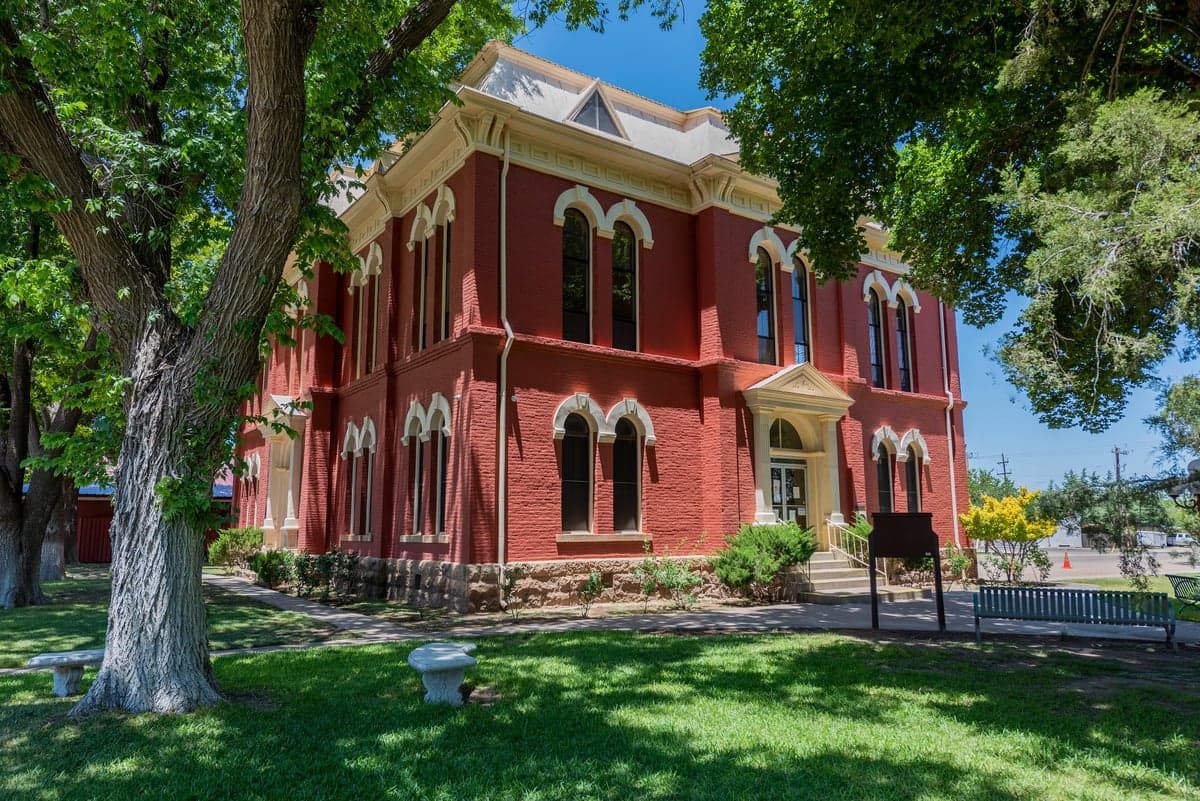
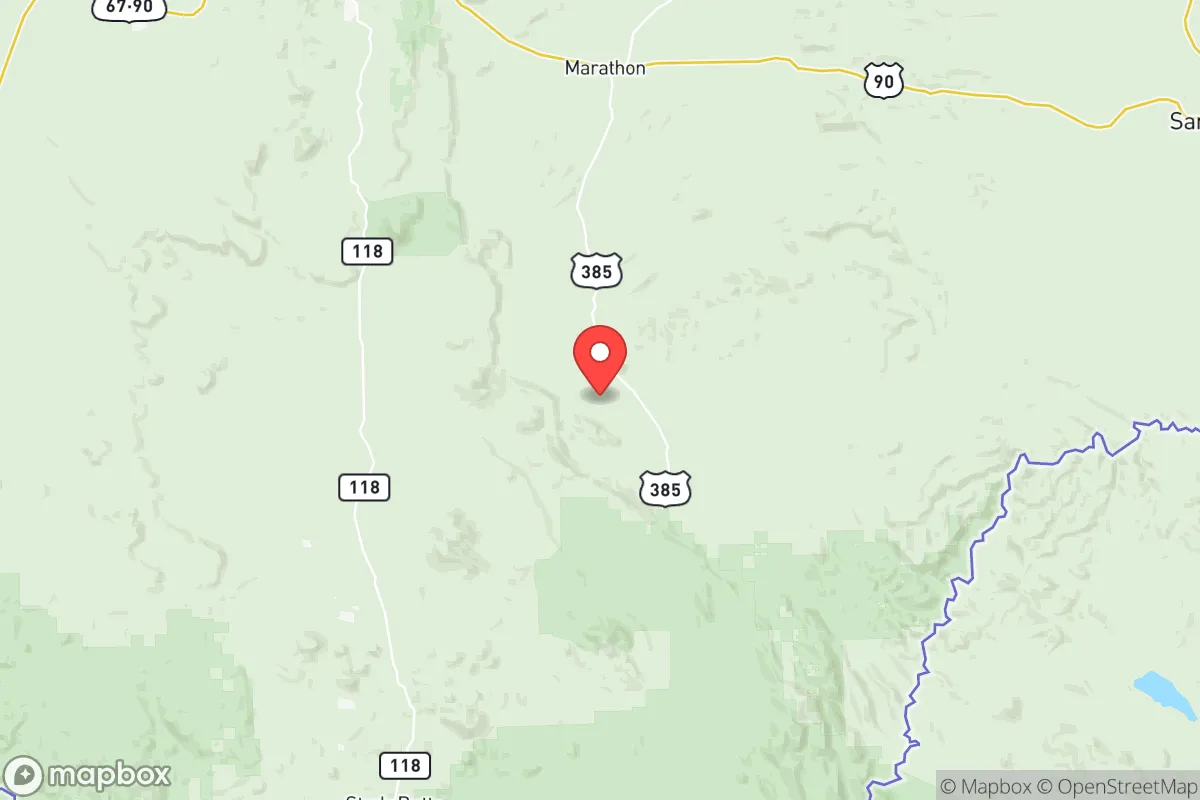
Photo: Wikipedia
Political ClimatePolitical Climate in Brewster County
Showing district-level results — no local-only data available.
Local Political AnalysisPolitical Analysis of Brewster County
Brewster County leans reliably Republican with a Cook PVI of R+7, but that number masks a more nuanced local reality than the straight party-line vote suggests. Over the past decade, the county has shifted slightly leftward as Alpine—home to Sul Ross State University and a growing creative class—has become a small blue island in a sea of red ranch country. Meanwhile, the Terlingua and Study Butte areas, with their quirky off-grid communities, often swing between libertarian-leaning independents and Democratic candidates, while Marathon and Lajitas remain deeply conservative. The overall trajectory is a slow purple-tinged drift, but don’t expect Brewster to flip anytime soon—the rural vote still carries the day.
How it compares
Texas as a whole has no official Cook PVI, but statewide elections typically lean Republican by a similar margin—roughly R+5 to R+8 in recent cycles. Brewster County’s R+7 puts it right in line with the state average, but the internal divisions are starker. In Alpine, precincts around the university campus often vote 60-40 Democratic, while precincts in the eastern ranchlands near Marathon can go 80-20 Republican. That’s a wider gap than you’d see in, say, Travis County (Austin) or Harris County (Houston), where the urban-rural split is more gradual. What makes Brewster distinct is the sheer size of the county—over 6,000 square miles—and the fact that its population of roughly 9,000 is spread thin. The political conversation here isn’t about suburbs vs. city; it’s about university town vs. cattle ranch vs. desert tourist hub. Compared to Texas, Brewster’s politics feel more personal and less driven by big-money media markets.
What this means for residents
For conservative residents, especially ranchers and retirees in Marathon or along the Rio Grande, the county’s red lean means local offices—county commissioner, sheriff, school board—tend to reflect traditional values on land use, taxes, and Second Amendment rights. You can still hunt on public land without much fuss, and property taxes are relatively low compared to urban Texas. For liberal residents, mainly in Alpine and parts of Terlingua, the R+7 tilt can feel frustrating during county-wide elections, but they’ve carved out real influence at the city level. Alpine’s city council has passed non-discrimination ordinances and supported renewable energy initiatives, and the local Democratic Party chapter is active. The practical reality is that both sides coexist without much open conflict—Brewster County is too sparsely populated for the kind of culture-war shouting matches you see in suburban Texas. People here tend to judge neighbors by their character, not their bumper stickers.
Culturally, Brewster County stands apart from much of Texas because of its fierce independent streak. The county was historically a Democratic stronghold until the 1980s, and that legacy of “Yellow Dog Democrat” ranchers still lingers in some families. Policy-wise, the biggest distinction is land use: Brewster County has no zoning in unincorporated areas, which means you can build a yurt in Terlingua without a permit, something unheard of in suburban Texas. That libertarian undercurrent—combined with a strong environmental conservation ethos around Big Bend National Park—creates a political climate that’s less about party labels and more about preserving the way of life. Whether you’re a conservative wanting to keep the government out of your ranch or a liberal wanting to protect the desert, you’ll find common ground here more often than not.

State Political ClimatePolitical Climate in Texas
State Political AnalysisPolitical Environment in the State
Texas remains a solidly Republican state at the statewide level — no Democrat has won a race for governor, lieutenant governor, or attorney general since 1994 — but the political ground beneath it has been shifting for two decades. The dominant coalition is still conservative, anchored by rural voters, evangelical Christians, and business interests, but fast-growing suburbs and a surging Hispanic electorate are slowly pulling the state toward competitiveness. Over the last 10–20 years, the GOP’s margins have narrowed in major metro counties while rural red counties have deepened, creating a political map that looks more like a checkerboard than a monolith. In 2024, Donald Trump carried Texas by about 13 points, down from 19 points in 2004, and Democrats now reliably win in Austin, El Paso, and parts of the Dallas–Fort Worth and Houston metros.
Urban vs. rural divide
The political map of Texas breaks cleanly along the urban–rural line. The state’s four biggest metros — Houston (Harris County), Dallas–Fort Worth (Dallas, Tarrant, Collin, Denton counties), San Antonio (Bexar County), and Austin (Travis County) — are now Democratic strongholds or competitive battlegrounds. Harris County, home to Houston, has voted Democratic in every presidential election since 2008, and Travis County (Austin) is one of the most liberal counties in the South. Meanwhile, rural West Texas and the Panhandle remain deep red: Lubbock (Lubbock County) gave Trump over 70% in 2024, and Midland and Odessa (Ector and Midland counties) are similarly lopsided. The most interesting shifts are in the suburbs: Collin County (north of Dallas) went from +27 Republican in 2012 to +9 in 2024, and Fort Bend County (southwest of Houston) flipped to Democratic in 2018 and has stayed there. The border city of El Paso has been reliably Democratic for decades, while Brownsville and the Rio Grande Valley are trending more Democratic but with significant conservative Hispanic crossover voters.
Policy environment
Texas’s policy environment is defined by a low-tax, low-regulation posture that appeals strongly to conservative relocators. There is no state income tax, and the state relies on property taxes and sales taxes to fund services. Property taxes are high — the effective rate is around 1.6% of home value, among the highest in the nation — but recent legislation (SB 2 in 2023) has compressed school district tax rates and increased the homestead exemption. The regulatory climate is business-friendly: no state-level minimum wage above the federal $7.25, right-to-work laws, and limited occupational licensing. Education policy has become a flashpoint: the state has expanded school choice through charter schools and a new education savings account program (HB 1 in 2023), while also passing laws restricting how race and gender are taught in public schools (HB 3979, SB 3). Healthcare policy is dominated by the state’s refusal to expand Medicaid under the ACA, leaving roughly 18% of adults uninsured — the highest rate in the country. Election laws were tightened in 2021 with SB 1, which restricted mail-in ballot access, banned drive-through voting, and gave partisan poll watchers more authority.
Recent policy direction
The last five years have seen Texas move decisively in a conservative direction on nearly every front a relocator might weigh. On gun and self-defense law, the state enacted permitless carry (HB 1927) in 2021, allowing most adults to carry a handgun without a license or training. On abortion and medical autonomy, Texas passed SB 8 in 2021, banning abortion after detection of a fetal heartbeat (around six weeks) and empowering private citizens to sue violators; after Dobbs, a trigger law (HB 1280) took effect banning nearly all abortions. On parental and education rights, the state passed HB 900 in 2023, requiring book vendors to rate materials for “sexually explicit” content, and SB 14 in 2023, banning gender-affirming medical care for minors. On speech and privacy, Texas has no comprehensive data privacy law, but it passed a biometric privacy law (CUBI) in 2023 and a law (HB 20) in 2021 that restricts social media platforms from moderating content based on viewpoint — a law currently tied up in court. On property rights, the state has strong eminent domain protections for landowners, but oil and gas mineral rights remain a dominant force, with the Railroad Commission overseeing drilling permits. On voting and ballot access, SB 1 (2021) added ID requirements for mail ballots, limited drop boxes, and banned 24-hour and drive-through voting — changes that disproportionately affect urban counties.
Civil unrest & political movements
Texas has seen its share of political flashpoints in recent years. The 2020 George Floyd protests in Austin and Dallas were among the largest in the country, leading to clashes with police and a subsequent backlash that helped fuel the 2021 election security law. The border has been a persistent flashpoint: Governor Greg Abbott launched Operation Lone Star in 2021, deploying state troopers and National Guard to the border, busing migrants to Democratic-led cities, and passing a law (SB 4 in 2023) that makes illegal entry a state crime — a law currently blocked by federal courts. The Texas Nationalist Movement, which advocates for secession, has gained some visibility but remains a fringe group with no serious political traction. Election integrity controversies have been loud but not substantiated: the state conducted a forensic audit of the 2020 election in four counties (Dallas, Harris, Tarrant, Collin) and found no evidence of widespread fraud. On the left, activist groups like the Texas Organizing Project and MOVE Texas have been active in voter registration and progressive advocacy, particularly in Houston and San Antonio. A new resident will notice the political polarization most visibly in yard signs, bumper stickers, and local news coverage — especially in the suburbs, where the culture war over education and LGBTQ rights is front and center.
Projection
Over the next 5–10 years, Texas is likely to remain Republican-controlled but with steadily narrowing margins. Demographic trends favor Democrats: the state’s Hispanic population, which leans Democratic but with a significant conservative minority, is growing rapidly, and in-migration from blue states (California, New York, Illinois) is bringing more moderate and liberal voters to suburbs like Frisco, McKinney, and Cedar Park. However, the GOP is also consolidating its base among rural and exurban voters, and the state’s gerrymandered congressional and legislative maps (drawn in 2021) will keep Republican majorities intact for most of the decade. The biggest wild card is turnout: if Hispanic and suburban voters continue to turn out at higher rates, Texas could become a true swing state by the early 2030s. For now, a relocator moving in should expect a conservative policy environment that is unlikely to change dramatically in the near term, but with significant local variation — living in Austin or El Paso will feel very different from living in Lubbock or Midland.
For a new resident, the bottom line is that Texas offers a low-tax, business-friendly environment with strong gun rights and a conservative social agenda, but the political reality varies enormously by location. If you lean conservative, you’ll find a welcoming policy climate statewide, especially in rural and exurban areas. If you lean liberal, you can still find like-minded communities in the major cities and inner suburbs, but you’ll be living under state laws that may conflict with your values — particularly on abortion, LGBTQ rights, and voting access. The smartest move is to choose your city or town carefully, because in Texas, the local political culture often matters more than the state’s overall lean.
* Values derived from national, state, county, city and local statistics and may differ in a specific area. Last updated: 2026-10-10T09:59:44.000Z
Narrative content on this page is AI-generated and may contain mistakes. Verify any details that matter before acting on them.
ReloMaps may earn a commission from affiliate links at no extra cost to you.

