Photo: Wikipedia
Political ClimatePolitical Climate in Aransas County
Showing district-level results — no local-only data available.
Local Political AnalysisPolitical Analysis of Aransas County
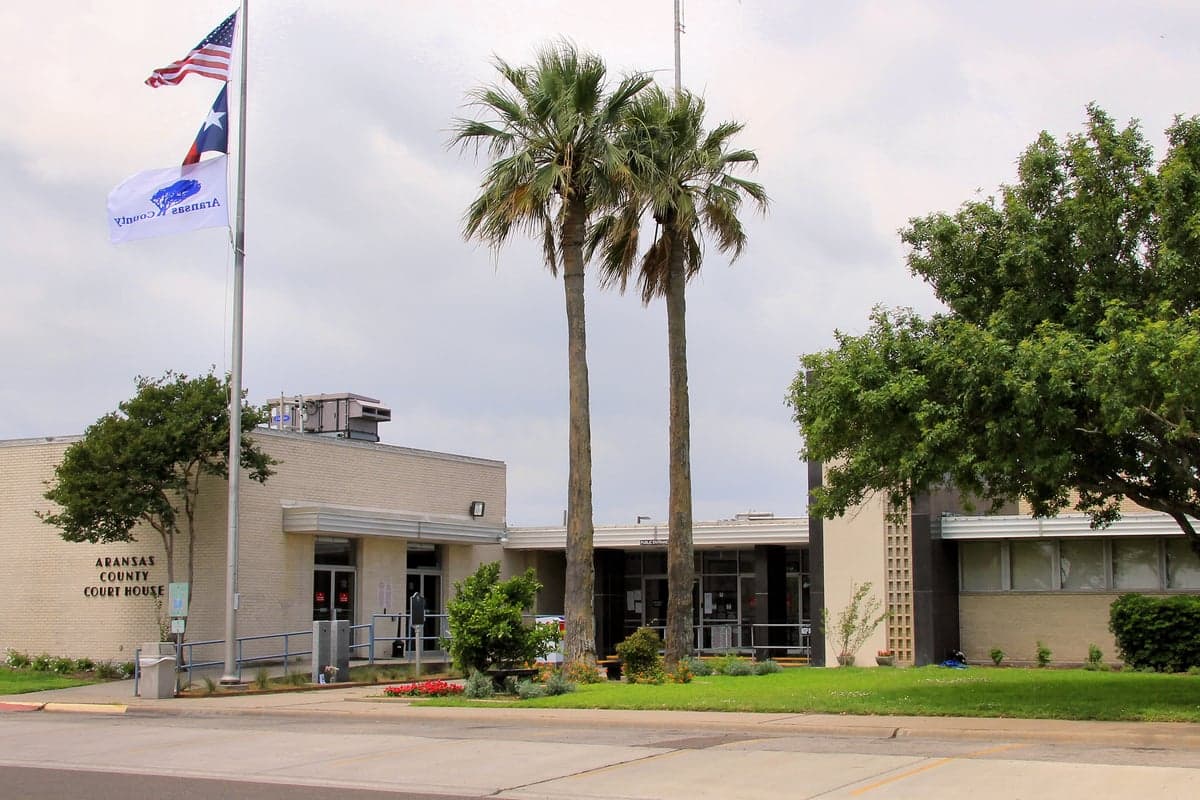
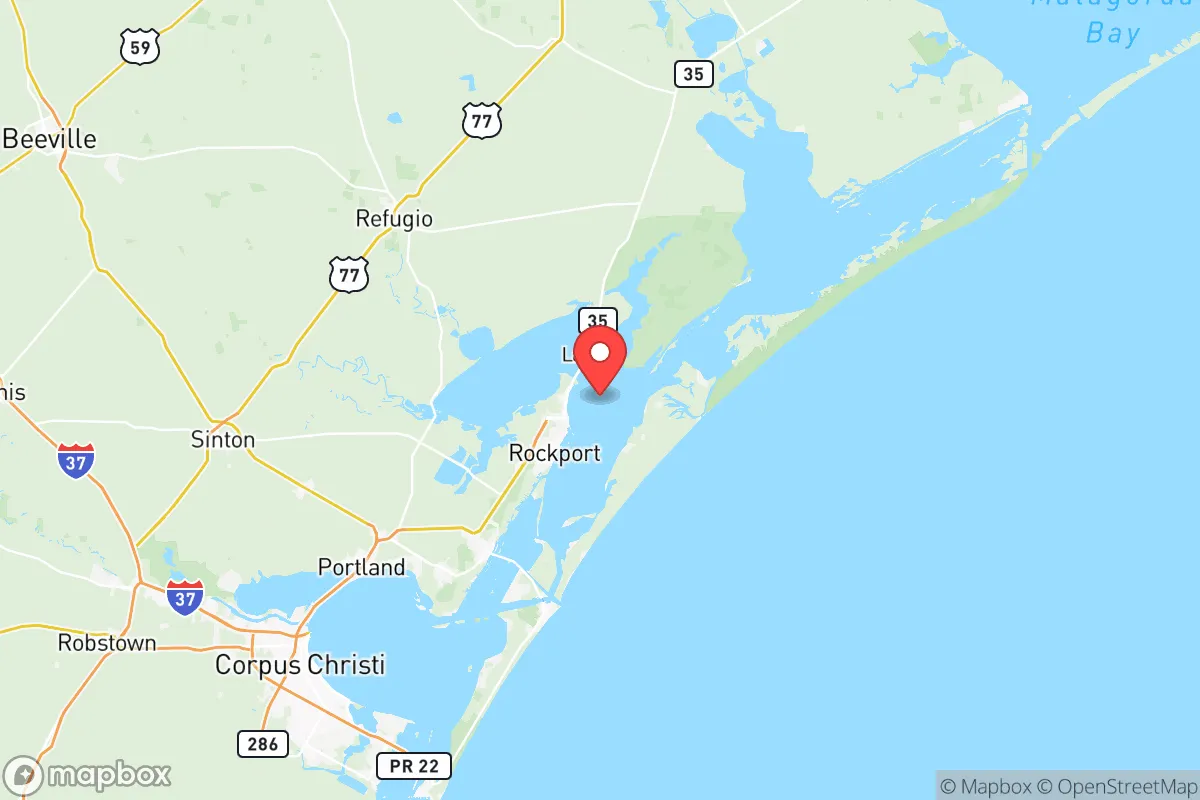
Aransas County, Texas, is a reliably Republican area with a Cook PVI of R+14, meaning it votes about 14 points more Republican than the national average. This coastal county, anchored by the town of Rockport and including smaller communities like Fulton and Lamar, has long leaned red, but the political landscape isn't entirely uniform. While Rockport itself tends to be the most conservative stronghold, you'll find a few more moderate pockets in the unincorporated areas near the Aransas National Wildlife Refuge and along the waterfront, where seasonal residents and retirees from more liberal states sometimes tip precincts slightly left. Overall, though, the county has been trending even more Republican in recent cycles, driven by population growth among conservative-leaning retirees and a strong local culture around fishing, hunting, and property rights.
How it compares
Compared to the state of Texas as a whole, Aransas County is significantly more conservative. Texas overall has a Cook PVI of R+5, so Aransas County's R+14 rating places it about 9 points to the right of the state average. In practice, this means that while Texas has become more competitive in recent presidential elections—with Democrats making gains in suburbs like those around Houston, Dallas, and Austin—Aransas County has moved in the opposite direction. For example, in 2020, Donald Trump won the county with about 70% of the vote, while he won Texas statewide with 52%. The gap is even starker in local races: Republicans here often run unopposed for county commissioner or constable, a rarity in more competitive parts of the state. The county's political DNA is closer to rural East Texas or the Panhandle than to the fast-growing, diversifying suburbs that are reshaping Texas politics.
What this means for residents
For conservative residents, Aransas County offers a deeply comfortable political environment. Local government, from the county judge to the school board, is dominated by Republicans, and policy debates tend to center on issues like hurricane preparedness, infrastructure, and property taxes rather than partisan flashpoints. You'll find strong support for Second Amendment rights and limited regulation, especially around coastal development and fishing. For liberal residents, the reality is more isolating. While there are active Democratic clubs in Rockport and Fulton, they are small and often struggle to recruit candidates for local office. Socially, progressive views on issues like climate change or LGBTQ+ rights are rarely voiced in public forums, and many liberal residents describe a "live and let live" approach—keeping political opinions private to avoid friction with neighbors. The county's small population (around 25,000) means that political disagreements can feel personal, but most people prioritize community ties over party lines, especially during hurricane season when everyone bands together.
Culturally, Aransas County's politics are deeply tied to its economy and geography. The county is a major hub for commercial and recreational fishing, and debates over water rights, coastal erosion, and oil-and-gas exploration often dominate local elections. Unlike in urban Texas, where social issues like abortion or immigration can be front and center, here the conversation is more likely to be about the price of shrimp or the condition of the jetties. This practical, issue-driven focus means that even in a heavily Republican area, there's room for independent-minded voters who prioritize the coast's health over party loyalty. Looking ahead, the county's political trajectory seems set to stay red, but with a growing number of retirees from blue states moving in, you might see a slow shift toward more moderate Republicanism—or at least a few more contested primaries in the next decade.

State Political ClimatePolitical Climate in Texas
State Political AnalysisPolitical Environment in the State
Texas has been a reliably Republican state for the past three decades, but the nature of that dominance is shifting. The GOP holds every statewide office and both chambers of the legislature, and the state hasn’t voted for a Democratic presidential candidate since 1976. However, the margin of victory has narrowed from 16 points in 2012 to 9 points in 2016 and just under 6 points in 2020, driven by explosive growth in the suburbs of Houston, Dallas, and Austin. The state is not flipping blue anytime soon, but the old solid-red coalition of rural conservatives and suburban moderates is fracturing, creating a more volatile and interesting political landscape.
Urban vs. rural divide
The political map of Texas is a story of three distinct zones. The big metros—Houston, Dallas-Fort Worth, San Antonio, and Austin—are the engines of Democratic growth. Harris County (Houston) and Dallas County now vote reliably blue, while Tarrant County (Fort Worth), a GOP stronghold for decades, flipped to Biden in 2020 by less than 2,000 votes. Austin’s Travis County is the bluest urban core in the South, routinely giving Democrats 70%+ of the vote. Meanwhile, the vast rural expanse—the Panhandle around Lubbock, East Texas piney woods, and the South Texas brush country—remains deeply Republican. The suburbs are the battleground: places like Collin County (north of Dallas) and Williamson County (north of Austin) were once GOP lockboxes but are now competitive, with educated, affluent voters shifting left on social issues while still favoring low taxes. The result is a state where a Republican can win statewide by 10 points while losing the three largest counties by a combined 1.5 million votes.
Policy environment
Texas’s policy environment is defined by its absence of a state income tax, a regulatory posture that favors business, and a deeply conservative social framework. Property taxes are high—among the top 10 in the nation—to compensate for no income tax, and the state relies heavily on sales tax and fees. Education policy is decentralized: local school districts control curriculum, but the state has passed laws restricting how race and gender are taught (HB 3979 in 2021, later SB 3 in 2023). Healthcare is a patchwork: Texas has the highest uninsured rate in the country (around 17% as of 2024) because it refused Medicaid expansion under the ACA. Election laws have tightened: SB 1 (2021) added ID requirements for mail ballots, limited drive-through and 24-hour voting, and gave partisan poll watchers more access. Gun laws are among the most permissive in the nation: permitless carry (HB 1927, 2021) allows most adults to carry a handgun without a license, and there is no red-flag law. Abortion is effectively banned after six weeks (SB 8, 2021) and completely outlawed after the Dobbs decision triggered a pre-1970s-era ban, with no exceptions for rape or incest.
Recent policy direction
The last five years have seen Texas lurch further right on cultural and liberty issues, even as the economy booms. On gun and self-defense law, the 2021 permitless carry law was followed by a 2023 law (HB 1900) raising the age to purchase certain rifles from 18 to 21, a rare restriction. On parental and education rights, the state passed a school voucher-like program in 2023 (HB 3) creating education savings accounts, and a 2023 law (SB 17) banned diversity, equity, and inclusion offices at public universities. On speech and privacy, a 2023 law (HB 20) requires social media platforms to disclose content moderation policies, while a 2024 law (SB 4) makes illegal entry a state crime, effectively creating a state-level immigration enforcement system. On medical and bodily autonomy, the abortion ban is total, but the state did expand postpartum Medicaid coverage from two months to 12 months in 2023. On property rights, eminent domain reform remains a perennial issue, but no major changes have passed. On taxation, the 2023 session saw a $18 billion property tax cut package (SB 2 and SB 3), the largest in state history, funded by a budget surplus. On voting and ballot access, the trend is toward restriction: the 2021 law reduced early voting hours and banned 24-hour voting, but turnout actually increased in 2022 and 2024, suggesting the effects are more about partisan signaling than suppression.
Civil unrest & political movements
Texas has a long history of political activism from both sides. The 2020 Black Lives Matter protests in Austin were among the largest in the country, leading to a short-lived city council defund-the-police vote that was later reversed. The 2021 winter storm blackouts sparked grassroots anger that briefly energized a third-party movement, but it fizzled. Immigration politics are a constant flashpoint: Governor Abbott’s Operation Lone Star (2021-present) has bused over 100,000 migrants to Democratic-led cities, and the state’s 2024 law (SB 4) allowing state police to arrest suspected illegal crossers is being challenged in court. Secession rhetoric, once fringe, has entered the mainstream: the Texas Nationalist Movement claims 500,000+ supporters, though no serious political figure endorses it. Election integrity controversies peaked in 2020-2022, with the state GOP calling for an audit of the 2020 results in four counties, which found no significant irregularities. A new resident would notice the ubiquity of political signage, the frequency of “Keep Texas Red” vs. “Texas is a Battleground” yard signs, and the fact that local news covers the border as a top-tier issue year-round.
Projection
Over the next 5-10 years, Texas will likely remain Republican at the state level but become more competitive in presidential and Senate races. The key demographic driver is in-migration: the state adds roughly 1,000 new residents per day, many from California and the Northeast, and they tend to be younger, more diverse, and more moderate-to-liberal than the native population. The suburbs of Fort Worth, Katy, and Frisco will continue to shift left, while rural areas will become even more Republican. The state’s Hispanic population, long assumed to be a Democratic voting bloc, is splitting: South Texas counties like Zapata and Starr shifted 20+ points toward Trump between 2016 and 2020. The legislature will likely remain under GOP control through 2030 due to gerrymandering, but the margin will shrink. A new resident moving in now should expect a state where the culture wars are constant, the economy is hot, and the political identity is in flux—but where the fundamental conservative tilt on taxes, guns, and regulation is unlikely to change.
For a new resident, the practical takeaway is that Texas offers a high degree of personal freedom in some areas (low taxes, loose gun laws, minimal zoning) and tight restrictions in others (abortion, voting, immigration enforcement). Your experience will depend heavily on where you land: Austin feels like a blue island in a red state, Houston is a purple melting pot, and Lubbock is as conservative as it gets. The political climate is loud, but for most people, daily life is unaffected by the partisan noise—unless you work in education, healthcare, or local government, where the policy battles are real and ongoing. If you value low taxes and a business-friendly environment, you’ll feel at home. If you prioritize social services and progressive governance, you’ll need to pick your city carefully and accept that state law will override local preferences on many issues.
* Values derived from national, state, county, city and local statistics and may differ in a specific area. Last updated: 2026-10-16T15:12:52.000Z
Narrative content on this page is AI-generated and may contain mistakes. Verify any details that matter before acting on them.
ReloMaps may earn a commission from affiliate links at no extra cost to you.

