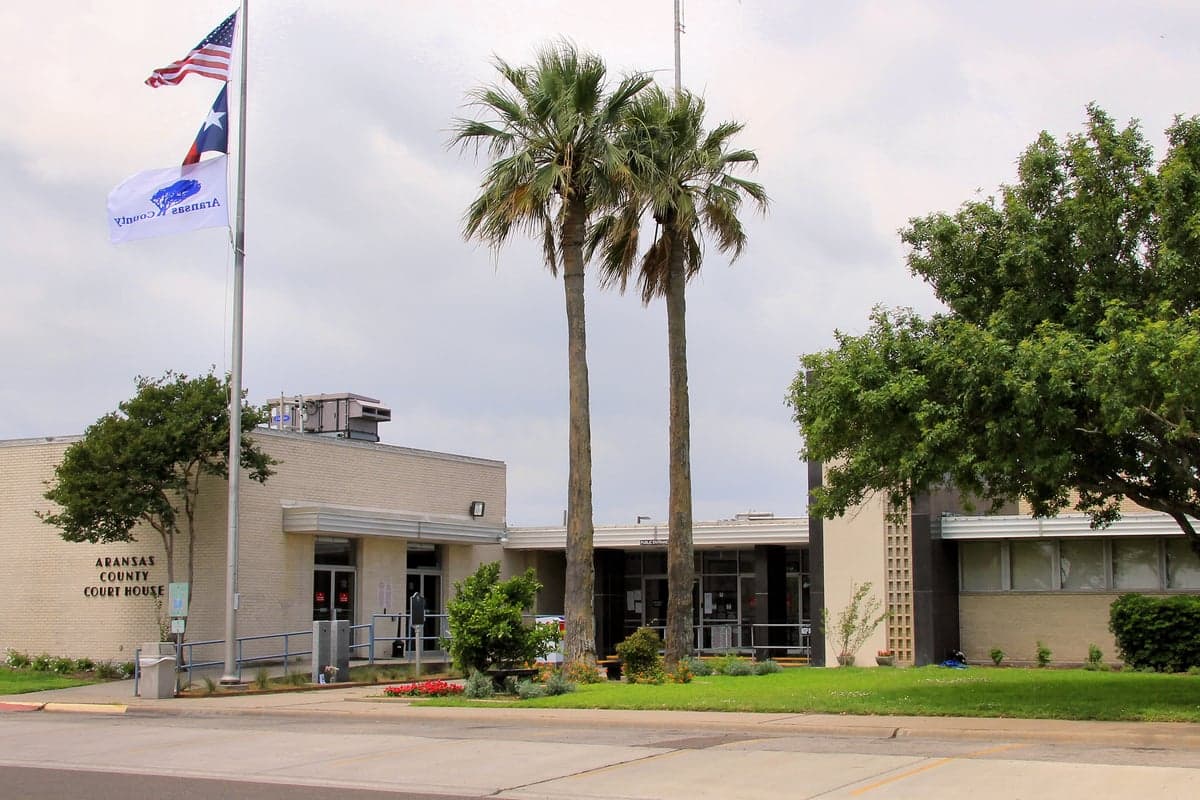
Photo: Wikipedia
Demographics of Aransas County
Affluence Level in Aransas County
A middle-class area roughly in line with national averages across income, home values, education, and employment.
People of Aransas County
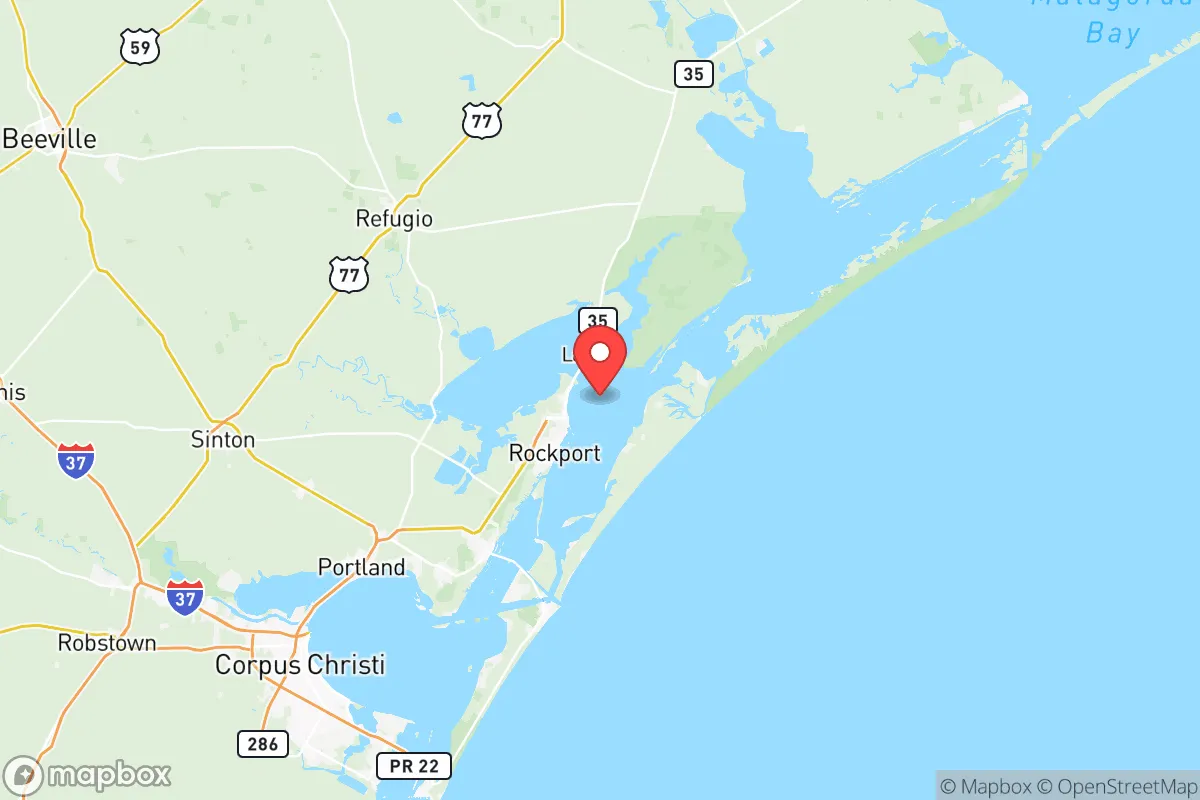
Today, Aransas County is home to roughly 24,449 residents, a population defined by its coastal identity, a strong Anglo and Hispanic heritage, and a notably low foreign-born share of just 0.9%. The county’s character is shaped by the twin anchors of Rockport and Fulton, with smaller communities like Lamar and Holiday Beach contributing to a spread-out, small-town feel. Distinctive markers include a deep reliance on tourism, fishing, and winter Texan migration, alongside a population that is 67.6% White and 26.8% Hispanic, with very small Black (1.1%) and East/Southeast Asian (1.1%) communities. This is a place where the past is never far from the surface, from ancient shell middens to the remnants of 19th-century cotton ports.
Settlement & growth (pre-1960)
Long before European contact, the area now known as Aransas County was home to the Karankawa people, a nomadic coastal tribe who left behind extensive shell middens along the bays and barrier islands. Their seasonal camps, particularly around what is now Rockport and the Aransas National Wildlife Refuge, were sustained by fishing, shellfish, and hunting. Spanish explorers, including Álvar Núñez Cabeza de Vaca, likely passed through in the 1530s, but no permanent Spanish settlement took root here. The region remained a sparsely visited frontier through the Mexican and early Republic of Texas periods.
Permanent American settlement began in earnest after the Texas Revolution, driven by land grants and the promise of coastal commerce. The first major Anglo wave arrived in the 1840s and 1850s, primarily from the U.S. South—Tennessee, Kentucky, and the Deep South. These settlers were drawn by the fertile coastal prairies for cattle ranching and the deep-water access of Aransas Bay for shipping cotton and cattle. The town of Rockport was founded in 1867 as a railhead and port, quickly becoming the county’s commercial hub. Nearby Fulton, established slightly earlier, grew as a fishing and shipbuilding center. The 1850s also saw a small but significant influx of German and Czech immigrants, who farmed the inland areas around Lamar and Bayside, leaving a lasting architectural and cultural imprint in the form of stone farmhouses and Lutheran churches.
After the Civil War, the economy shifted from cotton to cattle and fishing. The arrival of the railroad in the 1880s solidified Rockport’s role as a shipping point for cattle and seafood. The population remained overwhelmingly Anglo-American through the early 20th century, with a small Mexican-origin population working in fishing, ranching, and railroad labor. The Dust Bowl and Great Depression of the 1930s brought a modest wave of displaced farmers from Oklahoma and North Texas, but Aransas County never saw the massive influx that transformed other parts of Texas. By 1950, the county’s population was still under 5,000, a reflection of its isolation and limited industrial base.
Modern era (post-1965)
The post-1965 era brought two major demographic forces to Aransas County: the rise of coastal tourism and the growth of the Hispanic population. The 1965 Hart-Cellar Act had a minimal direct effect here—the foreign-born share remains negligible at 0.9%—but the broader national trend of Hispanic population growth reshaped the county. The Hispanic share, which was likely under 10% in 1960, rose steadily through natural increase and domestic migration from South Texas. Today, 26.8% of residents identify as Hispanic or Latino, with many families tracing their roots to the Rio Grande Valley and northern Mexico. This community is concentrated in Rockport’s older neighborhoods and in the unincorporated areas around Fulton and Holiday Beach, where many work in construction, hospitality, and commercial fishing.
The most transformative domestic migration wave began in the 1970s and accelerated through the 1990s: the arrival of “Winter Texans”—retirees from the Midwest, Canada, and the Upper Midwest who spend months in the mild coastal climate. This seasonal influx, which can double the county’s population in peak months, has driven much of the housing development in Rockport Beach, Key Allegro, and the gated communities along the bay. The permanent population also grew as some Winter Texans became full-time residents, contributing to the county’s older median age and its relatively high share of college-educated residents (27.6%).
Suburbanization has been modest compared to Texas’s big metro areas. The county remains rural and coastal, with no large cities. Rockport and Fulton have grown together into a continuous strip of development along Highway 35, but the interior—places like Copano Village and Estes—remains sparsely populated ranchland. The Black population, at 1.1%, is a small remnant of a larger post-Reconstruction community that worked in fishing and railroading; most left during the Great Migration. The East/Southeast Asian population (1.1%) is a recent addition, primarily Vietnamese and Filipino families drawn to the fishing industry and hospitality work, with a small cluster in Rockport.
The future
Aransas County is projected to grow slowly but steadily, with the population likely reaching 28,000–30,000 by 2040. The Hispanic share will continue to rise, potentially approaching 35–40%, driven by higher birth rates and continued migration from South Texas. This will make the county more bilingual and culturally diverse, though the Anglo majority will remain dominant. The foreign-born share is expected to remain low, as the county lacks the industrial or agricultural jobs that attract large immigrant populations.
New development will concentrate along the Highway 35 corridor between Rockport and Fulton, with infill in existing subdivisions rather than new master-planned communities. The Winter Texan demographic will gradually shrink as the Baby Boom generation ages, but the county’s appeal as a retirement destination for younger Gen X and older Millennials—seeking lower costs and coastal access—may offset this. The cultural identity will likely evolve from a “fishing village with retirees” to a more diverse, year-round coastal community, though it will remain politically conservative and family-oriented. The biggest wildcard is climate change: rising sea levels and hurricane risk (notably from Hurricane Harvey in 2017) could slow growth or shift development inland toward Bayside and Lamar.
For someone moving in now, Aransas County offers a stable, slow-growing community with a strong sense of place, low crime, and deep ties to the coast. The population is becoming more Hispanic and slightly more diverse, but the core identity—conservative, outdoors-oriented, and rooted in fishing and tourism—will persist. The key question for newcomers is not whether the county will change, but how it will balance growth with the preservation of its small-town, coastal character.

* Values derived from national, state, county, city and local statistics and may differ in a specific area. Last updated: 2026-10-16T15:12:52.000Z
Narrative content on this page is AI-generated and may contain mistakes. Verify any details that matter before acting on them.
ReloMaps may earn a commission from affiliate links at no extra cost to you.

