Photo: Wikipedia
Political ClimatePolitical Climate in Terra Bella, CA
District shown is the primary district for this city’s centroid. Cities may span multiple districts.
Local Political AnalysisPolitical Analysis of Terra Bella, CA
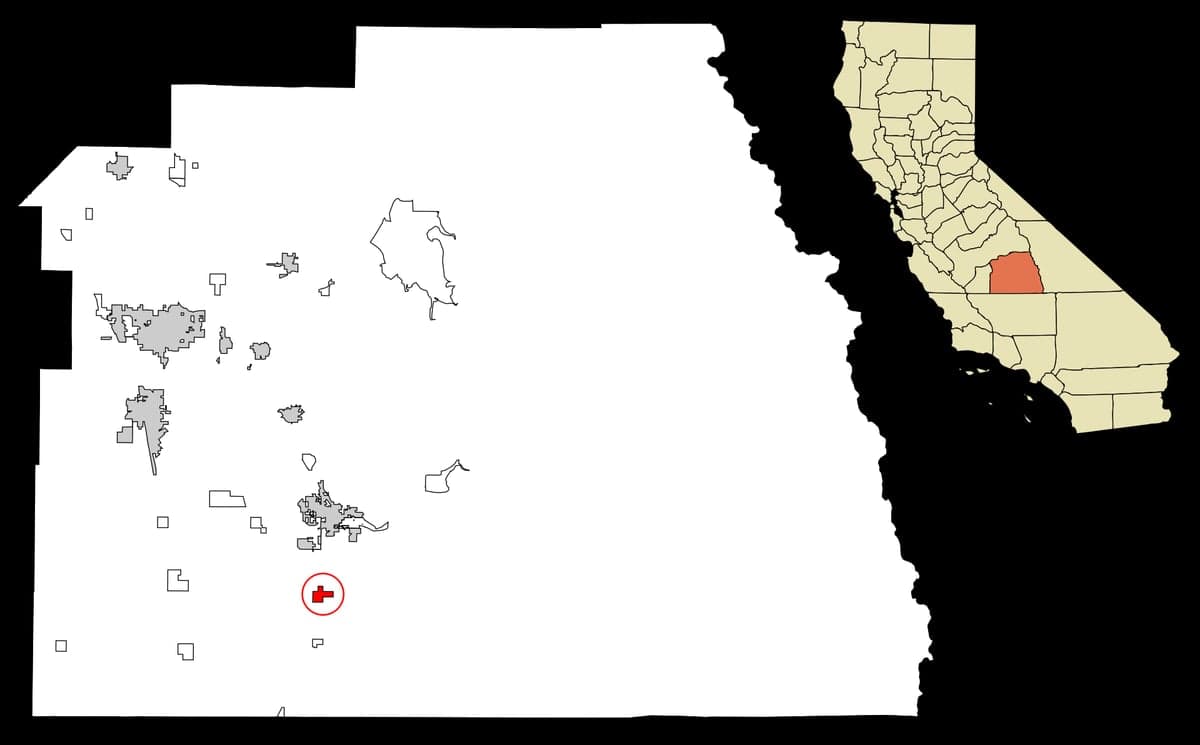
Terra Bella, a small unincorporated community in Tulare County, leans slightly Republican with a Cook Partisan Voting Index (PVI) of R+1, making it a rare red-leaning pocket in deep-blue California. This isn't a fire-breathing conservative stronghold—it's more of a quiet, working-class area where folks vote their wallets and their way of life, not party talking points. Over the past decade, the shift has been subtle but real: as the Central Valley's agricultural economy has tightened and housing costs have soared, more residents have drifted toward the GOP, though the area still sees plenty of split-ticket voting, especially in local races.
How it compares
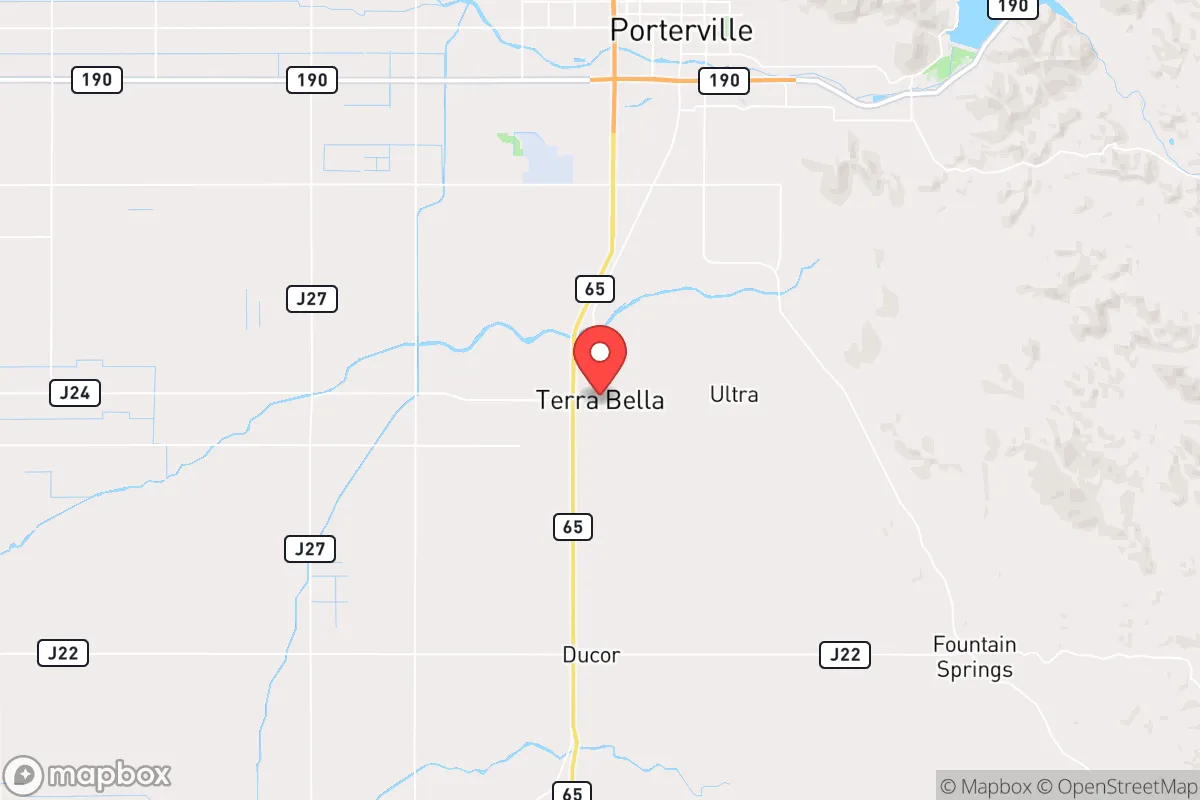
Compared to California as a whole—which has a Cook PVI of D+13 and is one of the most reliably Democratic states in the country—Terra Bella is a political outlier. The contrast is stark when you look at nearby cities: Porterville, just 10 miles south, is also R+1, but Visalia, 20 miles north, leans R+4, while Bakersfield, 50 miles south, is R+8. On the flip side, Fresno, 40 miles northwest, is D+5, and Los Angeles, 150 miles south, is D+28. So Terra Bella sits in a band of Central Valley communities that are redder than the state but not as deep red as the far southern San Joaquin Valley. The real divide isn't between Terra Bella and California—it's between Terra Bella and the coastal metros. A resident here might feel politically invisible in Sacramento or San Francisco, but among neighbors, the R+1 lean means conservative views on water rights, farming regulations, and gun ownership are common, while progressive stances on climate policy or social issues are less vocal.
What this means for residents
For conservative residents, the R+1 lean means their vote actually counts more here than in a deep-blue district—local elections for county supervisor or school board can swing on a few hundred votes. They'll find their views on property taxes and agricultural water use reflected in local policy, but they'll still be outnumbered in statewide elections, so they learn to live with California's progressive laws on everything from emissions to labor. For liberal residents, it's a different story: they're a minority, but not a tiny one. They can find like-minded folks in Porterville or Visalia, and they'll notice that the local Democratic Party is more moderate than its coastal counterpart—focused on farmworker rights and affordable housing, not identity politics. Both sides share a common frustration: the feeling that Sacramento doesn't understand life in a small farm town. That shared grievance often makes local politics less about left vs. right and more about "us vs. the state."
Culturally, Terra Bella is distinct from California's urban centers in ways that go beyond voting. Water is the real political issue here—not abortion or immigration. The community's economy is built on citrus, olives, and almonds, so debates over groundwater pumping and drought management dominate local conversation. You'll hear more talk about the Friant-Kern Canal than about presidential politics. Gun ownership is common across the political spectrum, and church attendance is high, even among Democrats. The area's large Latino population—over 80%—means that many conservative voters are also Spanish-speaking and Catholic, a demographic that doesn't fit the national GOP stereotype. In practice, this creates a political climate that's less ideological and more pragmatic: people vote for whoever they think will keep the water flowing and the schools open, regardless of party label. It's a place where a Republican can support a Democrat for county supervisor if that person promises to fix a pothole, and where a Democrat can vote for a Republican for state assembly if that person fights for farmers. That's the real Terra Bella—a community where politics is personal, not partisan.

State Political ClimatePolitical Climate in California
State Political AnalysisPolitical Environment in the State
California is a solidly Democratic state, with Democrats holding every statewide office and a supermajority in the state legislature, but the political reality is far more layered than the raw registration numbers suggest. The state’s 54 electoral votes have gone to the Democratic nominee in every presidential election since 1992, and the margin has actually widened over the last two cycles—Joe Biden won by 29 points in 2020, and Kamala Harris carried it by roughly 20 points in 2024. That said, the state has a massive and politically diverse geography, and the "California" you experience in San Francisco or Los Angeles is a completely different place than the one in Bakersfield or Redding.
Urban vs. rural divide
The political map of California is essentially a tale of coastal metros versus the inland interior. The Bay Area—San Francisco, Oakland, San Jose—and the Los Angeles-Orange County corridor are the Democratic engines, producing margins that dwarf the rest of the state combined. Los Angeles County alone casts about a quarter of all votes in the state, and it reliably delivers 70%+ Democratic margins. San Francisco and Alameda County are even more lopsided, often pushing 85% Democratic. These metros are the reason the state’s overall lean is so deep blue.
But drive east over the Tehachapi Mountains and the picture flips hard. The Central Valley—Fresno, Bakersfield, Modesto—is culturally and politically closer to Oklahoma or Texas than to coastal California. These are agricultural and oil-producing regions with strong union roots that have drifted Republican over the past two decades. The state’s rural north, including Redding, Chico, and the far-northern counties like Siskiyou and Modoc, is deeply conservative, with many precincts voting 70-80% Republican. Even in the suburbs, the divide is stark: Orange County, once a Republican stronghold, flipped to Biden in 2020 and has stayed Democratic, while inland Riverside and San Bernardino counties are competitive but trending right. The takeaway for a relocator is simple: your political experience in California depends almost entirely on which of these Californias you choose to live in.
Policy environment
California’s policy environment is the most progressive in the nation, and it’s codified in the state constitution and statute in ways that are hard to unwind. The state has a progressive income tax with a top marginal rate of 13.3%—the highest in the country—and a 7.25% base sales tax that local jurisdictions can and do pile on top of. Property taxes, however, are capped at 1% of assessed value with a 2% annual increase limit under Proposition 13, which is a genuine relief for long-term homeowners but creates a weird patchwork where new buyers pay far more than their neighbors. The regulatory environment is dense: California has its own environmental review process (CEQA) that can delay projects for years, strict labor laws including a $20 minimum wage for fast-food workers, and a statewide mandate for electric vehicles by 2035.
On social policy, California is a national leader in abortion access, gender-affirming care, and immigrant protections. It’s a sanctuary state, meaning local law enforcement is barred from cooperating with federal immigration authorities in most circumstances. Election law is expansive: same-day voter registration, automatic voter registration via the DMV, and universal mail-in ballots sent to every registered voter. For a conservative relocator, the tax burden and regulatory climate are the biggest practical hurdles; for a liberal relocator, the state’s social safety net and civil rights protections are the draw.
Recent policy direction
The last five years have seen California double down on its progressive identity while also grappling with some notable voter pushback. On guns, the state has some of the strictest laws in the nation—an assault weapons ban, a 10-day waiting period, and a 2023 law (SB 2) that bans carrying concealed firearms in most public places, which is currently tied up in federal court. On education, the state passed a law in 2024 requiring schools to notify parents if a student requests a gender identity change, a reversal of earlier policy that had kept such information confidential—a sign that even deep-blue California is feeling the parental rights movement. On property rights, the state has been aggressively building housing, with a 2023 law (SB 423) that streamlines approval for housing projects in San Francisco and other metros, overriding local zoning in some cases.
On taxes, voters rejected a 2020 ballot measure (Prop 15) that would have raised commercial property taxes, a rare defeat for the progressive coalition. On crime, the state has partially walked back its 2014 Proposition 47, which downgraded many drug and property felonies to misdemeanors; a 2024 ballot measure (Prop 36) reclassified some theft and drug offenses as felonies, reflecting public frustration with retail theft and homelessness. On privacy, the California Privacy Rights Act (CPRA) gives residents strong data protections. On voting, the state has expanded access to the point where it’s arguably the easiest state in the nation to cast a ballot. The direction is clear: California is not moderating, but it is responding to visible failures—homelessness, crime, housing costs—with targeted adjustments.
Civil unrest & political movements
California has a long and visible history of political protest, and it remains a flashpoint for national movements. The 2020 George Floyd protests were massive in Los Angeles, Oakland, and Sacramento, with property damage and looting in some areas. The state also saw sustained pro-Palestinian encampments on university campuses in 2024, particularly at UCLA and UC Berkeley, which led to police crackdowns and legislative hearings. On the right, the state has a smaller but active conservative movement centered in the Central Valley and rural north; the "State of Jefferson" secession movement, which wants to split the northern counties and parts of southern Oregon into a new state, remains a symbolic but persistent force. The 2021 recall attempt against Governor Gavin Newsom failed by a 24-point margin, but it did draw national attention and revealed that roughly 40% of the state’s voters were willing to oust him.
Immigration politics are a constant undercurrent. Sanctuary policies mean that undocumented immigrants can drive, work, and access state services without fear of local deportation, but federal ICE raids still occur, and the tension between state and federal enforcement is a live issue. Election integrity controversies are less pronounced than in swing states, but the 2020 and 2024 cycles saw scattered claims of mail-in ballot fraud, mostly from rural counties, with no evidence of widespread issues. A new resident will notice the visible homelessness crisis in every major city, the frequent protests in urban centers, and the stark cultural divide between coastal and inland communities.
Projection
Over the next five to ten years, California’s political trajectory is likely to remain deeply Democratic, but the margins may narrow slightly as the state’s population continues to shift inland. The state lost a congressional seat after the 2020 census, and net domestic out-migration has been negative for over a decade, with most leavers heading to Texas, Arizona, and Nevada. Those leaving tend to be middle-income families and conservatives, while international immigration and high birth rates in immigrant communities keep the overall population stable. The Central Valley is growing faster than the coast, which will make the state’s internal politics more contested even as the statewide lean stays blue. The housing crisis is the wildcard: if the state’s new building laws actually produce significant supply, it could slow out-migration and keep the coastal metros dominant; if not, the inland shift accelerates.
For a conservative moving in, expect to be in a permanent minority at the state level, but with real local power in many counties. For a liberal moving in, expect the state to continue pushing progressive policy, but with increasing friction from voters on crime, homelessness, and cost of living. The state’s fiscal situation is a looming issue—the 2024-25 budget had a $27 billion deficit, and the state’s reliance on capital gains taxes from a volatile tech economy makes boom-and-bust cycles likely.
For a new resident, the bottom line is that California is not a place you move to for political comfort—it’s a place you move to for economic opportunity, climate, or family, and you accept the political landscape as part of the package. If you’re conservative, you can find like-minded communities in places like Temecula, Clovis, or Rocklin, but you’ll be living under state laws you likely oppose. If you’re liberal, you’ll find the state broadly aligned with your values, but you’ll also pay for it in taxes and cost of living. The state is not going to flip, and it’s not going to moderate; it’s going to keep being California, for better or worse, and the smartest move is to understand exactly which California you’re choosing before you sign the lease.
* Values derived from national, state, county, city and local statistics and may differ in a specific area. Last updated: 2026-10-21T10:05:32.000Z
Narrative content on this page is AI-generated and may contain mistakes. Verify any details that matter before acting on them.
ReloMaps may earn a commission from affiliate links at no extra cost to you.

