Photo: Wikipedia
Demographics of Terra Bella, CA
Affluence Level in Terra Bella, CA
A below-average socioeconomic profile. Incomes, home values, and educational attainment trail the U.S., with higher poverty and unemployment.
People of Terra Bella, CA
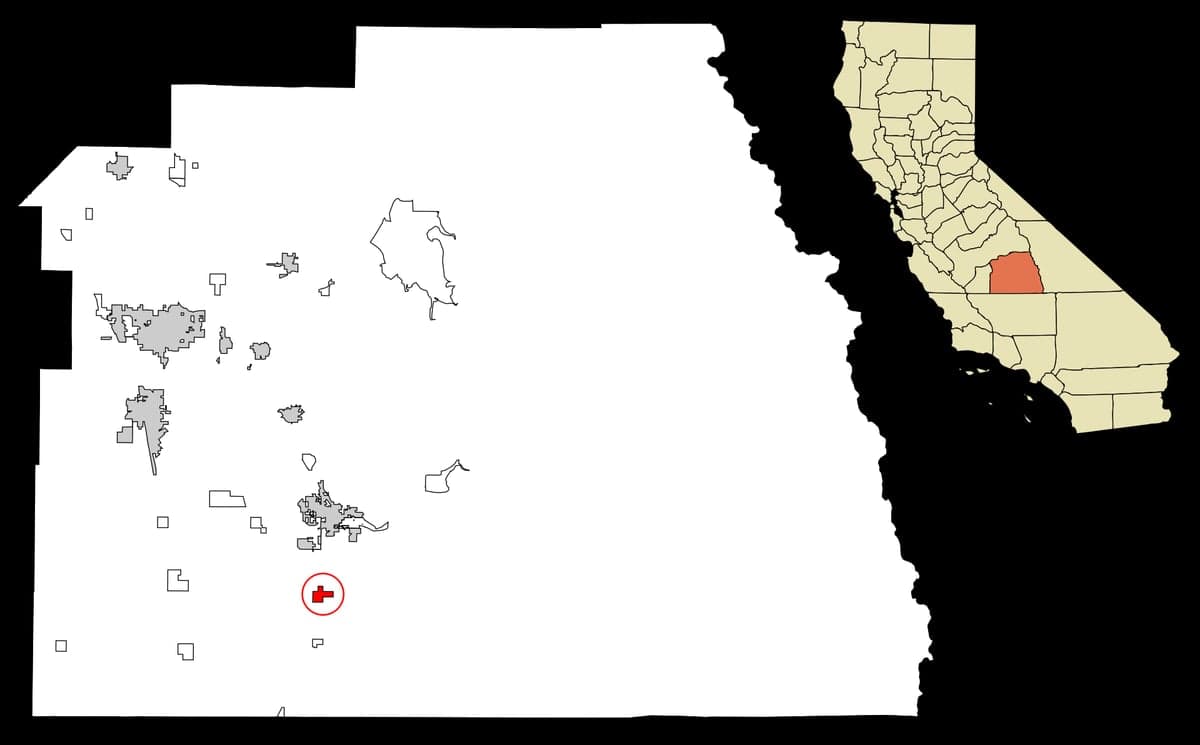
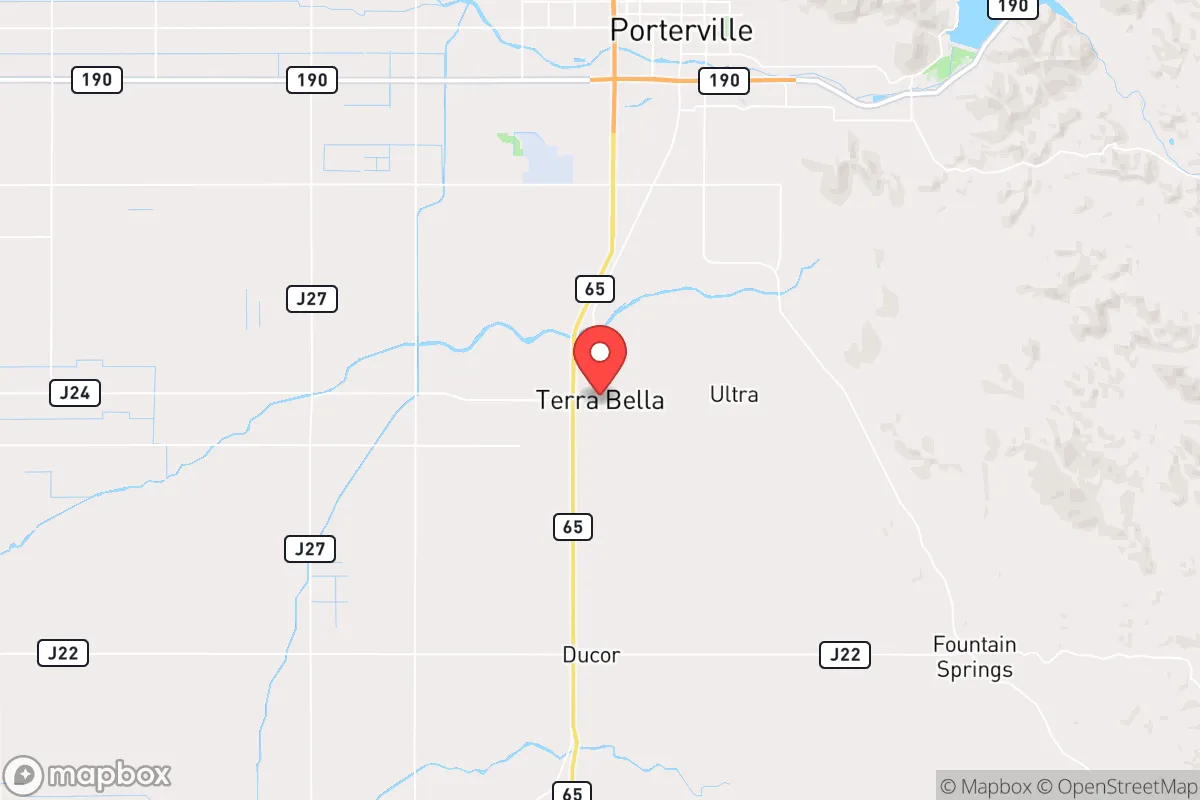
Terra Bella, California, is a small, unincorporated community in Tulare County with a population of roughly 1,658, characterized by a dense, family-oriented, and overwhelmingly Hispanic identity. The community is 84.5% Hispanic, with a very small White non-Hispanic population of 12.5% and a foreign-born share of 30.4%, indicating a strong immigrant-rooted character. Distinctive markers include a low college education rate of 3.1% and a tight-knit, rural feel centered on agriculture, with a population that is both deeply rooted and economically tied to the land.
How the city was settled and grew
Terra Bella’s human history is not one of colonial-era founding but of agricultural labor migration. The area was originally part of the vast Rancho Tule River land grant, but its modern settlement began in the late 19th and early 20th centuries as large-scale irrigated farming—especially citrus, olives, and cotton—took hold in the southern San Joaquin Valley. The first significant wave of settlers were Anglo-American homesteaders and small farmers, who established the core of what is now the Old Town Terra Bella district, centered around the intersection of Avenue 96 and Road 208. These early residents built the community’s first schools and churches, laying a foundation of rural, Protestant-influenced life. By the 1920s and 1930s, the demand for cheap farm labor drew the first major wave of Mexican immigrants, who settled in what became known as the Colonia area, a cluster of modest homes and labor camps south of the railroad tracks. This pattern of Anglo landowners and Mexican laborers defined the social geography for decades.
Modern era (post-1965)
The post-1965 era, following the Hart-Cellar Immigration Act, dramatically reshaped Terra Bella’s population. The act, combined with the end of the Bracero Program in 1964, led to a surge in both legal and undocumented immigration from Mexico and Central America. These new arrivals, seeking work in the region’s expanding almond, pistachio, and citrus groves, settled heavily in the East Terra Bella neighborhood, an area of newer, more modest tract homes and mobile homes east of Road 208. The Westside district, closer to the old town core, saw a gradual White flight as Anglo families aged out or moved to larger towns like Porterville and Visalia. By the 1990s, the Hispanic share of the population had risen from a minority to an overwhelming majority. The 2020 Census data confirms this shift: the White non-Hispanic population now stands at just 12.5%, while the Hispanic population is 84.5%. The foreign-born share of 30.4% is nearly triple the national average, reflecting ongoing chain migration and family reunification. The Black population (1.1%) and the near-zero Asian and Indian populations (0.0% each) indicate that Terra Bella has not attracted the diverse immigrant streams seen in larger California cities.
The future
The population of Terra Bella is likely to become slightly less foreign-born but remain overwhelmingly Hispanic over the next 10–20 years. The foreign-born share of 30.4% is high, but second- and third-generation U.S.-born Hispanic families are now the majority, and this trend will continue as immigration from Mexico slows. The community is not becoming more diverse in a broad sense; the White population is projected to continue its slow decline, and there is no significant influx of Asian, Black, or other groups. New housing development is limited, but what little growth occurs is concentrated in the North Terra Bella area, near Avenue 96, where a few new subdivisions of single-family homes have been built for younger families. The cultural identity is evolving from a purely immigrant, agricultural labor community to a more settled, multi-generational Hispanic working-class town, with a growing sense of permanence and local pride. The low college attainment rate (3.1%) suggests that out-migration of educated youth to larger cities will continue, keeping the population stable but not growing rapidly.
For someone moving in now, Terra Bella offers a quiet, family-centric, and affordable alternative to the more expensive and crowded cities of the Central Valley. It is a place where Spanish is commonly heard, where community life revolves around the local school and church, and where the economy remains tied to the land. The population is stable, culturally cohesive, and deeply rooted, making it a good fit for those seeking a close-knit, rural Hispanic community rather than a diverse, fast-changing suburb.

* Values derived from national, state, county, city and local statistics and may differ in a specific area. Last updated: 2026-10-21T10:05:32.000Z
Narrative content on this page is AI-generated and may contain mistakes. Verify any details that matter before acting on them.
ReloMaps may earn a commission from affiliate links at no extra cost to you.

