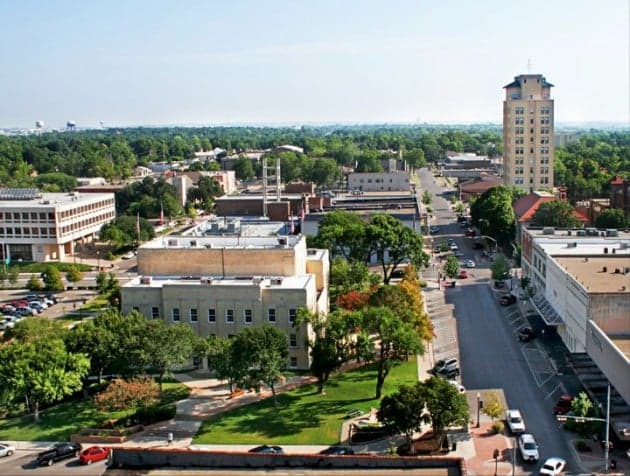
Photo: Wikipedia
Quality of Life in Temple, TX
A high quality of life with strong walkability, manageable living costs, healthy neighborhood signals, and solid amenity access.
What does Quality of Life tell us?
Quality of Life blends cost of living, nearby amenities, socioeconomic signals, and neighborhood character. City-level scores represent the whole municipality; individual neighborhoods can differ.
What does this tell us?
Quality of Life blends cost of living, nearby amenities, socioeconomic signals, and neighborhood character. City-level scores represent the whole municipality; individual neighborhoods can differ.
Cost of Living
8% below national average
The Real Cost of Living in Temple, TX for 2026
| Tier | Individual | Family (4) |
|---|---|---|
| Survival | $19k | $35k |
| Comfortable | $43k | $63k |
| Luxury | $112k+ | $174k+ |
| Elite (Top 5%) | $132k+ | $205k+ |
103%
The Area Signal
A metric tracking the socioeconomic signals of the area.
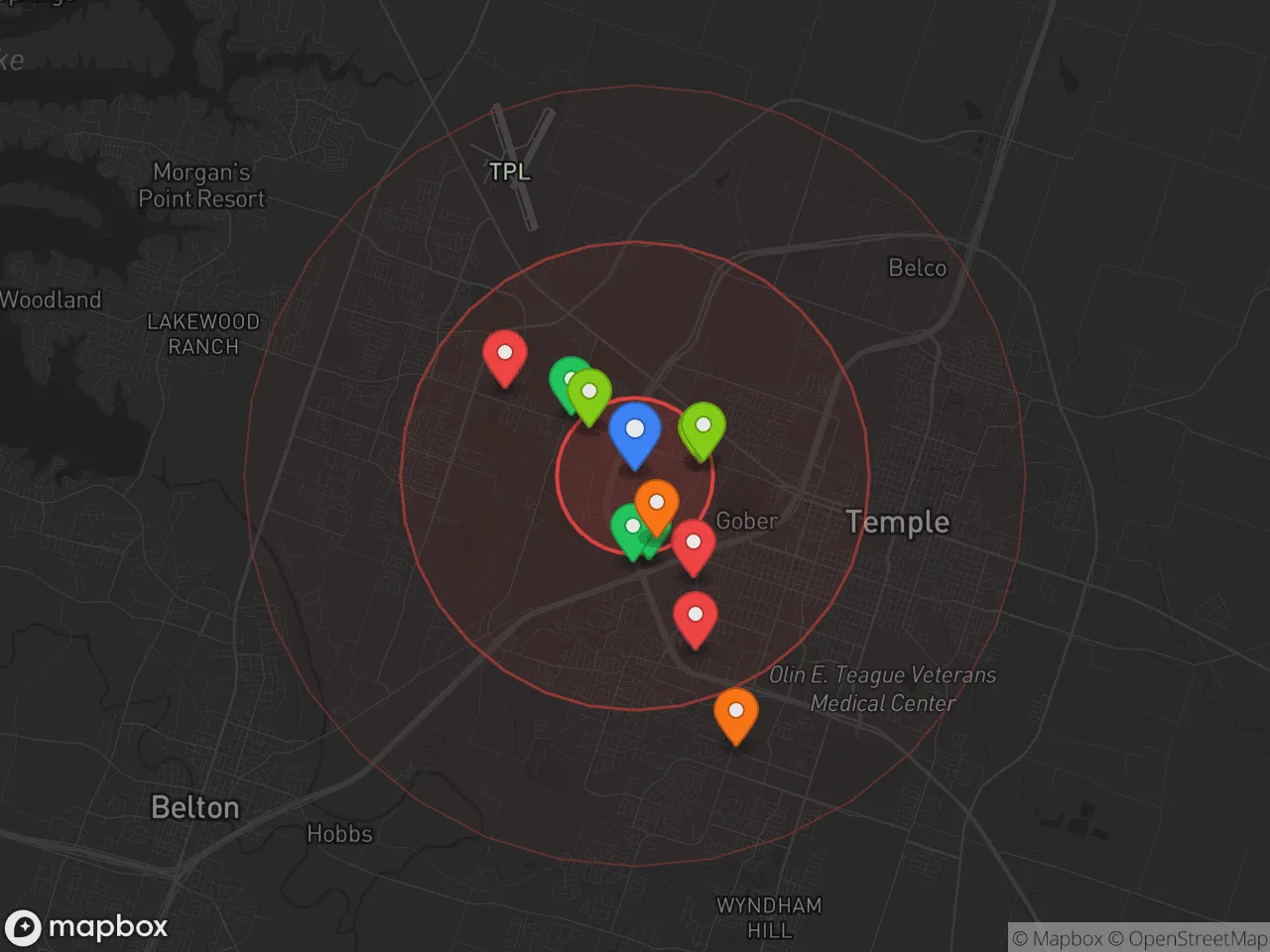
Hobbies
Explore the areaGroceries
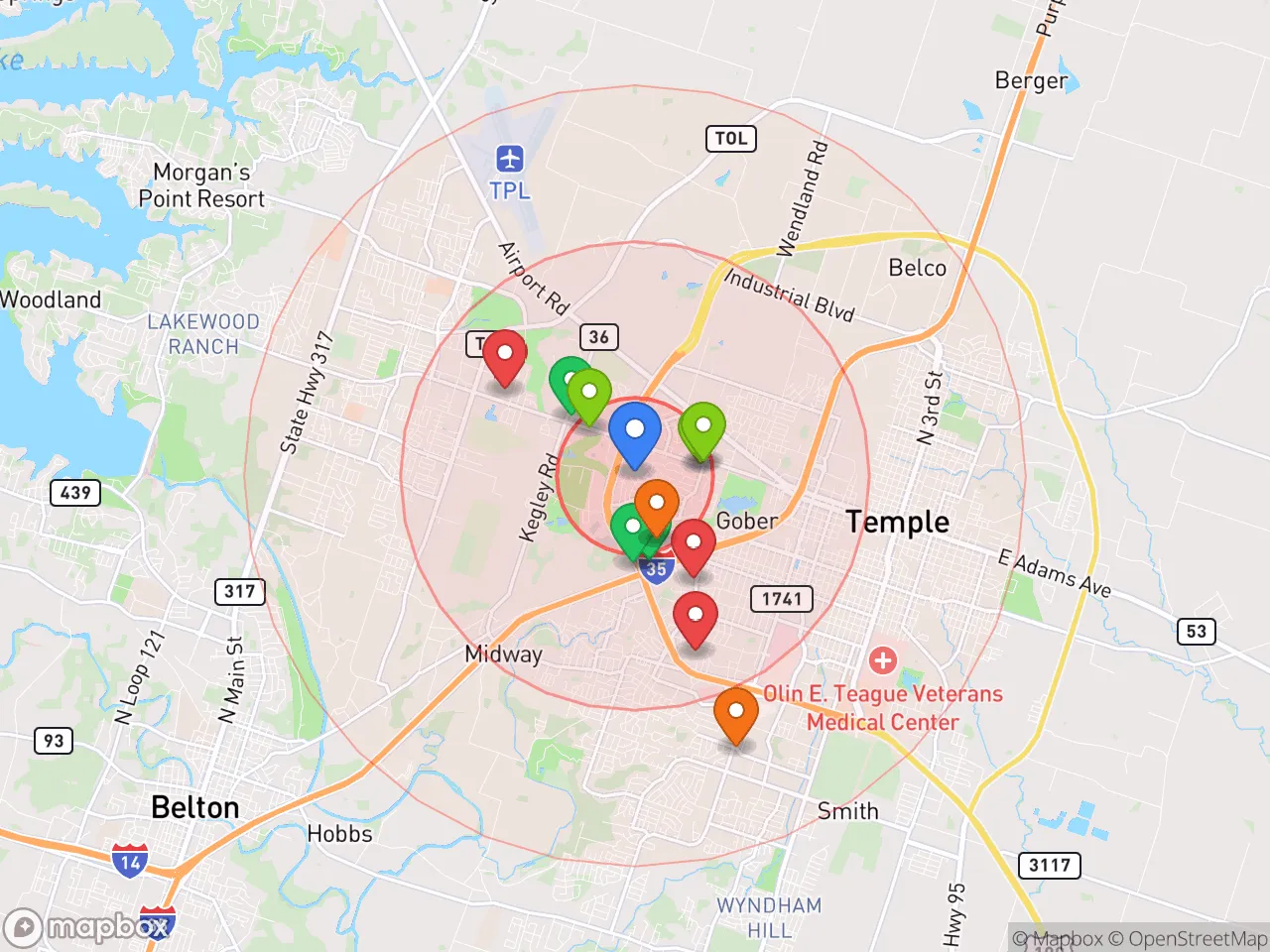
7 within 10 miles
Gas
20 within 10 miles
Hospital
6 within 20 miles
Airport
AUS — Austin-Bergstrom International
Post Office
USPS — Temple, TX
Critical Amenities
Quality-of-Life Analysis
Temple, Texas, offers a quality of life defined by solid middle-class stability and a cost of living that stretches further than in the state’s major metros. The city’s population skews toward families employed in healthcare, manufacturing, and education, drawn by the presence of Baylor Scott & White Medical Center and the Temple Independent School District. With a cost of living index of 92 (100 equals the U.S. average), Temple provides a tangible affordability advantage over nearby Austin (index ~105) and even Round Rock, making it a practical choice for those seeking a slower pace without sacrificing access to urban amenities.
How housing costs and everyday expenses compare to nearby cities
Temple’s housing market remains one of its strongest draws for newcomers. The median home value sits at $220,300, roughly $100,000 less than the median in Round Rock and nearly $300,000 below Austin’s median. Median rent is $1,174, which undercuts the national average and is significantly lower than the $1,500+ typical in the Austin metro. This affordability extends to utilities and groceries, which track close to the national average. The average commute time of 21.5 minutes is notably shorter than the 30-minute-plus commutes common in larger Texas cities, allowing residents to reclaim time for family or recreation. Property taxes in Bell County hover around 2.2% of assessed value, which is typical for Texas but worth factoring into monthly budgets.
What daily life is like for families: schools, parks, and local amenities
Daily life in Temple centers on a manageable, car-dependent routine with a growing emphasis on outdoor recreation. The Temple Independent School District operates 14 elementary schools, three middle schools, and two high schools, with Temple High School offering a robust International Baccalaureate program. For younger families, the city’s park system includes 30+ parks, with the 200-acre Lions Junction Family Water Park and the Lake Belton shoreline providing summer escapes. Shopping and dining cluster along Interstate 35 and around the Temple Mall, with national chains dominating but local spots like Bird Creek Grill and the farmers market on West Avenue adding character. The Baylor Scott & White Health system is the largest employer, anchoring a healthcare sector that also includes McLane Children’s Hospital. Cultural amenities are modest but growing: the Temple Civic Theatre and the annual Temple Rodeo & Stock Show offer community gathering points, while the nearby Texas A&M University-Central Texas campus provides adult education and events.
Who thrives in Temple? The city is best suited for families and professionals who prioritize affordability, short commutes, and access to healthcare over the nightlife and cultural density of a major city. Remote workers and retirees on fixed incomes will find the low housing costs and slower pace appealing, while those in the medical or manufacturing fields will appreciate the stable job base. Residents who crave weekend trips to Austin (70 miles south) or Waco (40 miles north) will find Temple a quiet, cost-effective home base. However, those seeking walkable neighborhoods, robust public transit, or a vibrant arts scene may find the city’s suburban character limiting. For the right buyer, Temple delivers a balanced, low-stress lifestyle at a price point that is increasingly rare in Central Texas.

Crime in Temple, TX
Lower crime rates than 99% of comparable U.S. locations.
Violent CrimeViolent Crime Analysis
Property CrimeProperty Crime Analysis
Crime Analysis
Temple, Texas, presents a notably low-crime environment compared to both state and national averages, with violent crime rates significantly below the norm. The city recorded a violent crime rate of just 9 incidents per 100,000 residents, a figure that is a fraction of the Texas average of roughly 450 per 100,000 and the national rate of approximately 380 per 100,000. Property crime in Temple stands at 62 per 100,000 residents, also well below the state average of around 2,500 per 100,000, indicating a community where serious crime is relatively rare.
Crime in context
Temple’s crime statistics place it among the safest cities in Texas for its size. The violent crime rate of 9 per 100,000 is roughly 98% lower than the national average, while the property crime rate of 62 per 100,000 is about 97% lower. For context, the nearby city of Killeen reports a violent crime rate near 500 per 100,000, and Waco’s rate is around 600 per 100,000, making Temple an outlier for safety in Central Texas. These figures are drawn from the most recent FBI Uniform Crime Reporting data, which consistently show Temple as a low-crime outlier in a region where larger cities face higher rates of theft and assault.
What residents experience
Residents of Temple generally report feeling safe in their daily routines, with the low crime rates translating into a tangible sense of security. The city’s police department maintains a visible presence, and community policing initiatives are active in neighborhoods and schools. However, like any community, Temple is not immune to property crimes such as vehicle burglaries and package thefts, particularly in areas near major retail corridors like I-35 and West Adams Avenue. The low violent crime rate means that incidents like robbery or aggravated assault are rare, and most residents go years without encountering such events. The city’s justice system, operating under Bell County’s generally conservative judicial philosophy, emphasizes accountability, which contributes to the low recidivism and crime rates.
Neighborhood-level variation in Temple is modest but worth noting. Areas west of I-35, including the historic downtown and newer subdivisions near Lake Belton, tend to have the lowest crime rates, with many blocks reporting zero incidents annually. Older neighborhoods east of the railroad tracks, particularly around the former Temple Mall site, see slightly higher property crime, though still well below city averages. The city’s overall safety profile is consistent, with no neighborhoods experiencing violent crime rates that approach state or national norms. For families and professionals relocating to Central Texas, Temple offers a rare combination of affordability and exceptional safety, making it a standout choice in the region.
* Values derived from national, state, county, city and local statistics and may differ in a specific area. Last updated: 2026-07-20T01:55:26.000Z
Narrative content on this page is AI-generated and may contain mistakes. Verify any details that matter before acting on them.
ReloMaps may earn a commission from affiliate links at no extra cost to you.

