Photo: Wikipedia
Political ClimatePolitical Climate in Summersville, WV
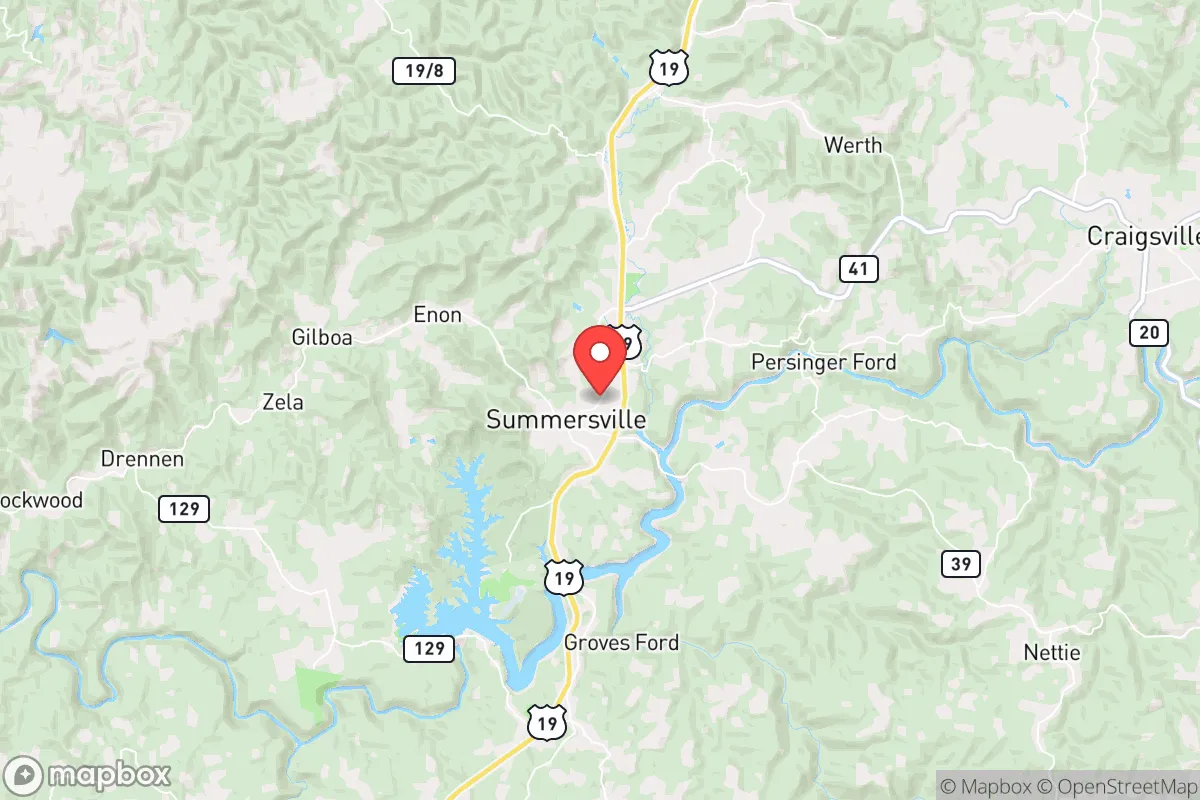
District shown is the primary district for this city’s centroid. Cities may span multiple districts.
Local Political AnalysisPolitical Analysis of Summersville, WV
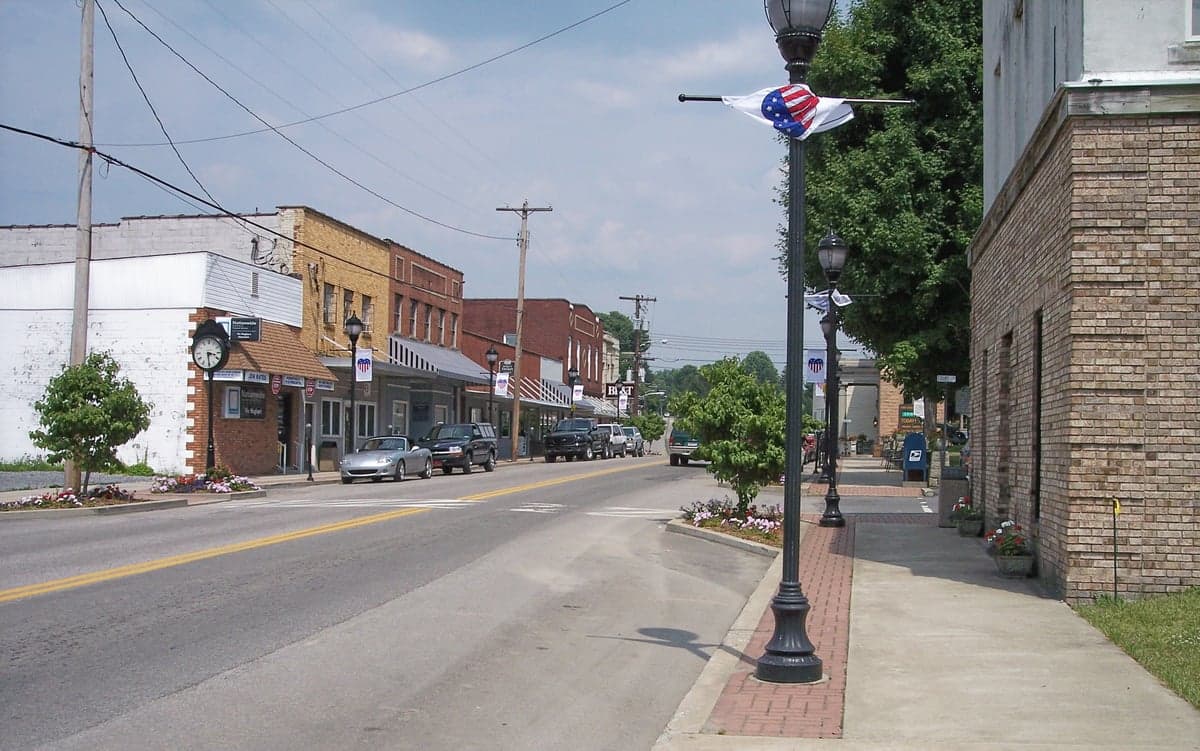
Summersville, West Virginia, is about as solidly conservative as it gets, and that’s not changing anytime soon. The Cook PVI rating of R+22 tells you everything you need to know—this area leans hard Republican, and it’s been that way for generations. You don’t see the kind of political flip-flopping here that you get in some of the bigger towns closer to the interstate. The real story, though, is how the local culture has held the line against the progressive shifts that have crept into places like Morgantown or even parts of Charleston. People here still believe in personal responsibility, and they’re not shy about saying so.
How it compares
If you drive an hour north to Morgantown, you’ll find a completely different world—college town, younger crowd, more liberal leanings, especially around the university. Same goes for Charleston, where the state government brings in a mix of politics, but the city itself has pockets that are trending left. Summersville, though, sits in Nicholas County, and that county has voted Republican by massive margins in every recent presidential election. Even nearby Beckley, which is more moderate, feels like a different planet compared to the straight-ticket conservatism you get here. The contrast is stark: while some of those towns are wrestling with progressive policies on things like zoning, school curriculum, or even mask mandates, Summersville has largely kept that stuff at arm’s length. It’s a place where the old-school values of limited government and individual freedom still mean something.
What this means for residents
For folks living here, the political climate translates into a pretty hands-off approach from local government. You don’t get a lot of overreach—no one’s telling you what you can and can’t do on your own property, and the tax burden stays low compared to more progressive areas. The downside, if you can call it that, is that the community expects you to pull your own weight. There’s not a lot of patience for people looking for handouts or trying to change the way things have always been done. The local schools stick to the basics, and you won’t find a lot of the culture war stuff that’s popping up in other districts. For families, that’s a relief—kids here are still taught to respect their elders and work hard, not to question every tradition. The long-term trend, though, is something to keep an eye on. As younger folks move away for jobs, the population is aging, and that could shift priorities down the road. But for now, the conservative majority is as strong as ever.
One thing that sets Summersville apart is the strong sense of local identity tied to outdoor life—hunting, fishing, and the lake. That’s not just a hobby; it’s a political statement. When you see proposals for new regulations on firearms or land use, people here get riled up fast. There’s a deep distrust of federal overreach, especially when it comes to environmental rules that could affect the Summersville Lake area or the nearby Gauley River. The local culture is built on self-reliance, and any hint of government telling people how to live their lives is met with serious pushback. If you’re looking for a place where your rights are respected and the political scene stays predictable, this is it. Just don’t expect a lot of change—that’s the whole point.

State Political ClimatePolitical Climate in West Virginia
State Political AnalysisPolitical Environment in the State
West Virginia has long been one of the most reliably Republican states in the nation, but that wasn’t always the case. As recently as the 1990s, it was a Democratic stronghold at the state and local level, voting for Bill Clinton twice. The shift began in earnest around 2000, accelerated by the national Democratic Party’s move left on coal, guns, and cultural issues. By 2024, Donald Trump carried the state by nearly 40 points, and Republicans now hold supermajorities in both chambers of the legislature, every statewide office, and both U.S. Senate seats. The state’s political DNA is now deeply conservative, but the map isn’t uniform—pockets of blue remain, and the rural-urban divide tells a more nuanced story.
Urban vs. rural divide
The political map of West Virginia breaks down along familiar lines: the rural, mountainous counties are deep red, while the few urbanized areas lean blue. Kanawha County, home to the capital Charleston, is the state’s largest population center and a perennial battleground—it voted for Trump in 2024 but by a narrower margin than the state average, and Democrats still hold a few local offices there. Monongalia County, anchored by Morgantown and West Virginia University, is the state’s most reliably blue county, driven by the university’s academic and younger demographic. Berkeley County in the Eastern Panhandle, part of the Washington D.C. exurbs, has been trending redder as new arrivals from Maryland and Virginia bring conservative values with them. Meanwhile, McDowell County in the southern coalfields, once a Democratic bastion, flipped hard to Trump and now votes Republican by margins exceeding 70 points. The rural-urban split is stark: every county with a population over 50,000 except Monongalia voted for Trump, but the rural counties deliver the overwhelming margins that make the state’s overall lean so lopsided.
Policy environment
West Virginia’s policy environment is aggressively conservative, with a focus on low taxes, deregulation, and cultural traditionalism. The state has no personal income tax on Social Security benefits, and the corporate net income tax rate is a flat 6.5%. In 2023, the legislature passed a bill to phase out the state’s personal income tax entirely, contingent on revenue triggers—a move that would make West Virginia one of the few states with no income tax. The regulatory posture is business-friendly, especially for energy and manufacturing, with the state offering generous tax credits for new industrial projects. On education, West Virginia has a robust school choice program, including the Hope Scholarship, which allows parents to use state education funds for private school tuition, homeschooling, or other educational expenses. Healthcare policy is mixed: the state expanded Medicaid under the Affordable Care Act, but it also passed a law requiring parental consent for minors seeking abortions, and in 2024, the legislature enacted a near-total abortion ban with exceptions only for rape, incest, and medical emergencies. Election laws are among the most secure in the nation—voter ID is required, and the state has no same-day registration or no-excuse absentee voting. Overall, the policy environment is designed to attract conservative families and businesses, with a strong emphasis on parental rights and limited government.
Trajectory & freedom
West Virginia is becoming more free in several key areas, particularly on gun rights, parental rights, and taxation. In 2023, the legislature passed a constitutional carry law, allowing any law-abiding adult to carry a concealed firearm without a permit. The same year, the state enacted the “Parental Bill of Rights,” which requires schools to notify parents of any changes to a student’s health or well-being and prohibits instruction on sexual orientation or gender identity in grades K-3. On property rights, West Virginia is a “right to farm” state, protecting agricultural operations from nuisance lawsuits. However, there are concerning trends: the state’s medical marijuana program, while legal, is heavily regulated and expensive to participate in, and recreational cannabis remains illegal. On speech, the state has no hate speech laws that would chill free expression, but some local governments have attempted to impose mask mandates and vaccine requirements during public health emergencies, leading to legislative pushback. The 2024 session saw a bill to prohibit any government entity from requiring a vaccine passport, which passed with bipartisan support. The trajectory is clearly toward greater personal liberty, but the pace is slower than many conservatives would like, especially on tax reform and medical freedom.
Civil unrest & political movements
West Virginia has a history of labor activism, particularly in the coal fields, but modern political movements are overwhelmingly conservative. The 2018 statewide teachers’ strike, which shut down schools for nine days, was a rare example of left-leaning activism, but it was focused on pay and benefits rather than broader progressive causes. Since then, the dominant grassroots energy has come from the right: the “Moms for Liberty” chapter in Jefferson County has been active in school board elections, and the “West Virginia Citizens Defense League” is a powerful gun rights organization. Immigration politics are muted—the state has one of the smallest foreign-born populations in the country—but there have been local resolutions opposing sanctuary city policies, even though no such policies exist in the state. Election integrity has been a flashpoint: in 2020, the state’s Republican secretary of state, Mac Warner, implemented strict ballot security measures, including signature verification and chain-of-custody tracking, which were praised by conservatives but criticized by Democrats as voter suppression. There have been no major protests or civil unrest in recent years, but the political climate is tense in places like Morgantown, where university students and faculty sometimes clash with local conservatives over issues like drag shows and campus speech codes. Overall, the state is politically stable, but the cultural divide between the university towns and the rest of the state is growing.
Projection
Over the next 5-10 years, West Virginia is likely to become even more conservative, driven by two demographic trends: the continued out-migration of younger, more liberal residents to neighboring states, and the in-migration of conservatives from high-tax states like New York, New Jersey, and California. The Eastern Panhandle, particularly Berkeley County and Jefferson County, is seeing the fastest growth, and these new arrivals tend to be fiscally conservative and culturally traditional. The state’s population is aging and shrinking overall, but the political impact of that shift is a deepening of the Republican supermajority. The income tax phase-out, if it continues, will accelerate this trend, making West Virginia a magnet for remote workers and retirees seeking low taxes and a slower pace of life. However, there are risks: the state’s heavy reliance on coal and natural gas revenue makes it vulnerable to federal energy policy changes, and the opioid crisis continues to strain public health resources. A new resident moving in now should expect a state that is politically stable, culturally conservative, and increasingly free, but also one that is economically fragile and geographically isolated. The next decade will likely see more school choice expansion, further tax cuts, and continued battles over medical freedom and parental rights.
For a conservative individual or family considering relocation, West Virginia offers a rare combination of low taxes, strong gun rights, and a government that is actively working to reduce its footprint. The trade-offs are real: limited job opportunities outside of energy and healthcare, a declining population, and a lack of cultural amenities that many people take for granted. But if your priority is personal freedom, a community that shares your values, and a state that respects your right to live as you see fit, West Virginia is one of the best bets in the country. Just know that you’ll be joining a state that is still fighting its way out of a century of economic dependence on coal, and that the fight for freedom is ongoing—but the trajectory is clearly in your favor.
* Values derived from national, state, county, city and local statistics and may differ in a specific area. Last updated: 2026-05-03T20:39:32.000Z
Narrative content on this page is AI-generated and may contain mistakes. Verify any details that matter before acting on them.
ReloMaps may earn a commission from affiliate links at no extra cost to you.

