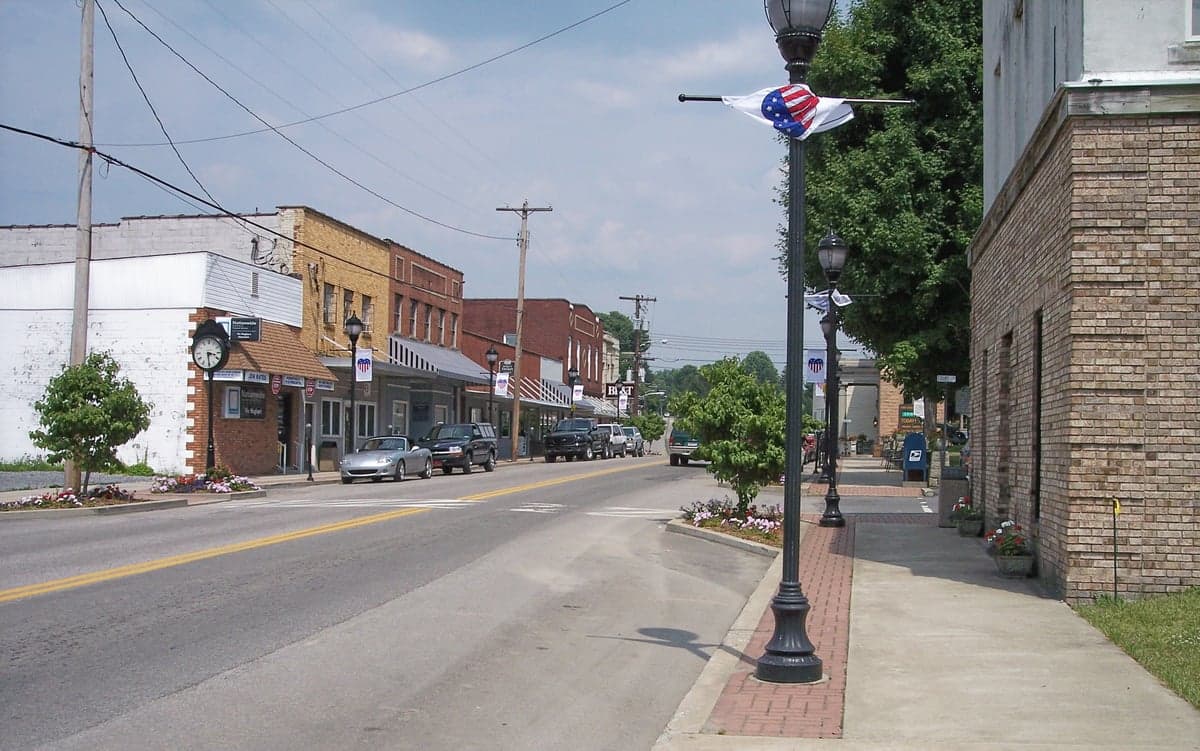
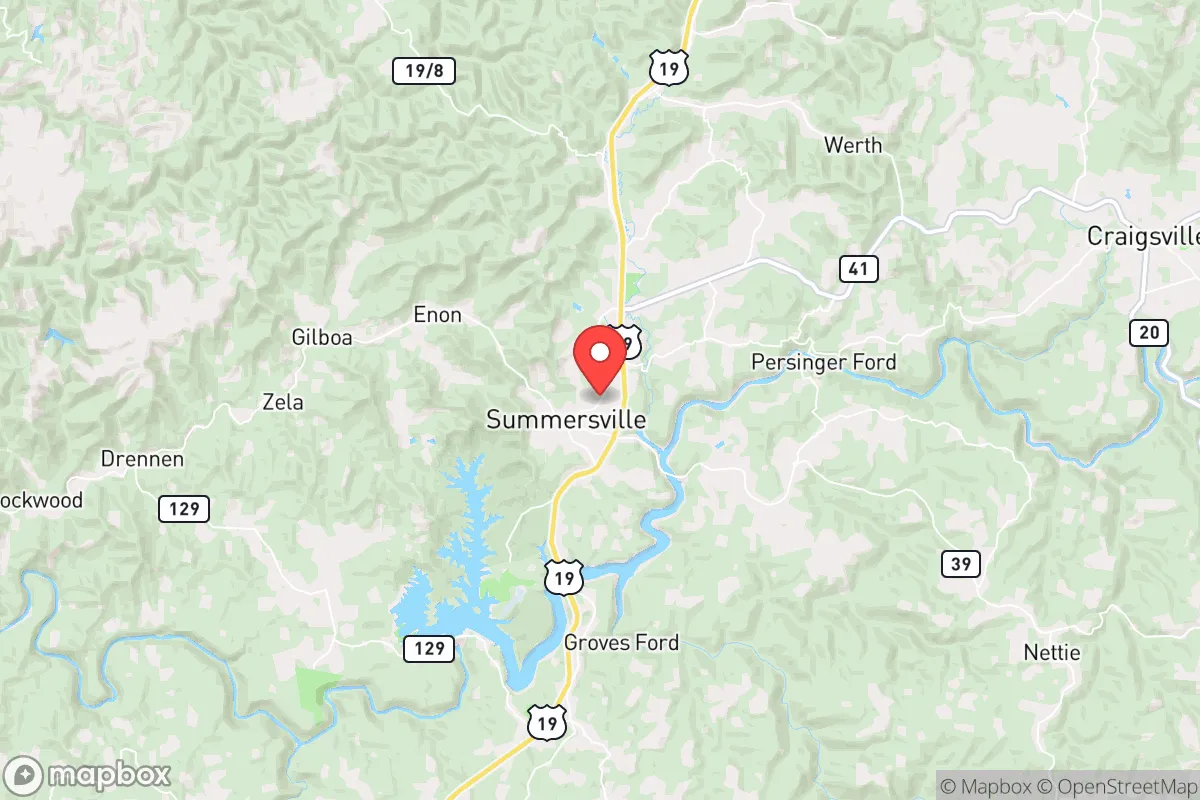
Photo: Wikipedia
Personal Sovereignty in Summersville, WV
Viable for self-reliance. Generally workable, though some barriers may limit total independence.
What does Personal Sovereignty tell us?
Personal Sovereignty measures your capacity for self-reliance and independence with minimal government friction. Higher scores mean fewer barriers between you and the way you want to live... but it assumes you have the space you need and good neighbors.
What does this tell us?
Personal Sovereignty measures your capacity for self-reliance and independence with minimal government friction. Higher scores mean fewer barriers between you and the way you want to live... but it assumes you have the space you need and good neighbors.
State Policy
Energy independence: Net exporter (200% of energy produced in-state)
Personal Liberty
Homesteading

Personal Liberty Analysis
Summersville, West Virginia, offers a notably high degree of personal sovereignty, largely because the state’s legal and cultural DNA resists the kind of top-down control that has become common in many other parts of the country. For a prepper or survivalist-minded individual, this area represents a genuine pocket of autonomy where the government’s footprint is lighter and the expectation of self-reliance is baked into daily life. The combination of a low tax burden, permissive gun laws, and a regulatory environment that still respects property rights makes it a serious contender for anyone looking to step back from the encroaching reach of federal and state overreach. While no place is a perfect fortress against the trends of the modern world, Summersville’s posture is one of relative freedom, and that is its primary strategic value.
Tax burden and regulatory posture: how West Virginia’s fiscal climate supports independence
West Virginia’s tax structure is a clear advantage for anyone focused on keeping more of what they earn and minimizing entanglement with state bureaucracy. The state’s personal income tax is a graduated system with a top rate of 5.12% on income over $60,000, which is moderate but not punishing, and there is no state-level tax on Social Security benefits—a meaningful consideration for long-term planning. Property taxes in Nicholas County, where Summersville sits, are among the lowest in the nation, typically hovering around 0.5% to 0.6% of assessed value. This means a $200,000 home might carry an annual tax bill of roughly $1,000 to $1,200, leaving far more capital for land, supplies, and infrastructure than you’d find in high-tax states like New York or California. The regulatory posture here is also notably restrained: West Virginia does not have a state-level equivalent of the EPA’s more aggressive clean air or water rules, and the state’s Department of Environmental Protection generally takes a cooperative rather than adversarial stance with landowners. For someone looking to develop a property for self-sufficient living—whether that means building a workshop, installing a rainwater catchment system, or running a small farm—the permitting process is straightforward and rarely a barrier. The state’s political leadership has consistently pushed back against federal overreach, including lawsuits against the Biden administration’s environmental and energy policies, which signals a willingness to defend local autonomy even when it means fighting the federal government.
Self-defense and gun law specifics: what the Second Sanctuary status means for residents
West Virginia is a constitutional carry state, meaning no permit is required to carry a concealed firearm for anyone legally allowed to possess one. This is a foundational liberty for anyone serious about self-defense, and it is backed by a state preemption law that prevents local municipalities like Summersville from enacting their own gun restrictions. The state has also been designated a “Second Amendment Sanctuary” by legislative resolution, which formally declares that state resources will not be used to enforce federal gun laws deemed unconstitutional—a direct rebuke to potential federal overreach. For preppers, this means you can legally own standard-capacity magazines, suppressors, and short-barreled rifles without the kind of local harassment seen in more restrictive states. The state’s castle doctrine is robust: there is no duty to retreat in your home, vehicle, or place of business, and the use of deadly force is presumed justified if someone unlawfully enters. Stand-your-ground protections extend to any place you are lawfully present. The practical effect is that a resident of Summersville can maintain a well-stocked armory for both personal defense and community security without worrying about a sudden change in local ordinances. The sheriff’s office in Nicholas County is generally supportive of gun rights, and the local culture treats firearms as tools, not political symbols.
Self-reliance and homesteading viability: lot sizes, zoning, and off-grid feasibility
The physical landscape around Summersville is a prepper’s dream for self-reliance. Rural properties outside the town limits commonly come in 5- to 20-acre parcels, with plenty of undeveloped land available for under $5,000 per acre. Zoning in Nicholas County is minimal: there is no county-wide zoning ordinance, meaning you can build a house, a barn, a greenhouse, or a root cellar without needing a variance or facing a planning board that wants to dictate your roof color. Off-grid living is entirely feasible here. The county does not require connection to municipal water or sewer for rural properties, so wells and septic systems are standard. Solar panels, wind turbines, and rainwater collection are all legal and common, though you should check with the Nicholas County Health Department for any specific requirements on rainwater systems used for potable water—generally, they are permitted as long as basic filtration is in place. The growing season runs from late April to early October, which is long enough for a serious garden and even some warm-weather crops like tomatoes and peppers. The nearby Gauley River and Summersville Lake provide reliable water sources for fishing and emergency supply, and the surrounding Monongahela National Forest offers public land for foraging and hunting. For someone looking to build a self-sufficient homestead with minimal government interference, this area is about as accommodating as it gets in the eastern United States.
Personal liberties: parental rights, medical autonomy, speech, and property protections
West Virginia has taken a strong stance on parental rights, with state law explicitly affirming that parents have the fundamental right to direct the upbringing, education, and healthcare of their children. This includes the ability to opt out of school curricula or medical treatments without state interference, a critical consideration for families who want to avoid government-mandated health policies or controversial educational content. Medical autonomy is also relatively strong: the state does not have a universal vaccine mandate for adults, and while school vaccine requirements exist, religious and philosophical exemptions are available and have been upheld. During the COVID-19 pandemic, the state legislature passed laws limiting the governor’s emergency powers, preventing indefinite lockdowns or business closures without legislative approval—a direct check on executive overreach that many other states lack. Free speech protections are robust, with no state-level hate speech laws that could be used to chill political or religious expression. Property rights are protected by a strong eminent domain statute that requires “public use” in the traditional sense, not just economic development, meaning your land cannot be seized for a private developer’s project. The state’s right-to-farm law also shields agricultural operations from nuisance lawsuits, which is important if you plan to keep livestock or run a small farm. For the survivalist mindset, these legal protections create a buffer against the kind of cultural and governmental pressures that erode personal freedom elsewhere.
Compared to the rest of the country, Summersville and its surrounding area offer a level of personal sovereignty that is increasingly rare. The tax burden is low, the gun laws are among the most permissive in the nation, the regulatory environment is hands-off, and the legal framework supports parental rights, medical choice, and property autonomy. While no location is immune to federal overreach or the slow creep of centralized control, West Virginia’s political culture and legal infrastructure provide a meaningful defense. For someone looking to build a life based on self-reliance, preparedness, and minimal government interference, this region stands out as a strategic stronghold in a country that is moving in the opposite direction.

* Values derived from national, state, county, city and local statistics and may differ in a specific area. Last updated: 2026-05-03T20:39:32.000Z
Narrative content on this page is AI-generated and may contain mistakes. Verify any details that matter before acting on them.
ReloMaps may earn a commission from affiliate links at no extra cost to you.

