Photo: Wikipedia
Political ClimatePolitical Climate in Strasburg, CO
District shown is the primary district for this city’s centroid. Cities may span multiple districts.
Local Political AnalysisPolitical Analysis of Strasburg, CO
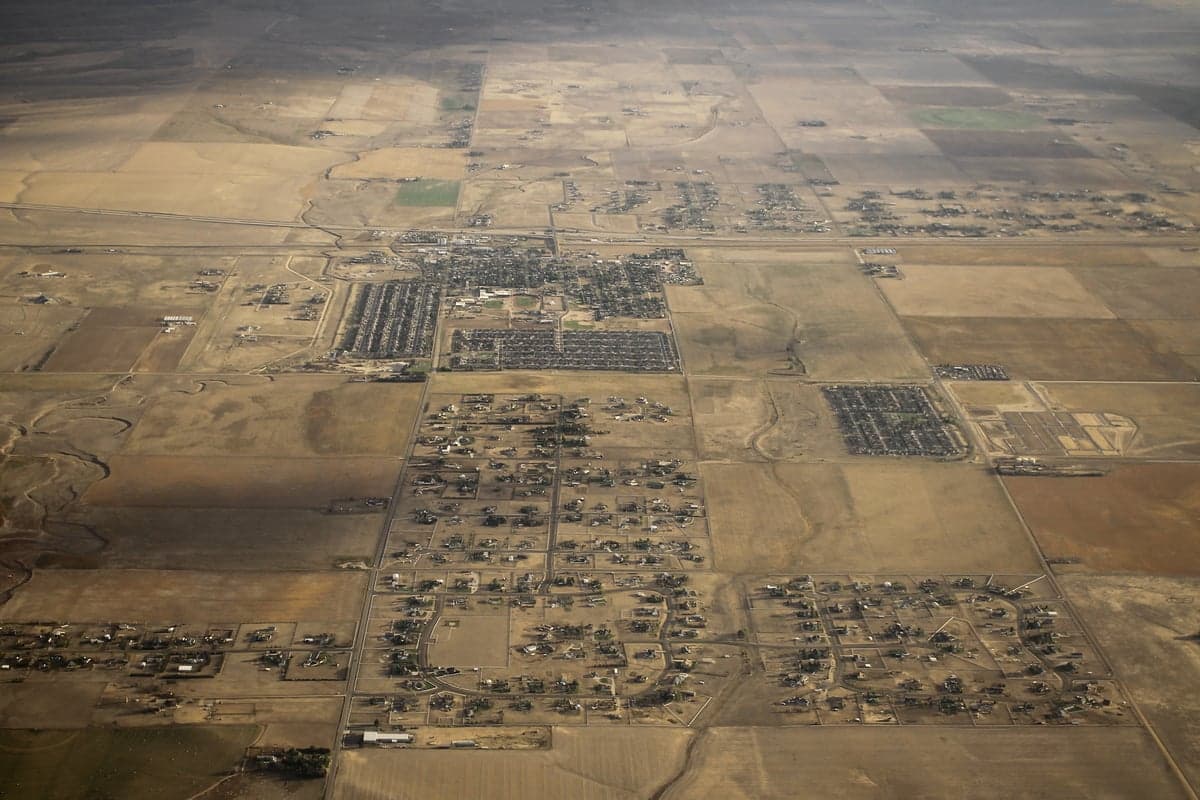
Strasburg, Colorado, sits firmly in conservative territory, with a Cook Partisan Voting Index (PVI) of R+9, meaning the area votes about nine points more Republican than the national average. This isn't a recent shift; the town has long been a rural, agricultural stronghold where Democratic candidates rarely compete. The political trajectory here is steady, not swinging—local elections and county-level races are reliably won by Republicans, and the community’s values align closely with traditional conservative priorities like limited government, gun rights, and local control. While Colorado as a whole has trended purple-to-blue in recent decades, especially along the Front Range, Strasburg remains a red island in a sea of shifting politics.
How it compares
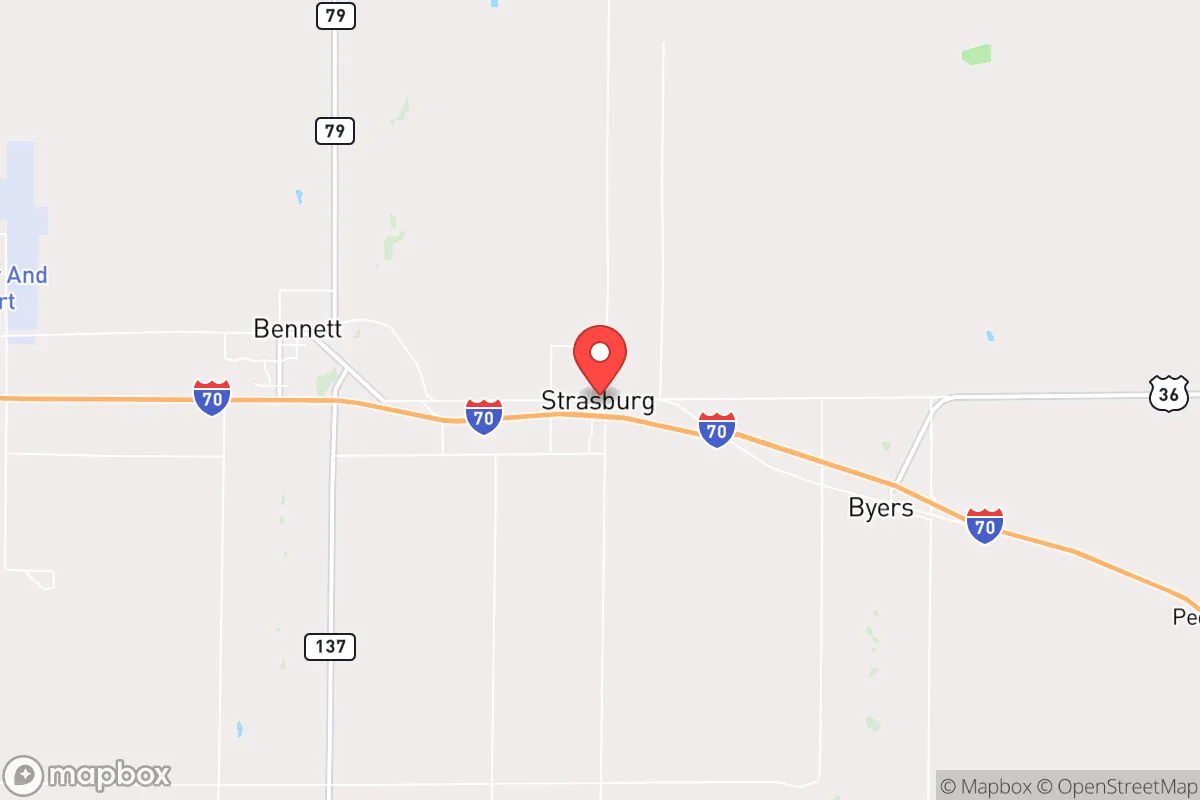
Strasburg’s R+9 rating puts it at odds with much of Colorado’s political landscape. The state’s Cook PVI is unknown, but its recent electoral history tells the story: Colorado voted for Joe Biden by 13 points in 2020 and has elected Democratic governors and senators consistently since 2014. In contrast, Strasburg sits in Arapahoe County, but its rural eastern edge is a world apart from the Denver suburbs. Nearby towns like Bennett and Byers share Strasburg’s conservative lean, while just 30 miles west, Aurora and Denver are solidly blue. This creates a stark urban-rural divide—within a 45-minute drive, you go from a district that votes +9 Republican to one that votes +20 Democratic. The contrast is visible in everything from yard signs to local policy debates.
What this means for residents
For conservative residents, Strasburg offers a comfortable political home where their views are the norm. Local government, school board decisions, and county commissions tend to reflect conservative priorities—lower taxes, fewer regulations, and a focus on property rights. Gun ownership is widespread and culturally accepted, and discussions about land use or development often center on preserving rural character. For liberal residents, life here can feel isolating politically. They may find themselves in the minority at town meetings or in local social circles, but the community is generally respectful—political disagreements rarely turn hostile. The practical impact is that progressive policies on climate, housing, or social issues rarely gain traction locally, so liberal residents often engage in state-level politics or drive to Denver for activism. The area’s trajectory suggests this dynamic will persist; as Colorado’s Front Range grows more diverse and urban, Strasburg’s rural identity and political leanings may actually strengthen as a deliberate counterpoint.
Culturally, Strasburg stands apart from Colorado’s mountain-town or urban scenes. There’s no craft brewery scene or bike-share program here—instead, you’ll find rodeos, 4-H clubs, and a strong sense of self-reliance. Policy-wise, the town has resisted state-level mandates on everything from renewable energy to land-use planning, often citing local autonomy. For newcomers, the biggest adjustment is understanding that political affiliation here isn’t just a label—it’s woven into daily life, from the church potlucks to the county fair. Whether you’re conservative or liberal, Strasburg’s political climate is straightforward: it’s a place where your vote is predictable, but your neighbor’s help is not conditional on your party registration.

State Political ClimatePolitical Climate in Colorado
State Political AnalysisPolitical Environment in the State
Colorado has shifted from a classic purple swing state to a solidly blue-leaning state over the past two decades, but it’s not a monolith. Democrats control every statewide office and both legislative chambers, yet the state’s overall partisan lean is only about D+5 to D+7 in presidential elections — a far cry from deep-blue states like California or New York. The trajectory has been remarkably consistent: Republicans won Colorado in 2004 (George W. Bush by 4.7 points), then Democrats carried it in every subsequent presidential election, with margins growing from 8.9 points in 2008 to 13.5 points in 2020. The 2024 election saw a slight tightening, with Kamala Harris winning by roughly 11 points, but the underlying trend remains clear — the state’s growing urban and suburban population centers are driving a durable Democratic majority.
Urban vs. rural divide
The political map of Colorado is a textbook case of the urban-rural divide. The Denver metro area — including Denver proper, Boulder, Aurora, Lakewood, and the suburban counties of Jefferson, Arapahoe, and Adams — generates roughly 60% of the state’s vote and leans heavily Democratic. Boulder County is one of the most liberal counties in the nation, routinely voting 75-80% Democratic. The I-25 corridor from Fort Collins down through Denver to Colorado Springs is the state’s political spine, but even within that corridor, there are stark contrasts. Colorado Springs (El Paso County) remains a conservative stronghold, voting +14 Republican in 2024, anchored by military installations like Fort Carson and Peterson Space Force Base, as well as a large evangelical Christian community. The Western Slope — places like Grand Junction and Montrose — is deeply red, with Mesa County voting +22 Republican in 2024. Rural eastern Colorado, the agricultural plains, is also reliably conservative. The key swing areas that decide close races are the suburban Denver counties of Arapahoe and Jefferson, plus the fast-growing exurbs like Douglas County (which has been trending right but is now more competitive) and Weld County (Greeley area), which remains Republican but is moderating as it grows.
Policy environment
Colorado’s policy environment reflects its blue governance but with a pragmatic, Western twist. The state income tax is a flat 4.4% (down from 4.55% in 2024 due to a TABOR-mandated reduction), and property taxes are relatively low compared to the national average, though they vary significantly by county. The Taxpayer’s Bill of Rights (TABOR), a 1992 constitutional amendment, still constrains state spending and requires voter approval for tax increases — a uniquely Colorado check on government growth that even Democratic governors have learned to work within. Education policy is solidly progressive: Colorado has adopted the Common Core standards, expanded full-day kindergarten, and increased per-pupil funding, though teacher pay remains below the national average. Healthcare is a major issue — the state runs its own health insurance exchange (Connect for Health Colorado) and has expanded Medicaid under the ACA. Election laws are among the most accessible in the nation: universal mail-in ballots, same-day voter registration, and automatic voter registration at the DMV. The state also has a robust open-records law and a strong tradition of citizen initiatives (both left and right) via the ballot process.
Recent policy direction
The last five years have seen Colorado move decisively left on a range of issues that matter to relocators. On gun and self-defense law, the state passed a red-flag law (Extreme Risk Protection Orders) in 2019, a 2021 law requiring universal background checks for private sales, and a 2024 law raising the minimum purchase age for all firearms to 21. Magazine capacity limits (15 rounds) were also enacted. Concealed carry permits are still issued, but the state is no longer a shall-issue haven. On parental and education rights, Colorado has expanded LGBTQ+ protections in schools, including a 2023 law requiring schools to allow transgender students to use facilities matching their gender identity. School choice is robust — charter schools are plentiful and open enrollment across district lines is standard — but the state has also increased funding for public schools and mandated comprehensive sex education. On speech and privacy, Colorado passed the Colorado Privacy Act (CPA) in 2021, giving residents control over their personal data, and has strong anti-SLAPP protections. On medical and bodily autonomy, Colorado codified abortion rights into state law in 2022 (Reproductive Health Equity Act) and has no gestational limits. Recreational marijuana has been legal since 2014, and the state has a regulated market with high taxes (15% retail marijuana excise tax plus local sales taxes). Property rights are generally strong, but local zoning and land-use regulations are extensive, especially along the Front Range, where housing costs have skyrocketed. The state has also aggressively pursued renewable energy mandates (100% clean electricity by 2040) and electric vehicle adoption targets, which can affect utility costs and vehicle registration fees.
Civil unrest & political movements
Colorado has seen its share of political flashpoints. The 2020 protests in Denver over George Floyd’s death were large and occasionally violent, leading to property damage and a lasting debate over police reform. The state passed a sweeping police accountability law (SB20-217) in 2020 that eliminated qualified immunity for officers and restricted chokeholds. On the right, the Weld County area saw a significant “Three Percenter” militia presence, and there have been ongoing tensions over federal land management on the Western Slope, with some rural counties passing symbolic “Second Amendment sanctuary” resolutions. Immigration politics are heated: Denver has been a sanctuary city since 2017, and the state has limited cooperation with ICE, but the 2023-2024 surge of migrants from the southern border overwhelmed Denver’s shelter system and created a backlash even among some Democratic voters. Election integrity remains a live issue — Colorado’s mail-in ballot system is widely considered secure, but conservative activists in Mesa County (Grand Junction) gained national attention in 2022 when a county clerk was indicted for allegedly allowing unauthorized access to voting machines. The state has also seen organized efforts to recall progressive district attorneys in Denver and Boulder, though none have succeeded so far.
Projection
Over the next 5-10 years, Colorado is likely to become slightly more Democratic, but not dramatically so. The main driver is demographic: the Denver metro area continues to attract young, college-educated professionals from across the country, and these voters lean left. The state’s Hispanic population, concentrated in the Denver metro and the San Luis Valley, is growing and tends to vote Democratic, though not as overwhelmingly as in some other states. However, there are countervailing forces. The cost of housing in the Front Range is pushing some moderate and conservative families to exurbs like Pueblo West or Fountain, and to smaller cities like Colorado Springs and Grand Junction, which are growing and could become more politically competitive. The rural-urban divide will likely widen, with rural areas feeling increasingly alienated from Denver’s policy direction. A wildcard is the potential for a TABOR reform or repeal, which could unlock more state spending and accelerate the leftward policy drift. For a conservative relocator, the realistic expectation is that Colorado will remain a blue state with strong pockets of red — you can find a conservative community in Colorado Springs, Douglas County, or the Western Slope, but you’ll be living under a state government that is consistently progressive on social issues, gun control, and environmental regulation.
Bottom line for a new resident: If you’re a conservative moving to Colorado, you’re not moving to a red state, but you’re also not moving to a place where your values are unwelcome in daily life. The state’s political culture is more libertarian than authoritarian on either side — people mostly leave each other alone. You’ll pay moderate taxes, have access to world-class outdoor recreation, and live in a state with a strong economy. But you should be prepared for a state government that will continue to pass gun restrictions, protect abortion access, and push green energy mandates. If those are dealbreakers, look at El Paso County or Weld County — but understand that even there, state law will override local preferences on many issues. For liberals, Colorado is a comfortable fit, but the high cost of living in the blue cities and the persistent rural conservatism mean it’s not a progressive utopia either. It’s a purple state that votes blue, with all the tension that implies.
* Values derived from national, state, county, city and local statistics and may differ in a specific area. Last updated: 2026-09-11T01:16:17.000Z
Narrative content on this page is AI-generated and may contain mistakes. Verify any details that matter before acting on them.
ReloMaps may earn a commission from affiliate links at no extra cost to you.

