Photo: Wikipedia
Demographics of Strasburg, CO
Affluence Level in Strasburg, CO
A middle-class area roughly in line with national averages across income, home values, education, and employment.
People of Strasburg, CO
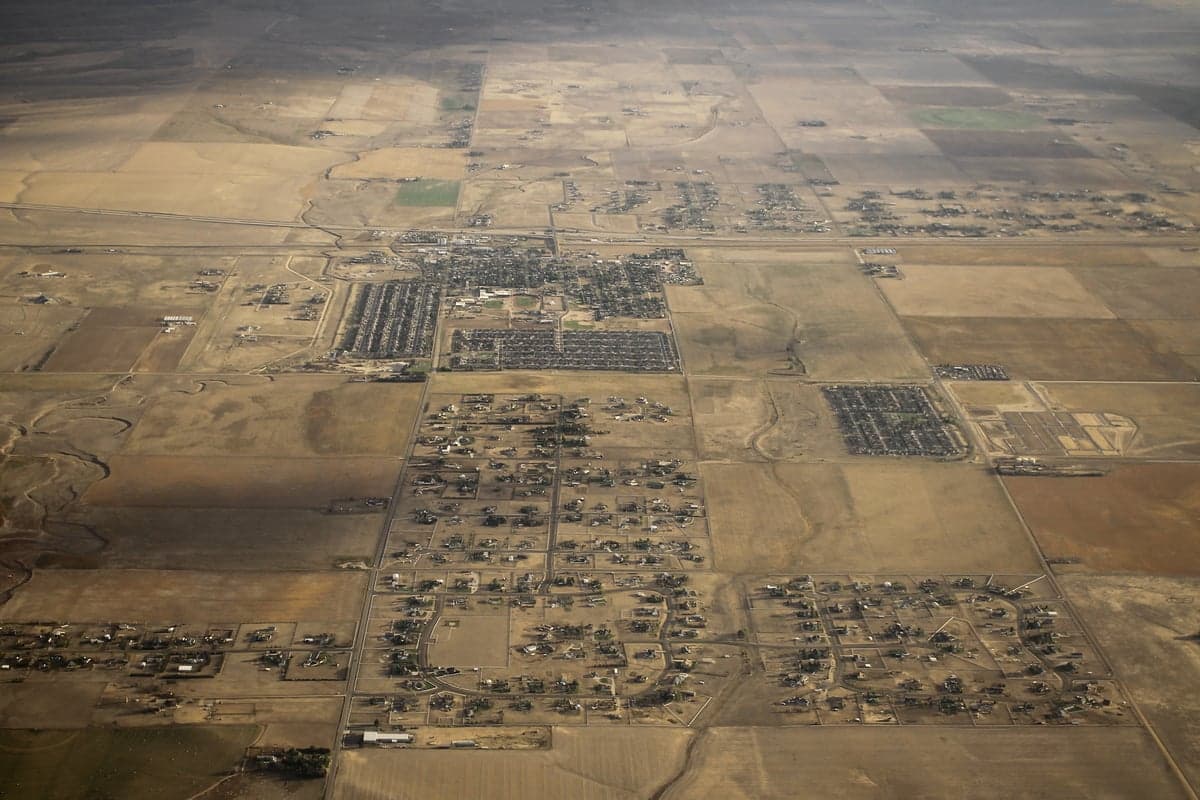
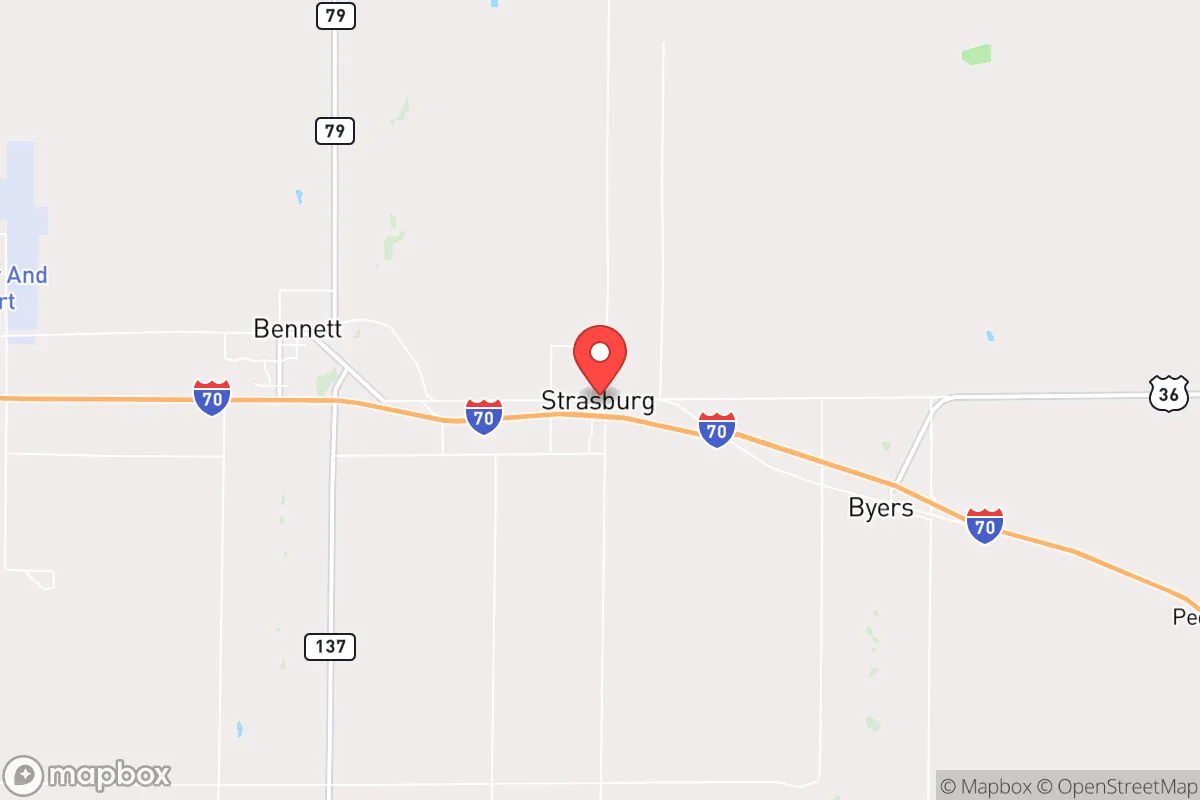
Strasburg, Colorado, is a small, tight-knit community of 3,249 residents that blends its agricultural roots with a growing commuter identity. The population is predominantly White (69.9%) with a significant Hispanic minority (20.7%), a very small foreign-born share (4.7%), and a low college attainment rate (18.5%). The city’s character is defined by its rural setting along the I-70 corridor, a strong sense of local tradition, and a population that is slowly diversifying as new residents seek affordable housing and a quieter lifestyle within commuting distance of Denver.
How the city was settled and grew
Strasburg’s human history begins with the railroad. Founded in the late 19th century as a station stop on the Kansas Pacific Railway, the town was named after a railroad official’s hometown in France. The original settlers were predominantly homesteaders of German and Scandinavian descent, drawn by the promise of land under the Homestead Act and the opportunity to farm the short-grass prairie. These early families built the town’s first structures around the railroad depot, an area now known as Old Town Strasburg, where the original grain elevators and a few historic homes still stand. The town’s growth remained slow and steady through the early 20th century, anchored by dryland wheat farming and cattle ranching. A second wave of settlement came during the Dust Bowl era of the 1930s, when displaced farmers from the Oklahoma and Texas panhandles—many of them also of German and Scots-Irish stock—moved into the area, settling in the South Side district near the railroad tracks, where smaller, more affordable lots were available.
Modern era (post-1965)
The post-1965 era brought significant change, though Strasburg remained overwhelmingly White and rural for decades. The Immigration and Nationality Act of 1965 had little immediate effect on Strasburg itself, but it did spur broader demographic shifts across Colorado that eventually reached the town. The most notable change began in the 1990s and accelerated after 2000: the arrival of Hispanic families, many of whom came from northern New Mexico and southern Colorado, drawn by work in agriculture, construction, and the service industries in the expanding Denver metro area. These families concentrated in the Sunset Ridge neighborhood, a newer subdivision on the town’s western edge, and in the East Strasburg area, where older, more affordable housing stock exists. The Hispanic share of the population grew from a negligible percentage in 1990 to 20.7% today. Meanwhile, a smaller wave of domestic in-migration—primarily White families from the Denver suburbs—began in the 2010s, seeking larger lots and lower home prices. These newcomers have gravitated toward the Prairie View Estates subdivision, a master-planned community of single-family homes on the town’s northern edge. The Asian population remains negligible at 0.3%, and the Black population is effectively zero, reflecting the town’s limited appeal to non-White professional migrants who tend to settle closer to Denver’s urban core.
The future
Strasburg’s population is projected to grow modestly over the next 10–20 years, driven primarily by continued domestic in-migration from the Denver metro area. The town’s low housing costs and rural character are likely to attract more White families and retirees, while the Hispanic population is expected to grow slowly through natural increase and some continued migration. The overall diversity of the town will likely increase gradually, but Strasburg is not on a trajectory toward rapid diversification. The foreign-born share (4.7%) is well below the Colorado state average (9.6%), and the low college attainment rate (18.5%) suggests limited appeal to the highly educated, diverse professional class that is reshaping other Front Range communities. New development is likely to concentrate in the North Strasburg corridor along I-70, where several large parcels are zoned for residential development. This area may become a bedroom community for workers commuting to Aurora and Denver, potentially shifting the town’s cultural identity from a purely agricultural community to a hybrid of farm and suburb. The cultural identity is likely to remain conservative and family-oriented, with a strong emphasis on local schools, churches, and community events like the annual Strasburg Days festival.
For someone moving in now, Strasburg offers a stable, affordable, and safe environment with a clear sense of place, but it is not a diverse or rapidly changing community. The population is slowly becoming more Hispanic and more suburban, but the core identity remains rooted in its rural, White, working-class heritage. New residents should expect a welcoming but insular community where long-time families still hold significant influence, and where the pace of life is deliberately slower than the Denver metro area just 30 miles to the west.

* Values derived from national, state, county, city and local statistics and may differ in a specific area. Last updated: 2026-09-11T01:16:17.000Z
Narrative content on this page is AI-generated and may contain mistakes. Verify any details that matter before acting on them.
ReloMaps may earn a commission from affiliate links at no extra cost to you.

