
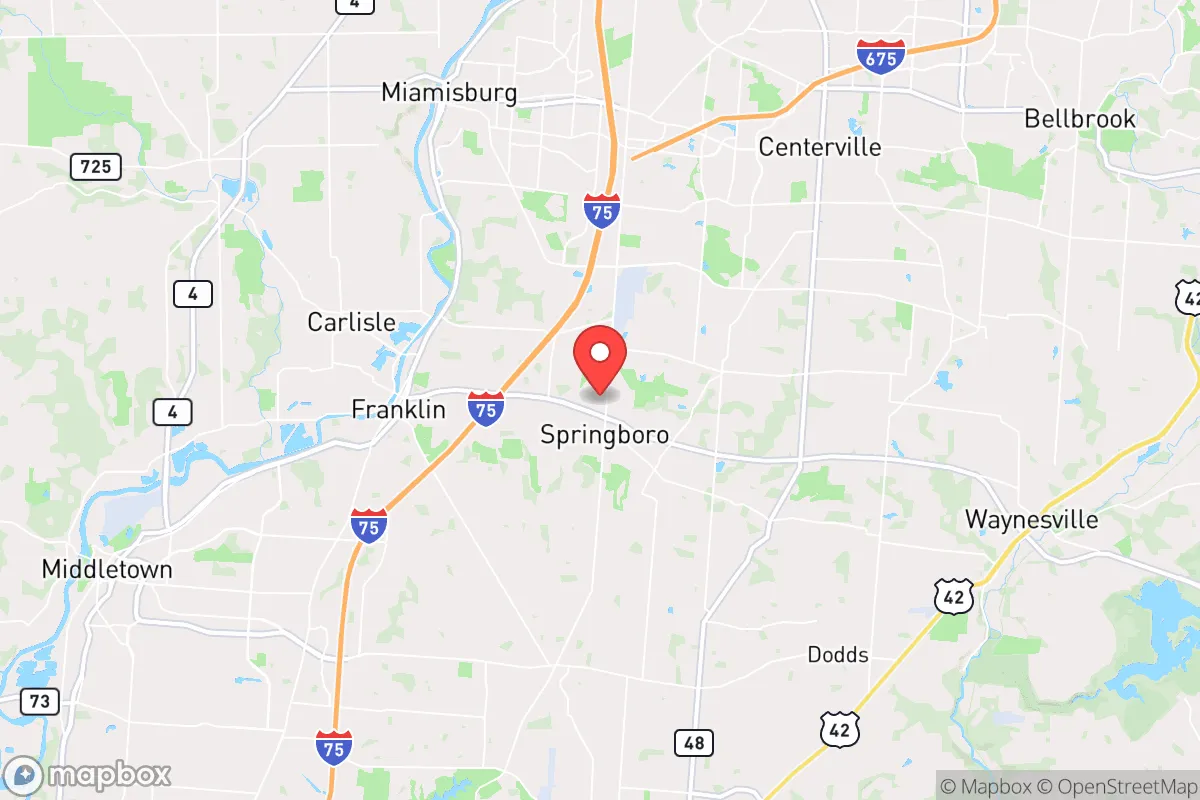
Photo: Wikipedia
Quality of Life in Springboro, OH
A high quality of life with strong walkability, manageable living costs, healthy neighborhood signals, and solid amenity access.
What does Quality of Life tell us?
Quality of Life blends cost of living, nearby amenities, socioeconomic signals, and neighborhood character. City-level scores represent the whole municipality; individual neighborhoods can differ.
What does this tell us?
Quality of Life blends cost of living, nearby amenities, socioeconomic signals, and neighborhood character. City-level scores represent the whole municipality; individual neighborhoods can differ.
Cost of Living
18% above national average
The Real Cost of Living in Springboro, OH for 2026
| Tier | Individual | Family (4) |
|---|---|---|
| Survival | $22k | $41k |
| Comfortable | $64k | $94k |
| Luxury | $159k+ | $247k+ |
| Elite (Top 5%) | $187k+ | $290k+ |
120%
The Area Signal
A metric tracking the socioeconomic signals of the area.
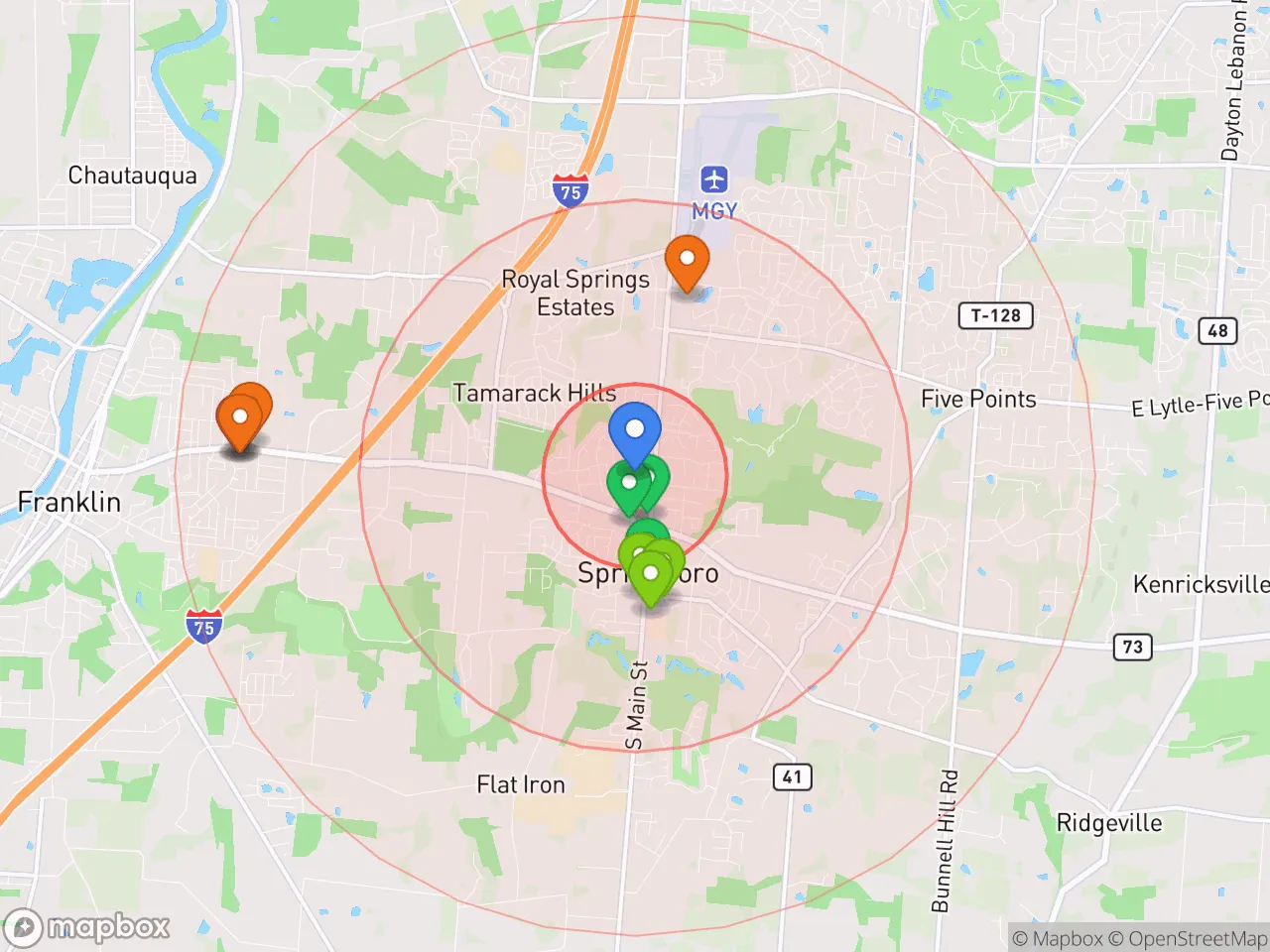
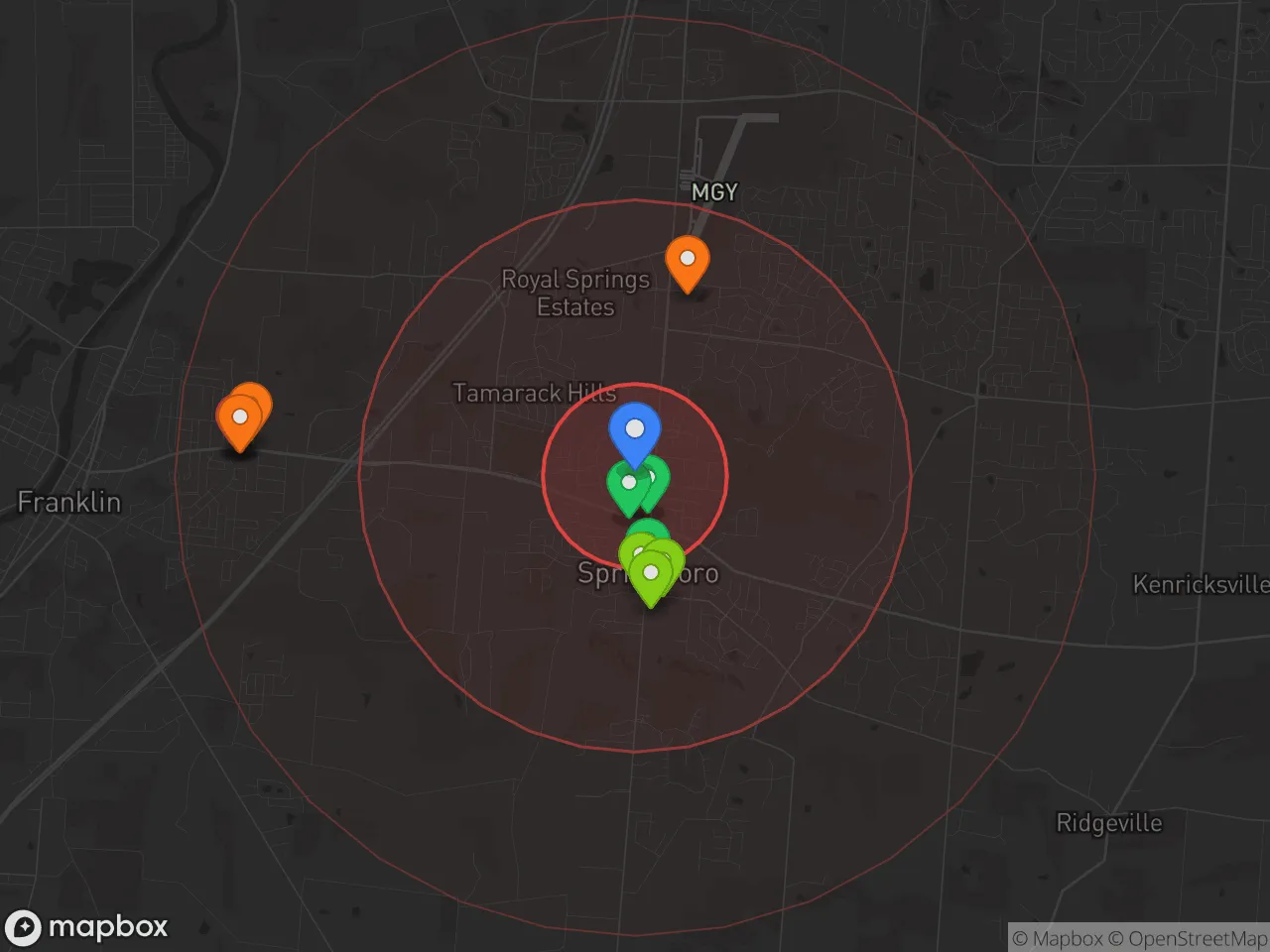
Hobbies
Explore the areaGroceries
7 within 10 miles
Gas
20 within 10 miles
Hospital
20 within 20 miles
Airport
John Glenn Columbus International Airport
Post Office
USPS — Springboro, OH
Critical Amenities
Quality-of-Life Analysis
Springboro, Ohio, is a high-amenity suburb in the Dayton-Cincinnati corridor defined by its affluence, strong public schools, and family-oriented lifestyle. With a cost-of-living index of 118 (18% above the U.S. average), the city attracts professionals, executives, and dual-income families who prioritize school quality and low crime over rock-bottom housing costs. The population skews married-with-children, and the local economy is anchored by nearby corporate headquarters, healthcare systems, and manufacturing employers in both metro areas.
Cost of living, housing, and affordability compared to Dayton and Cincinnati
Springboro’s cost of living is notably higher than both the national average and most surrounding communities, but it remains competitive with top-tier suburbs in the region. The median home value sits at $330,300, roughly double the median in Dayton proper and about 15% above the Cincinnati metro average. Median rent is $1,378, reflecting a tight market for single-family rentals and newer apartment complexes near the I-75 corridor. While these figures are steep for the region, they undercut comparable suburbs in northern Cincinnati (e.g., Mason, West Chester) by 10–15%, giving Springboro a value edge for buyers seeking Warren County schools without the highest price tag. Property taxes in Warren County run about 1.5% of assessed value, moderate for Ohio, and the average commute of 24.8 minutes allows residents to access jobs in both Dayton (20 minutes north) and Cincinnati (30 minutes south) without excessive drive time.
What daily life is like for families: schools, parks, and local amenities
Daily life in Springboro revolves around the highly rated Springboro Community City School District, which consistently earns A ratings from the Ohio Department of Education and feeds into nationally recognized high schools. The city maintains over 20 parks and 30 miles of multi-use trails, with the 80-acre North Park and the Springboro Sports Complex hosting youth soccer, baseball, and lacrosse leagues that dominate weekend schedules. The historic downtown district along Main Street offers locally owned restaurants, a farmers market from May through October, and seasonal events like the Springboro Summer Concert Series. Retail and dining are concentrated along the SR-73 and I-75 interchange, providing big-box shopping and chain restaurants within a 5-minute drive. For medical needs, Kettering Health and Premier Health operate outpatient centers in the city, while major hospitals in Dayton and Cincinnati are 20–30 minutes away. The rhythm is distinctly suburban: school drop-offs, evening youth sports, and weekend errands define the pace, with limited nightlife beyond a few breweries and wine bars.
Springboro is best suited for families and professionals who value top-tier public schools, low crime rates, and a suburban lifestyle with easy access to two metro economies. Empty-nesters and retirees may find the property taxes and housing costs high relative to smaller Ohio towns, but the combination of strong schools, ample parks, and a 25-minute commute to major employment centers makes it a logical choice for those who can afford the premium. Singles or young professionals seeking urban energy or nightlife will likely prefer Dayton’s Oregon District or Cincinnati’s Over-the-Rhine, but for anyone prioritizing school quality and community safety, Springboro delivers consistently high marks.

Crime in Springboro, OH
Generally safer than 73% of comparable U.S. locations.
Violent CrimeViolent Crime Analysis
Property CrimeProperty Crime Analysis
Crime Analysis
Springboro, Ohio, is a notably safe community, with violent crime rates far below national averages and property crime rates that, while higher than the town's violent crime figures, remain manageable for a suburban city in the Dayton-Cincinnati metro area. The city recorded a violent crime rate of just 15.2 per 100,000 residents, a fraction of the U.S. average of roughly 380 per 100,000. Property crime stands at 874.8 per 100,000, which is below the national median but warrants attention from prospective residents.
Crime in context
Springboro’s violent crime rate of 15.2 per 100,000 is 96% lower than the national average and significantly under Ohio’s state rate of approximately 290 per 100,000. Property crime at 874.8 per 100,000 is about 30% below the U.S. rate of roughly 1,950 per 100,000, but it is slightly above the Ohio average of 1,800 per 100,000. This means that while serious violent incidents are extremely rare, theft and burglary occur at a moderate suburban level. The city benefits from its location in Warren County, which has historically maintained conservative law-and-order policies and a well-funded sheriff’s office, contributing to overall low crime. However, Springboro sits within the broader Dayton-Cincinnati metro area, where some larger jurisdictions have adopted progressive prosecutorial approaches. Readers should be aware that liberal-leaning district attorneys in nearby cities can lead to reduced enforcement and higher recidivism, potentially spilling over into surrounding suburbs like Springboro over time.
What residents experience
Most residents report feeling very safe walking their neighborhoods, using city parks, and shopping at the Springboro Towne Center. The most common property crimes are vehicle break-ins and package thefts, often concentrated near apartment complexes and retail corridors like State Route 73. Violent crime is virtually nonexistent in residential areas; the few incidents that occur are typically domestic in nature and isolated. The Springboro Police Department maintains a visible presence and responds quickly to calls, and neighborhood watch programs are active in subdivisions like Settlers Walk and Deer Run. For families, the primary safety concern is not street crime but rather traffic safety on arterial roads, where congestion and speeding are more frequent issues.
Neighborhood-level variation is modest but worth noting. The older, established sections near downtown Springboro and the newer developments along the southern edge (closer to I-75) see slightly higher property crime rates due to easier access for transient offenders. The gated communities and large-lot subdivisions in the northern part of the city, such as those near the Springboro Country Club, report the lowest crime figures. Overall, Springboro offers a strong safety profile for a metro-area suburb, but residents should remain vigilant about property crime and monitor how regional prosecutorial trends may affect local conditions in the coming years.
* Values derived from national, state, county, city and local statistics and may differ in a specific area. Last updated: 2026-09-18T05:28:41.000Z
Narrative content on this page is AI-generated and may contain mistakes. Verify any details that matter before acting on them.
ReloMaps may earn a commission from affiliate links at no extra cost to you.

