Photo: Wikipedia
Demographics of Springboro, OH
Affluence Level in Springboro, OH
A middle-class area roughly in line with national averages across income, home values, education, and employment.
People of Springboro, OH
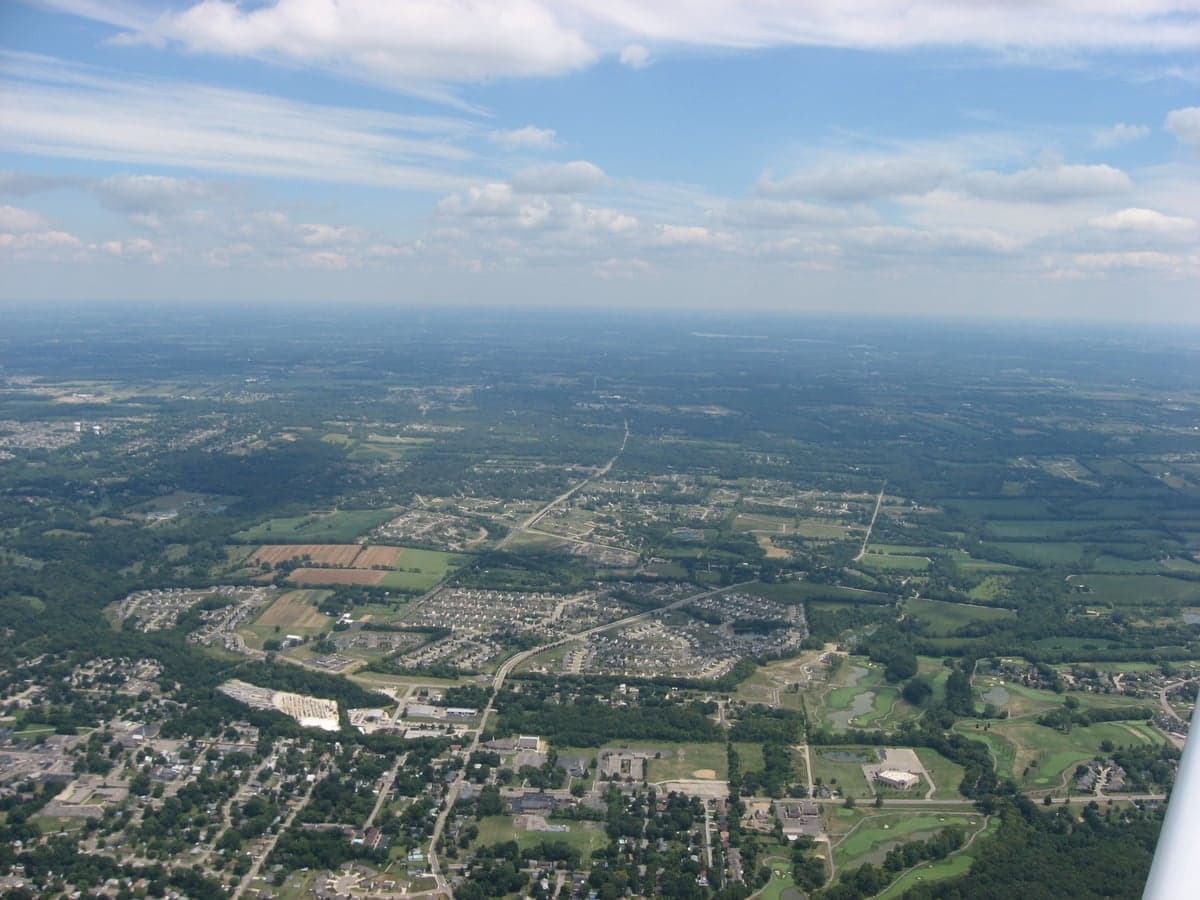
The people of Springboro, Ohio, today number 19,577, forming a predominantly white, highly educated, and family-oriented community with a notably low foreign-born share of 2.8%. The city’s identity is shaped by its blend of historic Quaker roots and modern suburban affluence, reflected in a 55.1% college-educated population and a median household income well above the national median. Distinctive markers include a strong local emphasis on school quality, a conservative-leaning political culture, and a population that is 85.5% white, with Hispanic residents at 4.4%, Black residents at 2.3%, East/Southeast Asian residents at 1.1%, and Indian-subcontinent residents at 1.0%.
How the city was settled and grew
Springboro was founded in 1815 by Quaker families migrating from the Carolinas and Virginia, drawn by the fertile soils of the Miami Valley and the area’s reputation as a stop on the Underground Railroad. These early settlers established a tight-knit, abolitionist community centered on what is now the Historic Downtown Springboro district, where many original 19th-century homes and the Springboro Friends Meetinghouse still stand. The town remained a small agricultural hamlet through the early 1900s, with growth driven by local mills and the arrival of the railroad in the 1850s, which connected farmers to regional markets. By the mid-20th century, Springboro’s population hovered around 1,500, with most residents living in the Olde Springboro neighborhood, a cluster of historic homes along Main Street and State Route 73.
Modern era (post-1965)
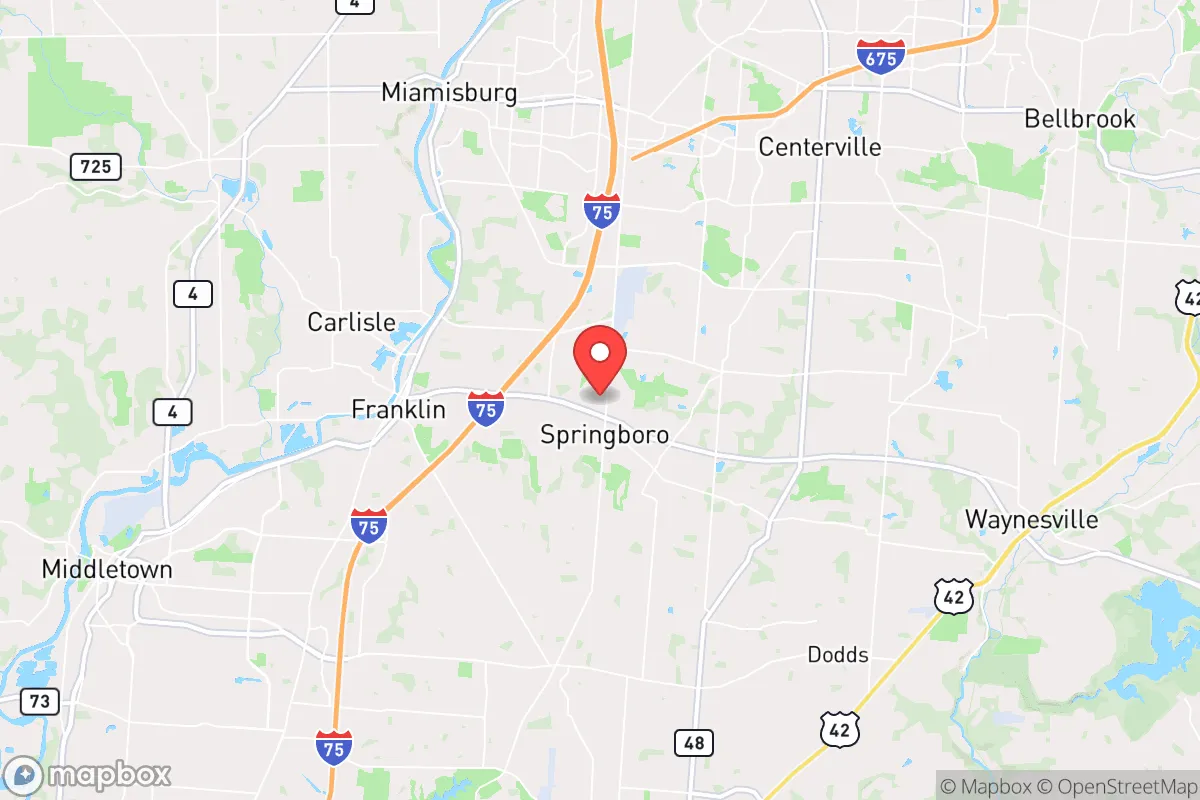
The modern transformation of Springboro began in earnest after the 1965 Hart-Cellar Act, though the city’s growth was driven primarily by domestic in-migration rather than international immigration. The construction of Interstate 75 in the 1960s and 1970s made Springboro a prime bedroom community for Dayton and Cincinnati, sparking a suburban boom that accelerated through the 1990s and 2000s. New subdivisions like Hunter’s Ridge and Wedgewood attracted white-collar families—many from within Ohio and the Midwest—seeking large homes, low crime, and top-rated schools in the Springboro Community City School District. The city’s population surged from roughly 6,000 in 1990 to over 17,000 by 2010, with most new arrivals settling in planned developments such as Clearcreek Crossing and Burning Tree, which feature spacious single-family homes and community amenities. During this period, the city’s racial composition remained overwhelmingly white, with modest growth in Hispanic and Asian populations tied to professional jobs at nearby employers like Wright-Patterson Air Force Base and Procter & Gamble. The Indian-subcontinent community, while small at 1.0%, has concentrated in newer subdivisions like Estates at Springboro, reflecting a pattern of educated professionals moving into higher-end housing.
The future
Springboro’s population is projected to grow slowly but steadily, reaching an estimated 22,000–23,000 by 2040, driven by continued infill development and the appeal of its school system. The city is becoming slightly more diverse, with the Hispanic share expected to rise to around 6–7% and the East/Southeast Asian and Indian-subcontinent shares each potentially reaching 2–3%, as young professionals and tech workers are drawn to the region’s expanding logistics and healthcare sectors. However, the foreign-born share is likely to remain below 5%, as most growth will come from domestic migration from other parts of Ohio and the Midwest. New communities are dispersing across the city’s remaining developable land, particularly in the northern corridor near State Route 73 and the southern edge near the Warren County line, where master-planned subdivisions are being built. The city’s cultural identity is evolving from a quiet Quaker village into a more standard Midwestern exurb, with a growing emphasis on community events like the Springboro Summer Concert Series and the expansion of retail along the Austin Boulevard corridor. For a new resident, this means moving into a place that values stability, school performance, and low crime, but where diversity remains modest and the social fabric is shaped by long-established families and newcomers alike.
Springboro is becoming a stable, affluent exurb with a slowly diversifying population, anchored by strong schools and a conservative-leaning civic culture. For someone moving in now, the city offers a predictable, family-oriented environment where most neighbors are white, college-educated, and employed in professional or managerial roles, and where the pace of change is gradual rather than disruptive.

* Values derived from national, state, county, city and local statistics and may differ in a specific area. Last updated: 2026-09-18T05:28:41.000Z
Narrative content on this page is AI-generated and may contain mistakes. Verify any details that matter before acting on them.
ReloMaps may earn a commission from affiliate links at no extra cost to you.

