Photo: Wikipedia
Political ClimatePolitical Climate in South River, NJ
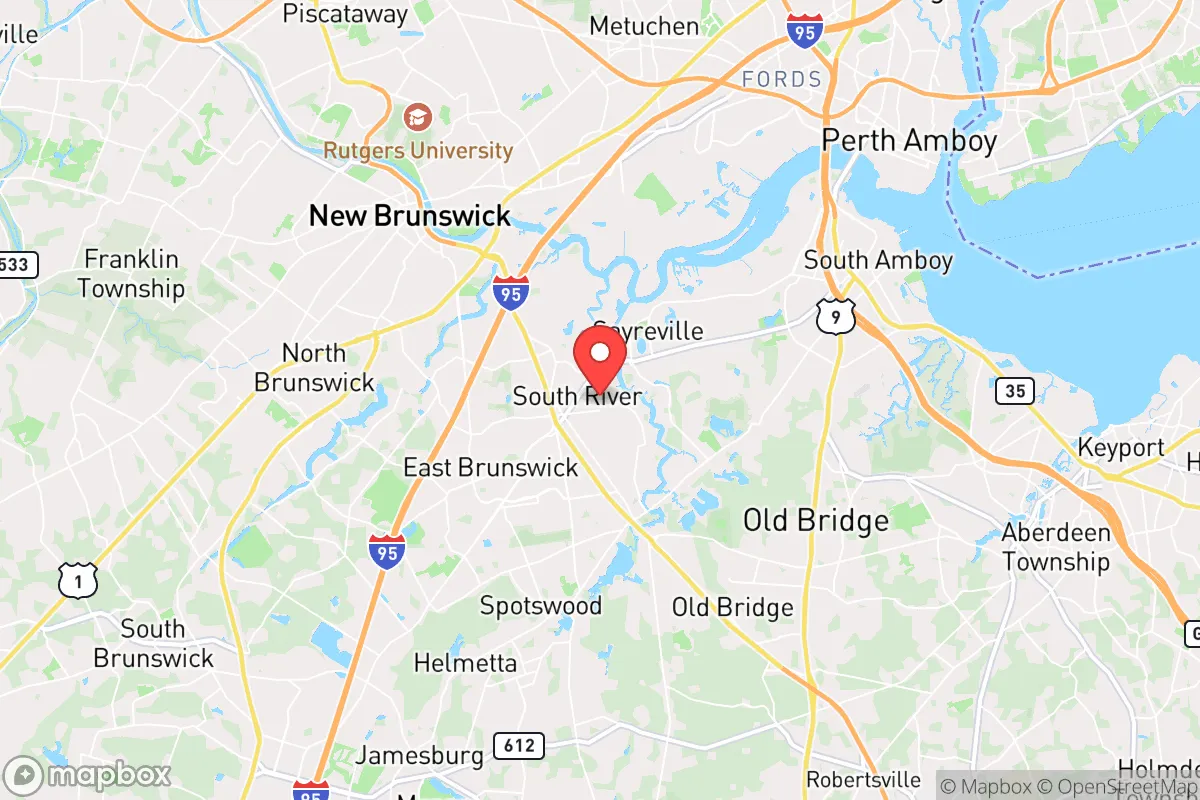
District shown is the primary district for this city’s centroid. Cities may span multiple districts.
Political rankings in New Jersey
- Most Conservative Cities in New Jersey
- Most Liberal Cities in New Jersey
- Best Conservative-Leaning Towns in the Northeast
- Best Conservative-Leaning Towns in the Mid-Atlantic
- Safest Liberal-Leaning Towns on the East Coast
- Safest Conservative-Leaning Towns on the East Coast
- Most Affordable Liberal-Leaning Small Towns in the U.S.
- Safest Liberal-Leaning Cities in the U.S.
- Most Conservative Counties in New Jersey
- Most Liberal Counties in New Jersey
Local Political AnalysisPolitical Analysis of South River, NJ
South River is a solidly Democratic borough, and it’s been that way for a long time — the kind of place where the local Democratic club has deep roots and the party line on the ballot is a real thing. The Cook Political Report gives the borough a PVI of D+13, which puts it well to the left of the state as a whole. That’s not a fluke of one election cycle; it’s a consistent pattern that’s held through wave years for both parties, and it shapes everything from who sits on the borough council to how the town approaches its budget.
How it compares
To put that D+13 in perspective, New Jersey as a whole sits at D+5, so South River is roughly eight points more Democratic than the average Jersey town. That gap is noticeable when you look at the surrounding area. Head a few miles west to East Brunswick or north to Sayreville, and you’ll find similar Democratic-leaning suburbs, but they’re not as deep blue as South River. The real contrast is just across the river in places like Spotswood or further south toward Old Bridge, where the mix is more competitive and you’ll see plenty of Republican lawn signs during midterms. South River’s lean is driven by a few things: a historically working-class, union-friendly population, a significant Eastern European and Hispanic community that votes reliably Democratic, and a local political culture that’s been dominated by the same party for decades. It’s not a purple town, and it’s not trending purple — if anything, the national polarization has only reinforced the local baseline.
What this means for residents
For a conservative living in South River, the practical reality is that you’re in the minority, but not an isolated one. You’ll find Republican voters at the diner and in the VFW hall, but you’re unlikely to see many GOP candidates win a borough-wide race. That means local government tends to be Democratic-led, and the council’s priorities — like affordable housing initiatives and public employee contracts — reflect that. For liberal residents, the upside is that the town’s politics align with their own on most social and economic issues, and there’s a strong network of Democratic activists who turn out for county and state races. The downside, if you can call it that, is that primary elections often matter more than general elections, so the real political fights happen within the party, not between parties. In practice, this means property taxes and school funding are the issues that actually move people — not the culture war stuff you see on cable news.
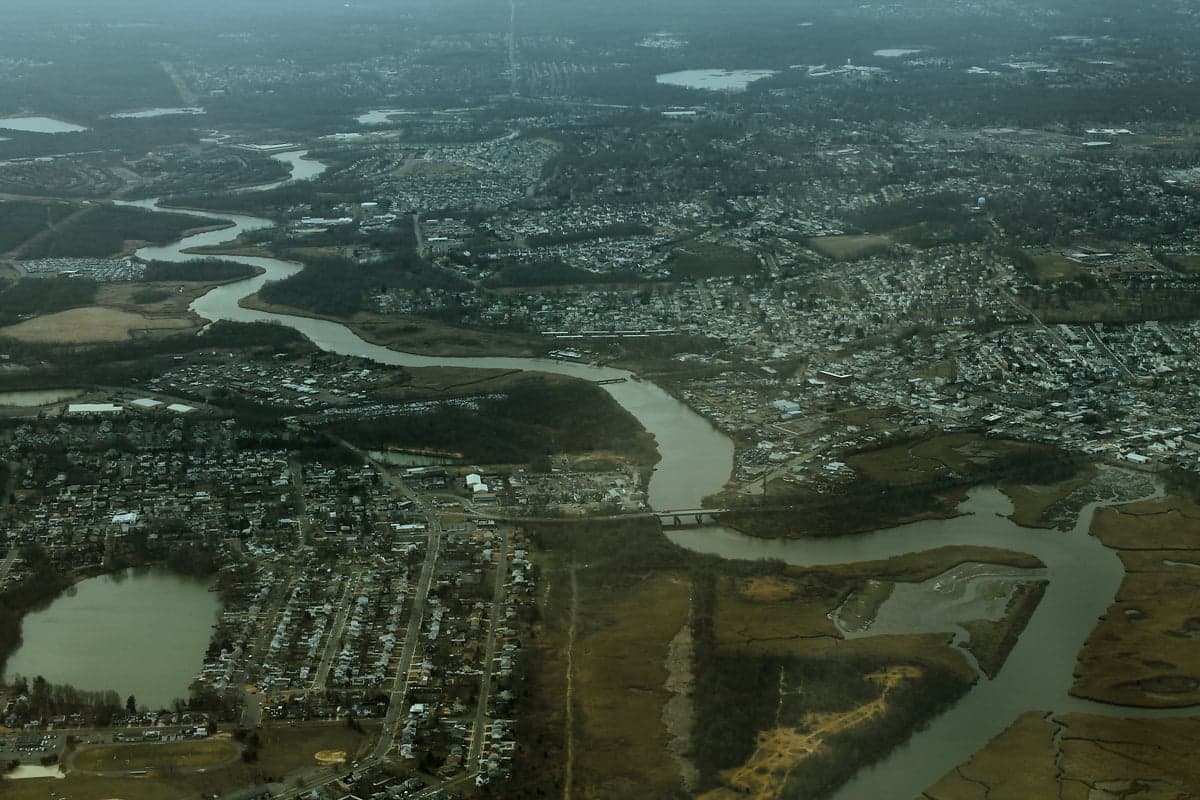
Culturally, South River has a distinct identity that’s more about its immigrant history and its riverfront than about partisan politics. The borough’s Hungarian and Polish heritage is still visible in its churches and social clubs, and newer Hispanic residents have added to that fabric. There’s a pragmatic, blue-collar ethos here — people care about flood protection, the cost of living, and the school system, and they tend to vote for whoever they trust to handle those basics. That’s why, even in a D+13 town, you’ll see crossover support for a moderate Republican in a county or state race if they talk about infrastructure or public safety. Looking ahead, South River’s politics are likely to stay Democratic, but the flavor could shift as younger, more progressive residents move in and the older, more conservative-leaning Democratic base ages out. It’s a stable, predictable political environment — which, in New Jersey, is about as good as it gets.

State Political ClimatePolitical Climate in New Jersey
State Political AnalysisPolitical Environment in the State
New Jersey is a solidly Democratic state with a Cook PVI of D+5, but that number masks a more complicated reality than a simple blue-state label suggests. The state has drifted leftward over the past 20 years, driven largely by the explosive growth of its New York City-adjacent suburbs and the consolidation of urban Democratic machines, but it still retains a stubborn, vote-splitting conservative streak in its rural and exurban corners. For a conservative-leaning relocator, the takeaway is that New Jersey is not a place where you'll find a unified political culture — instead, you get a patchwork of deep-blue cities, purple suburbs, and red townships where your experience depends heavily on which county you choose.
Urban vs. rural divide
The political map of New Jersey is essentially a story of three regions. The northeastern corridor — Newark, Jersey City, Paterson, and the dense Hudson County suburbs — is the engine of the state's Democratic dominance, delivering margins that swamp the rest of the state. These areas are home to the state's largest concentrations of union households, public-sector workers, and immigrant communities, and they vote consistently at 65-80% Democratic in statewide races. In contrast, the rural and exurban counties of Sussex, Warren, Hunterdon, and Salem are reliably Republican, often voting 55-65% for GOP candidates, though their populations are too small to offset the urban centers. The real battleground is the suburban ring — Morris, Somerset, Monmouth, Ocean, and Burlington counties — where the state's elections are actually decided. Ocean County, in particular, is a Republican stronghold (the only county that voted for Trump in both 2016 and 2020 by double digits), while Morris and Somerset have trended purple as professionals have moved in from New York. A conservative moving to New Jersey would find the most welcoming political environment in Ocean County towns like Toms River or Jackson, or in the rural northwest around Newton and Hackettstown.
Policy environment
New Jersey's policy environment is unmistakably progressive, with a tax-and-regulate posture that is among the most aggressive in the nation. The state has a progressive income tax that tops out at 10.75% for income over $1 million, and property taxes are the highest in the country — averaging over $9,500 annually, with some towns exceeding $15,000. The regulatory climate is dense: the state has its own environmental standards that go beyond federal requirements, a strict gun licensing regime (requiring a permit to purchase, a separate permit to carry, and a "justifiable need" standard that was only recently loosened by the Supreme Court's Bruen decision), and a school funding formula that heavily favors urban districts. On education, New Jersey spends more per pupil than almost any other state, and its public schools rank among the best nationally, but the system is also deeply segregated by district lines and property wealth. Healthcare policy is dominated by the state's individual mandate (a state-level penalty for being uninsured, unique in the nation) and a robust Medicaid expansion. Election laws are among the most accessible in the country: no-excuse mail-in voting, automatic voter registration at the DMV, and same-day registration during early voting. For a conservative, the policy environment means high taxes and a thicket of regulations, but also high-quality public services and schools — a trade-off that many suburban families find acceptable.
Recent policy direction
Over the past five years, New Jersey has moved decisively left on a range of issues that matter to relocators. On gun and self-defense law, the state passed a sweeping gun safety package in 2022 that banned .50 caliber rifles, raised the purchasing age to 21, and required liability insurance for gun owners — one of the strictest regimes in the country. On parental and education rights, the state has moved in the opposite direction from many red states: it mandates LGBTQ-inclusive curriculum in public schools, and in 2024, the governor signed a law prohibiting school districts from adopting policies that require staff to out transgender students to their parents. On medical and bodily autonomy, New Jersey has codified abortion rights into state law (the Freedom of Reproductive Choice Act, 2022) and expanded Medicaid coverage for gender-affirming care. On property rights, the state's rent control laws have been tightened in many municipalities, and a 2023 law gave tenants the right of first refusal when their building is sold. On taxation, the trend has been toward higher taxes on the wealthy and corporations, with a surcharge on million-dollar incomes made permanent in 2023. On voting and ballot access, the state has expanded mail-in voting and automatic registration, but also faced controversy over county-line ballots (a unique New Jersey system that gives party-endorsed candidates preferential ballot placement), which a federal court struck down as unconstitutional in 2024. For a conservative, the direction is clear: the state is becoming more progressive on social and cultural issues, and the tax burden is not likely to decrease.
Civil unrest & political movements
New Jersey has a history of organized political activism on both sides, though it rarely makes national headlines. The state's progressive movement is well-funded and institutionalized, anchored by the New Jersey Working Families Alliance and the state's powerful public-sector unions (the NJEA, the state teachers union, is one of the most influential political forces in Trenton). On the right, the New Jersey chapter of Moms for Liberty has been active in school board races, particularly in Ocean and Monmouth counties, where fights over curriculum and library books have been heated. The state's sanctuary policies are a flashpoint: New Jersey's "Immigrant Trust Directive" (2018) limits local police cooperation with federal immigration enforcement, and several cities — Newark, Jersey City, and Trenton — have declared themselves sanctuary cities. This has led to periodic confrontations between state and federal authorities, particularly during the Trump administration. Election integrity has been a persistent issue on the right: the state's widespread use of mail-in voting (expanded during COVID and made permanent in 2021) has drawn criticism from Republicans, though no evidence of widespread fraud has emerged. A conservative moving to New Jersey would find a state where political activism is common but rarely violent — more likely to manifest in contentious school board meetings and local zoning fights than in street protests.
Projection
Over the next 5-10 years, New Jersey's political trajectory is likely to continue its slow leftward drift, but with important caveats. The state's demographic trends — an aging population, slow population growth, and out-migration of younger families to lower-cost states — could eventually moderate its progressive momentum, as the tax base shrinks and pressure to cut spending grows. The in-migration that does occur is largely from New York City, which tends to reinforce the state's Democratic lean. However, the state's high cost of living and tax burden are creating a growing constituency for fiscal conservatism, even among Democrats — Governor Phil Murphy, a progressive, won reelection in 2021 by a much narrower margin than expected, and the state's property tax crisis is a perennial issue that could shift the conversation. A conservative moving to New Jersey now should expect that the state will remain Democratic-controlled for the foreseeable future, but that the margin may narrow as fiscal pressures mount. The most likely scenario is a continuation of the current dynamic: progressive governance in Trenton, with conservative strongholds in the rural and exurban counties, and a growing suburban backlash against high taxes that could produce more moderate Democratic governors.
For a new resident, the bottom line is that New Jersey offers a genuine choice of political environments within a single state. If you choose Ocean County or the rural northwest, you can live in a community that votes Republican, sends Republican representatives to Trenton, and has a local culture that aligns with conservative values — but you will still pay the state's high taxes and live under its progressive state laws. If you choose the northeastern suburbs or the urban centers, you will be in a deep-blue environment where your neighbors and local government are overwhelmingly Democratic. The practical takeaway: New Jersey is not a state where you can escape progressive policy, but it is a state where you can find a community that shares your political values, as long as you are willing to pay the price of admission.
* Values derived from national, state, county, city and local statistics and may differ in a specific area. Last updated: 2026-11-13T09:04:19.000Z
Narrative content on this page is AI-generated and may contain mistakes. Verify any details that matter before acting on them.
ReloMaps may earn a commission from affiliate links at no extra cost to you.

