Photo: Wikipedia
Demographics of South River, NJ
Affluence Level in South River, NJ
A middle-class area roughly in line with national averages across income, home values, education, and employment.
People of South River, NJ
South River, New Jersey, is a densely settled borough of 16,007 residents where a working-class immigrant legacy meets a rapidly diversifying present. The population is now 53.4% White, 26.7% Hispanic, 10.4% Black, 3.0% East/Southeast Asian, and 1.1% Indian (subcontinent), with 9.7% foreign-born. Its identity is rooted in a tight-knit, blue-collar history along the South River waterfront, yet today it is one of Middlesex County's most ethnically mixed small towns, blending old-time Italian and Hungarian families with newer Latino and Black communities.
How the city was settled and grew
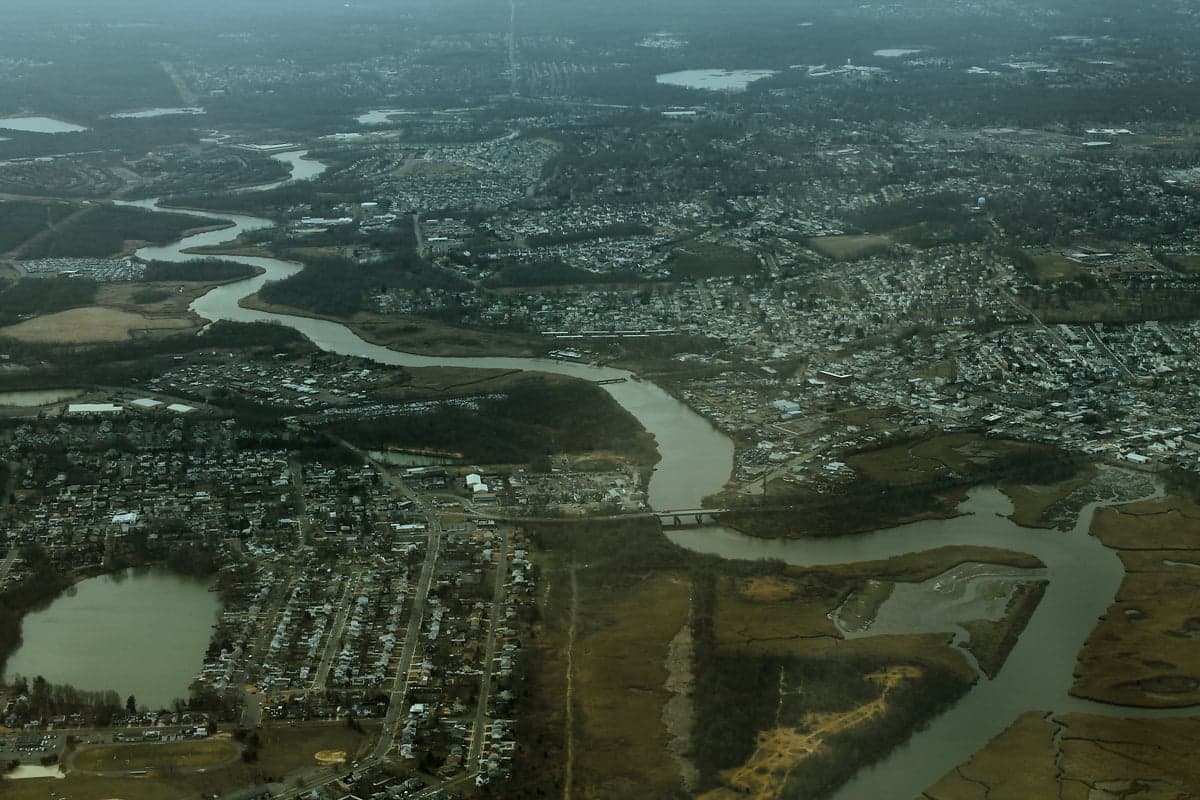
South River's growth was not a colonial story but a 19th- and 20th-century industrial one. The borough's location on the tidal South River made it a natural hub for brickmaking, clay mining, and shipbuilding, which drew the first major wave of immigrants. By the 1880s, Hungarian and Slovak laborers dominated the brickyards, settling in the Old Bridge Turnpike corridor and the low-lying streets near the river, an area still dotted with century-old worker cottages. A second wave of Italian immigrants arrived around 1900, working in the clay pits and on the railroad, and they built the dense, narrow-lot neighborhoods around Main Street and Whitehead Avenue that remain the borough's commercial and social spine. These groups were joined by a smaller contingent of Polish and German families, and by 1930 the borough was a classic immigrant mill town, overwhelmingly White and Catholic, with parish churches anchoring each ethnic enclave.
Modern era (post-1965)
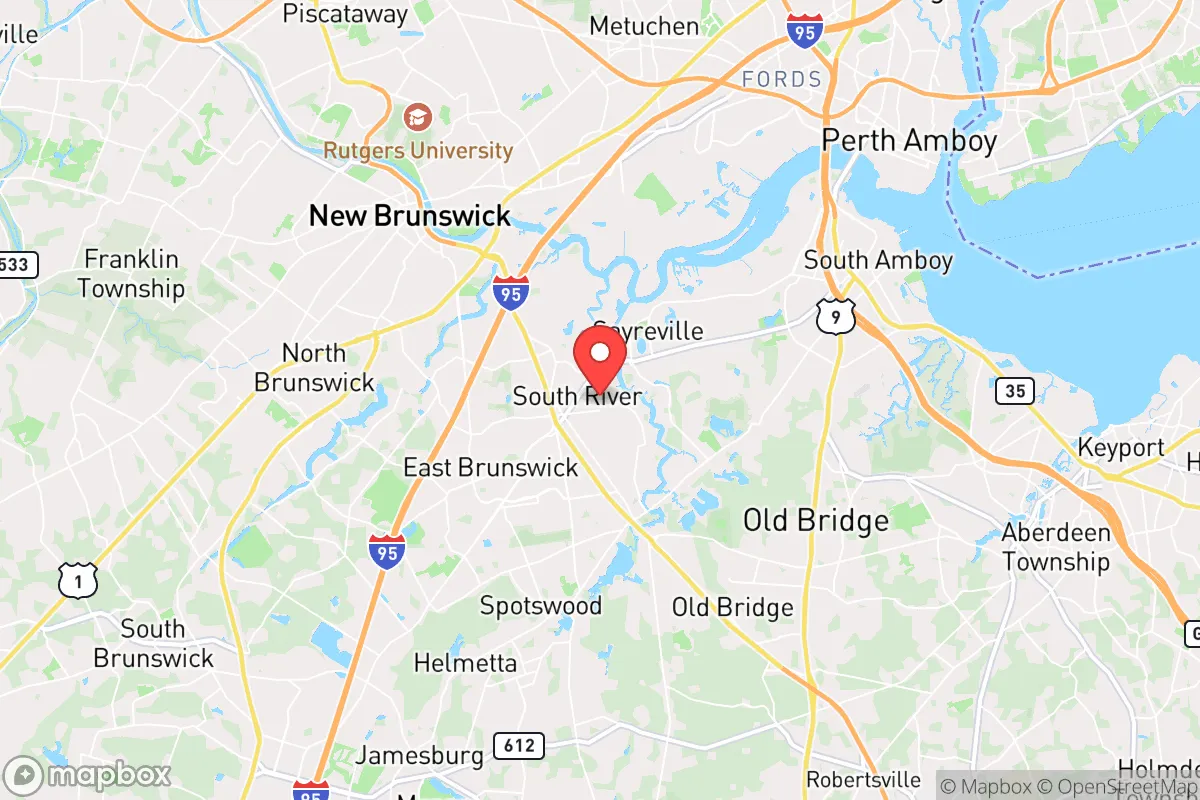
The post-1965 immigration reforms and the decline of local manufacturing reshaped South River's population. As the brickyards closed through the 1970s, the children of the Hungarian and Italian families began leaving for suburban Middlesex County towns like East Brunswick and Monroe, opening up housing stock. Into that vacuum came a steady stream of Hispanic families, primarily Puerto Rican and Dominican, who found affordable homes and proximity to warehouse and service jobs along Route 18 and the New Jersey Turnpike. They concentrated in the southern end of the borough near the riverfront and along Jackson Street, where they now anchor a vibrant Latino commercial strip. A smaller but significant Black population, largely African American families moving from New Brunswick and Perth Amboy, settled in the central wards around Elizabeth Street during the 1980s and 1990s. The most recent additions are East/Southeast Asian families—Filipino, Vietnamese, and Chinese—who have bought homes in the northeast section near the Sayreville border, drawn by the borough's low property taxes relative to neighboring towns. The White share has fallen from over 85% in 1980 to 53.4% today, while the Hispanic share has grown from under 5% to 26.7%.
The future
South River's population is becoming more diverse, not less, and the trend shows no sign of reversing. The borough's Hispanic share is projected to approach 35% by 2040, driven by natural increase and continued migration from Middlesex County's larger Latino hubs. The Black population is stable, while the East/Southeast Asian and Indian (subcontinent) communities, though small, are growing slowly as professionals seek affordable starter homes within commuting distance of New Brunswick's hospitals and pharmaceutical campuses. New residential development is scarce—the borough is nearly built out—so growth is occurring through the subdivision of older single-family homes into multi-unit rentals, particularly in the riverfront district and Old Bridge Turnpike corridor. This is accelerating a generational shift: the remaining Italian and Hungarian families are aging in place, and their homes are increasingly passing to young Hispanic and Asian buyers. The cultural identity is evolving from a European-ethnic enclave to a polyglot working-class borough, with Spanish increasingly heard alongside English in the schools and shops.
For someone moving in now, South River offers a rare combination in central New Jersey: genuine diversity, sub-$400,000 home prices, and a 30-minute train commute to Newark. The trade-off is density—the borough packs 16,000 people into just 2.8 square miles—and a school district that is majority-minority and still adjusting to its new demographics. The old ethnic clubs are fading, but the new South River is being built by families who value the same things the Hungarians and Italians did: a safe street, a nearby church, and a short walk to a decent deli. It is not a gentrifying town; it is a replenishing one, and the people arriving now are writing the next chapter of its immigrant story.

* Values derived from national, state, county, city and local statistics and may differ in a specific area. Last updated: 2026-11-13T09:04:19.000Z
Narrative content on this page is AI-generated and may contain mistakes. Verify any details that matter before acting on them.
ReloMaps may earn a commission from affiliate links at no extra cost to you.

