Photo: Wikipedia
Demographics of Spink County
Affluence Level in Spink County
A middle-class area roughly in line with national averages across income, home values, education, and employment.
People of Spink County
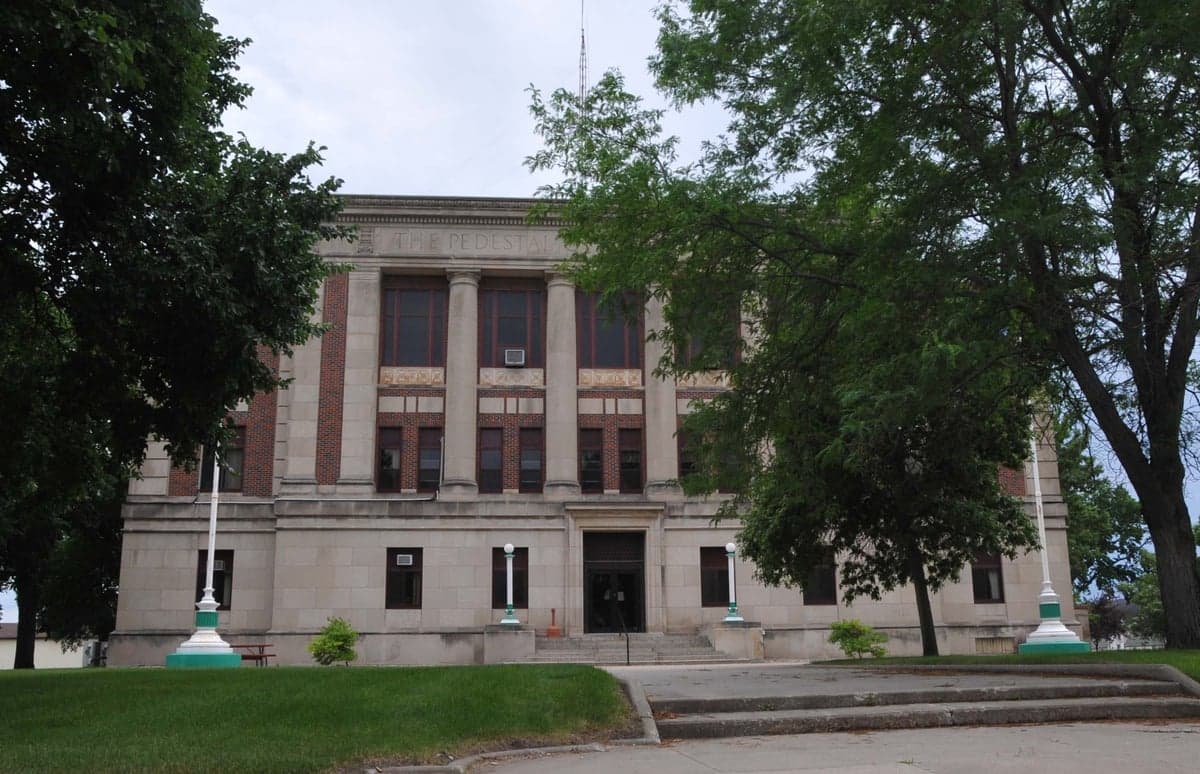
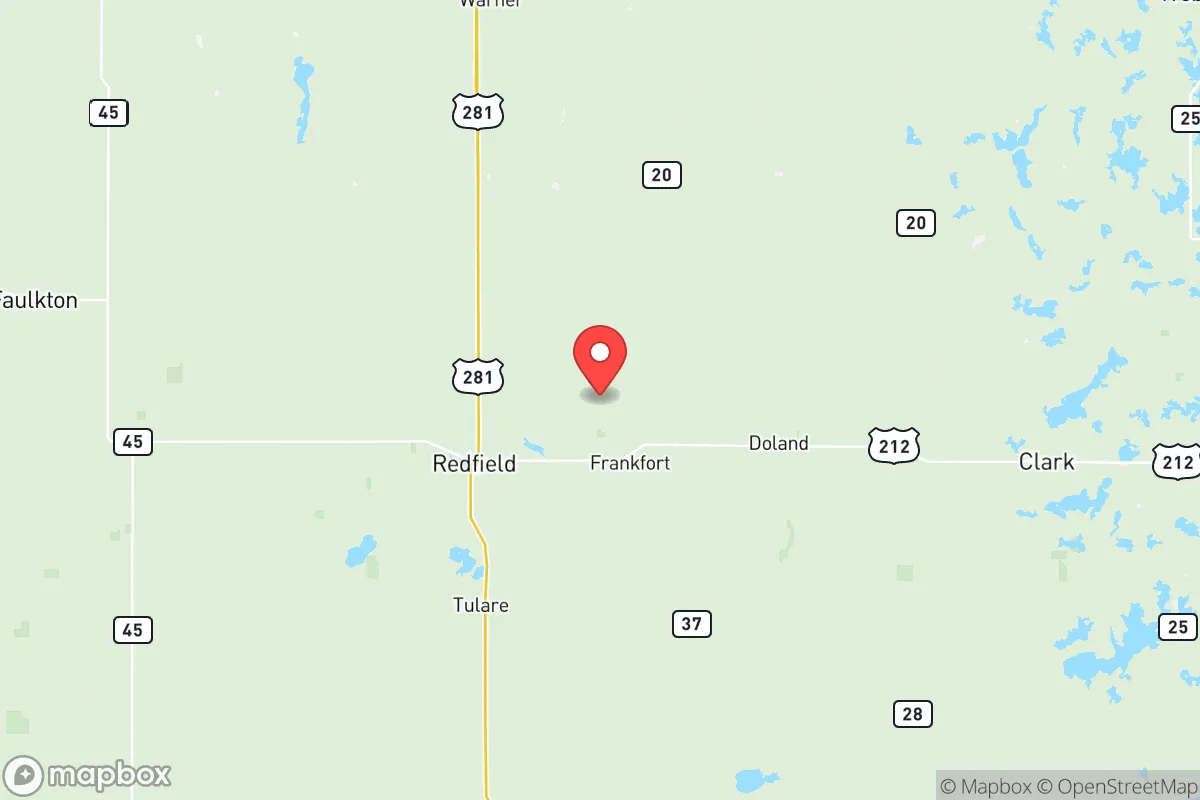
Spink County, South Dakota, is home to 6,283 residents, making it one of the state’s more sparsely populated rural counties, with a population density of just over four people per square mile. The county is overwhelmingly White (94.4%) and native-born (99.0% U.S.-born), with a small Hispanic population of 2.6% and a Black population of 0.9%. Its identity is rooted in agricultural heritage, small-town civic life, and a stable, family-oriented culture centered on the county seat of Redfield and the communities of Frankfort, Doland, and Conde.
Settlement & growth (pre-1960)
Before American settlement, the land that is now Spink County was part of the traditional territory of the Dakota (Sioux) people, particularly the Iháŋktȟuŋwaŋna (Yanktonai) bands, who followed bison herds along the James River. The 1858 Yankton Treaty and subsequent land cessions opened the region to Euro-American settlement, but it was not until the 1870s and 1880s that significant numbers of homesteaders arrived, drawn by the promise of 160-acre plots under the Homestead Act and the extension of the Chicago, Milwaukee, St. Paul and Pacific Railroad.
The first major wave of settlers were native-born Americans from the Upper Midwest—primarily from Wisconsin, Minnesota, and Iowa—who established farms along the James River valley. They founded Redfield in 1880 as a railroad town and agricultural service center, and it quickly became the county’s commercial and governmental hub. Almost simultaneously, German immigrants began arriving in the 1880s, drawn by cheap land and the presence of German-speaking communities already established in eastern Dakota Territory. They concentrated in the northern part of the county, founding the towns of Frankfort and Ashton, where German Lutheran and Catholic churches became the anchors of community life. Many of these families were from the Volga German region of Russia, bringing with them a distinctive dialect and a strong tradition of wheat farming.
A second wave of European immigration arrived between 1890 and 1910, this time including Norwegian and Swedish settlers who took up land in the central and eastern townships, particularly around the communities of Conde and Turton. These Scandinavian families were primarily Lutherans who built small country churches and one-room schoolhouses that dotted the prairie. The town of Doland, founded in 1881, became a commercial center for the Norwegian community, with its main street lined with grain elevators, hardware stores, and implement dealers serving the surrounding farms. Irish immigrants, though fewer in number, also settled in the county, often working as railroad laborers before acquiring their own farms near Hitchcock and Brentford.
By 1920, Spink County’s population had peaked at roughly 9,000 residents, a figure it would never again reach. The Dust Bowl of the 1930s hit the region hard, with severe drought and wind erosion driving some families off the land entirely, particularly those who had homesteaded on marginal soils in the western part of the county. Those who stayed—mostly the German and Norwegian families with deeper roots and more established farms—consolidated their holdings, and the county’s population began a long, slow decline that continued through the mid-20th century as agricultural mechanization reduced the need for farm labor.
Modern era (post-1965)
The post-1965 period brought little of the demographic transformation seen in urban America. The 1965 Hart-Cellar Act, which dramatically increased immigration from Asia, Latin America, and Africa, had almost no effect on Spink County. As of the most recent data, the foreign-born population stands at just 1.0%, and there are no measurable East/Southeast Asian or Indian-subcontinent communities in the county. The small Hispanic population of 2.6% is largely composed of families who moved to the area in the 1990s and 2000s to work in the Redfield meatpacking plant and on dairy operations, with most settling in Redfield itself rather than in the smaller towns.
Domestic migration patterns have been more consequential. Since the 1970s, Spink County has experienced steady out-migration of young adults seeking education and employment in larger cities like Sioux Falls, Brookings, and Aberdeen. This has left an aging population: the median age is approximately 44, well above the national average, and the county has more residents over 65 than under 18. The towns of Frankfort, Conde, and Doland have seen their populations shrink by 20-30% since 1990, with many main-street storefronts now vacant. Redfield has fared somewhat better, retaining its role as a regional agricultural service center and home to the South Dakota Developmental Center, a state-run facility that employs roughly 300 people and provides a stabilizing economic anchor.
Suburbanization has not occurred in any meaningful sense. There are no suburban subdivisions or exurban bedroom communities in Spink County; the nearest metropolitan area, Aberdeen, is 45 miles north, and most residents live on farms or in the small towns themselves. The county’s racial and ethnic composition has remained remarkably stable: the White share was 98.5% as recently as 2000, and the modest increase in Hispanic and Black residents since then represents a slow but real diversification, concentrated almost entirely in Redfield.
The future
Spink County’s population is projected to continue its gradual decline, falling to roughly 5,800 by 2040 under current trends. The county is not becoming more diverse in any rapid sense; the Hispanic share may rise to 4-5% over the next decade as families working in agriculture and meat processing settle permanently, but the county will remain overwhelmingly White and native-born for the foreseeable future. The small Black population, currently 0.9%, is largely tied to the state-run developmental center and is unlikely to grow significantly without a major new employer.
The cultural identity of the county is evolving slowly. The German and Norwegian heritage that defined the region for a century is still visible in church suppers, lutefisk dinners, and the annual Spink County Fair in Redfield, but younger generations are less connected to those ethnic traditions. The county’s future hinges on whether it can retain or attract young families; currently, the school districts in Redfield and Doland are consolidating, and the lack of rental housing and entry-level jobs in the smaller towns makes it difficult for new residents to move in. The most likely scenario is a continued concentration of population in Redfield, with the smaller towns of Frankfort, Conde, and Turton shrinking to unincorporated hamlets over the next two decades.
For someone moving in now, Spink County offers a quiet, safe, and deeply rooted rural lifestyle with low crime, strong community ties, and affordable housing—but also limited economic opportunity, minimal diversity, and a population that is older and shrinking. It is a place where newcomers are welcomed but expected to integrate into existing social structures, and where the pace of life is dictated by the seasons and the harvest rather than by urban trends. The county is not becoming something new; it is becoming a smaller, quieter version of what it has always been.

* Values derived from national, state, county, city and local statistics and may differ in a specific area. Last updated: 2026-07-10T20:25:21.000Z
Narrative content on this page is AI-generated and may contain mistakes. Verify any details that matter before acting on them.
ReloMaps may earn a commission from affiliate links at no extra cost to you.

