Photo: Wikipedia
Demographics of Pennington County
Affluence Level in Pennington County
A middle-class area roughly in line with national averages across income, home values, education, and employment.
People of Pennington County
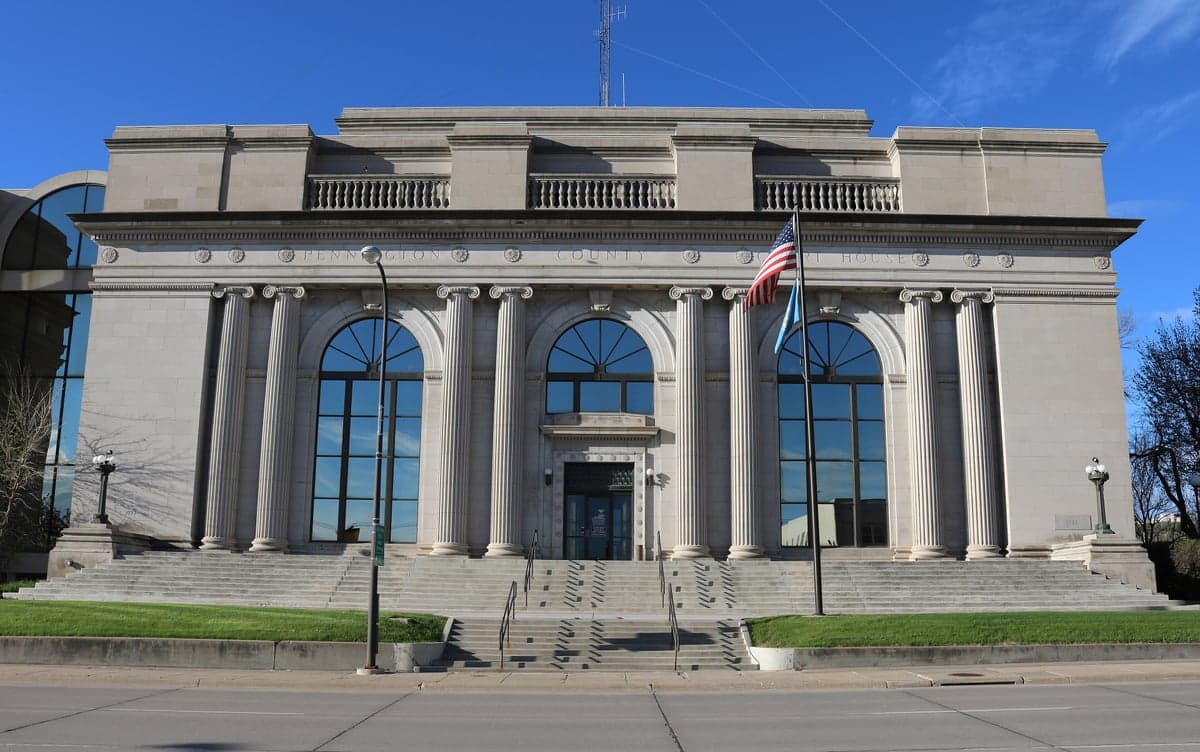
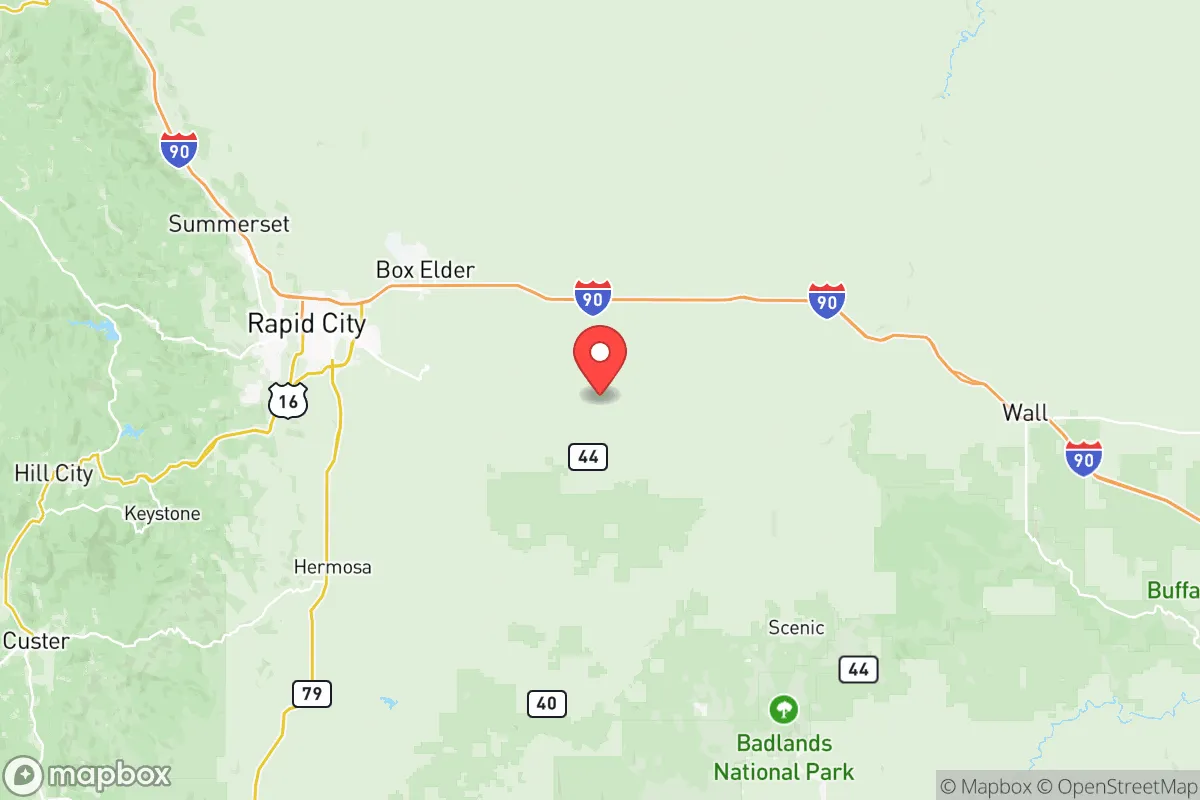
Pennington County, South Dakota, is home to 112,081 residents, a population defined by its strong Western character, a significant Native American presence, and a growing but still modest diversity. The county is anchored by Rapid City, the state's second-largest city, and is the commercial and cultural hub for the western half of the state. Its identity is shaped by a blend of frontier history, the nearby Pine Ridge and Cheyenne River reservations, and a steady influx of people drawn to the Black Hills' outdoor recreation and a lower cost of living.
Settlement & growth (pre-1960)
Long before European settlement, the area now known as Pennington County was home to the Lakota people, particularly the Oglala and Sicangu bands, who used the Black Hills as a sacred and resource-rich territory. The first non-Native incursion came with the 1874 Custer Expedition, which confirmed gold in the Black Hills, triggering a massive influx of prospectors and settlers in violation of the 1868 Fort Laramie Treaty. The city of Rapid City was founded in 1876 as a gateway to the gold fields, quickly becoming a supply and rail center. The earliest white settlers were overwhelmingly of Northern European descent—English, German, and Scandinavian—drawn by mining, ranching, and the promise of land under the Homestead Act.
The county's population grew steadily through the early 20th century, driven by the expansion of the railroad and the establishment of Ellsworth Air Force Base in 1942. The base brought a wave of military families and civilian workers, many of whom stayed after their service. The post-World War II era saw a boom in tourism to Mount Rushmore and the Black Hills, further cementing Rapid City as a regional service center. By 1960, the county's population was nearly 60,000, overwhelmingly white and native-born, with a small but established Lakota community concentrated in the Rapid City area and the nearby town of Wall.
Modern era (post-1965)
The 1965 Hart-Cellar Act had a minimal direct impact on Pennington County, as the region did not attract the large-scale immigration seen in coastal cities. The foreign-born population remains very low at just 0.8%, one of the lowest rates in the nation. The most significant demographic shift since the 1960s has been the growth of the Native American population, driven by migration from the Pine Ridge and Cheyenne River reservations into Rapid City for jobs, education, and healthcare. Today, the county's population is 78.3% white, with a substantial Native American community that is not fully captured in standard racial categories but is a visible and culturally influential presence, particularly in neighborhoods like North Rapid and the Lakota Homes area.
Hispanic residents now make up 5.5% of the population, a growing segment fueled by domestic migration from the Southwest and Mexico, working in construction, hospitality, and agriculture. They are most concentrated in Rapid City and the smaller town of Box Elder. The Black population stands at 1.2%, largely tied to military and civilian employment at Ellsworth Air Force Base. East and Southeast Asian communities (Chinese, Vietnamese, Filipino) account for 1.0%, with a small but established presence in Rapid City, often in professional and medical fields. The Indian subcontinent population is negligible at 0.1%. Suburbanization has been modest compared to national trends, with growth spreading into Box Elder and unincorporated areas along the I-90 corridor, but the county remains centered on Rapid City.
The future
Pennington County is projected to continue growing, driven by domestic migration from higher-cost states like California and Colorado, as well as from other parts of the Midwest. The population is expected to become slightly more diverse, with the Hispanic share likely rising to around 8-10% over the next decade, while the white share will gradually decline. The Native American population will remain a key demographic force, with ongoing migration from reservations and a growing political and cultural presence in Rapid City. New residential development is concentrating in Box Elder and the Rapid Valley area, where new subdivisions are attracting families seeking affordable housing. The county's cultural identity is likely to remain rooted in its Western and Lakota heritage, but with a more visible Hispanic influence in local businesses and festivals.
For someone moving to Pennington County now, the area offers a relatively affordable, safe, and outdoor-oriented lifestyle with a strong sense of community. The population is still predominantly white and native-born, but the county is slowly becoming more diverse, particularly through Hispanic and Native American growth. The key trend is steady, moderate growth driven by domestic migration, with the character of the region remaining more Western than suburban, and more traditional than cosmopolitan. It is a place where the frontier past still feels present, and where new arrivals are welcomed but expected to adapt to the local culture.

* Values derived from national, state, county, city and local statistics and may differ in a specific area. Last updated: 2026-10-23T20:17:50.000Z
Narrative content on this page is AI-generated and may contain mistakes. Verify any details that matter before acting on them.
ReloMaps may earn a commission from affiliate links at no extra cost to you.

