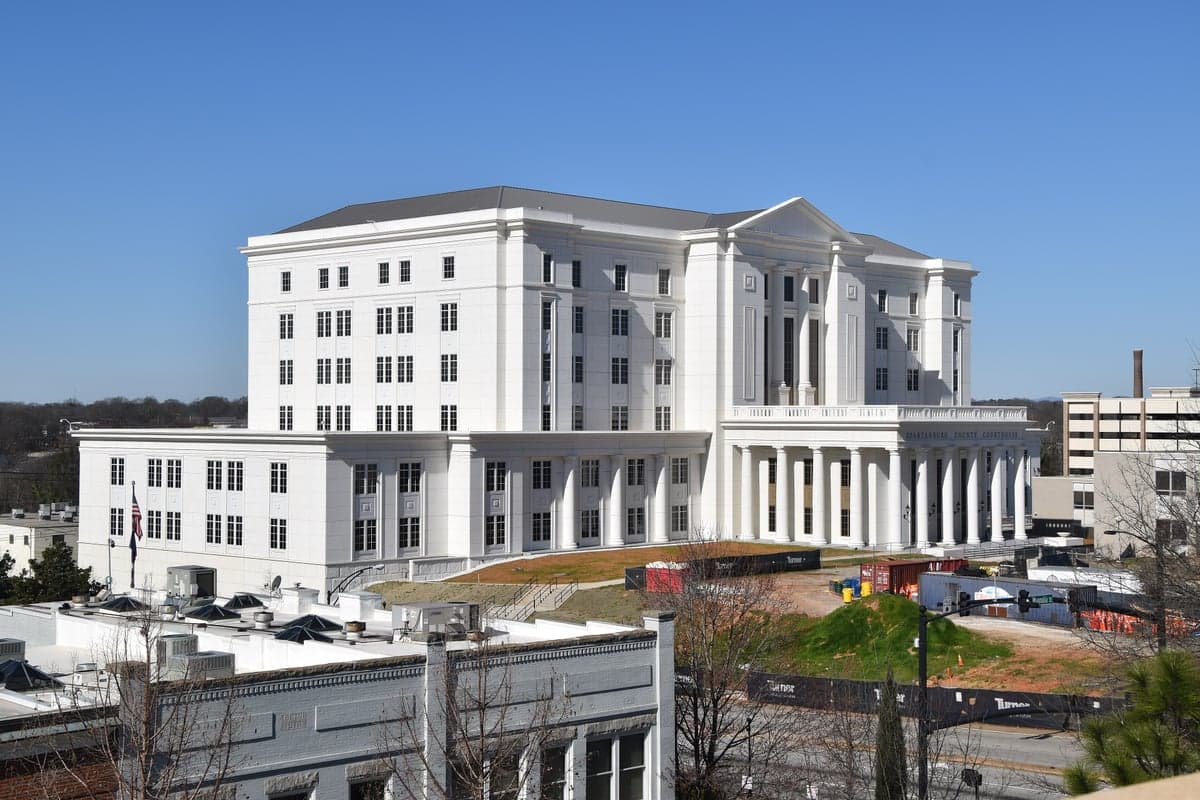
Photo: Wikipedia
Quality of Life in Spartanburg County
A livable area that tracks near national norms for affordability, walkability, and neighborhood health.
What does Quality of Life tell us?
Quality of Life measures an area by evaluating factors like cost of living, nearby amenities, country club access, airport proximity, socioeconomic signals and neighborhood character. For large states, this is a general average — quality of life can vary dramatically between metro areas, suburbs, and rural communities within the same state.
What does this tell us?
Quality of Life measures an area by evaluating factors like cost of living, nearby amenities, country club access, airport proximity, socioeconomic signals and neighborhood character. For large states, this is a general average — quality of life can vary dramatically between metro areas, suburbs, and rural communities within the same state.
Cost of Living
17% below national average
104%
The Real Cost of Living in Spartanburg County for 2026
| Tier | Individual | Family (4) |
|---|---|---|
| Survival | $16k | $31k |
| Comfortable | $42k | $62k |
| Luxury | $114k+ | $177k+ |
| Elite (Top 5%) | $134k+ | $208k+ |
Quality-of-Life Analysis
Spartanburg County offers a broad quality-of-life spectrum, from the revitalized urban core of its largest city to quiet, unincorporated crossroads and rural farmland. The county attracts a mix of young professionals and students drawn to the downtown Spartanburg scene, families seeking affordable suburban homes in communities like Boiling Springs, and retirees or commuters looking for land and lower taxes in rural pockets near Woodruff or Pacolet. This diversity means the "right" neighborhood depends heavily on whether a resident prioritizes walkable nightlife, top-rated schools, or acreage and privacy.
Largest town(s) & population centers
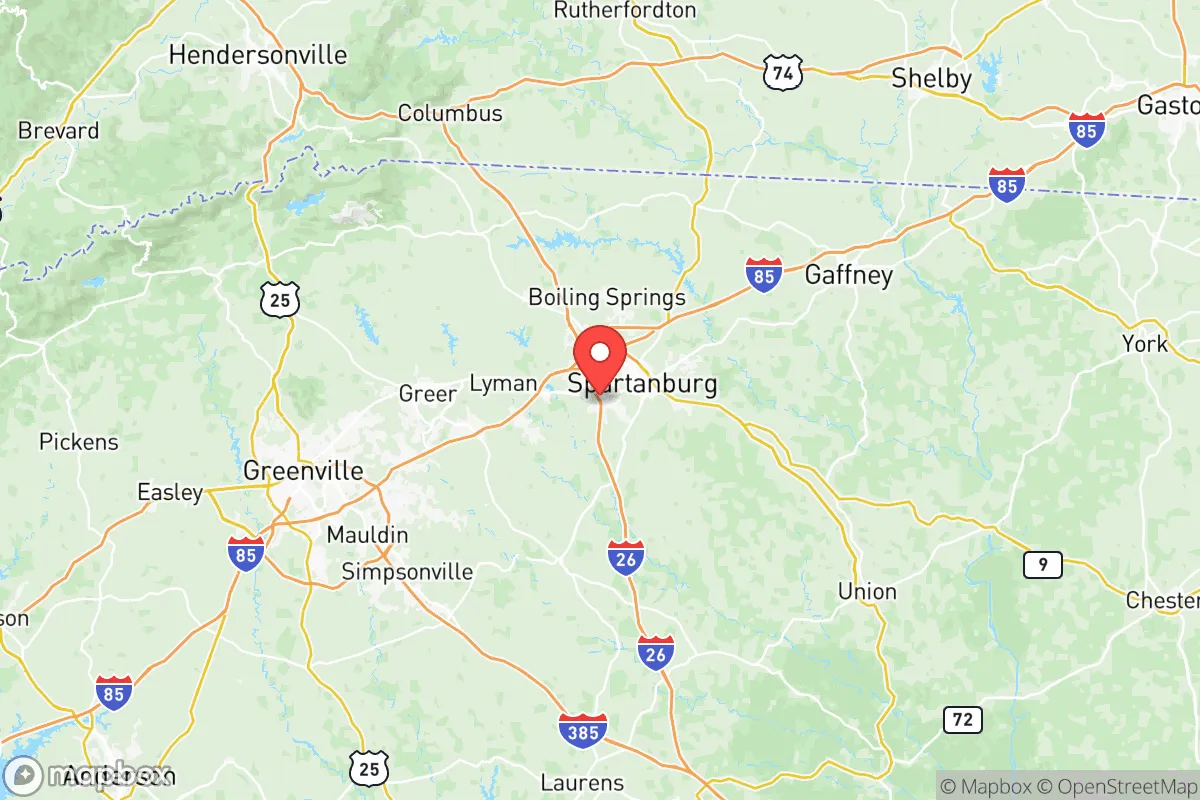
The county's undisputed hub is the city of Spartanburg (pop. ~38,000), which has undergone a downtown renaissance anchored by the Hub City Bookshop, the Chapman Cultural Center, and a growing food-and-brewery scene along Morgan Square. Daily life here is walkable and event-driven, with residents frequenting the Spartanburg Memorial Auditorium and the Rail Tail Ale House. Just west of the city, Boiling Springs (pop. ~10,000) functions as a major suburban bedroom community, with rapid residential growth, chain retail along Highway 9, and the highly regarded Boiling Springs High School. Further south, Duncan (pop. ~4,000) is a fast-growing industrial and logistics center near the BMW Manufacturing Co. plant in Greer, drawing workers who want a short commute and newer subdivisions. Woodruff (pop. ~4,200) serves as a smaller, more traditional town center with a historic Main Street and a slower pace, appealing to those who want a small-town feel within 20 minutes of Spartanburg's amenities.
Smaller towns & rural pockets
Beyond the population centers, Spartanburg County contains several distinct smaller communities. Pacolet (pop. ~2,500) is a historic mill town along the Pacolet River, offering a tight-knit community and a quiet, affordable housing stock of older mill homes and newer single-family houses. Landrum (pop. ~2,800), in the county's northern tip near the Blue Ridge foothills, is a gateway to outdoor recreation at Campobello and Lake Bowen, with a quaint downtown that attracts weekenders and retirees. Inman (pop. ~2,300) and Campobello (pop. ~500) are unincorporated communities that blend rural farmland with small clusters of services; they are popular with horse owners and those seeking larger lots. The far eastern side of the county, near the Tyger River and Cross Anchor area, remains deeply rural, with few services and a strong agricultural character.
Cost & lifestyle range
The county's overall cost of living index of 83 (100 = U.S. average) masks significant internal variation. At the higher end, downtown Spartanburg and newer subdivisions in Boiling Springs and Duncan command median home values near the county's $216,000 average, with some new construction exceeding $350,000. Rents in these areas average $1,019 per month, but can reach $1,400 for a two-bedroom in a desirable complex near the WestGate mall corridor. At the lower end, rural communities like Pacolet, Woodruff, and the Una area (an unincorporated community south of Spartanburg) offer median home values often below $180,000 and rents under $900 for older homes. The average commute of 24.6 minutes is manageable across the county, though residents in far northern Landrum or eastern Cross Anchor may face 35-40 minute drives to jobs in Spartanburg or Greenville. Property taxes remain low across the county (roughly 0.5% of assessed value), keeping the rural lifestyle especially affordable for those willing to trade proximity to amenities for space.
Spartanburg County best suits residents who value affordability and variety over a single, uniform experience. Young professionals and students thrive in the walkable downtown Spartanburg core; families with school-age children gravitate toward the suburban schools and amenities of Boiling Springs and Duncan; and those seeking land, quiet, or a foothills setting find their niche in Landrum, Pacolet, or the rural Tyger River area. The county's strength is that it offers a genuine choice between urban energy, suburban convenience, and rural tranquility — all within a short drive of each other.

Crime in Spartanburg County
Crime rates similar to the national median for U.S. locations.
Violent CrimeViolent Crime Analysis
Property CrimeProperty Crime Analysis
Crime Analysis
Spartanburg County, South Carolina, presents a mixed safety picture: its violent crime rate of 376.1 per 100,000 residents is notably higher than the national average, while its property crime rate of 1,653.2 per 100,000 also exceeds state and national benchmarks. The county’s safety landscape varies significantly by jurisdiction, with the city of Spartanburg itself reporting higher crime concentrations than outlying towns like Landrum, Woodruff, and Pacolet. Prospective residents should weigh these statistics carefully, particularly given the influence of local prosecutorial policies on public safety outcomes.
Crime in context
Spartanburg County’s violent crime rate of 376.1 per 100,000 is roughly 7% higher than the South Carolina state average (approximately 352 per 100,000) and about 35% above the national median (roughly 280 per 100,000). Property crime in the county, at 1,653.2 per 100,000, is similarly elevated—about 20% above the national property crime rate of roughly 1,350 per 100,000. These figures place Spartanburg County in the upper tier of crime risk among South Carolina’s 46 counties, though it remains below the most dangerous urban centers like Columbia or Charleston. The county’s crime index is driven largely by incidents in the city of Spartanburg and the unincorporated areas around Interstate 85, where population density and economic pressures are highest.
What residents experience
Residents of Spartanburg County most frequently encounter property crimes—theft, burglary, and motor vehicle theft—which account for roughly 80% of all reported incidents. Violent crimes, while less common, are concentrated in specific neighborhoods: the city of Spartanburg’s downtown core and the northern corridor along Asheville Highway see elevated rates of aggravated assault and robbery. In contrast, smaller towns like Landrum (population ~2,500) and Pacolet (population ~2,200) report violent crime rates below 100 per 100,000, making them statistically safer than the county average. The city of Woodruff also maintains a lower crime profile, though its property crime rate has ticked upward since 2020. Residents in the county’s more rural areas, such as Inman and Campobello, report fewer incidents overall, but the lack of a dense police presence can mean slower response times for property crimes.
A critical factor shaping safety in Spartanburg County is the prosecutorial philosophy of the Seventh Circuit Solicitor’s Office, which covers both Spartanburg and Cherokee counties. The current solicitor, Barry Barnette, has been in office since 2007 and is generally considered a moderate conservative. However, the broader trend in South Carolina’s larger metro areas—including Greenville and Charleston—has been toward progressive district attorneys who prioritize diversion programs and reduced sentencing for nonviolent offenders. While Spartanburg County has not yet adopted such policies, the risk remains that future elections could shift the solicitor’s office toward a more lenient approach, potentially increasing recidivism and reducing accountability for repeat offenders. Residents concerned about public safety should monitor local judicial elections closely, as a liberal prosecutor in a county with Spartanburg’s crime rates could lead to more criminals on the street and diminished justice for victims.
Neighborhood-level variation is pronounced. The city of Spartanburg’s Southside and Northside neighborhoods report violent crime rates exceeding 500 per 100,000, while the Eastside and Westview areas are closer to 200 per 100,000. Outside the city, the Boiling Springs area—a fast-growing suburb—has seen property crime rise by 12% since 2022, driven by vehicle break-ins and package theft. For the safest experience, relocating to Landrum, Pacolet, or the rural stretches of Chesnee offers the lowest crime risk, though these areas lack the amenities and job density of the Spartanburg metro. Prospective residents should also verify the specific sheriff’s precinct and patrol coverage for any address, as response times vary widely between the Spartanburg Police Department and the Spartanburg County Sheriff’s Office.
* Values derived from national, state, county, city and local statistics and may differ in a specific area. Last updated: 2026-11-14T07:10:08.000Z
Narrative content on this page is AI-generated and may contain mistakes. Verify any details that matter before acting on them.
ReloMaps may earn a commission from affiliate links at no extra cost to you.

