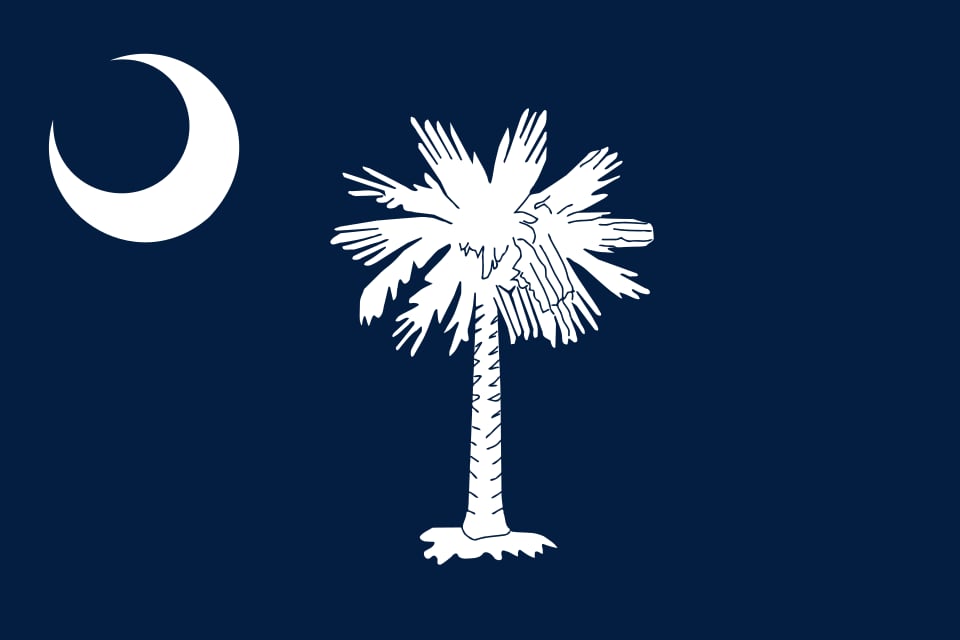
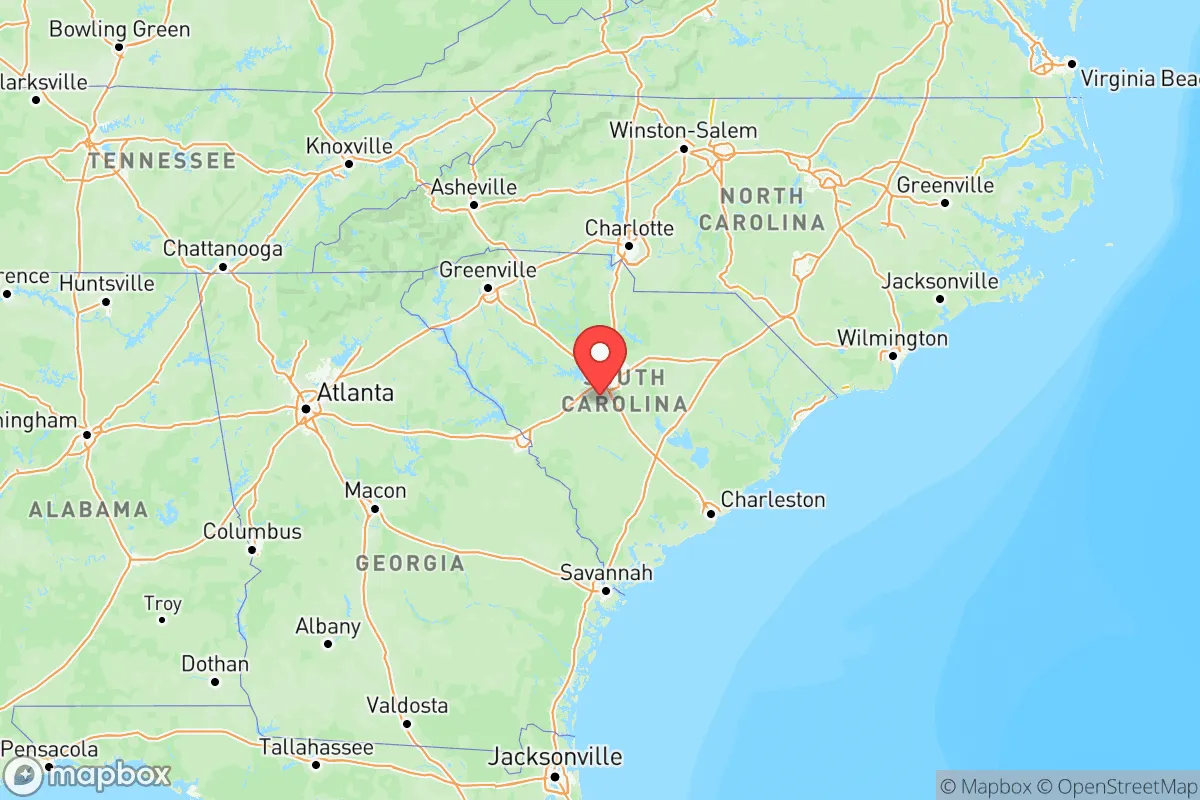
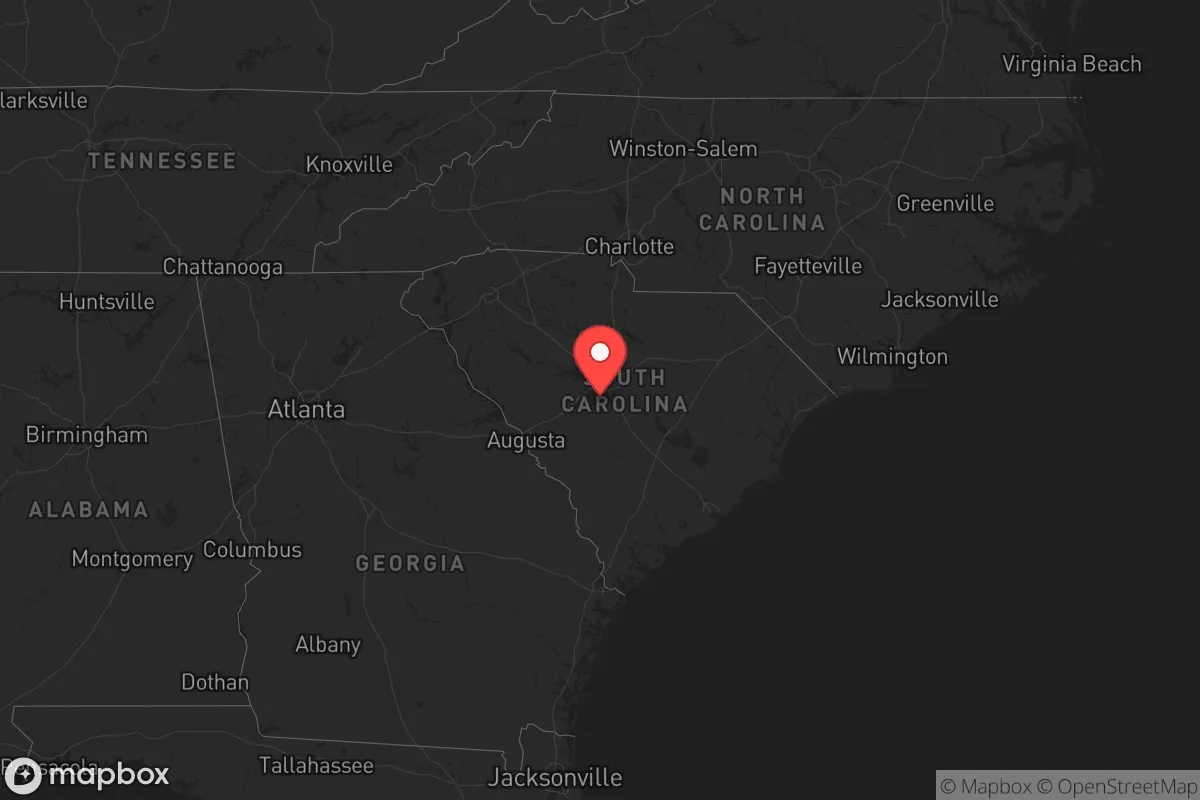
Photo: Wikipedia
Demographics of South Carolina
Affluence Level in South Carolina
An upper-middle-class area. Household wealth, education levels, and homeownership run ahead of national benchmarks.
People of South Carolina
The people of South Carolina today number just over 5.2 million, forming a state where the population is 62.2% white and 25.1% Black, with a small but growing Hispanic share of 7.1% and a foreign-born population of only 3.1% — one of the lowest in the nation. This demographic profile reflects a deep, layered history: a colonial plantation economy built on enslaved African labor, a post-Civil War agricultural system that kept the Black population concentrated in the Lowcountry, and a late-20th-century Sun Belt influx that has drawn white and Hispanic newcomers to the Upstate and the coast. The state’s identity remains distinctly Southern, shaped by its Gullah Geechee heritage in the sea islands, its evangelical Protestant culture in the Piedmont, and a growing tension between historic rural communities and rapidly suburbanizing metro areas like Greenville, Charleston, and Myrtle Beach.
Settlement & growth (pre-1960)
Long before European contact, the land now called South Carolina was home to several major Native American nations. The Cherokee controlled the northwestern mountains and foothills, while the Catawba held the central Piedmont along the Catawba River. The coastal Lowcountry was dominated by the Yamasee, the Sewee, and the Edisto, among others. The Spanish attempted a settlement at Santa Elena on Parris Island in 1566, but it was abandoned by 1587. Permanent European colonization began in earnest with the English, who founded Charleston (originally Charles Town) in 1670 as the capital of the Carolina colony. The city quickly became the entry point for English planters from Barbados, who brought enslaved Africans and a sugar-and-rice plantation model that would define the Lowcountry economy for two centuries.
The 18th century saw a massive forced migration of enslaved Africans, primarily from the rice-growing regions of present-day Sierra Leone, Senegal, and Angola. By 1720, enslaved people already outnumbered white colonists in the Lowcountry. This population concentrated on rice and indigo plantations along the Cooper, Ashley, and Santee Rivers, and on the sea islands around Beaufort and Hilton Head. The Gullah Geechee culture — a distinct African-American ethnic group with preserved language, foodways, and crafts — emerged directly from this forced migration and remains centered in the Lowcountry today.
After the American Revolution, the Upcountry opened to white settlement. The Scots-Irish, who had been migrating through Pennsylvania and down the Great Wagon Road, poured into the Piedmont starting in the 1760s and 1770s. They settled in the rolling hills around Greenville, Spartanburg, and Anderson, establishing small farms and a fiercely independent, Presbyterian-influenced culture distinct from the Anglican planter elite of Charleston. German immigrants, mostly from Pennsylvania, also arrived in smaller numbers, settling in the Dutch Fork region between the Broad and Saluda Rivers near present-day Columbia.
The Civil War and Reconstruction devastated the state’s economy and reshaped its population. Emancipation created a free Black population of roughly 400,000 by 1865, but the sharecropping and tenant farming systems that replaced slavery kept most Black families in rural poverty. The Great Migration (1910–1970) saw hundreds of thousands of Black South Carolinians leave for Northern industrial cities like New York, Philadelphia, and Chicago, reducing the state’s Black population share from 58% in 1900 to about 30% by 1970. Meanwhile, white in-migration was minimal during this period; the state remained poor and agricultural, with little to attract outsiders until the mid-20th century.
World War II and the Cold War brought the first significant modern in-migration. The U.S. military established major bases — Fort Jackson in Columbia, Shaw Air Force Base in Sumter, and the Marine Corps Recruit Depot on Parris Island — drawing military families from across the country. The Savannah River Site, a nuclear weapons facility built near Aiken in the 1950s, brought thousands of engineers and technicians, many from the Northeast and Midwest. These installations planted the seeds of a more diverse, less insular population, but the state remained overwhelmingly native-born and biracial (white and Black) through 1960.
Modern era (post-1965)
The 1965 Hart-Cellar Act had a relatively muted effect on South Carolina compared to states like Texas or California. The state’s foreign-born population remains just 3.1% — the fourth-lowest in the U.S. — and immigration has been modest. The most visible post-1965 immigrant group has been Hispanic, primarily from Mexico and Central America, drawn by construction, landscaping, poultry processing, and agriculture. Hispanic communities have grown fastest in the Upstate, particularly around Greenville and Greer, where the BMW and Michelin plants created manufacturing jobs, and in the Lowcountry around Charleston, where tourism and hospitality demand labor. The Hispanic share of the state’s population reached 7.1% by 2024, up from just 1.3% in 1990.
East and Southeast Asian communities, comprising 1.1% of the population, are smaller and more concentrated. Vietnamese refugees arrived after 1975, settling in Charleston and Columbia, often working in fishing, nail salons, and small retail. A smaller Korean community exists in the same cities, centered on Christian churches and small businesses. Indian-subcontinent residents (0.6% of the population) are a more recent arrival, mostly professionals in medicine, engineering, and information technology, concentrated in the suburbs of Greenville and Columbia near hospitals and corporate campuses.
The most transformative demographic force since 1965 has been domestic migration — the Sun Belt shift. Starting in the 1970s and accelerating after 2000, white retirees and professionals from the Northeast and Midwest have moved to the coast, driving explosive growth in Myrtle Beach, Hilton Head, and the Charleston suburbs. The Upstate, particularly Greenville and Spartanburg, has attracted younger families and corporate transplants drawn by lower taxes, lower housing costs, and a booming manufacturing sector anchored by BMW, Michelin, and Boeing. This in-migration has made South Carolina one of the fastest-growing states in the Southeast, but it has also created a cultural divide: the native-born population, especially in rural counties, remains heavily white and Black, while the coastal and Upstate metro areas are becoming more diverse and more politically moderate.
The future
South Carolina’s population is projected to continue growing, driven by domestic in-migration from the Northeast and Midwest, as well as natural increase among the Hispanic population. The state is not homogenizing; rather, it is tribalizing into distinct geographic zones. The Lowcountry coast — from Hilton Head through Charleston to Myrtle Beach — will become increasingly white, affluent, and retiree-heavy, with a growing Hispanic service workforce. The Upstate metro areas of Greenville and Spartanburg will see continued diversification, with more East/Southeast Asian and Indian professionals arriving for manufacturing and tech jobs, alongside a steady stream of white domestic migrants. Rural counties in the Pee Dee and the Midlands, by contrast, will continue to lose population, especially among young Black residents who move to Charlotte, Atlanta, or Charleston for opportunity.
The Hispanic population will likely grow from 7.1% to 10-12% by 2040, driven by both immigration and higher birth rates, but will remain concentrated in specific industries and neighborhoods rather than spreading evenly. The East/Southeast Asian and Indian communities will remain small but highly educated and economically influential, clustering in professional suburbs. The Black population share, currently 25.1%, is likely to decline slightly as white in-migration outpaces Black natural increase and out-migration. The state’s cultural identity will remain broadly Southern and conservative, but the growing Hispanic and Asian populations, along with the influx of Northern transplants, will gradually moderate the state’s politics and social norms in the metro areas.
For someone moving to South Carolina now, the state offers a choice: the traditional, biracial Lowcountry with its Gullah heritage and coastal affluence; the dynamic, diversifying Upstate with its manufacturing economy and mountain access; or the rural interior, which remains deeply rooted in 20th-century patterns of poverty, faith, and community. The state is not becoming a melting pot, but a mosaic of distinct regions, each with its own demographic trajectory and cultural character.

Most Diverse Cities in South Carolina
Most Homogenous Cities in South Carolina


* Values derived from national, state, county, city and local statistics and may differ in a specific area. Last updated: 2026-04-19T01:41:00.000Z
Narrative content on this page is AI-generated and may contain mistakes. Verify any details that matter before acting on them.
ReloMaps may earn a commission from affiliate links at no extra cost to you.

