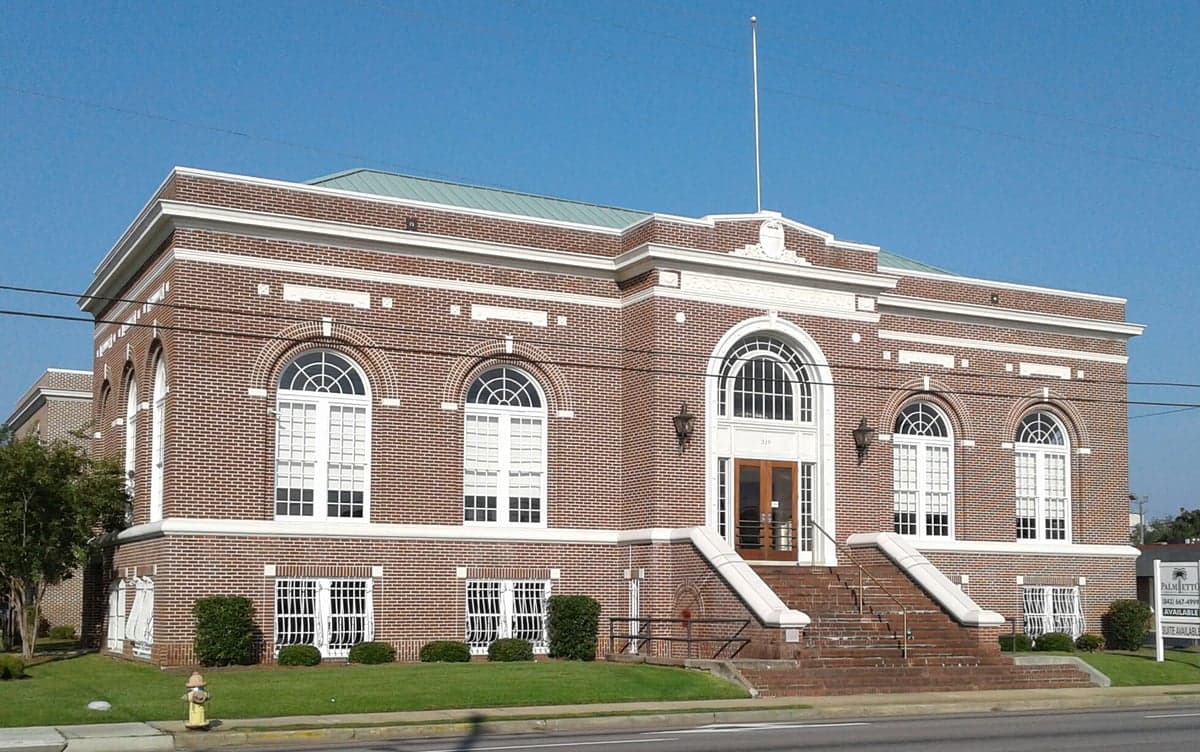
Photo: Wikipedia
Strategic Assessment of Florence County
Meaningful friction. Expect exposure to either population pressure, blast zones, or natural disaster risk. Consider buying a retreat property.
What does the Strategic Assessment tell us?
Our Strategic Assessment grades tactical survivability of an area. Major population centers, military targets, fallout zones, natural disasters, and border exposure all drive risk — lower exposure means a more defensible position in a crisis.
This is heavily inspired by Joel Skousen's Strategic Relocation book. Highly recommended you checkout the book ($)What does this tell us?
Our Strategic Assessment grades tactical survivability of an area. Major population centers, military targets, fallout zones, natural disasters, and border exposure all drive risk — lower exposure means a more defensible position in a crisis.
This is heavily inspired by Joel Skousen's Strategic Relocation book. Highly recommended you checkout the book ($)Strategic Pillars

Key Distances
Strategic Assessment Analysis
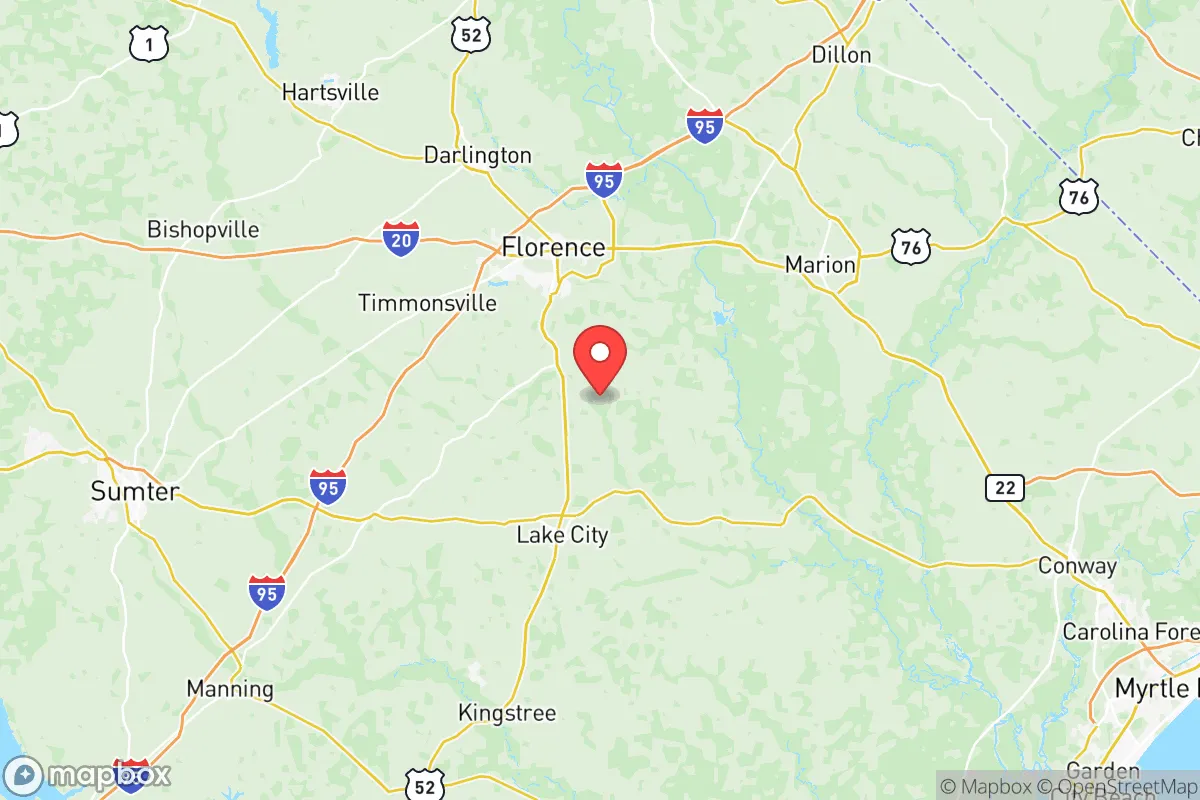
Florence County, South Carolina, occupies a strategic position in the Pee Dee region that balances accessibility with a degree of geographic insulation, making it a noteworthy consideration for those prioritizing resilience and self-sufficiency. Located roughly midway between the coastal port of Charleston and the state capital of Columbia, the area offers a blend of rural buffer zones and a modest urban core centered on the city of Florence. For a relocator assessing long-term stability, the county’s location away from major hurricane landfall zones and its distance from the most densely populated metropolitan corridors present a practical starting point for a deeper strategic evaluation.
Geographic position and natural advantages for long-term stability
Florence County sits on the fall line where the coastal plain meets the Sandhills region, a transition that provides slightly elevated terrain compared to the Lowcountry. This elevation, averaging around 140 feet above sea level in the city of Florence itself, reduces flood risk relative to communities directly on the coast or along major river floodplains. The county is bisected by the Great Pee Dee River, which flows southeast toward the coast, but the majority of residential and agricultural land lies on well-drained sandy loam soils that handle heavy rainfall better than clay-heavy areas. The region’s natural advantages include a temperate climate with a growing season long enough for year-round food production—typically from March through November—and abundant rainfall averaging 45 inches annually, which supports both agriculture and private well water supplies. The presence of the Pee Dee National Wildlife Refuge and the Sand Hills State Forest to the north provides additional buffer zones and natural resource access. For a relocator, these factors mean that basic subsistence needs—water, food, and shelter—are more readily secured here than in arid or flood-prone regions.
Risks, exposures, and proximity to fallout-relevant landmarks
While Florence County avoids the highest-risk zones for hurricanes and seismic activity, it is not without exposure. The primary natural risk is inland flooding from tropical systems that stall over the region, as seen with Hurricane Florence in 2018, which caused significant flooding along the Lynches River and Jeffries Creek in the southern part of the county. Man-made risks are more nuanced. The county is home to the Florence Regional Airport, which also serves as a U.S. Army aviation facility, and is located roughly 60 miles from the Savannah River Site, a nuclear materials processing facility near Aiken, SC. While not a direct fallout zone, the site’s presence introduces a low-probability but high-consequence risk for those within a 50-mile radius. Additionally, the county lies within 90 miles of the Port of Charleston, a major container shipping hub that could be a target in a conflict scenario. The city of Florence itself is a transportation crossroads for Interstates 95 and 20, which means it could experience significant evacuation traffic or supply chain disruptions during regional emergencies. For a relocator, the key takeaway is that Florence County is not a remote bunker location—it is a semi-rural area with moderate exposure to coastal and industrial risks, but far less than living directly in Charleston or near the Savannah River Site’s exclusion zone.
Practical resilience for a relocator: food, water, energy, and defensibility
Florence County offers several practical advantages for someone building a resilient homestead. Water availability is strong: the county sits atop the Floridan aquifer system, one of the most productive groundwater sources in the Southeast, and many rural properties can sustain private wells at depths of 100-300 feet. Surface water from the Great Pee Dee River and Lake City’s smaller reservoirs provides backup options. Food production is viable due to the long growing season and existing agricultural infrastructure—the county is a top producer of tobacco, soybeans, corn, and cotton, and there are active farmers’ markets in Florence, Lake City, and Pamplico. Local soil conditions support home gardens and small orchards, with pecan and fruit trees common. Energy resilience is mixed: the grid is served by Duke Energy and Santee Cooper, with a mix of natural gas, coal, and nuclear (from the nearby Robinson Nuclear Plant in Hartsville, about 30 miles west). Solar adoption is growing but not yet widespread. For off-grid capability, the region’s tree cover and moderate sun exposure make wood heating and solar panels feasible, though winter cloud cover can reduce solar efficiency. Defensibility is a more subjective factor. The county’s terrain is mostly flat to gently rolling, with mixed forest and farmland, offering limited natural chokepoints. However, the rural areas around Timmonsville, Coward, and Scranton provide low population density and good visibility for those seeking seclusion. The county’s law enforcement presence is concentrated in the city of Florence, leaving outlying areas with longer response times—a factor that cuts both ways for self-reliance. Overall, a relocator can achieve a high degree of practical resilience here with moderate investment in well water, solar backup, and food storage, but should not expect the defensibility of mountainous terrain.
The overall strategic picture for Florence County is one of moderate resilience with clear trade-offs. It offers strong natural resource advantages—abundant water, fertile soil, and a mild climate—that support long-term self-sufficiency, while its distance from the highest-risk coastal and industrial zones reduces exposure to catastrophic events. The presence of the Savannah River Site and the Port of Charleston as nearby fallout-relevant landmarks is a genuine consideration, but the risk is lower than living in the immediate vicinity of a nuclear facility or major port city. For a relocator with a conservative-leaning mindset who values community stability, agricultural potential, and a slower pace of life, Florence County represents a viable middle ground: not a hardened survivalist retreat, but a place where a prepared family can build a resilient lifestyle with reasonable effort. The key is to choose a location within the county that maximizes distance from the I-95/I-20 corridor and the city of Florence itself, focusing instead on the rural townships like Pamplico or Coward, where land is affordable and neighbors are few.

* Values derived from national, state, county, city and local statistics and may differ in a specific area. Last updated: 2026-07-03T11:24:49.000Z
Narrative content on this page is AI-generated and may contain mistakes. Verify any details that matter before acting on them.
ReloMaps may earn a commission from affiliate links at no extra cost to you.

