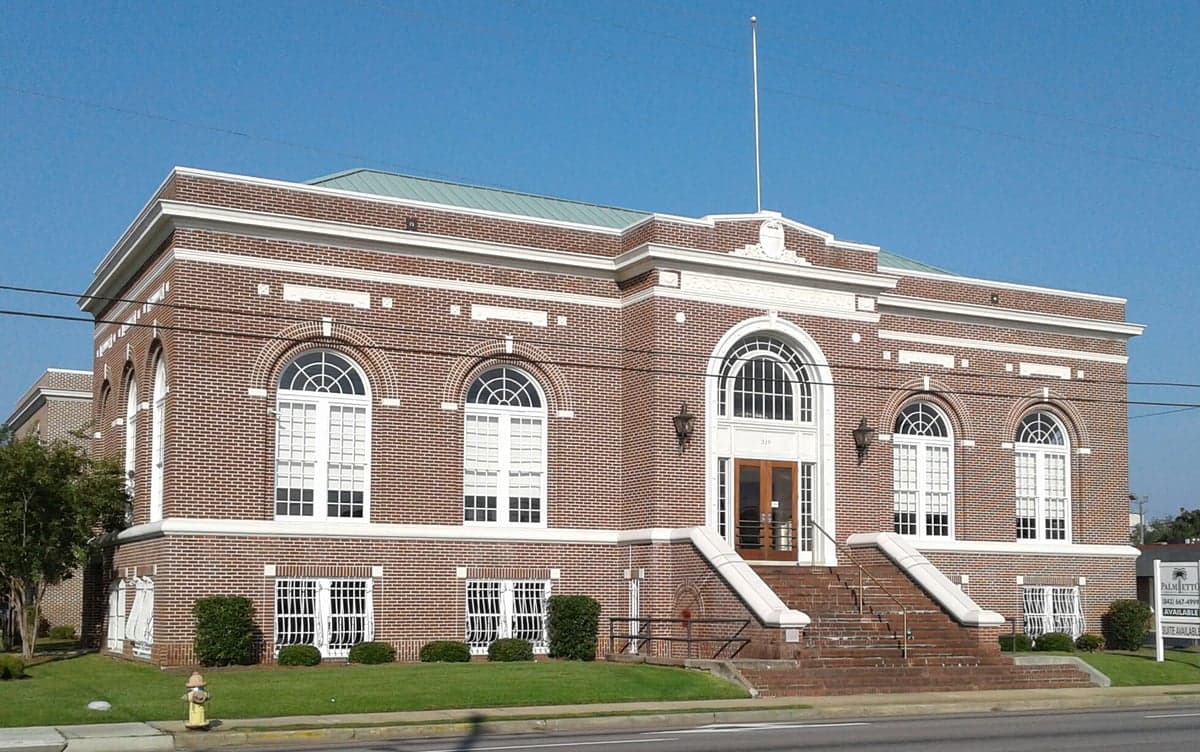
Photo: Wikipedia
Quality of Life in Florence County
A livable area that tracks near national norms for affordability, walkability, and neighborhood health.
What does Quality of Life tell us?
Quality of Life measures an area by evaluating factors like cost of living, nearby amenities, country club access, airport proximity, socioeconomic signals and neighborhood character. For large states, this is a general average — quality of life can vary dramatically between metro areas, suburbs, and rural communities within the same state.
What does this tell us?
Quality of Life measures an area by evaluating factors like cost of living, nearby amenities, country club access, airport proximity, socioeconomic signals and neighborhood character. For large states, this is a general average — quality of life can vary dramatically between metro areas, suburbs, and rural communities within the same state.
Cost of Living
30% below national average
120%
The Real Cost of Living in Florence County for 2026
| Tier | Individual | Family (4) |
|---|---|---|
| Survival | $14k | $27k |
| Comfortable | $32k | $47k |
| Luxury | $102k+ | $159k+ |
| Elite (Top 5%) | $130k+ | $201k+ |
Quality-of-Life Analysis
Florence County, South Carolina, offers a broad quality-of-life spectrum that ranges from the urban convenience and historic charm of its largest city to the quiet, low-cost rhythms of small towns and deep-country farmland. With a cost of living index of 70 (30% below the national average), a median home value of $165,500, and a median rent of $908, the county attracts a diverse mix: young professionals and retirees seeking affordability near the I-95 corridor, families looking for good schools in smaller communities, and agricultural workers or hobby farmers drawn to the rural stretches around Lake City and Johnsonville.
Largest town(s) & population centers
Florence is the county seat and the undisputed economic and cultural hub, home to roughly 40,000 residents. Daily life here centers on the Florence Center (a major concert and event venue), the Florence Museum, and the walkable downtown district along Dargan Street, which features local restaurants, breweries, and boutique shops. The city is anchored by major employers like McLeod Health and MUSC Health Florence Medical Center, making it a regional healthcare destination. Commute times average 22.9 minutes, slightly above the county mean, as many workers live in outlying areas and drive into the city. Housing here is the county's most expensive, with median home values near $200,000 in desirable neighborhoods like Southside and Delmae Heights, but still well below national averages. The city also hosts Francis Marion University, adding a college-town energy and cultural events that are absent from the county's smaller communities.
Smaller towns & rural pockets
Outside Florence, the county's character shifts markedly. Lake City (pop. ~6,000), 25 miles east, is a historic railroad town known for its South Carolina Cotton Trail and the Lake City Farmers Market. It offers a slower pace with a strong sense of community, anchored by the Dr. Ronald E. McNair Life History Center honoring the Challenger astronaut. Johnsonville (pop. ~1,400), near the Lynches River, is a tight-knit former mill town where many residents work in manufacturing or agriculture; housing here can dip below $120,000. Further south, Pamplico (pop. ~1,100) is a deeply rural crossroads with a single main street, a few churches, and a post office — ideal for those seeking true seclusion. Unincorporated areas like Effingham and Olanta consist largely of farmland, pine forests, and scattered homes on acreage, where residents often commute 30–40 minutes to Florence for work and shopping.
Cost & lifestyle range
The cost-of-life spread across Florence County is dramatic. At the high end, Florence's historic district and newer subdivisions near I-95 exit 164 feature homes from $250,000 to $400,000, with rents for a two-bedroom apartment averaging $1,100–$1,300. At the low end, rural Pamplico and Johnsonville offer median home values around $90,000–$110,000 and rents as low as $650 for a one-bedroom. Amenities follow the same gradient: Florence has chain retailers, a regional mall, and multiple grocery options, while Lake City and Johnsonville rely on local markets and dollar stores. Property taxes are uniformly low (South Carolina's average effective rate is 0.57%), but insurance costs can be higher in flood-prone areas near the Great Pee Dee River. The county's overall COL index of 70 means even the priciest neighborhoods are cheaper than most U.S. suburbs.
Florence County is best suited for people who value affordable space and a slower pace but still want access to healthcare, shopping, and interstate travel within a 30-minute drive. Young families and remote workers thrive in Florence city's walkable core, while retirees and agricultural workers find their niche in Lake City's historic streets or Johnsonville's quiet lanes. The county's diversity of settings — from the urban energy of a regional hub to the solitude of a tobacco farm — means that nearly any budget or lifestyle preference can find a fit here, provided the trade-off of limited nightlife and long drives for rural living is acceptable.

Crime in Florence County
Crime rates similar to the national median for U.S. locations.
Violent CrimeViolent Crime Analysis
Property CrimeProperty Crime Analysis
Crime Analysis
Florence County, South Carolina, presents a mixed safety picture where violent crime rates are slightly below the national average but property crime remains a more pressing concern for residents. With a violent crime rate of 373.9 per 100,000 residents and a property crime rate of 1,645.9 per 100,000, the county requires careful neighborhood selection, particularly in its urban core. The city of Florence itself, as the county seat and largest municipality, drives much of the county’s crime statistics, while smaller towns like Lake City, Pamplico, and Timmonsville offer notably different safety profiles.
Crime in context
Florence County’s violent crime rate of 373.9 per 100,000 is roughly 7% lower than the national average of 400 per 100,000, but it sits above the South Carolina state average of 346 per 100,000. Property crime, at 1,645.9 per 100,000, is about 15% higher than the national average of 1,432 per 100,000, placing the county in a higher-risk category for theft, burglary, and vehicle break-ins. When compared to neighboring counties, Florence County’s rates are elevated relative to more rural Darlington County (violent crime 312 per 100K) but lower than urbanized Richland County (Columbia area), which reports violent crime above 500 per 100K. The city of Florence accounts for approximately 60% of the county’s reported crime despite housing only 40% of the population, a pattern common in counties with a single dominant urban center.
What residents experience
Residents in the city of Florence frequently cite property crime—especially vehicle break-ins and package thefts—as the most common safety nuisance. The downtown area and neighborhoods near Florence-Darlington Technical College and McLeod Regional Medical Center see higher foot traffic and opportunistic theft. In contrast, the towns of Pamplico and Timmonsville report significantly lower crime rates, with violent crime incidents often limited to domestic disputes rather than stranger-on-stranger violence. Lake City, while smaller, has experienced periodic spikes in drug-related property crime tied to its location along the I-95 corridor. A notable concern for the county is the influence of the 12th Judicial Circuit, which covers Florence County. Critics point to a pattern of progressive-leaning judges and a district attorney’s office that has, in recent years, emphasized diversion programs and reduced sentencing for non-violent offenders. While intended to reduce recidivism, this approach has drawn criticism from victims’ advocates who argue it leads to more repeat offenders cycling back onto the streets, particularly in property crime cases where serial theft is common.
Neighborhood-level variation
Safety in Florence County varies dramatically by location. The most secure areas are generally found in the suburban and rural outskirts: neighborhoods in the Effingham and Quinby areas report violent crime rates below 200 per 100,000, with property crime roughly half the county average. The city of Florence’s west side, near the Florence Country Club and the Pee Dee State Farmers Market, is considered safer than the east side, which includes areas near the Florence County Detention Center and industrial zones. For families and retirees, the unincorporated communities of Coward and Olanta offer very low crime rates but limited amenities. Prospective residents should prioritize properties in the Florence 1 School District’s higher-performing attendance zones, as these areas consistently show lower incident reports. Overall, while Florence County is not a high-crime outlier in South Carolina, the combination of elevated property crime and a judicial philosophy that some view as lenient means that choosing a specific town or neighborhood is the single most important safety decision a mover can make.
* Values derived from national, state, county, city and local statistics and may differ in a specific area. Last updated: 2026-07-03T11:24:49.000Z
Narrative content on this page is AI-generated and may contain mistakes. Verify any details that matter before acting on them.
ReloMaps may earn a commission from affiliate links at no extra cost to you.

