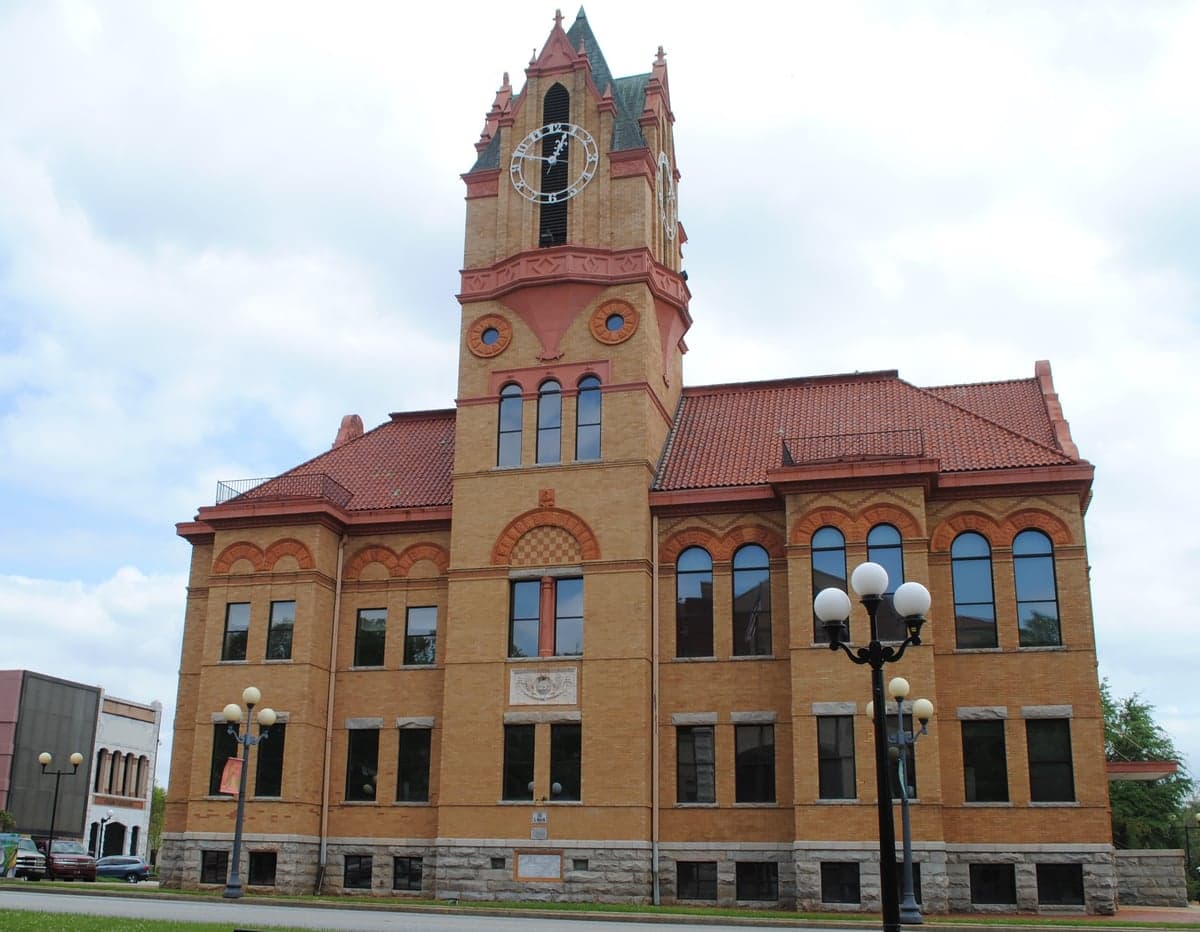
Photo: Wikipedia
Political ClimatePolitical Climate in Anderson County
Showing district-level results — no local-only data available.
Local Political AnalysisPolitical Analysis of Anderson County
Anderson County is one of the most reliably Republican areas in the Upstate, with a Cook Partisan Voting Index (PVI) of R+21 — meaning it votes about 21 points more Republican than the national average. That’s a full 13 points redder than South Carolina as a whole, which sits at R+8. The county hasn’t voted for a Democratic presidential candidate since 1976, and in 2024, Donald Trump carried it by roughly 35 points. But the county isn’t a monolith: the city of Anderson itself has pockets of blue-leaning voters, especially around the downtown core and near Anderson University, while the outer suburbs and rural areas — places like Piedmont, Williamston, and Belton — are deeply conservative. The swing precincts tend to be in the more suburban stretches along I-85, like Powdersville, where growth from Greenville County is bringing a mix of moderate Republicans and younger families who don’t always vote straight-ticket.
How it compares
Compared to the state of South Carolina, Anderson County is noticeably more conservative on both cultural and fiscal issues. While the state as a whole has a strong Republican tilt, the Upstate region — and Anderson in particular — is the engine of that conservatism. For example, the county’s Republican primary turnout often exceeds Democratic general election turnout, which isn’t the case in more competitive parts of the state like Charleston or Richland counties. On policy, Anderson County’s local government has been quicker to adopt conservative stances on issues like gun rights and tax cuts, often pushing further than state-level Republicans. The county council is entirely Republican, and the school board has a conservative majority that has been active on curriculum and library book policies. In contrast, the state legislature has to balance the more moderate Lowcountry and the more diverse Midlands, so Anderson’s delegation often votes as a bloc on the rightward edge of the state GOP.
What this means for residents
For conservative residents, Anderson County feels like a place where their values are reflected in local governance — low taxes, limited regulation, and a strong emphasis on Second Amendment rights. The county’s Republican lean means that primaries are often the real elections, especially for county council and school board seats. For liberal or moderate residents, the political climate can feel isolating, but there are active Democratic clubs in Anderson and Pendleton, and the city of Anderson itself has a small but vocal progressive community centered around the downtown arts scene and local nonprofits. The practical effect of the R+21 lean is that most local offices go unchallenged in the general election, so the real political action happens in the GOP primary. That means candidates tend to run to the right, and the winner often faces no Democratic opponent in November. For newcomers, especially those moving from more competitive states, it’s worth understanding that local politics here are shaped by a small, engaged conservative base — not by broad general election turnout.
Culturally, Anderson County’s political identity is tied to its rural and small-town roots, but that’s shifting as the I-85 corridor grows. The influx of residents from the Northeast and Midwest, drawn by jobs at Bosch, Michelin, and the new Scout Motors plant in Blythewood, is slowly diversifying the county’s politics. These newcomers tend to be more moderate, especially on economic issues, and they’re starting to show up in local races. The county’s strong evangelical presence — particularly in the smaller towns — keeps social conservatism front and center, but the growth around Powdersville and southern Anderson County is creating a more suburban, less culturally rigid electorate. One notable policy distinction: Anderson County has a local option sales tax for road improvements, which was passed by voters in 2022, showing that even in a conservative area, residents are willing to tax themselves for infrastructure when they see a direct benefit. That pragmatism, combined with the county’s deep Republican roots, makes Anderson a place where political change happens slowly — but it is happening.

State Political ClimatePolitical Climate in South Carolina
State Political AnalysisPolitical Environment in the State
South Carolina has been a reliably Republican state for decades, carrying a Cook Partisan Voting Index of R+8, meaning it votes about eight points more Republican than the national average in presidential elections. The dominant coalition is a blend of traditional conservatives in the suburbs and rural areas, evangelical Christians in the Upstate and Midlands, and a growing number of fiscally conservative transplants from the Northeast and Midwest. Over the last 10-20 years, the state has shifted rightward on cultural issues while maintaining a pro-business, low-tax posture, though the Democratic stronghold in the urban corridor from Charleston to Columbia has kept the margin from becoming lopsided — in 2020, Trump won the state by 12 points, down slightly from his 14-point win in 2016, hinting at a slow but real suburban drift.
Urban vs. rural divide
The political map of South Carolina is a classic tale of three regions. The Upstate, anchored by Greenville and Spartanburg, is the most reliably Republican area — Greenville County itself voted 58% for Trump in 2020, and the surrounding counties like Pickens and Oconee are even redder. The Midlands, centered on Columbia (Richland County), is the state's most Democratic-leaning metro, with Richland voting 62% for Biden, driven by the presence of the University of South Carolina, a large African American population, and state government workers. The Lowcountry, led by Charleston (Charleston County), is a political battleground: the city itself is increasingly liberal and diverse, but the surrounding suburbs like Mount Pleasant and Summerville lean Republican, giving the county a narrow 52-46 split for Trump in 2020. Rural counties like Allendale and Marlboro in the Pee Dee region are heavily Democratic due to high African American populations, while rural counties in the Upstate and along the coast — Beaufort and Hilton Head — are solidly Republican, driven by retirees and military families. The net effect is a state where Republicans dominate the legislature and governor's office, but Democrats hold a handful of urban seats and can occasionally win statewide races in wave years (e.g., Jim Hodges for governor in 1998).
Policy environment
South Carolina's policy environment is defined by a low-tax, limited-government philosophy that appeals to conservative relocators. The state has a flat income tax rate of 6.2% (phasing down to 6% by 2026), no estate tax, and a sales tax cap of 6% (local add-ons can push it to 9% in some areas). Property taxes are among the lowest in the Southeast, with a 4% assessment ratio for owner-occupied homes and a $50,000 exemption on the first $50,000 of value. Education policy is a mixed bag: the state has a robust school choice program through the Education Scholarship Trust Fund (expanded in 2023 to cover all income levels), but public school funding remains below the national average, and teacher pay ranks 41st nationally. Healthcare is a perennial issue — South Carolina did not expand Medicaid under the Affordable Care Act, leaving roughly 200,000 residents in the coverage gap, though the state has a strong network of rural hospitals and a growing telehealth sector. Election laws are restrictive by national standards: voters must show a photo ID, early voting was only introduced in 2022 (limited to two weeks), and absentee voting requires an excuse. The state also has a constitutional carry law (permitless carry of handguns) passed in 2024, reflecting its strong gun rights culture.
Recent policy direction
The last five years have seen South Carolina lean further into conservative cultural and economic policies. In 2023, the legislature passed a six-week abortion ban (the "Fetal Heartbeat Act"), which was briefly blocked by the state Supreme Court but reinstated after the court's composition shifted rightward. On education, the 2023 Parents' Bill of Rights (H. 3728) requires schools to notify parents of any changes to a student's health or well-being, including mental health and gender identity, and bans instruction on sexual orientation or gender identity in K-5 classrooms. Gun laws have expanded steadily: the 2024 constitutional carry law joined a preexisting "stand your ground" statute and a 2021 law allowing firearms in locked vehicles on school property. On property rights, the state has a strong eminent domain protection law (2006) that limits takings for private development, and a 2023 law (S. 576) restricts foreign ownership of agricultural land, particularly from China and other "adversarial" nations. Tax policy has been trending downward: the 2022 Income Tax Reduction Act cut the top rate from 7% to 6.2% and set a path to 6% by 2026. Voting access saw a modest expansion with the 2022 early voting law, but the state also passed a 2021 law (S. 108) that restricts drop boxes and limits absentee ballot assistance. For a relocator weighing freedoms, the picture is clear: strong protections for gun owners and parents, but tight restrictions on abortion and limited healthcare access for low-income residents.
Civil unrest & political movements
South Carolina has a history of political activism that is both visible and localized. The Confederate flag removal from the Statehouse grounds in 2015, after the Charleston church shooting, was a watershed moment that drew national attention and sparked both celebration and backlash — the "Heritage Not Hate" movement remains active in rural areas, with Confederate memorials still standing in many county courthouses. The Black Lives Matter protests in 2020 were largest in Charleston and Columbia, with some clashes in Greenville, but they were generally peaceful compared to other states. On the right, the Moms for Liberty chapter in Lexington (a conservative suburb of Columbia) has been particularly active, successfully pushing for book bans and curriculum reviews in local schools. Immigration politics are less heated than in border states, but Greenville County passed a symbolic "sanctuary city" ban in 2019, and the state has a 2008 law (S. 392) requiring employers to use E-Verify. Election integrity remains a flashpoint: after the 2020 election, the state GOP passed a resolution questioning the results (though the state's election system was widely praised for its security), and the 2021 voting law was framed as a response to "voter confidence" concerns. A new resident would notice the occasional Confederate flag at a rural gas station or a "Let's Go Brandon" bumper sticker, but political tensions are generally low-key — South Carolinians tend to be polite about their disagreements, at least in public.
Projection
Over the next 5-10 years, South Carolina is likely to remain solidly Republican, but the margin could narrow slightly as Charleston and Greenville continue to attract out-of-state transplants — many from blue states — who bring more moderate or liberal views on social issues. The Upstate's growth is particularly notable: Greenville County is projected to add 100,000 residents by 2030, and many of those newcomers are young professionals who may lean libertarian or moderate rather than hardline conservative. The state's Hispanic population is growing rapidly (up 40% since 2010), concentrated in the Upstate and along the coast, which could shift the electorate slightly leftward over time. However, the legislature is likely to remain firmly in GOP hands due to gerrymandering and the concentration of Democratic voters in a few urban counties. Expect continued tax cuts, further expansion of school choice, and possibly a move toward a flat income tax rate of 5% or lower. The abortion debate will remain heated, but the current ban is unlikely to be loosened unless the state Supreme Court changes again. For a relocator moving in now, the state in a decade will look much like it does today: conservative on cultural issues, business-friendly, and growing, but with a slightly more diverse and politically competitive urban fringe.
For a new resident, the bottom line is straightforward: if you're conservative or libertarian-leaning, South Carolina offers low taxes, strong gun rights, and a culture that respects traditional values and parental authority. If you're liberal, you'll find welcoming communities in Charleston, Columbia, and parts of Greenville, but you'll face a state government that is actively restricting abortion access, limiting LGBTQ+ rights in schools, and keeping taxes low at the expense of public services. The state is not a political battleground — it's a red state with blue islands — and the practical reality is that your day-to-day life will be shaped more by your local county and city government than by Columbia. Choose your town wisely, and you'll find a place that fits your values.
* Values derived from national, state, county, city and local statistics and may differ in a specific area. Last updated: 2026-07-09T05:58:02.000Z
Narrative content on this page is AI-generated and may contain mistakes. Verify any details that matter before acting on them.
ReloMaps may earn a commission from affiliate links at no extra cost to you.

