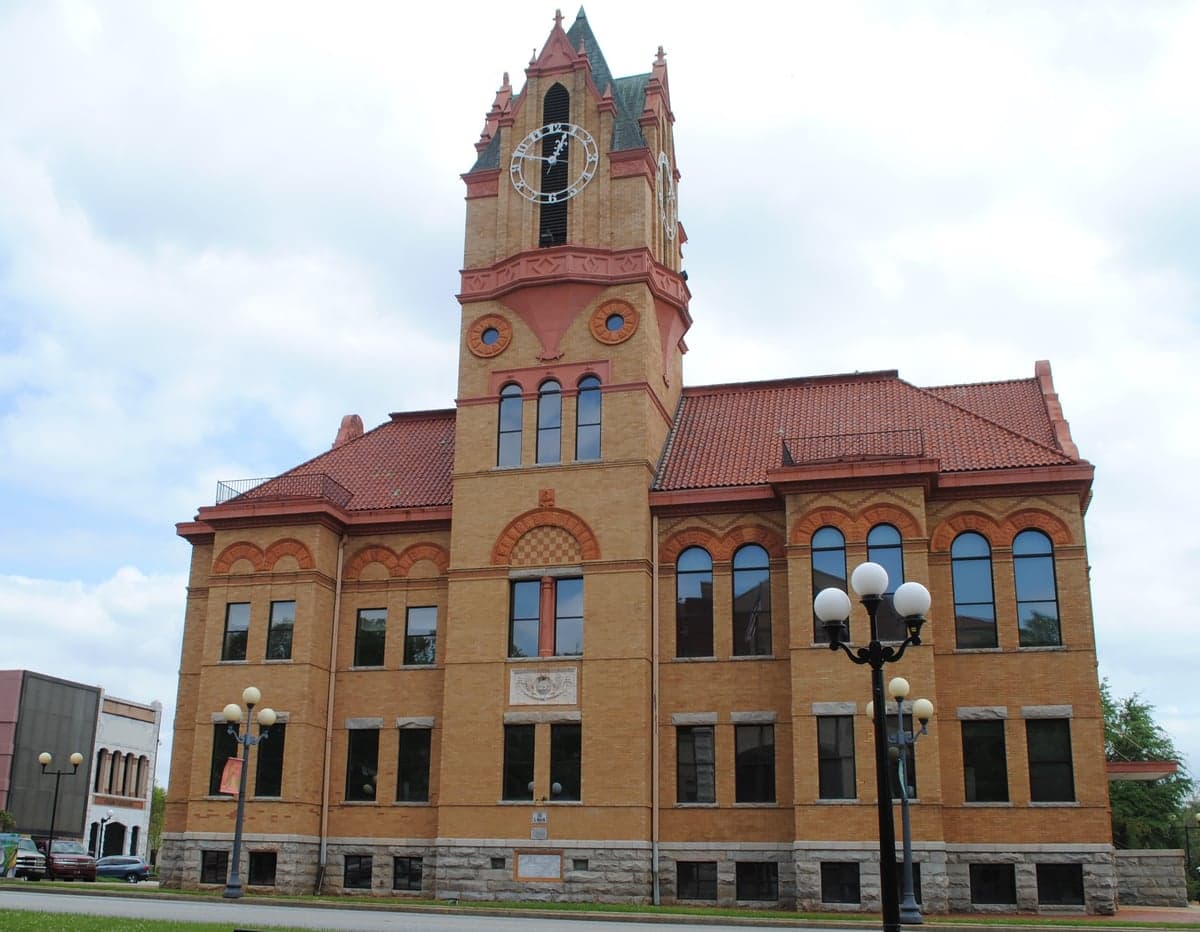
Photo: Wikipedia
Demographics of Anderson County
Affluence Level in Anderson County
A middle-class area roughly in line with national averages across income, home values, education, and employment.
People of Anderson County
The people of Anderson County, South Carolina, today form a predominantly white (75.5%) and native-born (98.0% U.S.-born) population of 207,218, shaped by a deep Scots-Irish and English heritage, a modest but growing Hispanic community (4.9%), and a significant Black minority (13.6%) rooted in the region's agricultural and industrial past. The county's identity is distinctly Southern and conservative, with a strong sense of local tradition, a manufacturing-based economy, and a population density that remains relatively low outside the city of Anderson and the towns of Williamston, Pendleton, and Belton. This is a place where family ties run deep, church attendance is high, and the pace of life is slower than the booming coastal cities, yet it is increasingly attracting newcomers seeking affordable housing and a quieter lifestyle within commuting distance of Greenville.
Settlement & growth (pre-1960)
Before European settlement, the area now known as Anderson County was part of the homeland of the Cherokee Nation, who used the land for hunting and maintained a major trading path along the Savannah River. The Cherokee were forcibly removed after the American Revolution, with the last major cession of their land in the region occurring in 1816. The first permanent European settlers were largely Scots-Irish and English farmers who migrated from Virginia and Pennsylvania down the Great Wagon Road in the mid-to-late 1700s. They were drawn by the promise of cheap, fertile land in the Piedmont foothills, and they established small, self-sufficient farms along creeks and rivers. The town of Pendleton, founded in 1790, became the early political and social hub, serving as the county seat until 1826 and hosting the Pendleton Farmers' Society, one of the oldest agricultural organizations in the South.
The arrival of the railroad in the 1850s transformed the county's economy and settlement patterns. The Blue Ridge Railroad and later the Atlanta and Charlotte Air Line Railway connected the region to national markets, spurring the growth of mill towns. Anderson, the county seat since 1826, grew as a commercial center, but it was the post-Civil War era that truly reshaped the population. The collapse of the plantation system and the rise of the textile industry pulled thousands of rural white farmers and newly freed Black families into the county's mill villages. Towns like Williamston, Belton, and Honea Path became company towns, with entire communities built around cotton mills. The textile boom, which peaked between 1880 and 1920, attracted a largely native-born, white workforce from the surrounding countryside, creating a distinct mill-village culture that persists in local memory. The Black population, which had been concentrated in rural agricultural areas after emancipation, also moved into these towns for mill work, though they were typically segregated into separate neighborhoods and faced lower wages.
The Great Depression and the subsequent decline of the textile industry in the mid-20th century slowed population growth significantly. Many residents left for industrial jobs in the North, but the county's population remained remarkably stable and homogeneous. By 1960, Anderson County was still overwhelmingly white (around 80%) and native-born, with a Black minority of about 18% and virtually no foreign-born population. The economy was transitioning from textiles to a more diversified manufacturing base, including the arrival of the U.S. Army's Clemson Ordnance Depot (later the Clemson University research park) and early automotive parts suppliers.
Modern era (post-1965)
The 1965 Hart-Cellar Act had a minimal direct impact on Anderson County. The foreign-born population today stands at just 2.0%, far below the national average, and the county has not seen the large-scale immigration from Asia, Latin America, or Africa that has reshaped many other parts of the United States. The most significant demographic shift since 1965 has been the growth of the Hispanic population, which rose from near zero in 1970 to 4.9% today. This growth is largely driven by domestic migration from other U.S. states, particularly Texas and Florida, as well as direct immigration from Mexico and Central America. These families have concentrated in the city of Anderson and in the more rural areas around Piedmont and West Pelzer, where they work in construction, landscaping, poultry processing, and the county's expanding manufacturing sector. A small but growing number of Hispanic-owned businesses, such as tiendas and restaurants, have opened along Main Street in Anderson, but no large ethnic enclave has formed.
The other major modern trend is domestic in-migration from the Rust Belt and the Northeast. Since the 1990s, Anderson County has attracted a steady stream of retirees and working-age families from states like Ohio, Michigan, New York, and Pennsylvania, drawn by lower taxes, cheaper housing, and a slower pace of life. This wave has concentrated in the suburban and exurban areas around Anderson, particularly in the Lake Hartwell corridor near Fair Play and Iva, where new subdivisions and retirement communities have sprung up. These newcomers are predominantly white and tend to be more educated and affluent than the native-born population, contributing to the county's rising college attainment rate (26.4%) and a gradual shift in political leanings toward the Republican Party. The Black population, meanwhile, has remained stable at 13.6%, with the highest concentrations in the city of Anderson and the historic mill towns of Williamston and Belton, where many families have lived for generations. The East/Southeast Asian population (0.6%) and Indian subcontinent population (0.4%) are tiny and dispersed, with no distinct ethnic neighborhoods, though a small number of professionals work at the nearby Clemson University and in the county's engineering and manufacturing firms.
The future
Anderson County is projected to continue growing at a moderate pace, driven by domestic migration rather than international immigration. The population is expected to become slightly more diverse, with the Hispanic share likely rising to 7-8% by 2035, as younger families move in for jobs in logistics, advanced manufacturing, and the growing healthcare sector. The Black population share is expected to remain stable or decline slightly, as out-migration of younger Black residents to larger cities like Charlotte and Atlanta offsets any natural increase. The white population, while still the overwhelming majority, will continue to age, with the county's median age (currently around 42) rising as retirees from the North settle in lakefront communities. New residential development is concentrating in the Anderson suburbs and along the I-85 corridor near Piedmont, where new schools, shopping centers, and industrial parks are being built. The historic mill towns of Belton and Honea Path are seeing slower growth and an aging population, as younger residents move toward the county's more dynamic employment centers.
Culturally, Anderson County is becoming a blend of traditional Southern life and Sun Belt suburbanism. The influx of Northern retirees and remote workers is slowly diluting the county's deep-rooted mill-village culture, but the core identity remains conservative, religious, and family-oriented. The county is not becoming a melting pot in the way that Greenville or Spartanburg are; instead, it is absorbing newcomers who are demographically similar to the existing population. For someone moving in now, Anderson County offers a stable, affordable, and safe environment with a strong sense of community, but it is not a place of rapid demographic change or cultural diversity. The future is one of steady, managed growth, with the county's character shaped more by economic development than by immigration.
In short, Anderson County is becoming a quieter, more suburban version of its past — a place where the old mill-town identity is slowly giving way to a commuter-oriented, retirement-friendly lifestyle, but where the population remains overwhelmingly native-born, white, and conservative. For a family or individual seeking a low-cost, low-crime, and culturally familiar environment in the Upstate, it is a solid choice, but those looking for ethnic diversity or a rapidly evolving urban scene will find it elsewhere.

* Values derived from national, state, county, city and local statistics and may differ in a specific area. Last updated: 2026-07-09T05:58:02.000Z
Narrative content on this page is AI-generated and may contain mistakes. Verify any details that matter before acting on them.
ReloMaps may earn a commission from affiliate links at no extra cost to you.

