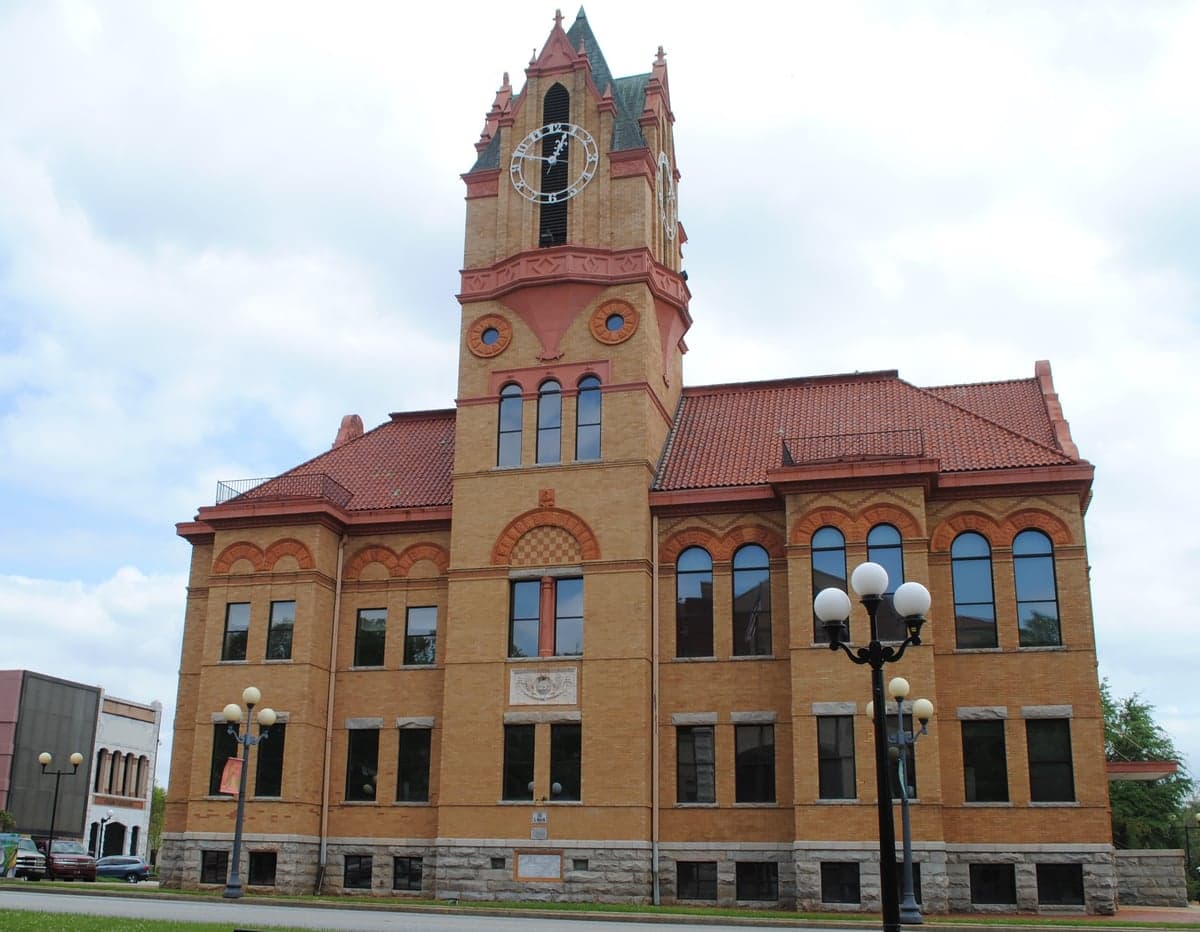
Photo: Wikipedia
Personal Sovereignty in Anderson County
Viable for self-reliance. Generally workable, though some barriers may limit total independence.
What does Personal Sovereignty tell us?
Personal Sovereignty measures your capacity for self-reliance and independence with minimal government friction. Higher scores mean fewer barriers between you and the way you want to live... but it assumes you have the space you need and good neighbors.
What does this tell us?
Personal Sovereignty measures your capacity for self-reliance and independence with minimal government friction. Higher scores mean fewer barriers between you and the way you want to live... but it assumes you have the space you need and good neighbors.
State Policy
Energy independence: Importer (25% of energy produced in-state)
Personal Liberty
Homesteading

Personal Liberty Analysis
Anderson County, South Carolina, offers a notably high degree of personal sovereignty, grounded in South Carolina’s broad preemption laws, a light regulatory touch, and a culture that prizes self-reliance. For individuals and families who value autonomy over government oversight, the county presents a legal and social environment where decisions about property, self-defense, and daily life are largely left to the individual. This is not a region of heavy-handed zoning or intrusive permitting; rather, it is a place where the default posture is permission, not restriction, particularly outside the more densely developed areas around the City of Anderson and Clemson.
Tax burden and regulatory posture for residents and business owners
South Carolina’s tax structure is among the most favorable in the nation for those seeking to keep more of their earnings. There is no state income tax on Social Security benefits, and a $3,000 deduction on other retirement income is available for those over 65. The state’s top marginal income tax rate is a flat 6.2%, but it is scheduled to decline to 6.0% by 2026. Property taxes in Anderson County are exceptionally low, with an effective rate of roughly 0.5% of assessed value for owner-occupied homes, thanks to a 4% assessment ratio on primary residences. The county’s regulatory posture is equally light. There is no county-wide zoning in unincorporated areas, meaning that in communities like Pendleton, Williamston, and Belton, residents can typically operate home-based businesses, keep livestock, or build accessory structures without navigating a thicket of permits. The City of Anderson itself has more conventional zoning, but even there, the code is less restrictive than in many comparably sized Southern cities. Business licensing is straightforward, and the county actively courts small-scale entrepreneurs with a "red carpet, not red tape" approach.
Self-defense and gun law specifics in Anderson County
South Carolina is a "shall-issue" state for concealed weapons permits (CWPs), and Anderson County’s sheriff’s office processes applications efficiently, typically within 30-60 days. The state also enacted permitless (constitutional) carry in 2024, allowing any law-abiding adult 18 or older to carry a concealed firearm without a permit. This makes Anderson County one of the most gun-friendly jurisdictions in the Southeast. There are no county-level restrictions on magazine capacity or firearm types, and the state preempts all local gun ordinances, so cities like Clemson (part of which lies in Anderson County) and Anderson cannot enact their own bans. Stand-your-ground laws are fully in effect, with no duty to retreat in any place where a person has a legal right to be. For those interested in training, the Anderson County Shooting Range in Pendleton offers public access for rifle and pistol practice. The culture around firearms is one of normalcy and competence, not anxiety; gun shops and ranges are common, and open carry is a routine sight in rural areas.
Self-reliance and homesteading viability across the county
For those seeking a self-sufficient lifestyle, Anderson County offers considerable opportunity, though viability varies by location. In unincorporated areas, there are no minimum lot size requirements for agricultural use, and parcels as small as one acre can support a substantial garden, a few chickens, or a goat. The county’s agricultural zoning allows for beekeeping, aquaculture, and even small-scale livestock operations without special permits. Communities like Starr and Iva are particularly attractive for homesteaders, with affordable land (often under $5,000 per acre) and a rural character that welcomes outbuildings, greenhouses, and solar panels. Off-grid feasibility is high: South Carolina has no state-level restrictions on rainwater collection, and many rural properties already rely on well water and septic systems. Solar panel installation is straightforward, though net metering policies with Duke Energy are less generous than in some states. The City of Anderson and the town of Clemson have stricter building codes and require permits for major structures, but in the county’s rural stretches, a family can build a cabin, install a composting toilet, and live largely off-grid with minimal bureaucratic friction.
Personal liberties in education, medical choice, and property rights
South Carolina law strongly supports parental rights in education. The state’s "Parental Bill of Rights" (enacted in 2023) guarantees parents the right to direct their child’s upbringing, access all educational records, and opt out of any curriculum or activity they find objectionable. Homeschooling is straightforward: parents simply file a one-page notice with the school district and maintain a portfolio of work. Anderson County has a robust homeschooling community, with co-ops and support groups active in Pendleton and Belton. Medical autonomy is similarly respected. South Carolina has no vaccine passport mandate, and while the state requires certain immunizations for school attendance, medical and religious exemptions are available and not unduly burdensome. Telehealth and direct-primary-care models are widely available. On property rights, the county’s lack of comprehensive zoning in unincorporated areas means that landowners have broad latitude to use their property as they see fit, subject only to state environmental regulations and basic health codes. The county does enforce nuisance ordinances, but these are generally complaint-driven and not proactively enforced.
Compared to other regions of the United States, Anderson County ranks among the top tier for personal sovereignty. Its combination of low taxes, permissive gun laws, minimal land-use restrictions, and strong parental rights creates an environment where individuals and families can live largely on their own terms. For a conservative-leaning reader weighing relocation, the county offers a concrete alternative to the increasingly regulated environments of the Northeast, West Coast, or even parts of the urban South. The trade-off is that this freedom comes with limited public services and a "live and let live" ethos that expects self-reliance rather than government support. For those who value autonomy over amenities, Anderson County is a compelling choice.

* Values derived from national, state, county, city and local statistics and may differ in a specific area. Last updated: 2026-07-09T05:58:02.000Z
Narrative content on this page is AI-generated and may contain mistakes. Verify any details that matter before acting on them.
ReloMaps may earn a commission from affiliate links at no extra cost to you.

