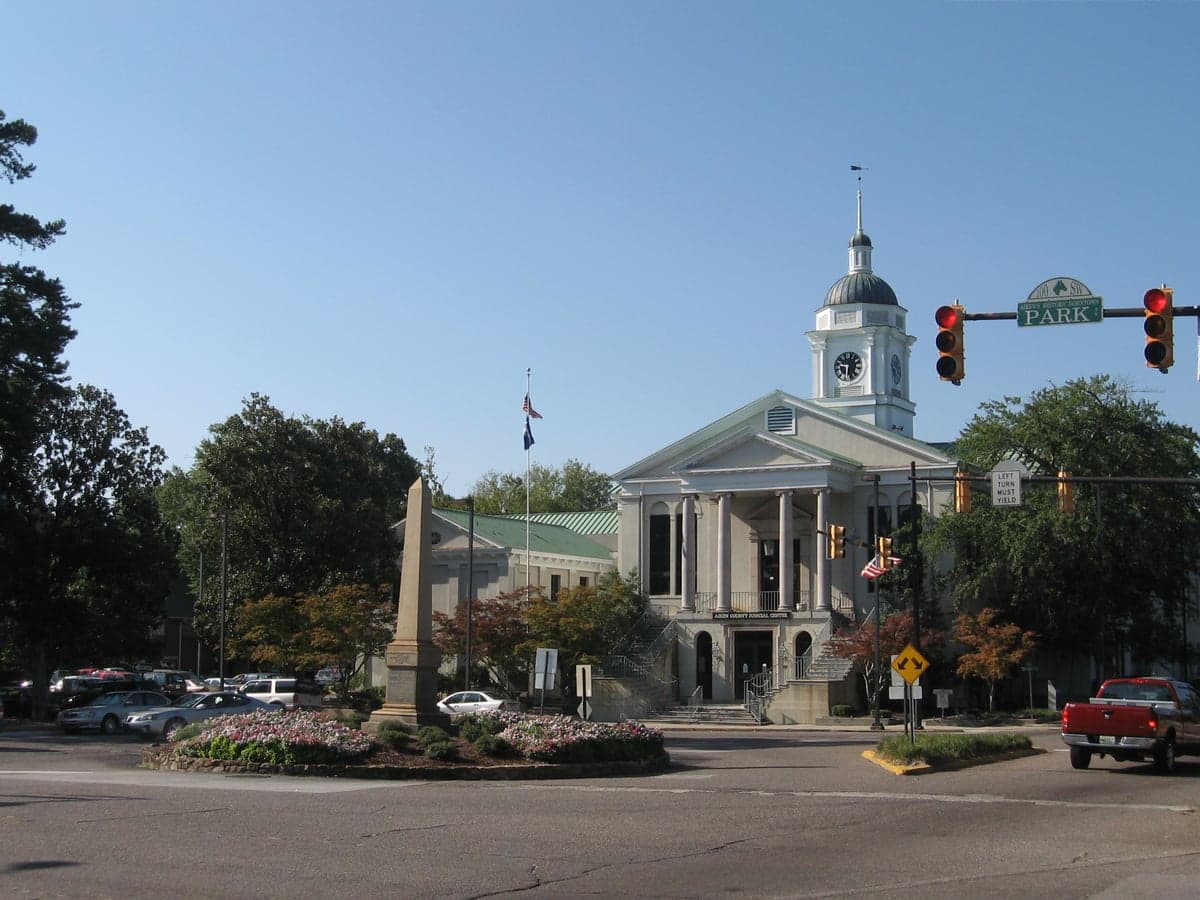
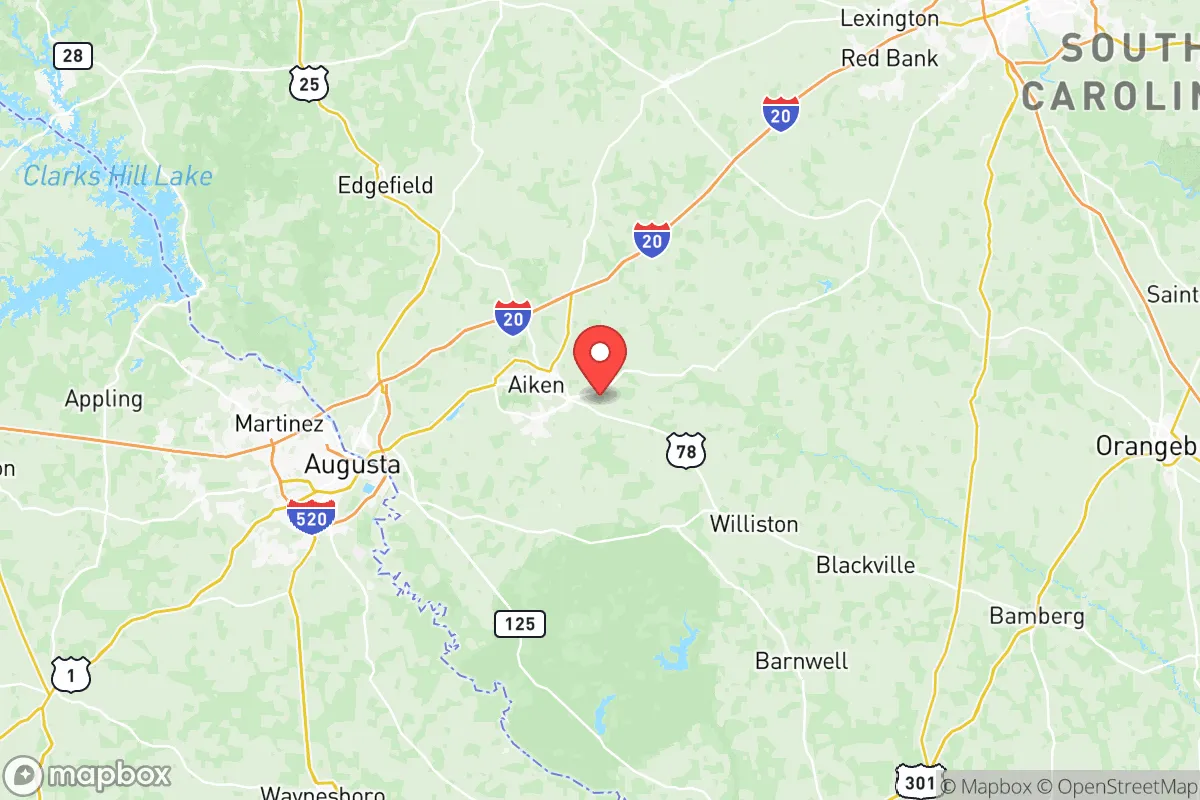
Photo: Wikipedia
Quality of Life in Aiken County
A livable area that tracks near national norms for affordability, walkability, and neighborhood health.
What does Quality of Life tell us?
Quality of Life measures an area by evaluating factors like cost of living, nearby amenities, country club access, airport proximity, socioeconomic signals and neighborhood character. For large states, this is a general average — quality of life can vary dramatically between metro areas, suburbs, and rural communities within the same state.
What does this tell us?
Quality of Life measures an area by evaluating factors like cost of living, nearby amenities, country club access, airport proximity, socioeconomic signals and neighborhood character. For large states, this is a general average — quality of life can vary dramatically between metro areas, suburbs, and rural communities within the same state.
Cost of Living
19% below national average
119%
The Real Cost of Living in Aiken County for 2026
| Tier | Individual | Family (4) |
|---|---|---|
| Survival | $16k | $31k |
| Comfortable | $39k | $57k |
| Luxury | $119k+ | $185k+ |
| Elite (Top 5%) | $140k+ | $217k+ |
Quality-of-Life Analysis
Aiken County, South Carolina, offers a broad spectrum of living environments that range from the historic, equestrian-focused city of Aiken to quiet, unincorporated crossroads and deep-rural farmland. With a cost of living index of 81 (well below the national average of 100), the county attracts a mix of retirees drawn to its horse-country culture, commuters working in the Savannah River Site or Augusta, GA, and families seeking affordable land. The county’s character shifts noticeably as one moves from the urbanized northern end near the city of Aiken to the more sparsely populated southern and eastern townships.
Largest town(s) & population centers
The city of Aiken is the county seat and by far its largest population center, with roughly 32,000 residents. Daily life here revolves around the historic downtown district, which features boutique shopping, restaurants, and the Aiken Thoroughbred Racing Hall of Fame. The city is known for its equestrian heritage, with the Aiken Training Track and numerous horse farms woven into the residential fabric. Aiken is also a regional employment hub, anchored by the Savannah River Site (a major nuclear facility) and the Aiken Regional Medical Centers. The city’s public schools, part of Aiken County Public School District, include Aiken High School and the magnet-focused Aiken Scholars Academy. For daily errands and services, residents rely on Whiskey Road and Richland Avenue, which are lined with grocery stores, big-box retailers, and medical offices. The average commute in the county is about 25 minutes, but those working in Augusta, GA (roughly 20 miles west) or at the Savannah River Site often face slightly longer drives.
Smaller towns & rural pockets
Outside the city of Aiken, the county contains several distinct smaller towns and unincorporated communities. North Augusta, located along the Savannah River directly across from Augusta, GA, is the second-largest population center and functions almost as a bedroom suburb for Augusta, with its own riverfront park and the popular Riverview Park Activities Center. Graniteville and Warrenville are historic mill towns in the central part of the county, where a mix of older homes and newer subdivisions serve families and workers commuting to the Savannah River Site. Wagener, in the rural western portion, is a small town of about 800 people with a quiet, agricultural feel and its own annual festival. Jackson, located near the Savannah River Site, is a tiny incorporated town that serves as a bedroom community for site employees. Further south, Williston and Blackville are small towns with populations under 3,000 each, offering very low housing costs and a slower pace of life, though with fewer retail and dining options.
Cost & lifestyle range
The cost of living varies noticeably across Aiken County, though it remains below the national average everywhere. At the higher end, the city of Aiken and North Augusta command median home values around $199,500 (the county median) or slightly above, with newer subdivisions in the Aiken’s Southside and North Augusta’s Hammond’s Ferry neighborhood pushing above $300,000. Median rent in the county is $1,031, but rents in desirable Aiken neighborhoods near downtown or the equestrian district can run $1,200–$1,500 for a two-bedroom. At the lower end, towns like Williston, Blackville, and rural areas in the southern part of the county offer home values well below the county median — often under $150,000 — and rents can dip below $800 for a one-bedroom. The trade-off is access to amenities: residents in the city of Aiken have walkable downtown dining and events, while those in Wagener or Williston may drive 20–30 minutes for a full grocery store or a sit-down restaurant. Property taxes are relatively low across the county, and South Carolina’s homestead exemption further reduces costs for seniors.
Who thrives in Aiken County? Retirees and horse enthusiasts are drawn to the city of Aiken’s historic charm and equestrian infrastructure. Commuters working at the Savannah River Site or in Augusta find the county’s affordable housing and 25-minute average commute appealing. Families seeking a lower cost of living and a slower pace often settle in the smaller towns like Graniteville or Wagener, where land is cheaper and schools are smaller. The county’s mix of urban, suburban, and genuinely rural environments means that almost any lifestyle preference — from downtown loft living to a 10-acre horse farm — can be accommodated within a 30-minute drive of the county’s core services.

Crime in Aiken County
Crime rates similar to the national median for U.S. locations.
Violent CrimeViolent Crime Analysis
Property CrimeProperty Crime Analysis
Crime Analysis
Aiken County, South Carolina, presents a mixed safety profile where overall crime rates fall near the national average, but significant variation exists between its urban corridors and rural communities. The county's violent crime rate of 373.9 incidents per 100,000 residents sits slightly below the national average, while its property crime rate of 1,645.9 per 100,000 tracks close to the U.S. median. However, these county-wide figures mask sharp differences between the city of Aiken itself, smaller towns like North Augusta and Wagener, and the unincorporated areas that make up much of the county's landmass.
Crime in context
Compared to South Carolina's statewide violent crime rate of approximately 490 per 100,000, Aiken County's 373.9 figure is notably lower, placing it among the safer large counties in the state. The property crime rate, while higher than the national average of roughly 1,950 per 100,000, is still below the South Carolina state average of about 2,100 per 100,000. These numbers reflect a county that benefits from a mix of suburban stability and rural low-density living, but also contend with crime spillover from the Augusta, Georgia metro area just across the Savannah River. The Second Judicial Circuit, which covers Aiken County, has seen increasing concern among residents about progressive-leaning prosecutorial policies that some argue prioritize offender rehabilitation over public safety. Critics point to a rise in repeat property offenses and drug-related crimes as evidence that lenient sentencing and diversion programs may be emboldening criminals rather than deterring them.
What residents experience
In practice, Aiken County residents experience crime very differently depending on where they live. The city of Aiken, the county seat and largest municipality, concentrates a disproportionate share of the county's violent crime, particularly in its downtown and southern corridors near Whiskey Road and Richland Avenue. North Augusta, a fast-growing suburb directly across the river from Augusta, Georgia, reports lower violent crime rates than the city of Aiken but has seen a troubling uptick in property crimes, including vehicle break-ins and package thefts, linked to transient populations moving between the two states. Smaller towns like Wagener and Jackson report very low violent crime numbers but struggle with property crime rates that can spike seasonally. The unincorporated areas surrounding Graniteville and Warrenville, historically mill towns, have experienced a rise in drug-related offenses as the opioid epidemic continues to affect rural communities. Residents in these areas frequently cite a lack of visible law enforcement presence and the county sheriff's office's limited resources as contributing factors to a sense of insecurity.
Neighborhood-level variation is pronounced. The gated communities and horse-country estates near Aiken's historic district and the Woodside Plantation area report crime rates far below the county average, often with violent crime near zero. Conversely, the areas around Aiken Mall and the Whiskey Road commercial corridor see higher concentrations of theft, shoplifting, and occasional armed robberies. In North Augusta, the Riverside Village development and the Hammond's Ferry neighborhood are considered very safe, while older apartment complexes along Martintown Road generate more police calls. For prospective residents, the safest bets are the suburban and rural subdivisions in the county's northern and eastern reaches, particularly around the towns of Windsor and New Ellenton, where both violent and property crime rates consistently run well below the county average. The key takeaway is that Aiken County's overall numbers are manageable, but the choice of specific town and neighborhood within the county has a major impact on day-to-day safety.
* Values derived from national, state, county, city and local statistics and may differ in a specific area. Last updated: 2026-07-10T21:24:49.000Z
Narrative content on this page is AI-generated and may contain mistakes. Verify any details that matter before acting on them.
ReloMaps may earn a commission from affiliate links at no extra cost to you.

