 Popular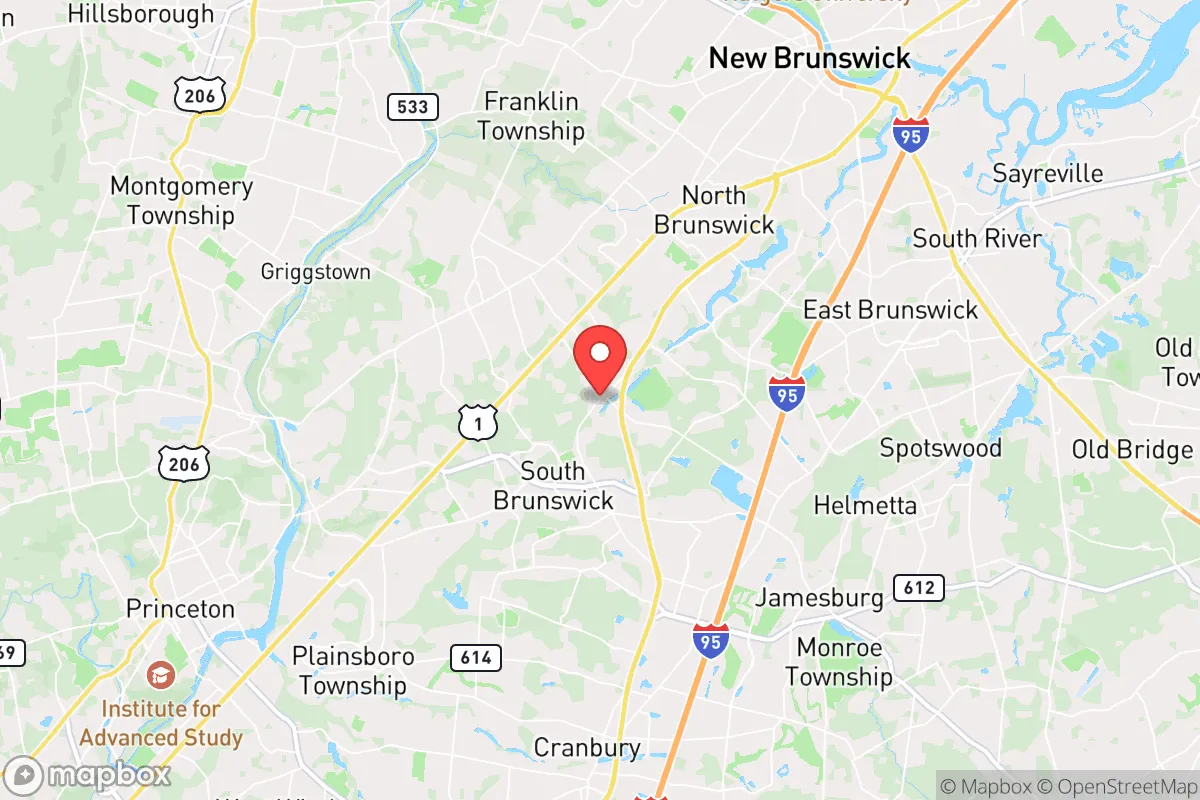
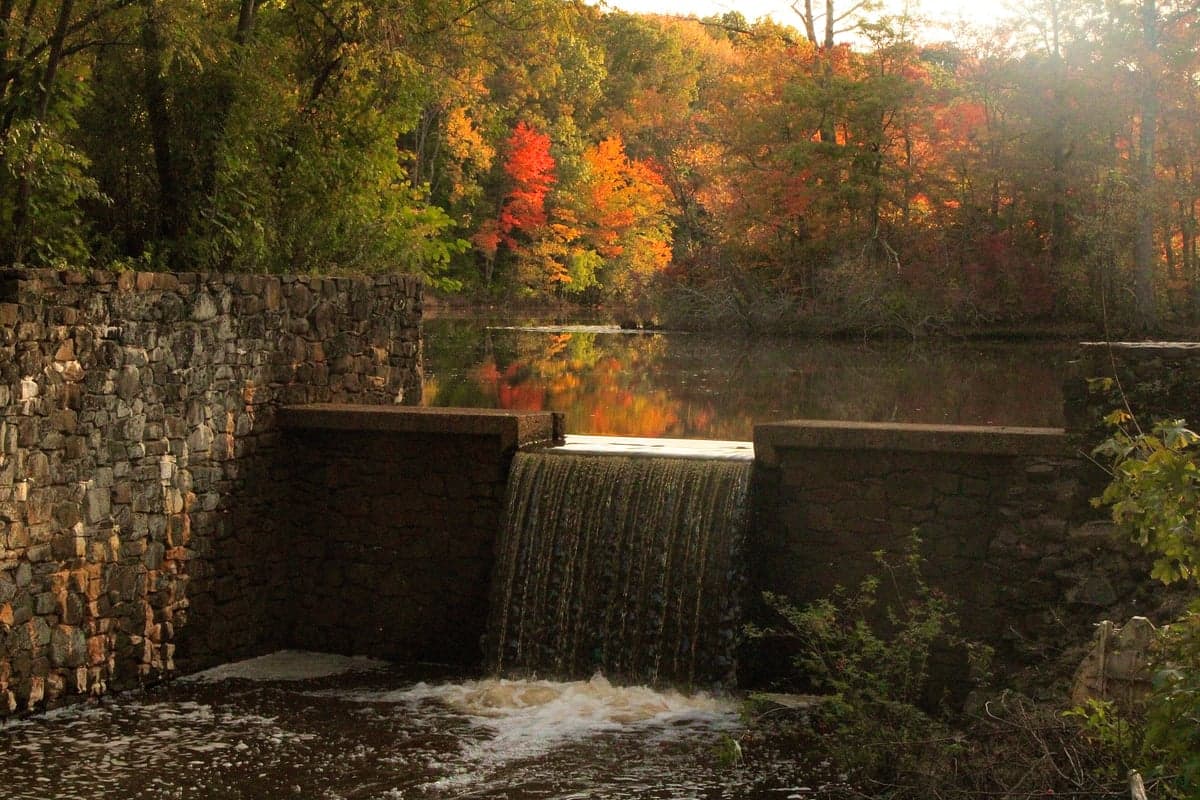
Photo: Wikipedia
Strategic Assessment of South Brunswick Township, NJ
Multiple tactical vulnerabilities. Population density, target proximity, or disaster risk are likely compounding. A retreat property and exit planning is required.
What does the Strategic Assessment tell us?
Our Strategic Assessment grades tactical survivability of an area. Major population centers, military targets, fallout zones, natural disasters, and border exposure all drive risk — lower exposure means a more defensible position in a crisis.
This is heavily inspired by Joel Skousen's Strategic Relocation book. Highly recommended you checkout the book ($)What does this tell us?
Our Strategic Assessment grades tactical survivability of an area. Major population centers, military targets, fallout zones, natural disasters, and border exposure all drive risk — lower exposure means a more defensible position in a crisis.
This is heavily inspired by Joel Skousen's Strategic Relocation book. Highly recommended you checkout the book ($)Strategic Pillars

Key Distances
Regional Safe Places
Below is our recommended "safe zones" in New Jersey and the surrounding area based on our strategic heuristics. For most people, it's unrealistic to live in a “safe zone” full-time due to work, family or other personal reasons. They tend to be more rural. However, many of these areas are perfect for second homes and retreat properties that double as a vacation home or even a short-term rental.
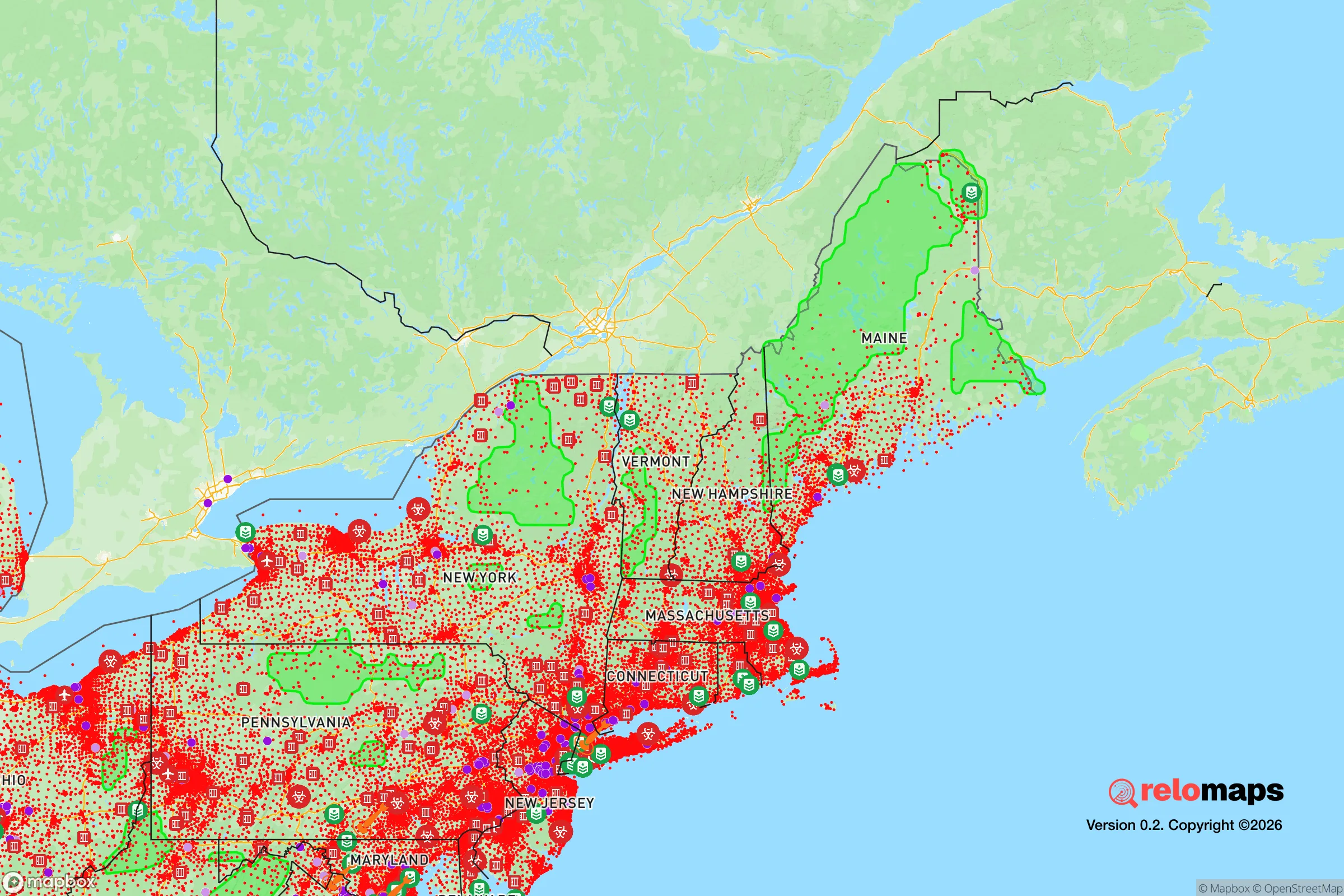
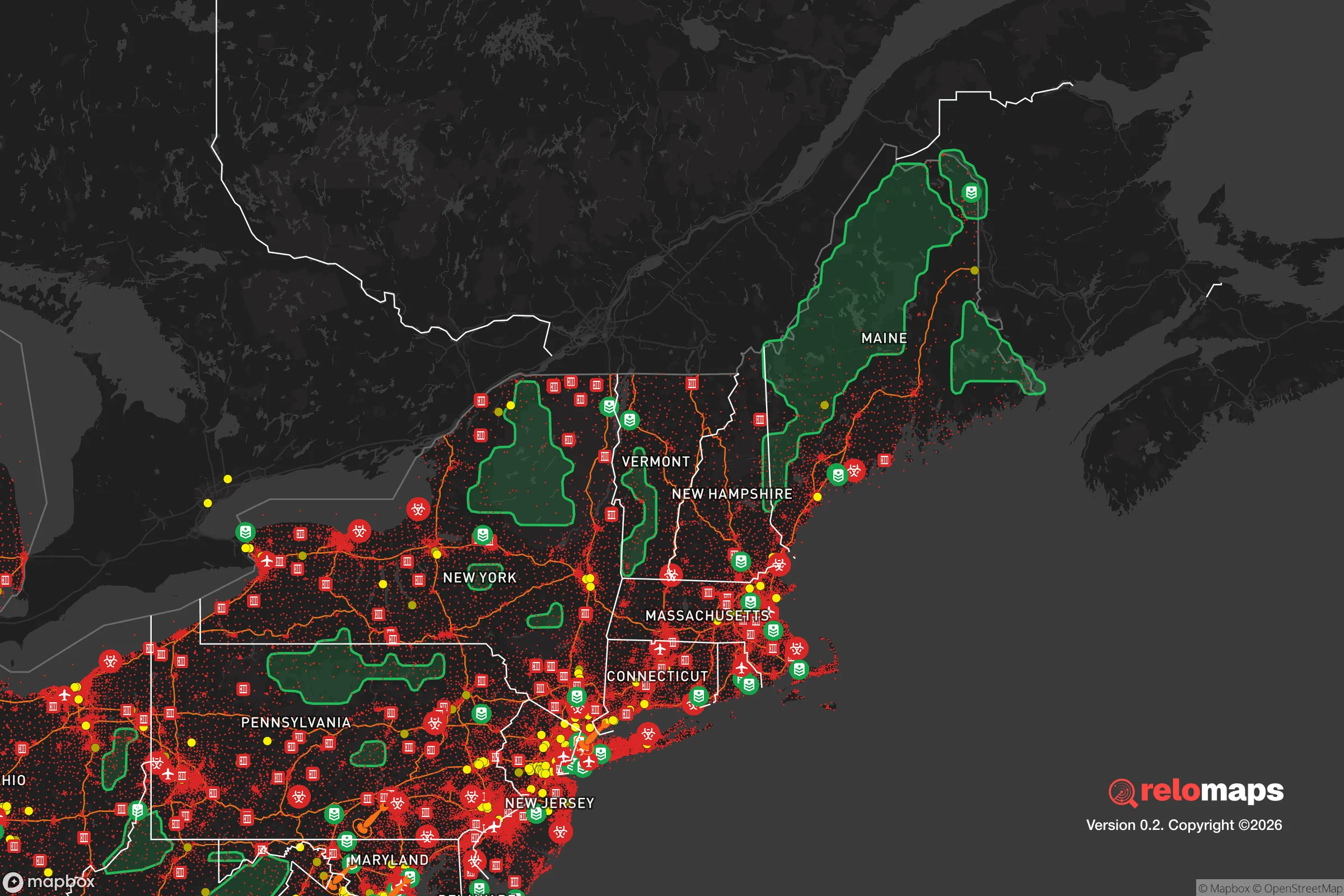


Important Note: For informational purposes only. This does not mean nothing bad ever happens in the green zones. Please use common sense. This is based on public data and modeled with AI. We tried to take a conservative approach but mistakes happen. We update this regularly as new information becomes available.
Solar Generator Recommendations
Backup power matters more here than in safer locations. We've picked three solar generators across budgets and capacity tiers — start with the budget unit if you only need a few essentials, or step up if you want to run a fridge and HVAC for days at a time.

Jackery Portable Power Station Explorer 300
Budget OptionPower on the Go: Weighing only 11 lbs, it's convenient to set up and store with book-sized foldable solar panels

BLUETTI Portable Power Station AC180
Designed for both indoor and outdoor scenarios, AC180 is highly capable as it has a robost capacity and continuous output power.

EF ECOFLOW DELTA Pro Ultra Power Station
Upgraded PickEcoFlow DELTA Pro Ultra is a whole-home energy system designed to grow with your family. Integrated with the Smart Home Panel 2, it scales to meet your evolving energy needs — keeping your home powered, intelligent, and secure through every stage of life.
We earn a commission, at no additional cost to you.
Strategic Assessment Analysis
South Brunswick Township, New Jersey, offers a strategic position that balances proximity to major economic hubs with a degree of geographic compartmentalization that appeals to relocators focused on resilience and self-sufficiency. Located in Middlesex County, roughly halfway between New York City and Philadelphia, the township sits within the greater Raritan Valley region, providing access to critical infrastructure while maintaining a suburban-rural character that supports a measure of independence. Its location along the Northeast Corridor — with direct rail access to both New York and Trenton — means that for a prepared household, the area can serve as a functional base from which to access resources or relocate if needed, without being embedded in the most congested urban cores. The presence of major highways (Turnpike, Route 1, Route 130) and proximity to Newark Liberty International Airport further enhance logistical options, though they also introduce vulnerabilities that must be weighed in any serious assessment.
Geographic position, natural buffers, and regional advantages for preparedness
South Brunswick’s geography provides a meaningful set of natural and man-made advantages for a relocator thinking in terms of disaster readiness. The township lies within the Piedmont region, characterized by gently rolling hills, mixed forests, and numerous waterways — including the Millstone River and the Delaware and Raritan Canal — which together create a landscape that is more defensible and resource-rich than flat suburban sprawl. The area is not coastal, which eliminates direct storm surge risk from hurricanes, though it is still vulnerable to heavy rainfall and inland flooding during Nor’easters. Elevation varies from about 100 to 250 feet above sea level across most of the township, placing it above the floodplains of nearby rivers and canals. The historic Delaware and Raritan Canal State Park runs through the western edge of the township, functioning not only as a recreational corridor but also as a potential water resource and natural barrier — a linear green buffer that could complicate ground-level access from certain directions. The prevalence of mature tree cover, including large sections of the 3,500-acre Assunpink Wildlife Management Area to the south, offers both concealment and a source of wood for heating or cooking in a prolonged grid-down scenario. For a prepared household, these features create a landscape that is more tenable for self-sufficiency than the denser, flatter suburbs closer to the coast.
Risk exposure, proximity to critical infrastructure, and man-made vulnerabilities
For a resilience-focused analysis, the most significant vulnerability of South Brunswick is its position within the most strategically contested corridor on the Eastern Seaboard. The township lies within about 15 miles of major industrial and chemical facilities in the Raritan River and Route 1 corridor, including the Port of Newark and Elizabeth marine terminals (30 miles east) and the sprawling chemical and refining complexes in Linden and Rahway. The presence of the Amtrak Northeast Corridor and NJ Transit rail lines running directly through the township means that any disruption — whether natural or man-made — affecting rail or power transmission (which follows those same corridors) would be felt immediately. The township is also roughly 35 miles from Philadelphia and 40 miles from New York City, placing it within the probable fallout zone of any large-scale event affecting either metro area, whether a conventional disaster or a deliberate attack on critical infrastructure. Additionally, the nearby McGuire Air Force Base (25 miles south) and Joint Base McGuire-Dix-Lakehurst represent both a potential asset and a target. The presence of the Princeton Plasma Physics Laboratory (about 12 miles north) and several research reactors in the region introduces a low-probability, high-consequence risk for a relocator concerned with nuclear or radiological hazards. For those serious about disaster readiness, the tradeoff is clear: South Brunswick offers superior access to resources and evacuation routes relative to the urban core, but it is not a remote or hardened location. Its defensibility in a prolonged crisis would depend heavily on the resident’s ability to secure a property with good sightlines, barriers, and stored supplies.
Practical resilience for a relocator: food, water, energy, and defensibility
South Brunswick provides a more favorable baseline for practical self-sufficiency than most New Jersey suburbs, but it requires deliberate preparation. Water access is a genuine asset in this area. The township sits atop the Newark Basin aquifer system, with well water being common in older or more rural sections. Public water comes from the Delaware River via the New Jersey American Water system, but a property with a private well and a hand-pump or generator backup would provide a reliable water source independent of municipal infrastructure. Surface water is available from the Millstone River, the Delaware and Raritan Canal, and numerous ponds and streams — though treatment (boiling, filtration, or chemical) would be necessary. Food production potential is moderate but real. Soils in the area are generally loamy and well-drained in the western and southern parts of the township, supporting community gardens and small farms. Zoning allows for backyard livestock (chickens, rabbits, goats) in most residential zones, with restrictions on roosters and larger animals. Several local farms and farmers’ markets, such as the East Brunswick Farmers Market (10 minutes east) and the South Brunswick Community Garden, provide immediate access to fresh produce and can serve as network nodes for bartering or mutual aid. Energy resilience is a weak point for most properties. The township is served by PSE&G with overhead power lines running along tree-lined roads, making it highly susceptible to storm outages. Natural gas is available in much of the township, meaning a gas-ready generator or backup boiler is a practical investment. Solar is viable but less common due to tree cover; a ground-mounted or roof array with battery storage would be necessary for true independence. Defensibility varies sharply by neighborhood. The denser, newer developments along Route 1 (e.g., the Southridge, Kendall Park, and Monmouth Junction areas) offer poor sightlines and multiple egress points, making them harder to secure. In contrast, the older, larger-lot sections west of the Turnpike and south of Route 27 provide more space, tree cover, and distance from major roads — better suited for a hardened property with a perimeter and storage. For a relocator, the key is to select a property with access to well water, space for a garden, and a defensible layout, rather than a suburban tract home facing a busy road.
The overall strategic picture for South Brunswick Township is one of qualified optimism for a prepared relocator. It is not the most resilient location in the Northeast — that would be a more remote area in the Appalachian foothills or northern New England — but it occupies a clear niche for someone who needs to remain within commuting distance of Philadelphia or New York while maintaining a functional level of emergency readiness. The township’s real strength is its combination of moderate geographic buffers, water availability, agricultural potential, and institutional resources (hospitals, fire departments, mutual aid networks) that would be invaluable in a crisis. Its weaknesses are the proximity to high-value targets and critical infrastructure corridors, the vulnerability of the grid, and the density of population that could complicate evacuation or long-term sustainment. For a family or individual with a solid plan, stored supplies (90+ days of food, water, medical gear, and fuel), and the discipline to secure property features (well, backup power, defensible layout), South Brunswick is a viable base of operations. For someone expecting to ride out a major event without preparation, it would be no better than any other suburban town on the I-95 corridor. The area rewards effort, planning, and resources — it does not offer them for free.

* Values derived from national, state, county, city and local statistics and may differ in a specific area. Last updated: 2026-06-30T04:04:47.000Z
Narrative content on this page is AI-generated and may contain mistakes. Verify any details that matter before acting on them.
ReloMaps may earn a commission from affiliate links at no extra cost to you.

