 Popular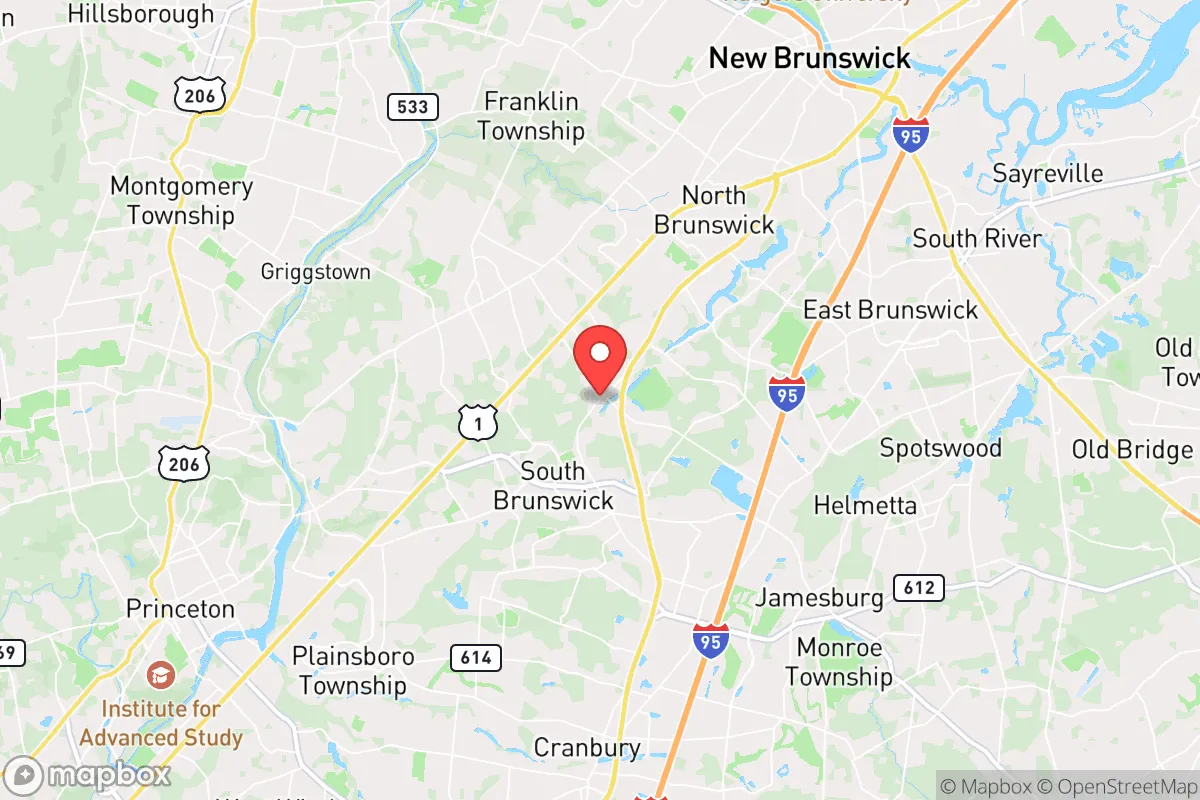
Photo: Wikipedia
Quality of Life in South Brunswick Township, NJ
A high quality of life with strong walkability, manageable living costs, healthy neighborhood signals, and solid amenity access.
What does Quality of Life tell us?
Quality of Life blends cost of living, nearby amenities, socioeconomic signals, and neighborhood character. City-level scores represent the whole municipality; individual neighborhoods can differ.
What does this tell us?
Quality of Life blends cost of living, nearby amenities, socioeconomic signals, and neighborhood character. City-level scores represent the whole municipality; individual neighborhoods can differ.
Cost of Living
140% above national average
The Real Cost of Living in South Brunswick Township, NJ for 2026
| Tier | Individual | Family (4) |
|---|---|---|
| Survival | $43k | $81k |
| Comfortable | $138k | $203k |
| Luxury | $303k+ | $470k+ |
| Elite (Top 5%) | $356k+ | $552k+ |
111%
The Area Signal
A metric tracking the socioeconomic signals of the area.
Hobbies
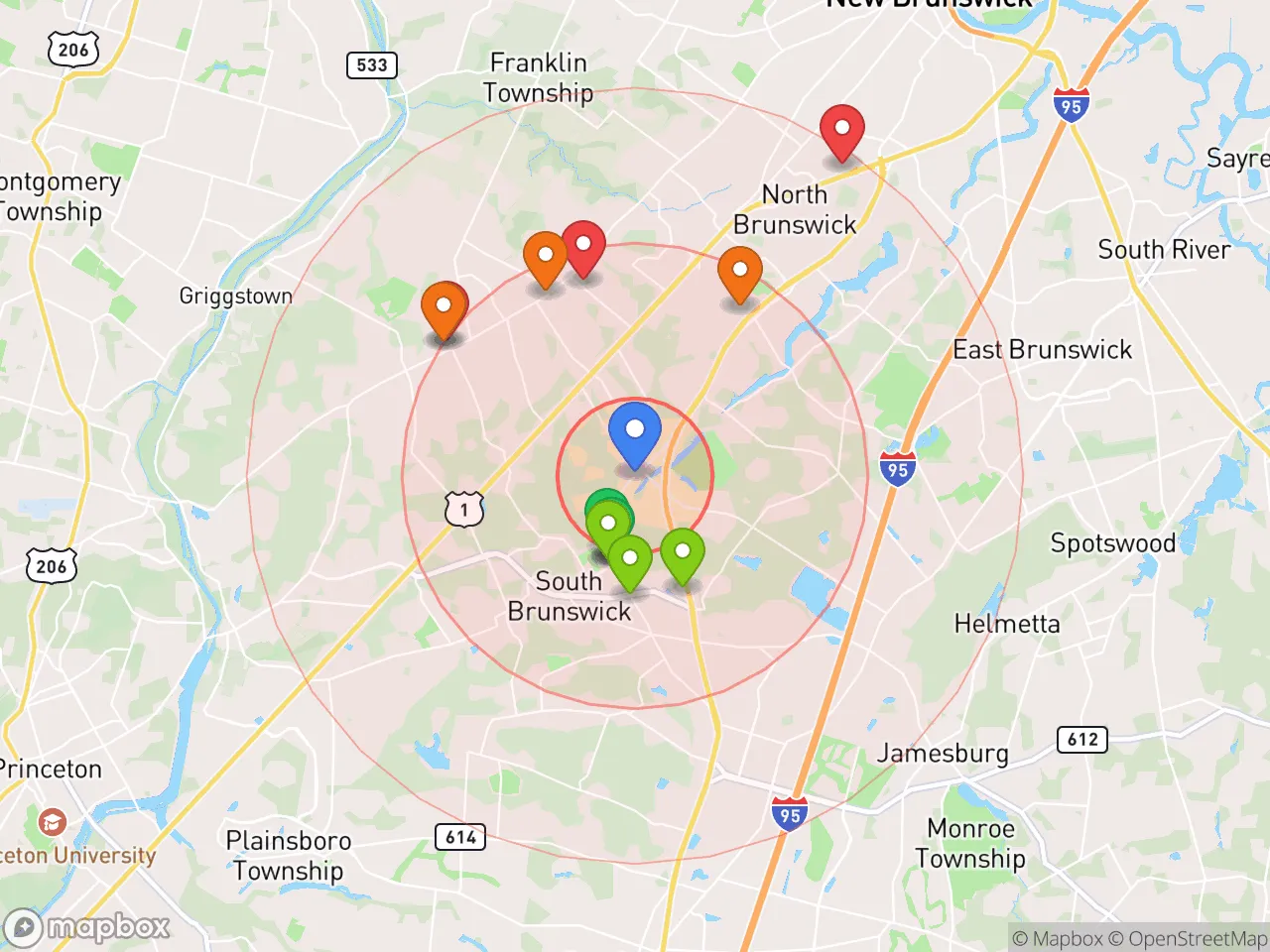
Explore the areaGroceries
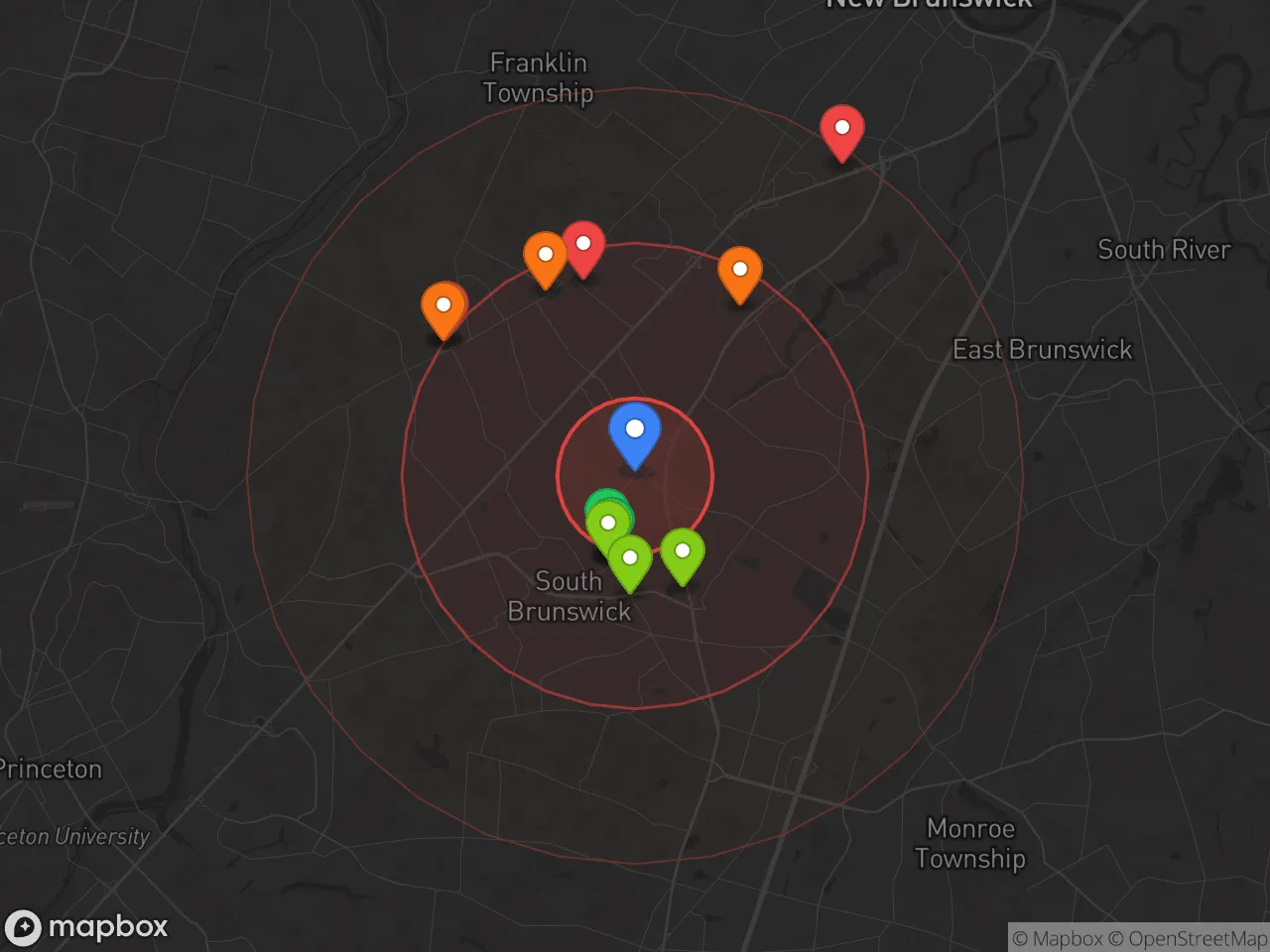
7 within 10 miles
Gas
20 within 10 miles
Hospital
20 within 20 miles
Airport
EWR — Newark Liberty International
Post Office
USPS — South Brunswick Township, NJ
Critical Amenities
Quality-of-Life Analysis
South Brunswick Township, located in central New Jersey’s Middlesex County, is a highly affluent, family-oriented suburban community where the cost of living index reaches 240 — more than double the national average of 100. This premium price tag attracts a population skewed toward professionals in tech, pharmaceuticals, and academia, many of whom commute to corporate hubs in Princeton, New Brunswick, and New York City. The township’s demographic profile is notably diverse and well-educated, with over 55% of residents holding a bachelor’s degree or higher, creating a stable, achievement-driven atmosphere.
Cost of living, home values, and housing affordability compared to nearby areas
With a median home value of $711,200 and a median rent of $2,700, South Brunswick ranks among the priciest towns in central Middlesex County, yet it remains significantly cheaper than Princeton (median home values above $900,000) or Summit ($1.2 million+). For comparison, neighboring towns like Monmouth Junction and Kendall Park, which fall within the same ZIP codes, offer slightly older housing stock but similar price floors. The average commute stretches to 41.6 minutes, reflecting the reality of living in a bedroom community where many residents travel to major employment centers — the Route 1 corridor, the Princeton Pike office parks, and Manhattan (via NJ Transit’s Princeton Junction station). Renters face a tight market: a typical two-bedroom apartment exceeds $2,400, and inventory is limited. For buyers, property taxes are a major factor — Middlesex County’s effective tax rate hovers around 2.4%, meaning annual bills on a $711,200 home easily top $17,000. Still, the trade-off is access to top-rated public services and extremely low crime rates.
School quality, local amenities, and what daily life feels like
Daily life in South Brunswick revolves around the township’s highly regarded South Brunswick School District, which consistently ranks among New Jersey’s top 10% for academic performance, with a 93% graduation rate and strong STEM programs. Amenities are centered in the town’s two commercial hubs: the Route 1/Mapleton Road corridor, anchored by the MarketFair mall (featuring Wegmans, AMC theaters, and a Whole Foods), and the smaller Kingston Village historic district with independent restaurants and parks. Outdoor recreation is plentiful: the 700-acre Woodlot Park offers hiking trails and sports fields, while the D&R Canal towpath provides 70 miles of paved paths for biking and jogging. The rhythm of life is decidedly suburban — car-dependent (walkability scores are low outside of a few pockets), with heavy school and sports traffic on weekdays and a quiet weekend scene dominated by youth soccer tournaments and farmers’ markets at the municipal center. For families, the trade-off between commute duration and quality-of-life metrics is the defining calculation.
South Brunswick is best suited for dual-income professional families who prioritize school quality, safety, and space over urban convenience or nightlife. Singles and empty-nesters may find the lack of a walkable downtown and the long commute frustrating, but for those seeking a low-crime, high-amenity environment with strong property value stability, it is a compelling choice. The township’s demographic makeup — heavily Indian American and Chinese American professionals, alongside long-standing white and Latino families — reflects its role as a gateway community where high earners trade commute time for exceptional public education and a quiet, well-maintained suburb.

Crime in South Brunswick Township, NJ
Generally safer than 73% of comparable U.S. locations.
Violent CrimeViolent Crime Analysis
Property CrimeProperty Crime Analysis
Crime Analysis
South Brunswick Township, located in Middlesex County, maintains a crime rate significantly below national averages, making it one of the safer communities in central New Jersey. With a violent crime rate of 120.6 per 100,000 residents and a property crime rate of 615.5 per 100,000, the township offers a security profile that appeals to families and commuters working in the New York City and Princeton corridors. However, these figures must be weighed against the broader context of Middlesex County’s criminal justice environment, which is shaped by progressive prosecutorial policies that may raise concerns for residents prioritizing public safety.
Crime in context
South Brunswick’s violent crime rate is roughly 67% lower than the national average of approximately 370 per 100,000. Property crime, while more common, also sits well below the national benchmark of about 1,950 per 100,000. These numbers place South Brunswick among the safer municipalities in New Jersey, comparable to neighboring communities like Plainsboro and Monmouth Junction. However, Middlesex County’s district attorney’s office has adopted several progressive reforms in recent years, including bail reform measures and diversion programs that prioritize treatment over incarceration for certain offenses. Proponents argue these reduce recidivism, but critics contend that reduced penalties and faster release cycles increase the likelihood of repeat property crimes and low-level violent offenses. For residents, this means that while the township’s raw crime numbers look favorable, the underlying justice system may not deter offenders as effectively as in more conservative jurisdictions.
What residents experience
Daily life in South Brunswick is largely free of the violent crime that plagues larger urban centers. The violent incidents that do occur—primarily simple assaults and occasional robberies—are rarely random, typically involving known parties. Property crime, including theft from vehicles and residential burglary, represents the more tangible everyday risk. Vehicle break-ins and package thefts are the most frequently reported offenses, particularly near commuter lots and in densely developed subdivisions. The township police department maintains a visible presence through community policing initiatives and a robust neighborhood watch network. However, residents living near the Princeton corridor or major transit hubs like the South Brunswick Train Station should remain vigilant, as transient populations and commuter traffic can correlate with higher opportunistic crime. Neighborhood-level variation is modest but noticeable: older, established neighborhoods near Route 1 tend to see slightly more property incidents than newer, gated developments in the township’s western sections.
For those concerned about the intersection of progressive criminal justice policy and local safety, the broader regional data offers a cautionary note. Middlesex County’s recidivism rates remain a focus of debate, with some analyses suggesting that early-release programs contribute to a small but persistent share of repeat property offenders. While South Brunswick itself avoids the more acute crime challenges of nearby New Brunswick or Trenton, the township is not insulated from regional trends. Prospective residents should factor in that a liberal judicial philosophy, while compassionate, may reduce the deterrent effect for would-be offenders, making proactive home security and community engagement prudent investments.
* Values derived from national, state, county, city and local statistics and may differ in a specific area. Last updated: 2026-06-30T04:04:47.000Z
Narrative content on this page is AI-generated and may contain mistakes. Verify any details that matter before acting on them.
ReloMaps may earn a commission from affiliate links at no extra cost to you.

