 Popular
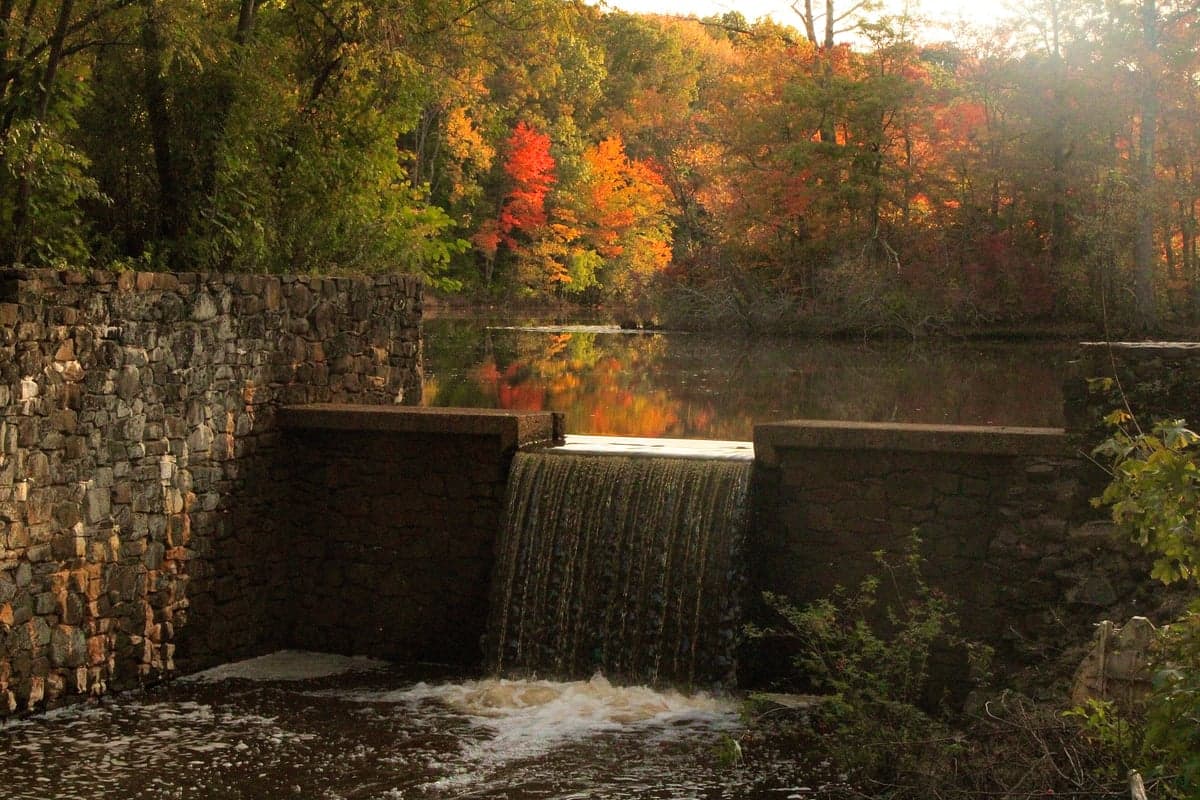
Photo: Wikipedia
Demographics of South Brunswick Township, NJ
Affluence Level in South Brunswick Township, NJ
A wealthy area with high-earning, well-educated households. Incomes, home values, and educational attainment meaningfully outpace national averages.
People of South Brunswick Township, NJ
Today, South Brunswick Township is a predominantly Indian-subcontinent community, with residents of Indian ancestry (India, Pakistan, Bangladesh, Sri Lanka, Nepal) making up 48.6% of its 5,942 residents—the largest single ethnic group by far. White residents account for 34.6%, East/Southeast Asian residents 6.3%, Black residents 4.7%, and Hispanic residents 2.6%. The township is highly educated, with 72.4% of adults holding a bachelor’s degree or higher, and 12.1% of residents are foreign-born. This demographic profile reflects a community that has transformed from a rural farming base into a magnet for tech and professional-class immigrants, particularly those drawn to the area’s strong schools and proximity to Princeton and the Route 1 corridor.
How the city was settled and grew
South Brunswick’s early history was defined by its agricultural character. Originally part of the East Jersey colony, the area was settled in the late 17th and early 18th centuries by Dutch and English farmers who cleared land for grain and livestock operations. The township itself was formally incorporated in 1798, but population remained sparse through the 19th century. The arrival of the railroad in the mid-1800s spurred small hamlets: Kingston and Heathcote became commercial nodes where German and Irish laborers settled, working on farms or in local mills. Dayton emerged as a distinct village center, home to a mix of farmers and tradesmen. By the early 20th century, Italian immigrants also arrived, working in local quarries and on farms, forming a small but stable community concentrated around the Franklin Corner area. Through the 1950s, the population remained under 3,000, and the township’s identity was overwhelmingly white, rural, and working-class.
Modern era (post-1965)
The Immigration and Nationality Act of 1965 was a watershed moment for South Brunswick. It opened doors for skilled professionals from Asia, and the township’s location along the U.S. Route 1technology corridor—home to companies like Siemens, Johnson & Johnson, and a dense cluster of pharmaceutical and IT firms—drew a wave of highly educated immigrants. Indian professionals, particularly software engineers and doctors, began arriving in the 1980s and accelerated through the 1990s and 2000s. They concentrated in newer subdivisions like Monmouth Junction and Kendall Park, attracted by the South Brunswick school district’s strong academic reputation and the proximity to commuter train service. The 2000 census showed the Indian population already at 34%; by 2020 it had climbed past 48%. During the same period, the white population declined from 57% to 34.6%, a shift driven by both out-migration of older Italian and German families and the arrival of new immigrant families. Kingston and Heathcote remain more white and older in character, while the newer developments—Middlesex Greenway area and around South Brunswick High School—are heavily Indian and Asian. The East/Southeast Asian population (6.3%, largely Chinese and Korean) also grew, but at a slower rate and concentrated in the same newer subdivisions.
The future
The trajectory is toward continued diversification, though the Indian share is likely to stabilize or grow slowly rather than accelerate. The population of 5,942 is relatively small for a New Jersey township, and housing stock is limited; new construction is infill or teardown-driven. The white population will probably continue to decline slowly as older residents age in place and younger white families choose other suburbs. The Hispanic share (2.6%) and Black share (4.7%) are likely to remain stable or edge up modestly, but South Brunswick’s identity will remain heavily Indian-subcontinent for the foreseeable future. The next decade will see the children of the post-1965 wave raising their own families, deepening the community’s professional orientation. The cultural identity is evolving into a hybrid: public schools celebrate both Diwali and Christmas, the township’s library hosts South Asian cultural programs, and local businesses—grocery stores, restaurants, and clothing shops—in Monmouth Junction cater to Indian tastes. New arrivals are dispersing across existing neighborhoods rather than clustering in a single enclave, but Monmouth Junction remains the commercial and cultural heart of the Indian community.
For a newcomer, South Brunswick is a stable, safe, academically high-achieving suburb where the dominant culture is Indian-subcontinent professional-class, with a quietly shrinking white rural legacy. A move here means entering a community where 72% of adults hold college degrees, where the top restaurants in Monmouth Junction serve South Indian cuisine, and where the biggest local debates are about zoning and school overcrowding—not about growth or decline. It is not a diverse melting pot in the broad sense, but rather a focused, high-opportunity enclave that has remade itself around a single immigrant success story.

* Values derived from national, state, county, city and local statistics and may differ in a specific area. Last updated: 2026-06-30T04:04:47.000Z
Narrative content on this page is AI-generated and may contain mistakes. Verify any details that matter before acting on them.
ReloMaps may earn a commission from affiliate links at no extra cost to you.

