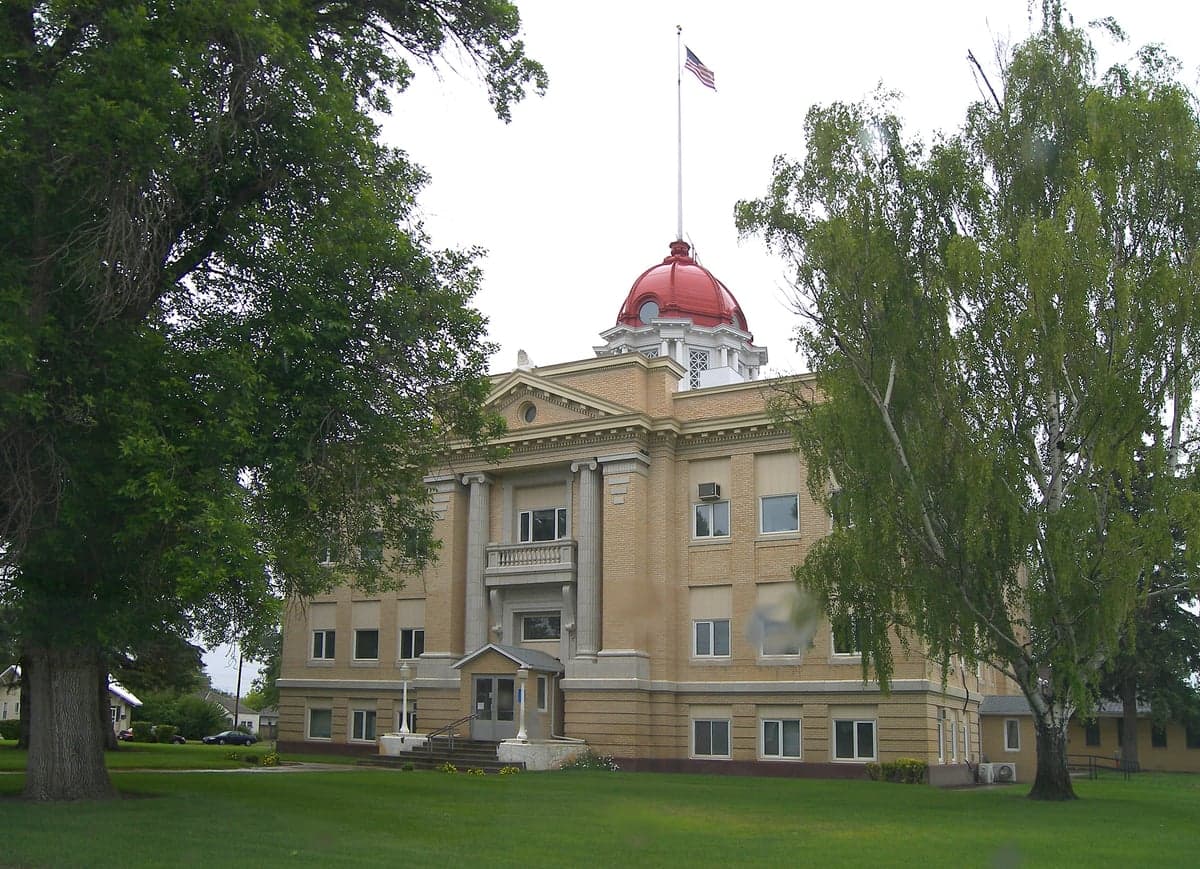
Photo: Wikipedia
Political ClimatePolitical Climate in Sidney, MT
District shown is the primary district for this city’s centroid. Cities may span multiple districts.
Local Political AnalysisPolitical Analysis of Sidney, MT
How it compares
Drive 30 miles south to Glendive, and you’ll find a similar conservative vibe, though maybe a little more tied to the railroad and state college crowd. The real contrast is if you head west toward Billings or, worse, up to Bozeman. Billings is still red overall, but it’s got a growing progressive undercurrent you can feel in the city council debates and the local news. Bozeman? That place has changed so fast it’s almost unrecognizable—a flood of out-of-state money and transplants who think they can import their coastal politics. Sidney, by comparison, feels like a time capsule of what Montana used to be. The Bakken oil boom brought some new faces, but the core values here—hard work, self-reliance, and a healthy skepticism of authority—haven’t budged. You won’t find the same kind of “let’s regulate everything” attitude you see in the bigger towns.
What this means for residents
For folks living here, the political climate means a lot less friction in daily life. You don’t have to worry about your kids coming home from school with some radical social curriculum, because the local school board is still run by people who believe in teaching the basics and letting parents raise their kids. Property taxes are a concern everywhere, but there’s a general understanding that the county commissioners aren’t looking to invent new fees or zoning rules just to satisfy some state mandate. The biggest worry for long-time residents isn’t about losing an election—it’s about the slow creep of federal regulations on energy and agriculture. The oil fields and the farms are the lifeblood here, and every new EPA rule or BLM land restriction feels like a direct attack on the local way of life. That’s where the real political energy goes: fighting to keep Washington D.C. from strangling the economy.
One thing that sets Sidney apart culturally is its no-nonsense approach to local governance. There’s no city-wide mask mandate drama or heated debates over bike lanes. The local paper covers the county fair and the high school football scores, not the latest culture war from the coast. That’s not to say there aren’t disagreements—there are plenty, especially over water rights and oil lease terms—but they’re handled like adults, not like a reality show. The trajectory I see is a slow, steady resistance to the outside world trying to change things. The younger generation that stays is often the one that values the freedom and space over the convenience of a city. As long as the oil holds and the wheat grows, Sidney will stay the same: a place where your word is your bond, your gun is your right, and the government is best when it’s kept at arm’s length.

State Political ClimatePolitical Climate in Montana
State Political AnalysisPolitical Environment in the State
Montana has long been a reliably Republican state in presidential elections, voting for the GOP candidate in every contest since 1968 except for Bill Clinton’s 1992 win, but the real story is the deepening internal divide between a libertarian-leaning, rural conservative base and a rapidly growing, more progressive urban corridor. The state’s overall partisan lean remains solidly red — Donald Trump won by 16 points in 2020 and 20 points in 2024 — but the political center of gravity is shifting as newcomers pour into places like Bozeman, Missoula, and Kalispell, bringing with them a mix of libertarian, moderate, and left-leaning values that are reshaping local elections and policy debates.
Urban vs. rural divide
The political map of Montana is a study in contrasts. The western third of the state, anchored by Missoula County and Gallatin County (home to Bozeman), has become a Democratic stronghold. Missoula County voted for Joe Biden by 22 points in 2020 and Kamala Harris by 18 points in 2024, driven by the University of Montana, a growing tech and outdoor recreation economy, and an influx of out-of-state transplants from California and the Pacific Northwest. Gallatin County, once reliably red, flipped to Biden by 失效 points in 2020 and has stayed competitive, with Bozeman’s explosive growth — up 40% in population since 2010 — bringing a younger, more educated, and more liberal electorate. In contrast, the eastern two-thirds of the state, including rural counties like Petroleum, Garfield, and McCone, routinely vote 80-90% Republican. The divide is stark: the state’s largest city, Billings (Yellowstone County), remains a conservative anchor, voting +24 R in 2024, while the Flathead Valley around Kalispell and Whitefish is a microcosm of the tension — Kalispell is deeply red, but Whitefish has become a liberal enclave, with its city council pushing progressive housing and environmental policies that alarm rural neighbors.
Policy environment
Montana’s policy environment is a mixed bag for conservatives. On the plus side, the state has no sales tax, a flat income tax rate of 5.9% (reduced from 6.9% in 2021 under Governor Greg Gianforte), and a strong right-to-work law that keeps unions weak. Property taxes are relatively low, though they’ve risen with home values — up 30% since 2020 in Bozeman and Missoula. The regulatory posture is generally business-friendly, with no state-level minimum wage above the federal $7.25 and limited zoning restrictions outside of incorporated cities. However, the state’s education system is a flashpoint: Montana ranks 44th in per-pupil spending, and school choice is limited to a handful of charter schools and a weak tax-credit scholarship program. The Gianforte administration has pushed for parental rights in education, including a 2023 law requiring schools to notify parents of curriculum changes and a 2024 law banning transgender athletes from girls’ sports. Election laws are moderately conservative: voter ID is required, same-day registration is allowed, and mail-in voting is universal — a system that some conservatives view as ripe for fraud, though no major irregularities have been documented. Healthcare is a perennial concern: Montana expanded Medicaid under the Affordable Care Act in 2015, and the program covers over 100,000 residents, but the state has one of the highest uninsured rates in the nation at 8.5%.
Trajectory & freedom
Montana’s trajectory on personal freedom is a tug-of-war between libertarian impulses and progressive encroachment. On the positive side, the state has some of the strongest gun rights in the nation: constitutional carry became law in 2021, and a 2023 law prohibits state enforcement of federal gun regulations that violate the Second Amendment. Property rights are robust, with a 2021 law limiting county-level zoning authority and a 2023 law requiring compensation for landowners affected by conservation easements. However, the state’s libertarian streak is under threat. In 2023, the legislature passed a law banning TikTok on state devices and government networks — a rare instance of government overreach into personal technology choices. More concerning for conservatives is the rise of “home rule” charters in cities like Missoula and Bozeman, which have allowed local governments to impose rent control, inclusionary zoning, and even a proposed plastic bag ban that was struck down by the courts. The Gianforte administration has pushed back, signing a 2023 law preempting local rent control and a 2024 law limiting city authority over short-term rentals. The biggest freedom fight is over medical autonomy: Montana’s 2023 law banning gender-affirming care for minors is being challenged in court, and a 2024 ballot initiative to enshrine abortion rights in the state constitution is gathering signatures, threatening to override the state’s current 20-week abortion ban.
Civil unrest & political movements
Montana has seen its share of political flashpoints. The 2020 election integrity debate was intense, with the state’s Republican secretary of state, Christi Jacobsen, defending the universal mail-in system against conservative criticism. In 2021, a group of armed protesters gathered at the state capitol in Helena to oppose COVID-19 mandates, and the “Freedom Convoy” movement had a small but vocal presence in 2022. Immigration politics are relatively quiet — Montana has a tiny foreign-born population (2.5%), but the state has seen a surge of asylum seekers from Central America in recent years, mostly in Missoula and Billings, straining local resources. The most visible political movement is the “Yellowstone County Rebellion” — a loose coalition of ranchers and property rights activists who have clashed with the federal Bureau of Land Management over grazing permits and land use. On the left, the “Montana Environmental Information Center” and “350 Montana” have organized protests against fossil fuel development, including the Keystone XL pipeline (which was canceled in 2021) and the proposed Black Butte copper mine. The state’s sanctuary city debate is muted — no Montana city has declared itself a sanctuary for undocumented immigrants, but Missoula’s city council passed a “welcoming city” resolution in 2019 that conservatives view as a backdoor sanctuary policy.
Projection
Over the next 5-10 years, Montana is likely to become more politically competitive, but not necessarily more liberal. The key demographic driver is in-migration: the state added 100,000 residents between 2020 and 2025, with most settling in the western counties — Gallatin, Missoula, Flathead, and Lewis and Clark (Helena). These newcomers are disproportionately white, affluent, and politically moderate, with a strong libertarian streak. They tend to vote Republican on economic issues (taxes, regulation) but are more socially liberal (abortion, marijuana — which is legal in Montana). This could create a “purple” coalition that keeps the state red at the presidential level but flips some local races. The state’s legislative districts are being redrawn after the 2020 census, and the new maps have already created a handful of competitive seats in the Bozeman and Missoula suburbs. The biggest wildcard is the 2024 ballot initiative on abortion rights: if it passes, it could galvanize Democratic turnout and shift the state’s political calculus. For conservatives, the threat is that Montana’s libertarian tradition is being eroded by a combination of federal overreach, local progressive activism, and a growing population that doesn’t share the state’s historical values of self-reliance and limited government.
For a new resident, the bottom line is this: Montana is still a great place for conservatives who value low taxes, gun rights, and wide-open spaces, but you need to pick your location carefully. If you move to Bozeman or Missoula, expect to live in a blue bubble where your property taxes are rising, your local government is increasingly progressive, and your kids’ school curriculum may reflect values you don’t share. If you settle in Billings, Kalispell, or a rural county like Ravalli or Park, you’ll find a more traditional Montana — conservative, independent, and suspicious of government. The state’s political future is uncertain, but one thing is clear: the days of Montana as a sleepy, uniformly red state are over. The fight for its soul is just beginning.
* Values derived from national, state, county, city and local statistics and may differ in a specific area. Last updated: 2026-04-29T22:31:04.000Z
Narrative content on this page is AI-generated and may contain mistakes. Verify any details that matter before acting on them.
ReloMaps may earn a commission from affiliate links at no extra cost to you.

