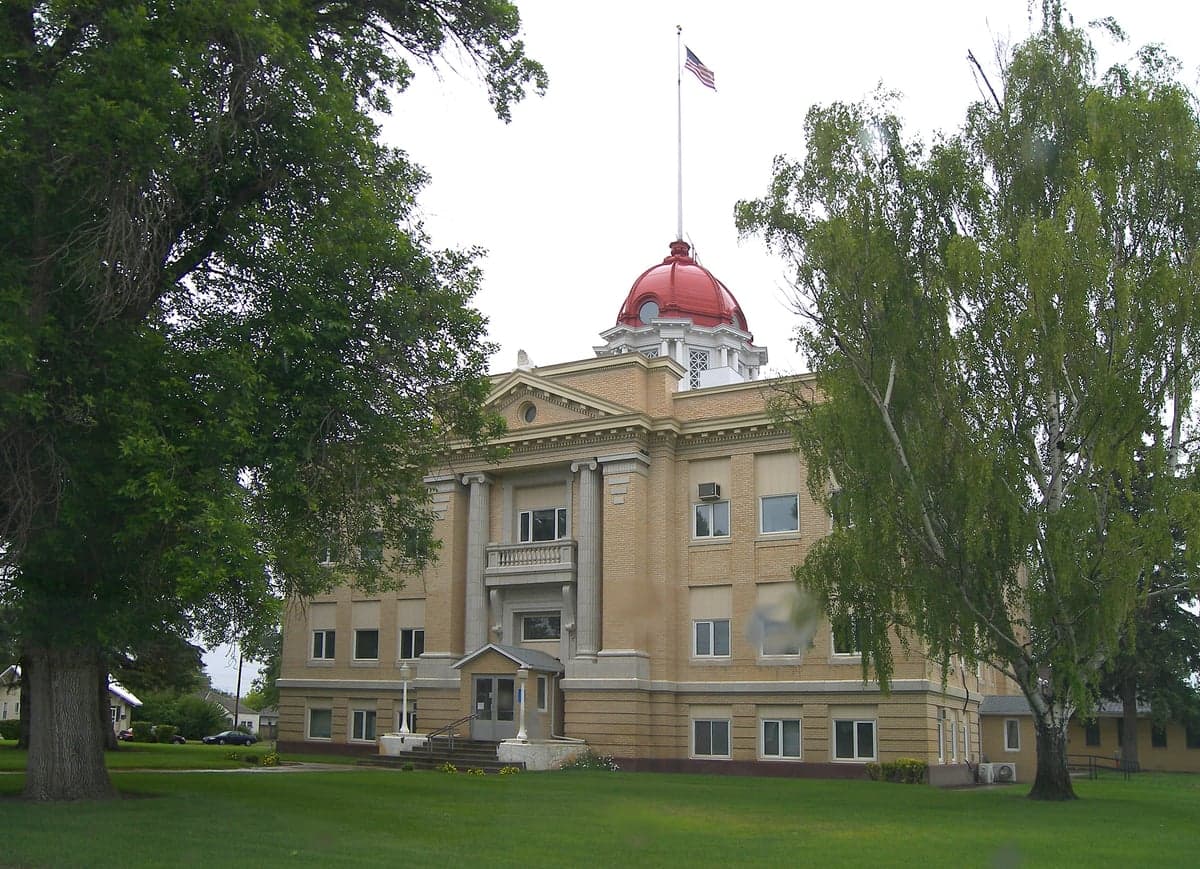
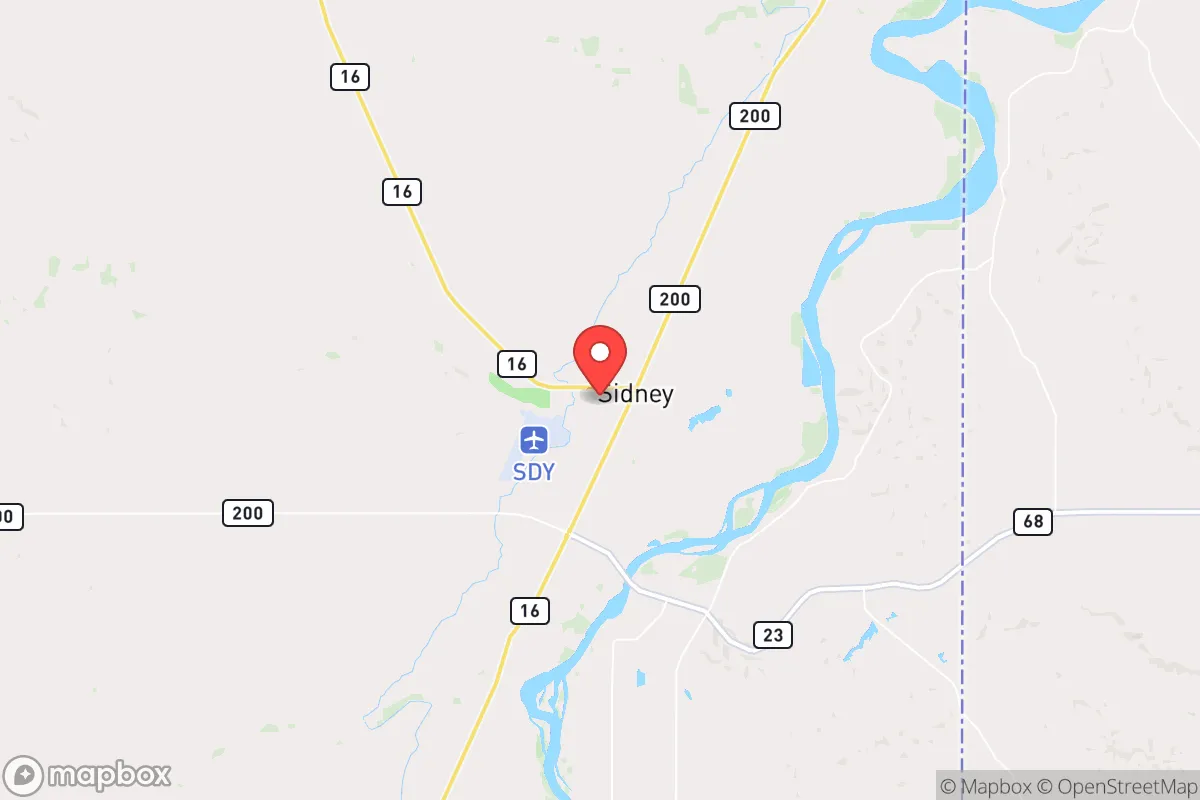
Photo: Wikipedia
Demographics of Sidney, MT
Affluence Level in Sidney, MT
A middle-class area roughly in line with national averages across income, home values, education, and employment.
People of Sidney, MT
The people of Sidney, Montana, today form a predominantly white, family-oriented community of 6,235 residents, with a strong agricultural and energy-sector identity. The city is notably homogeneous — 83.6% white and 2.6% foreign-born — with a Hispanic population of 6.9% and negligible Asian (0.2%) or Black (0.0%) presence. Sidney’s character is shaped by its role as the commercial hub of the Lower Yellowstone Valley, where a sense of self-reliance and neighborly practicality prevails, and where newcomers are often drawn by work in oil, farming, or healthcare rather than urban amenities.
How the city was settled and grew
Sidney’s population history begins with the arrival of the Northern Pacific Railway in the 1880s, which opened the Yellowstone Valley to homesteaders. The town was officially platted in 1888 and named after Sidney Walters, a railroad official. The first major wave of settlers were Northern European immigrants — primarily Germans from Russia, Norwegians, and Swedes — who were drawn by the promise of irrigated farmland under the Carey Land Act and later the Bureau of Reclamation’s Lower Yellowstone Project. These families built the original core of the city around Central Avenue and the area now known as Old Town Sidney, a historic district of early 20th-century brick storefronts and modest frame houses. A second wave came during the 1910s-1920s as dryland wheat farming expanded, with homesteaders filling out the West Side neighborhood, where many original farmhouses still stand. The city’s growth remained steady but slow through the mid-20th century, driven by agricultural processing (sugar beets, wheat) and the establishment of the Sidney Health Center in the 1950s.
Modern era (post-1965)
After the 1965 Immigration and Nationality Act, Sidney saw little of the national diversification that reshaped larger cities. The foreign-born share remains low at 2.6%, and the Hispanic population of 6.9% is largely composed of families who arrived in the 1990s and 2000s to work in the sugar beet fields and the Sidney Sugars processing plant, settling in the Southside area near the industrial corridor. The most significant modern demographic shift was domestic: the Bakken oil boom of the 2010s brought an influx of workers from across the Upper Midwest and Mountain West, many of whom rented apartments in the Northwest Heights subdivision or the newer Prairie View Estates development. This boom temporarily swelled the population to over 6,500, but as oil prices fell after 2014, many transient workers left, leaving a more stable, long-term resident base. The Asian population (0.2%) is negligible and consists of a handful of professionals at the hospital or university extension office; there is no Indian-subcontinent community (0.0%). The Black population is statistically zero. Sidney remains a place where the dominant cultural influence is Northern European agrarian tradition, with a small but visible Hispanic workforce.
The future
Looking ahead, Sidney’s population is likely to remain stable or grow very slowly, with a continued homogenization of its white majority. The city is not tribalizing into distinct ethnic enclaves — the Hispanic population is dispersed rather than concentrated, and there is no significant immigrant gateway forming. The aging of the white population (median age is around 40) and the low college attainment rate (18.9%) suggest that outmigration of young adults for education and jobs in Billings or the Front Range will continue. In-migration will likely be driven by two factors: agricultural consolidation (fewer but larger farms needing fewer workers) and energy sector cycles (oil and natural gas in the Williston Basin). The city’s housing stock — dominated by single-family homes in neighborhoods like Hillcrest and Sunset Addition — is affordable by national standards, which may attract remote workers or retirees seeking a low-cost, low-crime environment. However, without a major employer expansion or a shift in immigration policy, Sidney will likely remain a predominantly white, working-class community with a stable but aging population.
For someone moving in now, Sidney offers a predictable, safe, and community-oriented environment where neighbors know each other and local institutions (schools, churches, the hospital) anchor daily life. The city is not becoming more diverse in any meaningful way, and newcomers should expect a culture rooted in agricultural rhythms, conservative values, and a pace of life that values stability over change. It is a place for those seeking a quiet, family-focused existence rather than demographic dynamism or urban opportunity.

* Values derived from national, state, county, city and local statistics and may differ in a specific area. Last updated: 2026-04-29T22:31:04.000Z
Narrative content on this page is AI-generated and may contain mistakes. Verify any details that matter before acting on them.
ReloMaps may earn a commission from affiliate links at no extra cost to you.

