
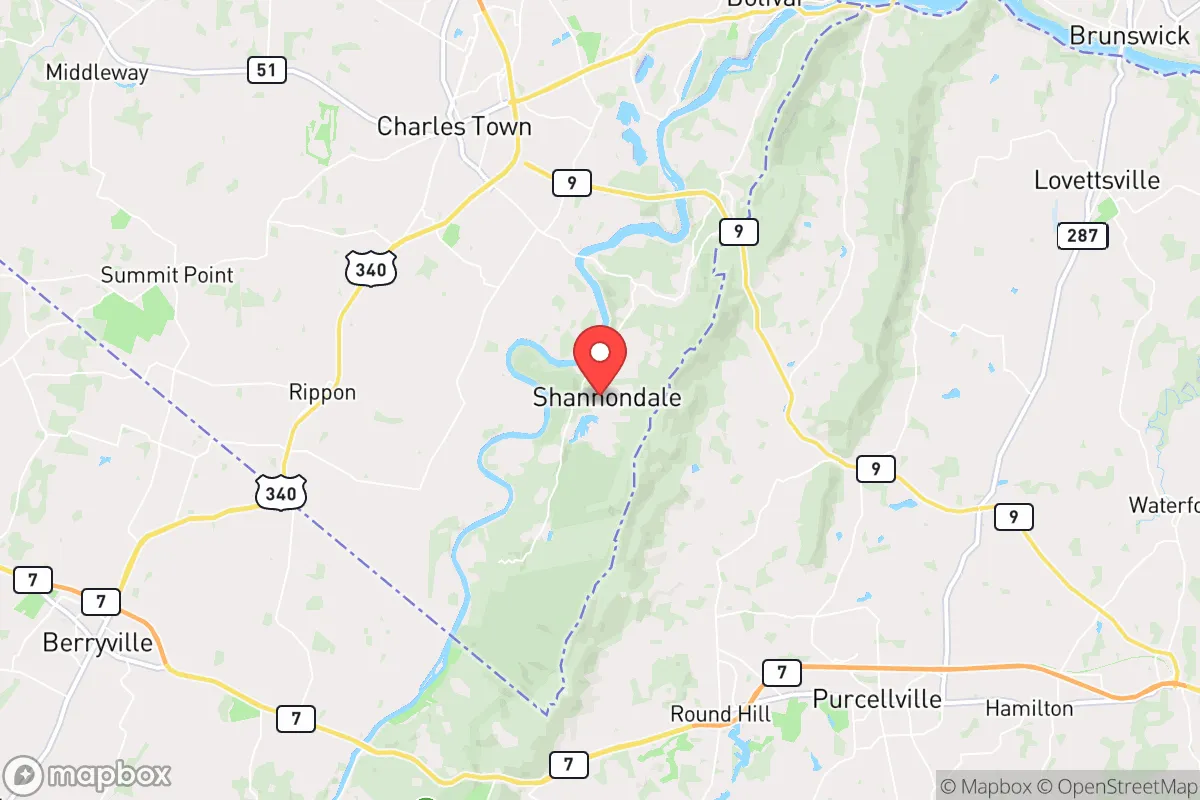
Photo by Joshua Hummell on Unsplash
Political ClimatePolitical Climate in Shannondale, WV
District shown is the primary district for this city’s centroid. Cities may span multiple districts.
Inherited from parent county — no local data available.
* Lean and PVI are calculated from the surrounding county’s 2020 and 2024 presidential results, Cook-style — a finer measure here than its congressional district (WV-2).
Political rankings in West Virginia
- Most Conservative Cities in West Virginia
- Most Liberal Cities in West Virginia
- Best Liberal-Leaning Towns in the South
- Best Liberal-Leaning Towns in Appalachia
- Safest Liberal-Leaning Towns in the South
- Safest Conservative-Leaning Towns in the South
- Affordable Small Towns for Conservatives
- Safest Conservative-Leaning Cities in the U.S.
- Most Conservative Counties in West Virginia
- Most Liberal Counties in West Virginia
Local Political AnalysisPolitical Analysis of Shannondale, WV
Shannondale, WV, leans reliably Republican, with a Cook PVI of R+7 that places it to the right of the national average but slightly less conservative than the surrounding Jefferson County as a whole. The area has been trending redder over the past decade, driven largely by an influx of retirees and remote workers from the D.C. metro area who bring fiscally conservative values but sometimes clash with locals on development and land-use issues. You won't find much political hand-wringing at the local diner — most folks here vote straight-ticket Republican, and the real debates tend to be about growth management rather than party ideology.
How it compares
Compared to West Virginia as a whole, Shannondale is a bit of an outlier. The state's Cook PVI is unknown, but statewide elections typically see Republicans winning by 30-40 points in rural counties; Jefferson County, where Shannondale sits, is more competitive, often voting 10-15 points more Democratic than the rest of the state. For context, nearby Charles Town and Ranson lean slightly more moderate, while Shepherdstown — just 15 minutes north — is a liberal pocket with a college-town vibe. Head west into Berkeley Springs or Martinsburg, and you'll find the same deep-red politics that dominate most of West Virginia. Shannondale's R+7 rating puts it in a middle ground: conservative enough to feel comfortable for a Republican, but not so deep red that a Democrat feels unwelcome at the grocery store.
What this means for residents
For conservative residents, Shannondale offers a political environment where their views are the norm — local government tends to favor low taxes, gun rights, and limited regulation. You'll see Trump signs in yards during election season, and the county commission usually votes along party lines. For liberal residents, it's not hostile, but you'll be in the minority. The upside is that Jefferson County's purple streak means local elections are often decided by a few hundred votes, so your vote genuinely counts. Property taxes here are among the lowest in the D.C. exurbs, which appeals to both sides, though liberals sometimes push for more school funding and social services. The real friction comes over growth: conservatives tend to favor fewer restrictions on new housing, while liberals often advocate for conservation and smart-growth policies. It's a classic exurban tension, and it plays out at every county planning meeting.
Culturally, Shannondale feels more like a rural Virginia community than a stereotypical West Virginia coal town. There's no mining heritage here — the economy is tied to commuters, small businesses, and the nearby Potomac River recreation. Gun ownership is common but not flaunted, and you'll see as many Subarus as pickup trucks. The local school board has debated book bans and curriculum transparency, but those fights are less heated than in neighboring Loudoun County, VA. Looking ahead, the area will likely stay R+7 to R+9 as more D.C. transplants arrive, but don't expect a blue wave — the newcomers tend to be moderate Republicans or libertarian-leaning independents. For now, Shannondale remains a place where you can disagree with your neighbor over politics and still help them haul firewood.

State Political ClimatePolitical Climate in West Virginia
State Political AnalysisPolitical Environment in the State
West Virginia has been one of the most reliably Republican states in the nation for over two decades, but it wasn't always that way. As recently as the 1990s, the state was a Democratic stronghold at the local level, voting for Bill Clinton twice. The shift began in earnest around 2000, accelerated by cultural and economic realignment, and by 2024, Donald Trump carried the state by nearly 40 points. Today, the dominant coalition is a mix of rural, working-class voters, small-business owners, and cultural conservatives, with the GOP holding supermajorities in both legislative chambers and every statewide office. The state's political identity is now defined by a deep skepticism of federal authority, strong support for gun rights, and a focus on energy extraction and economic revival.
Urban vs. rural divide
The political map of West Virginia is starkly divided between a few small urban centers and the vast, deeply red rural landscape. Charleston, the capital and largest city, is the only real blue dot, with Kanawha County often voting within a few points of the national average. Morgantown, home to West Virginia University, leans more moderate but still votes Republican in statewide races, though it has a noticeable progressive student and faculty presence. Huntington and Wheeling are reliably red, but with a working-class Democratic legacy that sometimes shows up in local races. The real engine of the state's Republican dominance is the rural expanse—counties like Mingo, Logan, and McDowell in the southern coalfields routinely deliver 80%+ margins for GOP candidates. The divide isn't just geographic; it's economic. The urban areas have diversified economies (healthcare, education, tech), while rural counties are still reeling from the coal industry's decline, making them receptive to populist and anti-establishment messaging.
Policy environment
West Virginia's policy environment is among the most conservative in the country, particularly on fiscal and cultural issues. The state has no personal income tax on most wages (phased out in 2023), and property taxes are among the lowest in the nation, capped by the state constitution at 1.5% of assessed value. The regulatory posture is aggressively pro-business, with a right-to-work law on the books and a strong tort reform environment that has attracted some manufacturing and logistics. On education, the state has a robust school choice program, including charter schools and education savings accounts (ESAs) passed in 2021. Healthcare is a mixed bag: the state expanded Medicaid under the ACA, but the legislature has repeatedly rejected efforts to create a state-based exchange or expand abortion access. Election laws are moderately restrictive—voter ID is required, early voting is limited to 10 days, and no-excuse absentee voting was made permanent in 2023. The state also has a "constitutional carry" law for firearms, meaning no permit is needed to carry a concealed weapon.
Recent policy direction
The last five years have seen a rapid consolidation of conservative policy wins. In 2021, the legislature passed the West Virginia Parental Bill of Rights, requiring schools to notify parents about curriculum changes and medical services. The same year, the state enacted a near-total abortion ban, with exceptions only for rape, incest, and life of the mother. On gun rights, the 2022 "constitutional carry" law eliminated the permit requirement for concealed carry, and the state has a strong "stand your ground" self-defense statute. Property rights were strengthened with the 2023 passage of a law limiting eminent domain for carbon capture pipelines. On privacy and surveillance, the state has no broad data privacy law, but it does have a ban on warrantless drone surveillance of private property. Voting access has been tightened: the 2023 election integrity law requires signature verification for absentee ballots and bans ballot harvesting. The overall direction is toward maximizing individual liberty in the traditional conservative sense—low taxes, minimal regulation, strong gun rights, and parental control over education—while maintaining a robust social safety net for the state's aging population.
Civil unrest & political movements
West Virginia has a long history of labor activism, but the modern political movements are more focused on cultural and economic grievances. The 2018 teacher strike, which shut down schools across the state for nine days, was a rare moment of cross-partisan unity, with both rural and urban teachers demanding better pay and benefits. That movement has since faded, replaced by a more organized conservative grassroots. The West Virginia Citizens Defense League is active in gun rights advocacy, and the Family Policy Council pushes for socially conservative legislation. Immigration politics are low-key—the state has one of the smallest foreign-born populations in the country—but there is a vocal minority pushing for stricter enforcement, and the legislature has passed resolutions opposing "sanctuary city" policies (though no such cities exist in the state). Election integrity remains a hot-button issue: the 2020 and 2022 cycles saw baseless claims of fraud in some rural counties, but no major controversies have emerged. The most visible flashpoint for a new resident would likely be the presence of "thin blue line" flags and pro-Trump signage in rural areas, contrasted with the occasional protest in Charleston over abortion or environmental issues.
Projection
Over the next 5-10 years, West Virginia's political trajectory is likely to remain deeply conservative, but with some demographic and economic shifts that could moderate the edges. The state is losing population, particularly in the rural south, while the eastern panhandle (around Martinsburg and Charles Town) is growing as a bedroom community for Washington, D.C. This influx of more moderate, educated workers could gradually shift the political balance in that region, but it's a slow drip. The coal industry's continued decline will keep economic anxiety high in the south, reinforcing populist and anti-establishment sentiment. The state's aging population (second-oldest in the nation) will likely push for continued Medicaid expansion and senior-focused tax breaks, even as the legislature pursues further tax cuts. A new resident moving in now should expect a state that is solidly red for the foreseeable future, with a policy environment that prioritizes low taxes, gun rights, and school choice, but with a pragmatic streak on healthcare and infrastructure. The culture war battles will continue, but they'll be fought in the legislature, not on the streets.
For someone considering a move to West Virginia, the practical takeaway is straightforward: if you align with traditional conservative values—low taxes, gun rights, school choice, and minimal government interference in your personal life—you'll find a state that is actively building policy in that direction. If you're more liberal, you'll find a small but resilient community in Charleston and Morgantown, but you'll be swimming against a strong political current. The state's politics are stable, predictable, and deeply rooted in its history and economy. What you see now is likely what you'll get for the next decade, with the only wildcard being how the eastern panhandle's growth and the coal country's decline reshape the map over time.
* Values derived from national, state, county, city and local statistics and may differ in a specific area. Last updated: 2026-11-14T11:37:16.000Z
Narrative content on this page is AI-generated and may contain mistakes. Verify any details that matter before acting on them.
ReloMaps may earn a commission from affiliate links at no extra cost to you.

