
Photo by Joshua Hummell on Unsplash
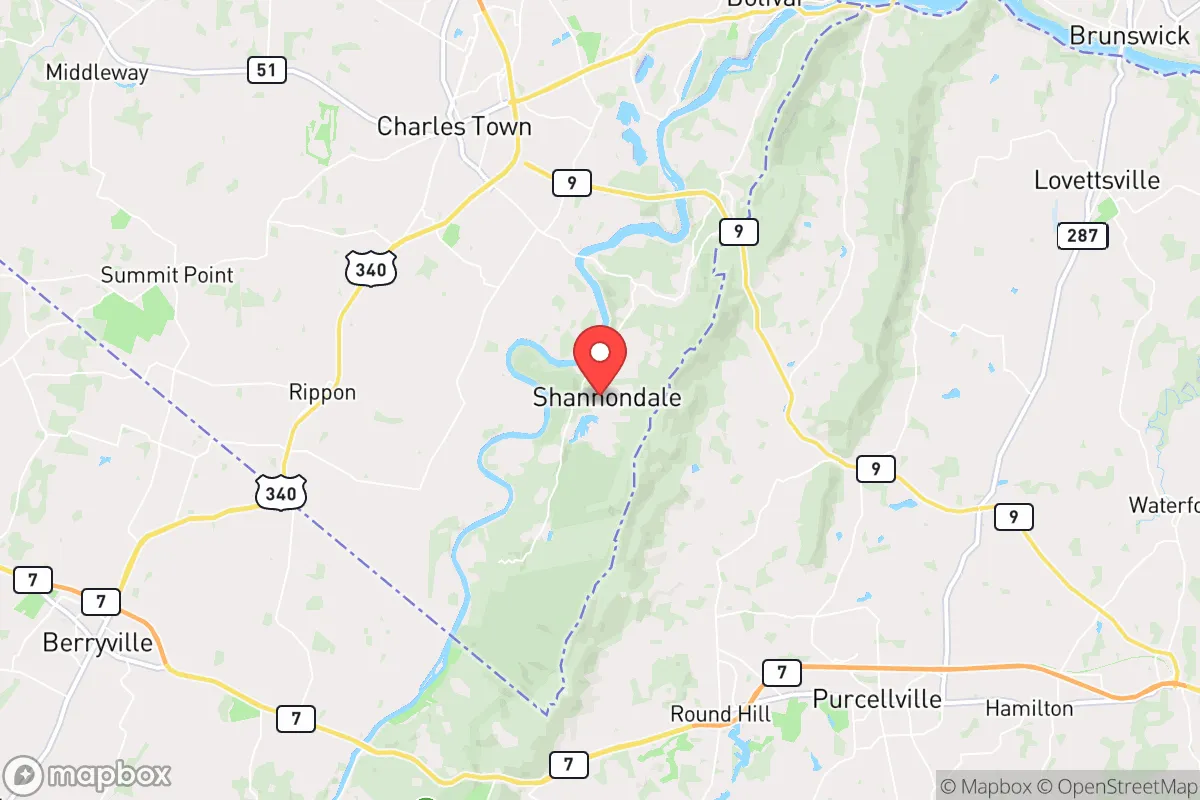
Personal Sovereignty in Shannondale, WV
Strong independent fundamentals that actively favor personal liberty and low regulation.
What does Personal Sovereignty tell us?
Personal Sovereignty measures your capacity for self-reliance and independence with minimal government friction. Higher scores mean fewer barriers between you and the way you want to live... but it assumes you have the space you need and good neighbors.
What does this tell us?
Personal Sovereignty measures your capacity for self-reliance and independence with minimal government friction. Higher scores mean fewer barriers between you and the way you want to live... but it assumes you have the space you need and good neighbors.
State Policy
Energy independence: Net exporter (754% of energy produced in-state)
Personal Liberty
Homesteading
Personal Liberty Analysis
Shannondale, West Virginia, offers a notably high degree of personal sovereignty, rooted in the state’s consistently light-touch regulatory environment and strong protections for individual rights. For residents prioritizing autonomy, this unincorporated Jefferson County community provides a blend of rural independence with proximity to the broader liberties afforded by West Virginia law. The area’s appeal to freedom-minded individuals and families stems from a combination of low taxation, permissive self-defense statutes, viable homesteading conditions, and robust protections for personal and parental choices, making it a distinct alternative to more heavily governed jurisdictions in the nearby Washington, D.C., metro area.
Tax burden and regulatory posture in Jefferson County
West Virginia maintains one of the lowest overall tax burdens in the United States, a fact that directly benefits Shannondale residents. The state imposes a flat personal income tax rate of 4.12% as of 2026, following a series of rate reductions enacted by the legislature. Property taxes are among the lowest in the nation, with Jefferson County’s effective rate typically falling below 0.9% of assessed home value, thanks to the state’s classification system that caps residential property tax increases. There is no state-level sales tax on groceries or prescription drugs, and the general sales tax is a modest 6%. The regulatory posture in Jefferson County is generally permissive, particularly for land use. The county does not impose a countywide zoning ordinance, meaning that in unincorporated areas like Shannondale, property owners face fewer bureaucratic hurdles for building, fencing, or operating a home-based business. The state’s right-to-work law and absence of a state-level minimum wage above the federal floor further reflect a business-friendly, low-intervention approach. For a resident seeking to minimize government entanglement in daily financial and property decisions, the tax and regulatory climate here is a clear advantage.
Self-defense and gun law specifics in West Virginia
West Virginia is a constitutional carry state, meaning that any law-abiding adult 21 or older may carry a concealed firearm without a permit. Shannondale residents benefit from this policy directly, as no state or local license is required for open or concealed carry. The state also preempts local firearm ordinances, so Jefferson County cannot enact restrictions stricter than state law. Stand-your-ground laws are in effect, eliminating any duty to retreat before using deadly force in self-defense when lawfully present. The state’s Castle Doctrine provides a legal presumption that a homeowner who uses force against an intruder acted reasonably. Additionally, West Virginia does not maintain a firearm registry, and there are no state-level restrictions on magazine capacity or specific firearm types. For the self-defense-minded resident, the legal framework is among the most protective in the Mid-Atlantic region, offering clarity and minimal administrative burden. Background checks are required only for commercial sales, consistent with federal law, and private transfers between individuals are unrestricted.
Self-reliance and homesteading viability in Shannondale
Shannondale’s rural character makes it well-suited for self-reliant living. Lot sizes in the area commonly range from one to five acres, with many properties offering enough space for substantial gardens, small orchards, or livestock. Jefferson County’s lack of countywide zoning means that keeping chickens, goats, or even a few head of cattle is generally permissible without special permits, though residents should verify any subdivision-specific covenants. The area’s soils are predominantly well-drained loam and clay loam, suitable for vegetable production and pasture. Off-grid feasibility is moderate: while most properties are connected to the electrical grid, the region’s abundant groundwater and relatively low population density make private well and septic systems standard. Solar panel installation is unrestricted by county code, and net metering is available through local utilities like Potomac Edison. Rainwater collection is legal and unregulated. The growing season runs approximately 170 days, from late April to mid-October, supporting a wide range of crops. For a family seeking to reduce dependence on supply chains, Shannondale offers a practical environment for semi-subsistence homesteading without excessive regulatory friction.
Personal liberties: parental rights, medical autonomy, speech, and property
West Virginia law provides strong protections for parental rights, including a statutory presumption that parents have the fundamental right to direct the upbringing, education, and healthcare of their children. The state does not mandate COVID-19 or other non-routine vaccines for school attendance, and parents may opt out of required immunizations for medical, religious, or philosophical reasons. Medical autonomy is further supported by the state’s broad conscientious objection statute, which allows healthcare providers and individuals to refuse participation in procedures they find objectionable. Freedom of speech and assembly are protected under both the U.S. and West Virginia constitutions, with no state-level hate speech laws that could chill expression. Property rights are robust: eminent domain is limited to public uses like roads and utilities, and the state’s Agricultural Protection Act restricts nuisance lawsuits against farms, preserving the right to engage in normal agricultural operations. The absence of a state income tax on Social Security benefits and the lack of an estate tax further reinforce financial independence. For the resident who values minimal government intrusion into family, health, and property decisions, the legal environment in Shannondale is consistently supportive.
Overall, Shannondale ranks among the more sovereignty-friendly communities in the Mid-Atlantic region, offering a legal and practical environment that prioritizes individual choice and self-reliance. Compared to nearby jurisdictions in Maryland or Northern Virginia, where tax rates are higher, gun laws are more restrictive, and zoning is more prescriptive, West Virginia’s approach is markedly lighter. For a conservative-leaning individual or family seeking to maximize personal freedom—from financial autonomy to self-defense rights to homesteading flexibility—Shannondale represents a deliberate departure from the regulatory density of the urban corridor. The trade-off is access to fewer government services and a more hands-on approach to daily life, but for those who value sovereignty, that is precisely the point.

* Values derived from national, state, county, city and local statistics and may differ in a specific area. Last updated: 2026-11-14T11:37:16.000Z
Narrative content on this page is AI-generated and may contain mistakes. Verify any details that matter before acting on them.
ReloMaps may earn a commission from affiliate links at no extra cost to you.

