
Photo by Joshua Hummell on Unsplash
Demographics of Shannondale, WV
Affluence Level in Shannondale, WV
A below-average socioeconomic profile. Incomes, home values, and educational attainment trail the U.S., with higher poverty and unemployment.
People of Shannondale, WV
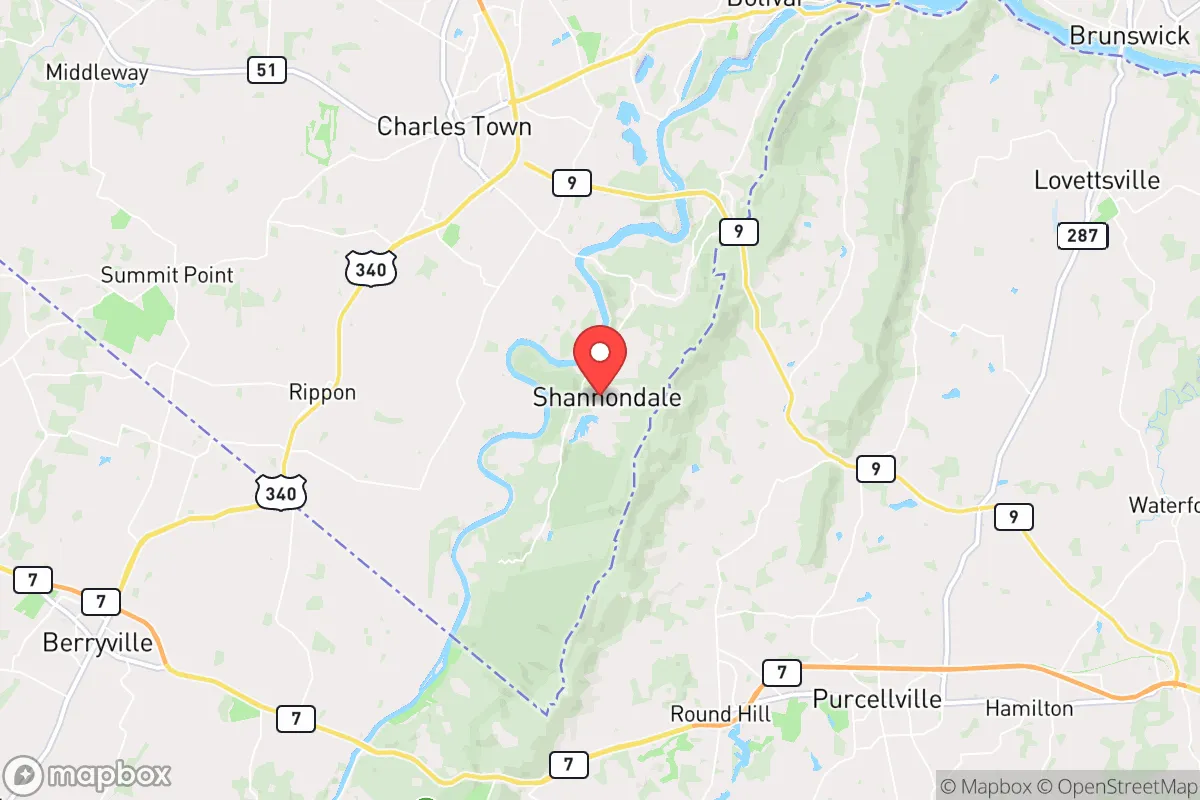
Today, Shannondale, West Virginia is a small, predominantly white community of 3,441 residents, characterized by its rural setting along the Shenandoah River and a population that skews older and less diverse than the national average. With 86.8% of residents identifying as white and only 1.6% foreign-born, the area retains a strong Appalachian and Mid-Atlantic cultural identity, shaped by generations of families who have lived in the region for decades. The community is notably less diverse than nearby Jefferson County as a whole, and its population has remained relatively stable in recent years, with little new in-migration from outside the region. For those considering a move, Shannondale offers a quiet, low-density lifestyle, but with limited demographic change on the horizon.
How the city was settled and grew
Shannondale’s history begins in the mid-18th century, when European settlers—primarily of English, Scots-Irish, and German descent—moved into the Shenandoah Valley under land grants from Lord Fairfax. The area was originally part of a larger tract known as the "Shannondale Springs," a mineral springs resort that drew visitors in the 1800s. The first permanent settlers were farmers and millers who established homesteads along the river, with the Shannondale Springs Historic District marking the original resort core. By the late 19th century, the arrival of the Baltimore and Ohio Railroad spurred growth, with a small depot and a handful of stores forming the nucleus of what is now the Old Town neighborhood, where many of the original settler families’ descendants still reside. The population remained overwhelmingly white and rural through the early 1900s, with little immigration from outside the region.
Modern era (post-1965)
After the 1965 Hart-Cellar Act, Shannondale saw virtually no increase in foreign-born residents—the current 1.6% foreign-born share is far below the national average. Instead, the post-1965 era was defined by domestic in-migration from the Washington, D.C. metropolitan area, as commuters sought affordable housing within driving distance of the capital. This wave settled primarily in newer subdivisions like River Bend Estates and Shannondale Hills, which were developed in the 1970s and 1980s on former farmland. These neighborhoods attracted white-collar workers and retirees, raising the college-educated share to 26.3%—modest by national standards but notable for rural West Virginia. The racial composition remained overwhelmingly white (86.8%), with small Hispanic (2.1%), Black (1.2%), and East/Southeast Asian (1.0%) communities concentrated in the River Bend area, where newer housing stock and proximity to the river appealed to a slightly more diverse mix of buyers. The Indian subcontinent population is negligible at 0.2%.
The future
Shannondale’s population is projected to remain stable or decline slightly over the next decade, mirroring broader trends in West Virginia’s Eastern Panhandle. The area is not attracting significant international immigration, and domestic in-migration from the D.C. suburbs has slowed as housing prices in Jefferson County have risen. The population is aging, with a median age above the state average, and younger residents often leave for job opportunities elsewhere. New development is likely to be limited to infill housing in existing subdivisions like Shannondale Hills and River Bend Estates, rather than large-scale new neighborhoods. The cultural identity will likely remain predominantly white and rural, with little change in racial or ethnic diversity. The small Hispanic and Asian communities may grow slightly through natural increase, but they will remain a minor presence.
For someone moving to Shannondale now, the area offers a stable, low-key environment with strong ties to its Appalachian and Civil War-era past. It is not a place of rapid demographic change or cultural flux; rather, it is a community where long-time residents and a modest influx of D.C.-area transplants coexist in a quiet, riverfront setting. Newcomers should expect a predominantly white, older population and limited diversity, but also a safe, affordable lifestyle within commuting distance of the D.C. metro area.

* Values derived from national, state, county, city and local statistics and may differ in a specific area. Last updated: 2026-11-14T11:37:16.000Z
Narrative content on this page is AI-generated and may contain mistakes. Verify any details that matter before acting on them.
ReloMaps may earn a commission from affiliate links at no extra cost to you.

