Photo: Wikipedia
Personal Sovereignty in Scottsbluff, NE
Moderate friction. Expect trade-offs in some aspect of personal liberty and independence.
What does Personal Sovereignty tell us?
Personal Sovereignty measures your capacity for self-reliance and independence with minimal government friction. Higher scores mean fewer barriers between you and the way you want to live... but it assumes you have the space you need and good neighbors.
What does this tell us?
Personal Sovereignty measures your capacity for self-reliance and independence with minimal government friction. Higher scores mean fewer barriers between you and the way you want to live... but it assumes you have the space you need and good neighbors.
State Policy
Energy independence: Importer (35% of energy produced in-state)
Personal Liberty
Homesteading

Personal Liberty Analysis
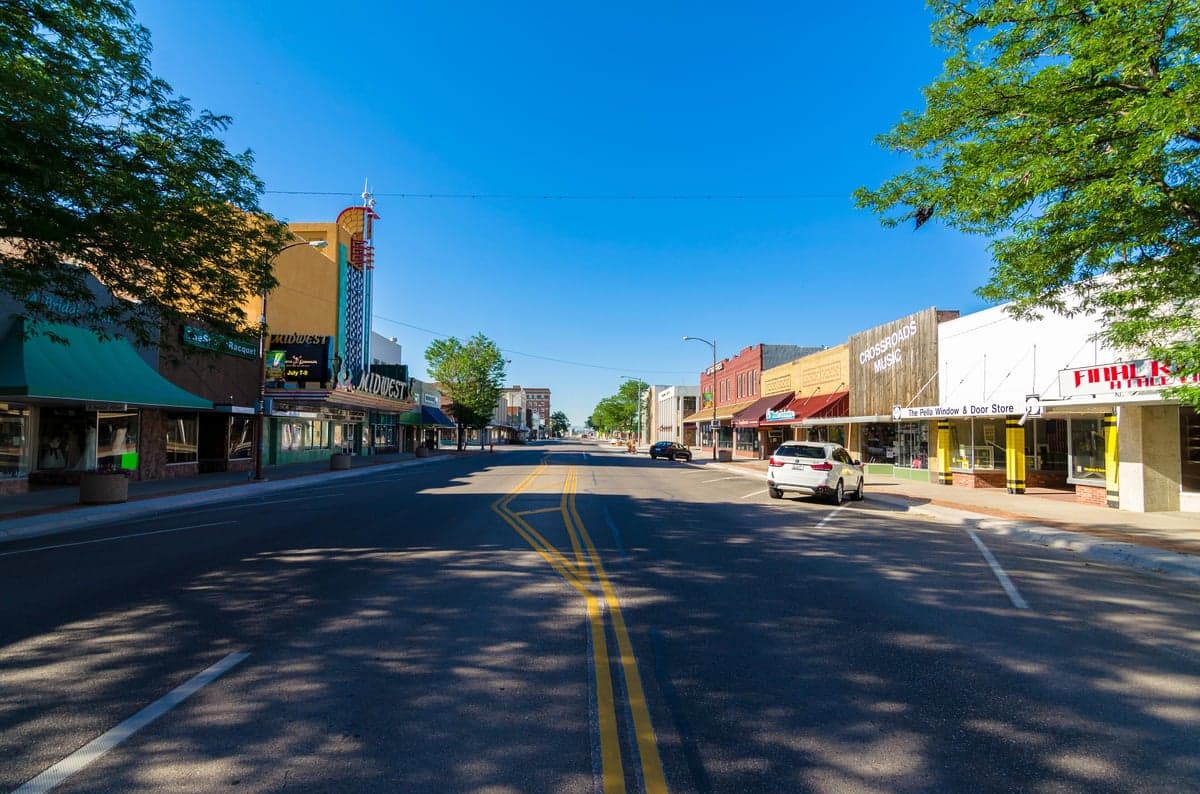
Scottsbluff, Nebraska, offers a notably high degree of personal sovereignty relative to much of the United States, functioning as a quiet outpost where state-level preemption and a rural ethos push back against the expanding reach of federal and coastal-state mandates. For the individual or family prioritizing autonomy—whether that means keeping the government out of your home, your business, or your defensive choices—this region of the Panhandle presents a strategic advantage. The trade-off is straightforward: you gain significant freedom from overregulation and intrusive governance, but you also accept a landscape where self-reliance isn't a lifestyle choice; it's the baseline expectation. The state's constitutional carry law, low tax burden, and minimal zoning interference create an environment where a prepared individual can operate with far fewer permissions than in most of the country.
Tax burden and regulatory posture: how Nebraska compares to surrounding states
Nebraska's tax structure is a mixed bag that still favors the sovereign individual when compared to high-tax states like California, New York, or Illinois, though it is not as aggressively low-tax as Wyoming or South Dakota. The state income tax is a flat rate of 5.84% as of 2026, which is moderate but not negligible—a single earner pulling $60,000 will pay roughly $3,500 annually. Property taxes in Scotts Bluff County are a more significant concern, hovering around 1.7% of assessed value, which is higher than the national average but typical for the Great Plains. However, the regulatory posture in Scottsbluff itself is decidedly hands-off. The city operates with a light touch on business licensing, no local income tax, and a zoning code that is far more permissive than urban counterparts. For the prepper or survivalist, the key advantage is that Nebraska has strong state preemption laws: local governments cannot ban short-term rentals, impose rent control, or create their own gun ordinances stricter than state law. This means Scottsbluff's city council cannot suddenly decide to restrict your property rights or firearm access—a critical buffer against the kind of municipal overreach seen in places like Denver or Omaha.
Self-defense and gun law specifics: constitutional carry and no red flag laws
Nebraska is a constitutional carry state as of 2023, meaning any law-abiding adult can carry a concealed firearm without a permit. Scottsbluff sits in a region where this is not just legal but culturally normalized—you will not draw stares for open carry, and most locals view the Second Amendment as a non-negotiable right. There is no state-level red flag law, no firearm registration, and no magazine capacity restrictions. The state also preempts all local firearm ordinances, so Scottsbluff cannot enact its own waiting periods or "sensitive place" bans that go beyond state law. For the survivalist, this means you can maintain a fully stocked armory without worrying about a future city council vote stripping your rights. Stand-your-ground laws are in effect, with no duty to retreat in any place you are lawfully present. The practical reality is that self-defense in Scottsbluff is treated as a personal responsibility, not a government-granted privilege. If you are concerned about the erosion of gun rights nationally, this corner of Nebraska remains a stronghold where the legal framework supports the armed citizen.
Self-reliance and homesteading viability: lot sizes, zoning, and off-grid feasibility
Scottsbluff's zoning and land-use policies are a major draw for those seeking self-sufficiency. Within city limits, standard residential lots range from 7,000 to 10,000 square feet, and many older neighborhoods have alleys and deep backyards suitable for substantial gardens, small livestock, or workshop structures. The city's zoning code permits backyard chickens, beekeeping, and even the keeping of goats on lots over 10,000 square feet with a simple permit. For those wanting to go further off-grid, the surrounding Scotts Bluff County has no building codes outside of the limited extraterritorial jurisdiction, meaning you can build a cabin, a shipping container home, or a earth-sheltered structure without county inspection—provided you meet basic septic and well regulations. Water rights are a critical consideration: Nebraska is a prior-appropriation state, meaning you must obtain a permit for any significant groundwater use, but domestic wells (up to 50 gallons per minute for household use) are exempt from permitting. Solar panels face no HOA restrictions in unincorporated areas, and net metering is available through the local utility, though rates are not as favorable as in some western states. The feasibility of a fully off-grid homestead within a 20-minute drive of Scottsbluff is high, especially if you are willing to buy raw land in the surrounding Banner or Kimball counties, where acreage can still be found for under $3,000 per acre.
Personal liberties: parental rights, medical autonomy, speech, and property
Parental rights in Nebraska are robust, with a state law explicitly affirming that parents have the fundamental right to direct the upbringing, education, and healthcare of their children. Scottsbluff's school district, while not exceptional academically, does not push controversial curriculum without parental opt-out options, and the local culture strongly supports parental involvement. Medical autonomy is a mixed landscape: Nebraska has not enacted vaccine mandates for adults, and the state legislature has repeatedly blocked efforts to create a centralized vaccine database. However, the state does require certain immunizations for school attendance, with philosophical exemptions available only for daycare and not for K-12—a point of friction for some. On the speech front, Scottsbluff is a place where you can express dissenting political views, including criticism of federal overreach, without social or legal repercussions. The city council meetings are sparsely attended, and there is no culture of censorship. Property rights are strongly protected: Nebraska has no statewide rent control, no inclusionary zoning mandates, and no laws restricting the use of land for personal food production. The state's eminent domain laws are among the most restrictive in the nation, requiring a public purpose and just compensation that is often above market value. For the individual who values the ability to speak freely, raise their children without state interference, and use their land as they see fit, Scottsbluff offers a legal environment that respects those choices.
In the broader landscape of American personal sovereignty, Scottsbluff ranks as a solid B+—not the libertarian paradise of a place like rural Idaho or Montana, but far superior to the regulatory saturation of the coasts or even the urban corridors of its own state. The trade-offs are real: you trade cultural amenities and economic dynamism for a legal and social environment that leaves you alone. For the survivalist or prepper who sees the trajectory of the country as one of increasing government control, Scottsbluff represents a viable fallback position where the laws still favor the individual, the neighbors still mind their own business, and the state government has not yet succumbed to the worst impulses of the era. It is not a fortress, but it is a defensible position.

* Values derived from national, state, county, city and local statistics and may differ in a specific area. Last updated: 2026-05-03T20:32:02.000Z
Narrative content on this page is AI-generated and may contain mistakes. Verify any details that matter before acting on them.
ReloMaps may earn a commission from affiliate links at no extra cost to you.

