Photo: Wikipedia
Demographics of Scottsbluff, NE
Affluence Level in Scottsbluff, NE
A below-average socioeconomic profile. Incomes, home values, and educational attainment trail the U.S., with higher poverty and unemployment.
People of Scottsbluff, NE
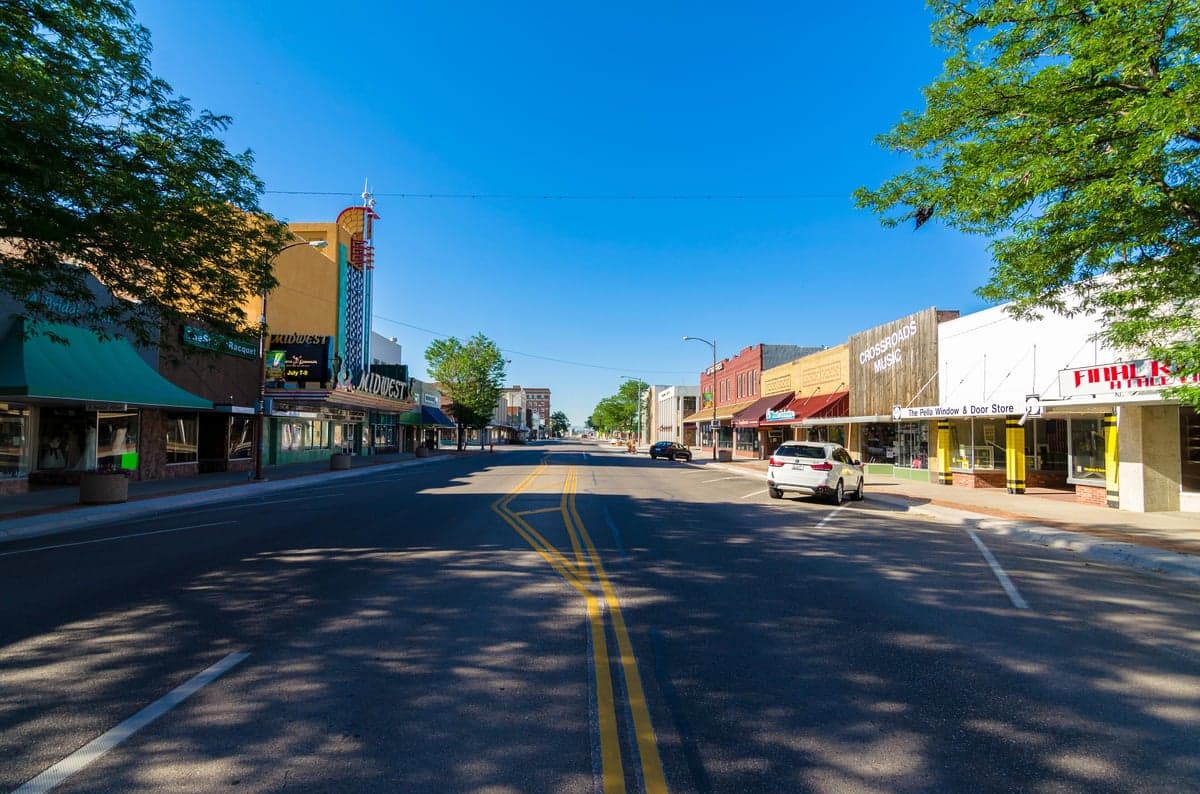
Today, Scottsbluff, Nebraska is a community of roughly 14,400 residents shaped by a century of agricultural settlement and recent demographic change. The city is predominantly white (66.1%) with a substantial and growing Hispanic population (29.1%), creating a distinctive cultural blend uncommon in rural Nebraska. Scottsbluff’s identity is rooted in its role as a regional trade and service hub for the North Platte Valley, with a working-class character and a population density of about 2,200 people per square mile. The city’s small foreign-born population (3.3%) and low college attainment rate (27.2%) reflect its history as a destination for laborers rather than professionals.
How the city was settled and grew
Scottsbluff was founded in 1900 as a railroad town on the Union Pacific line, drawing its first wave of settlers from the Great Plains and the Midwest. The original population was almost entirely white, composed of homesteaders and merchants drawn by the promise of irrigated farmland along the North Platte River. The city’s early growth was tied to sugar beet production, which brought a distinct wave of Mexican laborers in the 1910s and 1920s, many of whom settled in the South Belt neighborhood near the sugar factory. By the 1930s, a small but established Mexican-American community had formed in this area, laying the foundation for today’s Hispanic population. The Downtown district, centered on Broadway, became the commercial and civic heart, built by German, Czech, and Scandinavian immigrants who arrived in the 1900-1920 period. The North Heights neighborhood, developed in the post-World War II era, attracted returning veterans and their families, solidifying the city’s white middle-class character through the 1950s and 1960s.
Modern era (post-1965)
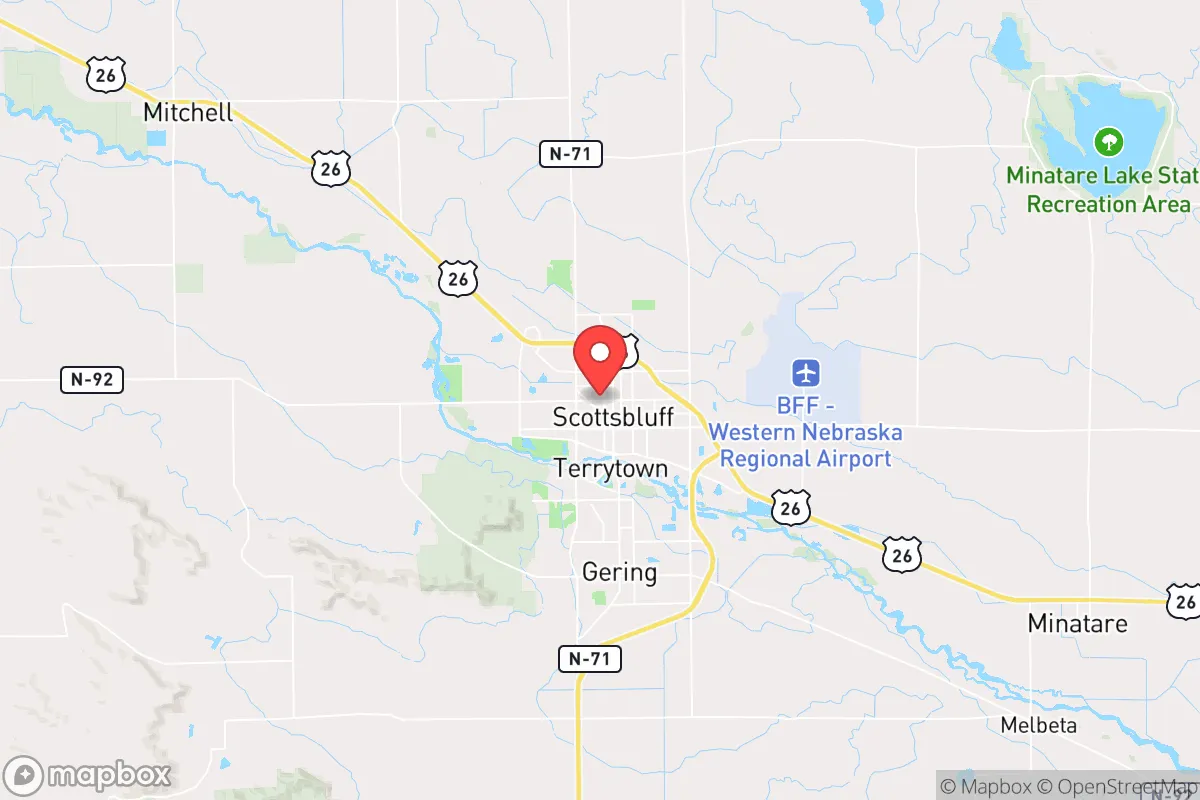
After the 1965 Hart-Cellar Act, Scottsbluff did not experience the large-scale immigration seen in coastal cities, but its Hispanic population grew steadily through chain migration from rural Mexico and Texas. By 2020, the Hispanic share had risen to 29.1%, with most families concentrated in the South Belt and East Overland neighborhoods, where older, more affordable housing stock is located. The white population, which was over 90% as recently as 1980, has declined in absolute numbers as younger residents have left for larger cities, though it remains the majority at 66.1%. The city’s East/Southeast Asian population (0.9%) is small and largely composed of Vietnamese and Filipino families who arrived in the 1980s and 1990s, primarily settling in the Westmoor subdivision. The Black population (0.8%) and Indian subcontinent population (0.0%) are negligible, reflecting the region’s limited diversity beyond the Hispanic-white dynamic. Suburbanization has been minimal, with most growth occurring in the Gering-Fort Laramie corridor, a mixed-use area that straddles the city’s southern edge.
The future
Scottsbluff’s population is projected to remain stable or decline slightly over the next decade, as the white population continues to age and younger families move to larger metros. The Hispanic population is likely to grow further, potentially reaching 35-40% by 2040, driven by higher birth rates and continued migration from agricultural labor networks. This shift is already visible in the South Belt and East Overland neighborhoods, which are becoming predominantly Hispanic, while North Heights and Westmoor remain overwhelmingly white. The city is not tribalizing into hostile enclaves, but residential patterns are increasingly defined by ethnicity and income. The foreign-born share (3.3%) is unlikely to rise dramatically, as the region lacks the job diversity to attract new immigrant streams. Assimilation is occurring gradually, with bilingual signage and Hispanic-owned businesses becoming common in Downtown.
For someone moving in now, Scottsbluff is a community in transition: a historically white agricultural hub becoming a binational, working-class town. The practical implication is that newcomers will find a place where Spanish is increasingly heard in public life, but where the civic and economic institutions remain largely white-led. The city offers affordable housing and a low crime rate relative to larger Nebraska cities, but limited professional opportunities and a shrinking tax base. It is a stable, if slowly changing, community best suited for those who value small-town life and are comfortable with its evolving demographic reality.

* Values derived from national, state, county, city and local statistics and may differ in a specific area. Last updated: 2026-05-03T20:32:02.000Z
Narrative content on this page is AI-generated and may contain mistakes. Verify any details that matter before acting on them.
ReloMaps may earn a commission from affiliate links at no extra cost to you.

