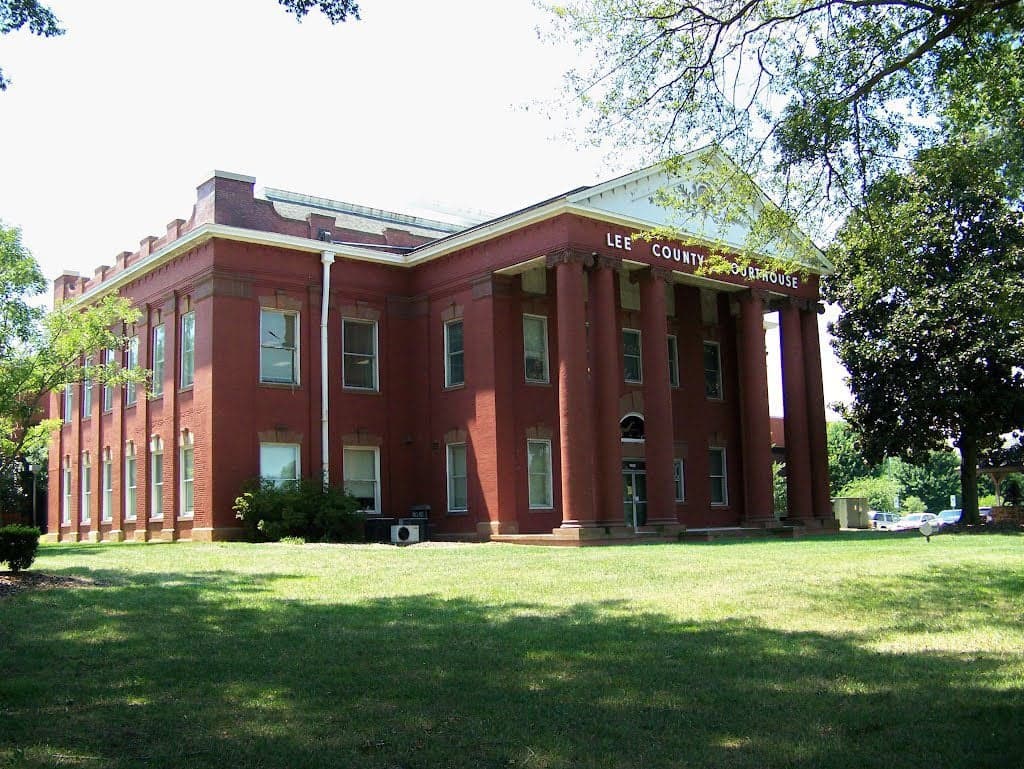
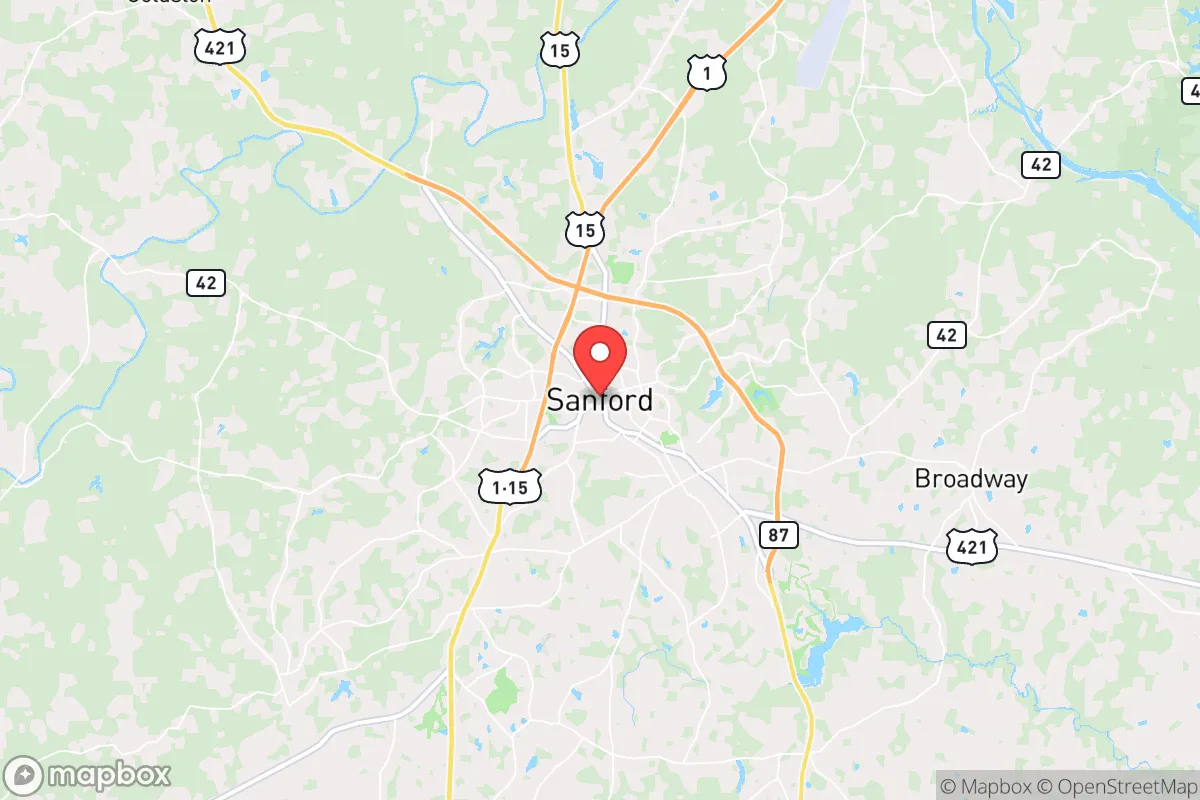
Photo: Wikipedia
Political ClimatePolitical Climate in Sanford, NC
District shown is the primary district for this city’s centroid. Cities may span multiple districts.
Local Political AnalysisPolitical Analysis of Sanford, NC
Sanford, North Carolina, sits solidly in conservative territory, with a Cook PVI of R+8 that reflects a community where traditional values and limited government still hold strong. For decades, this town has leaned reliably Republican, and while the surrounding Lee County has seen some demographic shifts, the political landscape remains firmly rooted in a belief that local control beats distant bureaucracy. If you’re looking at the big picture, Sanford is a place where folks tend to vote with their gut on personal freedoms—think Second Amendment rights, lower taxes, and a healthy skepticism of Raleigh or Washington telling you how to live your life.
How it compares
Drive twenty minutes north to Cary or Apex, and you’ll hit a different world—those are solidly blue suburbs of the Triangle, with Cook PVIs leaning D+4 or more. The contrast is stark: Cary’s city council debates bike lanes and density bonuses, while Sanford’s conversations center on property rights and keeping the county commission from overstepping. Head south to Fayetteville, and you’ll find a more mixed bag, with a military-heavy population that swings both ways, but Sanford’s rural and small-town character keeps it reliably red. Even within Lee County, the city itself is a bit more moderate than the outlying areas, but the R+8 rating tells you the overall tilt hasn’t budged much in the last decade. That said, there’s been a slow creep of progressive influence from the Triangle—some newcomers bring their Cary sensibilities with them, and you can see it in local school board races and zoning debates. It’s not a flood, but it’s a trickle worth watching if you value keeping government out of your backyard.
What this means for residents
For the average Sanford resident, the political climate translates into a few concrete realities. First, taxes stay relatively low—the county’s property tax rate hovers around 0.75%, well under what you’d pay in Wake County. Second, gun laws are respected: North Carolina is a shall-issue state for concealed carry, and local sheriffs aren’t looking to add extra hoops. Third, you’ll see a lot of “Keep Sanford Safe” signs during election season, reflecting a community that prioritizes public safety over social experiments. The downside? If you’re hoping for rapid transit expansions or big public housing projects, you’ll be disappointed—this town moves slow on anything that smells like government overreach. The long-term concern is that as the Triangle expands, developers and outside interests will push for more regulation, more taxes, and more “equity” mandates that erode the freedom to run your own life. It’s not here yet, but the seeds are being planted in county commission meetings and planning board votes.
Culturally, Sanford still feels like the kind of place where the VFW hall is packed on Friday nights and the local diner knows your order. There’s no mask mandate drama or defund-the-police chatter here—those ideas get laughed out of town hall. The biggest policy distinction is probably the county’s stance on land use: Lee County has resisted the kind of zoning overhauls that have turned neighboring counties into bureaucratic mazes. You can still build a workshop on your property without a dozen permits, and the school board hasn’t gone in for critical race theory or gender ideology curriculum changes. That’s the Sanford way—keep it simple, keep it local, and don’t let the government tell you how to raise your kids or spend your money. If that vibe holds, this town will stay a conservative anchor in a state that’s getting pulled in two directions.

State Political ClimatePolitical Climate in North Carolina
State Political AnalysisPolitical Environment in the State
North Carolina has long been considered a quintessential swing state, but over the past decade, it has settled into a reliably right-of-center posture, voting Republican in every presidential election since 2012 except for Barack Obama’s narrow 2008 win. The state’s political DNA is a blend of traditional Southern conservatism, a booming suburban and exurban base, and a growing but geographically concentrated progressive vote. The 2024 election saw Donald Trump carry the state by roughly 3 points, a margin that reflects the durable Republican lean built on rural strength and suburban shifts. However, the 10-20 year arc shows a slow but steady Democratic creep in the Research Triangle and Charlotte metro, while the rest of the state—especially the Sandhills, Piedmont Triad, and coastal plain—has hardened its Republican allegiance. For a conservative-leaning relocator, North Carolina offers a mixed bag: a state government that has consistently pushed back on federal overreach, but with major population centers that are increasingly adopting progressive policies at the local level.
Urban vs. rural divide
The political map of North Carolina is a textbook case of urban-rural polarization. The Democratic strongholds are concentrated in a handful of metro areas: Charlotte (Mecklenburg County), the Raleigh-Durham-Chapel Hill Research Triangle (Wake, Durham, and Orange Counties), and to a lesser extent Greensboro and Winston-Salem (Guilford and Forsyth Counties). These metros are home to major universities, tech and finance sectors, and a rapidly diversifying population that votes overwhelmingly Democratic—Mecklenburg and Wake Counties alone account for nearly a quarter of the state’s votes. Meanwhile, the rural and exurban counties—places like Union County (just southeast of Charlotte), Johnston County (east of Raleigh), and Cabarrus County (north of Charlotte)—have flipped from purple to deep red over the past two cycles. The coastal counties, including Brunswick and New Hanover around Wilmington, are also trending Republican as retirees and military families move in. The rural east, from Fayetteville to the coast, remains solidly GOP, driven by military, agricultural, and manufacturing interests. The divide is stark: in 2024, Trump won 80 of the state’s 100 counties, but lost the population centers by margins large enough to keep the race competitive.
Policy environment
North Carolina’s state-level policy environment has been a bright spot for conservatives, though not without caveats. The state has a flat income tax rate of 4.5%, which is scheduled to drop to 3.99% by 2027 under legislation passed by the Republican supermajority. There is no state tax on Social Security benefits, and the standard deduction is generous—a clear win for retirees and families. The regulatory climate is business-friendly, with right-to-work laws and a tort reform system that caps non-economic damages in medical malpractice cases. On education, the state has expanded school choice dramatically: the Opportunity Scholarship Program now provides vouchers for any K-12 student, regardless of income, to attend private or religious schools. This has been a major draw for conservative parents frustrated with public school curricula. However, the state’s healthcare landscape is more mixed. North Carolina expanded Medicaid in 2023 under Democratic Governor Roy Cooper, a move that many conservatives opposed as a federal overreach. Election laws have been a battleground: the state requires photo ID to vote, has reduced early voting days, and implemented strict absentee ballot rules—all of which have been upheld in court. The Republican-controlled General Assembly has also passed laws limiting local governments’ ability to raise taxes or regulate businesses, preempting progressive city councils in Charlotte and Raleigh.
Trajectory & freedom
On the freedom front, North Carolina has been a mixed story over the past five years. The state has expanded gun rights significantly: permitless carry (constitutional carry) became law in 2023, allowing any law-abiding adult to carry a concealed handgun without a permit. This was a major win for Second Amendment advocates. Parental rights have also been strengthened: the 2023 Parents’ Bill of Rights requires schools to notify parents about curriculum changes, medical services, and any changes to a student’s gender identity or pronouns. This law has been a flashpoint, with progressive school boards in Orange and Durham Counties openly resisting it. On the other hand, the state has seen a troubling expansion of government power in other areas. The 2021 repeal of the “bathroom bill” (HB2) was followed by a compromise that left local nondiscrimination ordinances in place, but the issue remains unresolved. Medical autonomy took a hit in 2023 when the General Assembly passed a 12-week abortion ban, overriding Governor Cooper’s veto—a restriction that many conservatives support but that has energized progressive opposition. Property rights have been generally respected, with no statewide rent control or aggressive zoning mandates, though local governments in Charlotte and Raleigh have pushed for upzoning and density requirements that some residents see as an infringement on neighborhood character. The overall trajectory is one of cautious conservatism: the state is becoming more free on guns and school choice, but the abortion ban and Medicaid expansion represent significant government involvement in personal decisions.
Civil unrest & political movements
North Carolina has seen its share of political turbulence, though it has largely avoided the large-scale riots seen in other states. The 2020 protests in Charlotte and Raleigh over George Floyd’s death were mostly peaceful, but there were instances of property damage and looting in Charlotte’s Uptown area. The state has a strong and organized conservative grassroots movement, particularly around the John Locke Foundation and local Republican Party chapters. The “Moms for Liberty” group has been active in school board meetings, especially in Wake County and Union County, pushing back on critical race theory and LGBTQ curriculum. Immigration politics are relatively muted compared to border states, but there have been flashpoints: Durham and Orange Counties have declared themselves “sanctuary” jurisdictions, limiting cooperation with ICE, which has led to legislative pushback from the General Assembly. Election integrity remains a hot-button issue: the 2020 election saw a narrow Trump loss in the state, and subsequent audits found no widespread fraud, but the Republican-controlled legislature has tightened voting laws in response to concerns about ballot harvesting and mail-in voting. There is no serious secession or nullification movement in North Carolina, but there is a strong strain of “10th Amendment” rhetoric among rural county commissioners who have passed resolutions opposing federal gun control and environmental regulations. A new resident would notice the political divide most acutely in the suburbs: a drive from Raleigh to Garner or from Charlotte to Concord feels like crossing into a different political universe, with yard signs and bumper stickers reflecting the partisan split.
Projection
Looking ahead 5-10 years, North Carolina is likely to remain a competitive but right-leaning state, though the margin for error is shrinking. The key demographic shift is the influx of out-of-state migrants, particularly from California, New York, and Florida. Many of these newcomers are moving to the Charlotte and Raleigh suburbs for jobs and lower taxes, and they tend to bring their political habits with them. However, the data so far suggests that these migrants are more conservative than the national average—many are fleeing high-tax, high-regulation states and are drawn to North Carolina’s Republican governance. The rural counties are aging and losing population, which could slowly erode the GOP’s base, but the exurban counties are growing fast and trending red. The wild card is the Hispanic population, which is growing rapidly in the eastern part of the state and in the Charlotte area; this group has historically leaned Democratic but is not monolithic, and Republican outreach has been increasing. The state’s political geography will likely see the Research Triangle become even more Democratic, while the Charlotte suburbs and the coastal counties become more Republican. The General Assembly is likely to remain under Republican control through at least 2030 due to gerrymandered maps, though the state Supreme Court has flipped back and forth. For a conservative moving in now, the expectation should be that the state will remain a solidly purple-to-red environment, with the state government acting as a bulwark against progressive policies from the metros, but with constant cultural and legal battles over education, guns, and abortion.
For a conservative relocator, North Carolina offers a compelling package: low taxes, strong gun rights, school choice, and a state government that generally respects personal liberty. The trade-off is living in a state where the major cities are increasingly progressive and where local politics can feel like a constant tug-of-war. If you’re looking for a place where your values are reflected in state law and where you can raise a family with minimal government interference, North Carolina is one of the better options in the Southeast. Just be prepared for the fact that your county commission and school board might not always agree with you, and that the political battles are far from over. The state is still a battleground, but for now, the conservative side is holding the line.
* Values derived from national, state, county, city and local statistics and may differ in a specific area. Last updated: 2026-05-03T20:26:32.000Z
Narrative content on this page is AI-generated and may contain mistakes. Verify any details that matter before acting on them.
ReloMaps may earn a commission from affiliate links at no extra cost to you.

