 Popular
Quality of Life in San Angelo, TX
A high quality of life with strong walkability, manageable living costs, healthy neighborhood signals, and solid amenity access.
What does Quality of Life tell us?
Quality of Life blends cost of living, nearby amenities, socioeconomic signals, and neighborhood character. City-level scores represent the whole municipality; individual neighborhoods can differ.
What does this tell us?
Quality of Life blends cost of living, nearby amenities, socioeconomic signals, and neighborhood character. City-level scores represent the whole municipality; individual neighborhoods can differ.
Cost of Living
17% below national average
The Real Cost of Living in San Angelo, TX for 2026
| Tier | Individual | Family (4) |
|---|---|---|
| Survival | $18k | $34k |
| Comfortable | $35k | $51k |
| Luxury | $111k+ | $172k+ |
| Elite (Top 5%) | $131k+ | $203k+ |
125%
The Area Signal
A metric tracking the socioeconomic signals of the area.
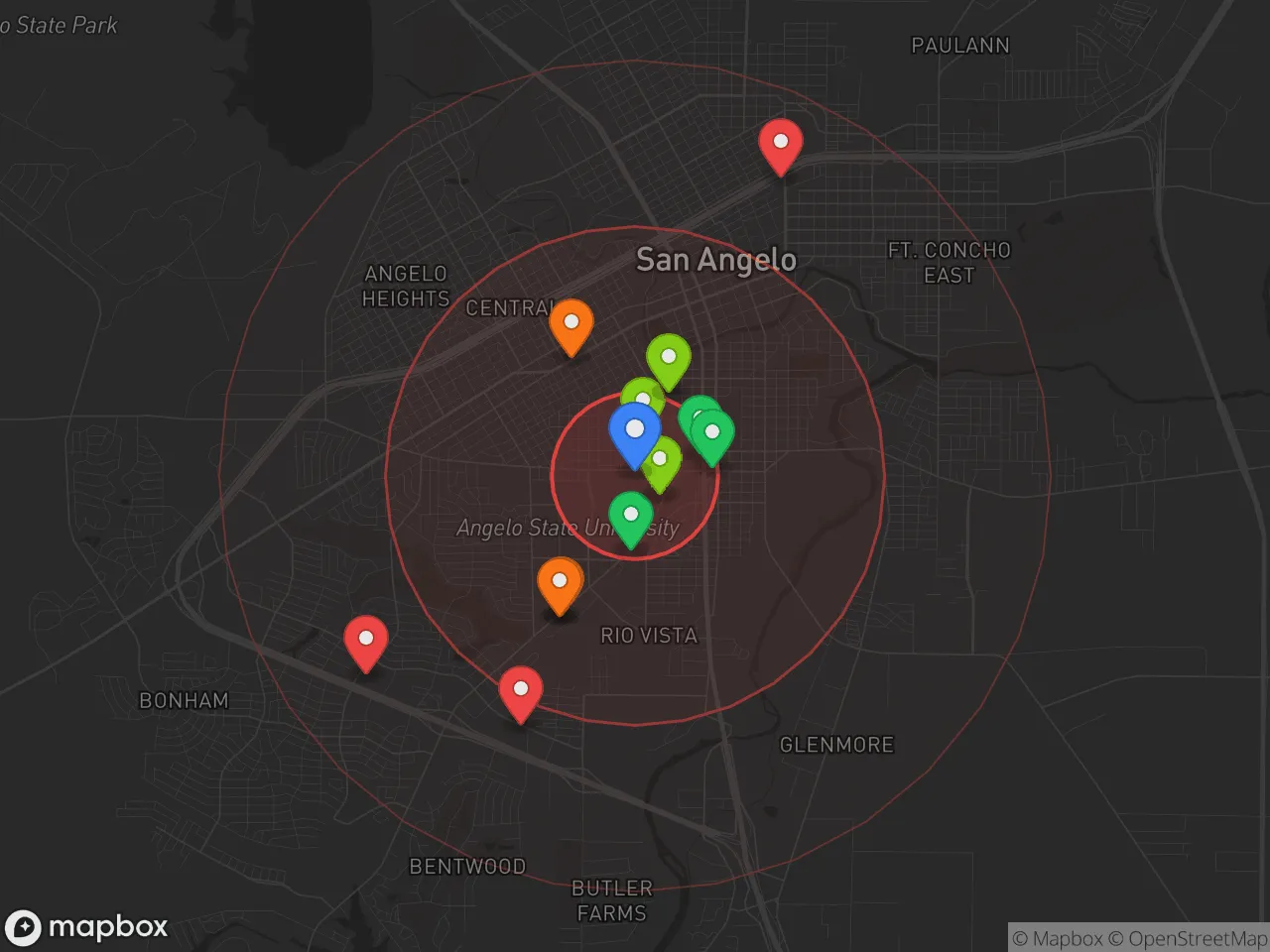
Hobbies
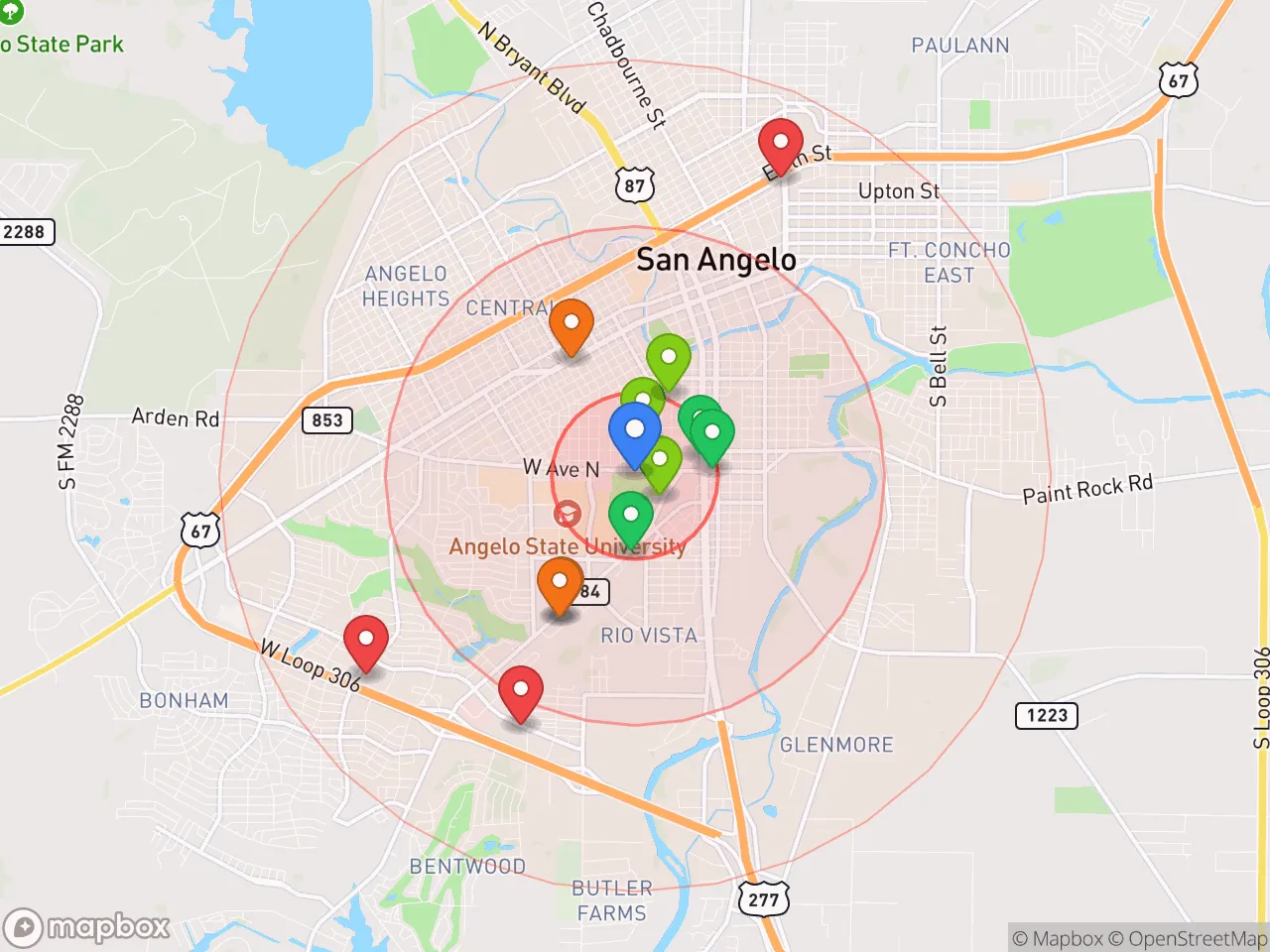
Explore the areaGroceries
0 within 10 miles
Gas
0 within 10 miles
Hospital
0 within 20 miles
Airport
SAN — San Angelo Regional
Post Office
Critical Amenities
Quality-of-Life Analysis
San Angelo presents a notably affordable quality of life, with a cost of living index of 83—17% below the national average—making it one of the more budget-friendly mid-sized cities in West Texas. The population of roughly 100,000 skews toward a mix of working-class families, retirees seeking lower taxes, and professionals tied to the region’s energy, agriculture, and healthcare sectors. Median household income hovers around $52,000, which, combined with the low cost of living, allows residents to stretch their dollars further than in larger Texas metros like Austin or Dallas.
Cost of living, housing, and affordability compared to nearby cities
Housing is the primary driver of San Angelo’s affordability. The median home value sits at $179,300, roughly half the Texas state median of $350,000, while median rent is $1,121—well below the national average of $1,400. Compared to nearby cities, San Angelo is cheaper than Midland (median home value ~$280,000) and Abilene (~$195,000), though slightly pricier than smaller towns like Sweetwater. The average commute of 18.5 minutes is significantly shorter than the national average of 26 minutes, reducing transportation costs and freeing up time for daily life. Property taxes in Tom Green County average about 1.5% of assessed value, which is moderate for Texas, and no state income tax further boosts take-home pay.
What daily life is like for families: schools, amenities, and local rhythm
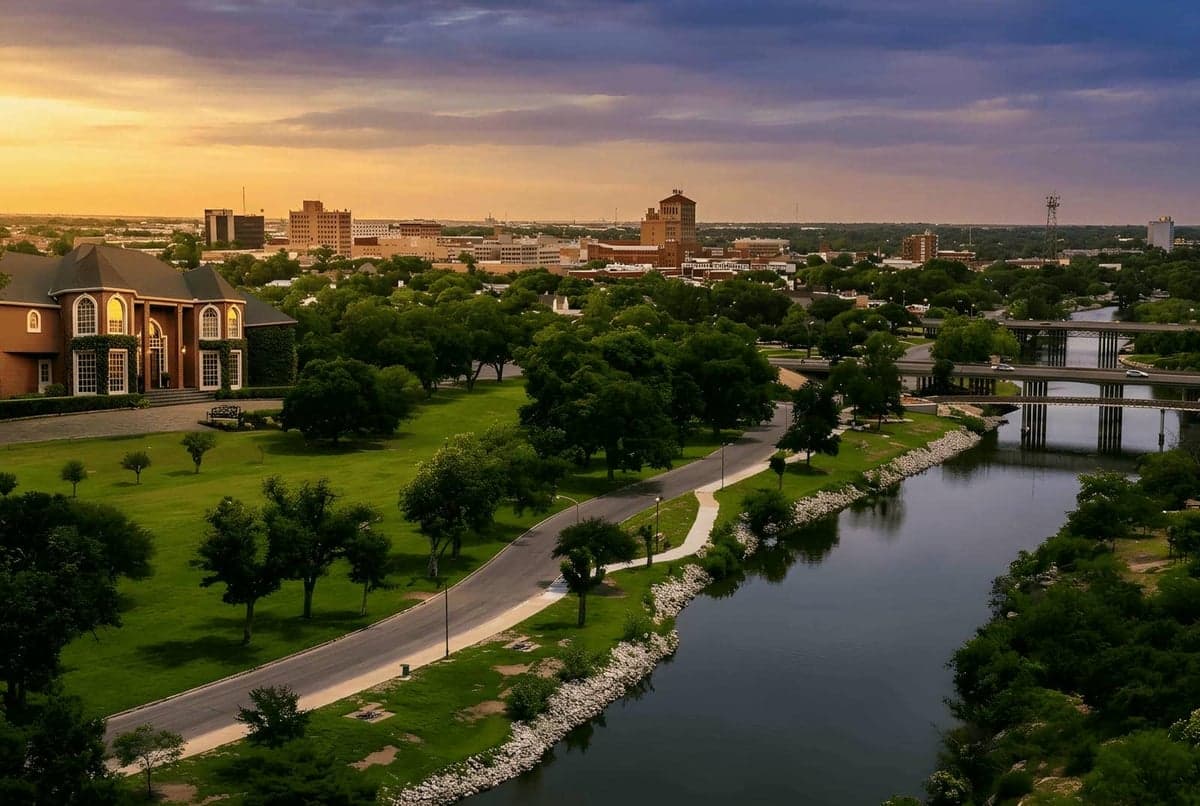
Daily life in San Angelo revolves around the Concho River and a handful of community anchors. The San Angelo Independent School District serves most families, with Central High School and Lake View High School as the main public options; the district’s graduation rate is around 90%, slightly above the state average. For higher education, Angelo State University (part of the Texas Tech system) enrolls over 10,000 students and provides cultural events, sports, and part-time employment. Outdoor amenities include the San Angelo State Park (with hiking, biking, and a bison herd) and the Concho River Walk, a 4-mile paved trail popular for jogging and kayaking. The city’s rhythm is slower than in Houston or San Antonio—restaurants and shops close earlier, and weekend traffic is minimal. Healthcare is served by Shannon Medical Center and Community Medical Center, both offering emergency and specialty care, though residents with rare conditions may travel to Abilene or Austin.
San Angelo is best suited for those who prioritize low housing costs, a short commute, and a relaxed, community-oriented pace over urban nightlife or high-end retail. Retirees on fixed incomes, remote workers seeking a low-stress base, and families who value outdoor recreation and decent schools will find the city a practical fit. However, professionals in tech or finance may find limited job diversity, and those accustomed to walkable urban cores will need a car for nearly every errand. For budget-conscious movers who want a slice of West Texas without the oil-boom price spikes of Midland or Odessa, San Angelo offers a stable, affordable alternative.

Crime in San Angelo, TX
Generally safer than 58% of comparable U.S. locations.
Violent CrimeViolent Crime Analysis
Property CrimeProperty Crime Analysis
Crime Analysis
San Angelo’s overall safety picture is mixed: its violent crime rate of 286.5 per 100,000 residents sits below the Texas average of roughly 450 per 100,000, but its property crime rate of 2,187 per 100,000 is notably higher than both the state and national averages. This means a resident’s risk of a violent incident is lower than in many other Texas cities of similar size, while the likelihood of burglary, theft, or vehicle break-ins is elevated. The city’s location in Tom Green County, far from any major metro area, means it does not face the spillover crime pressures seen in suburbs of Houston, Dallas, or San Antonio.
Crime in context
San Angelo’s violent crime rate of 286.5 per 100,000 is roughly 36% lower than the Texas statewide rate of approximately 447 per 100,000 and about 23% lower than the national rate of roughly 370 per 100,000. Property crime, however, tells a different story: at 2,187 per 100,000, it exceeds the Texas average of about 2,100 per 100,000 and is significantly above the national average of roughly 1,950 per 100,000. The city’s property crime problem is concentrated in auto theft and larceny, with burglary rates closer to state norms. Notably, San Angelo benefits from being an independent judicial district without the progressive prosecutorial policies found in large urban counties like Harris or Dallas—where soft-on-crime district attorneys and liberal judges have been linked to reduced incarceration rates and increased recidivism. In Tom Green County, the district attorney’s office maintains a more traditional approach to prosecution, which correlates with the city’s lower violent crime figures.
What residents experience
For daily life, the most tangible safety concern is property crime. Residents report that unlocked vehicles and items left in driveways are frequent targets, particularly in neighborhoods near the downtown core and along the major commercial corridors of Sherwood Way and Bryant Boulevard. Violent crime, while less common, is not random—it is overwhelmingly concentrated in specific areas, including parts of the Santa Rita neighborhood and the block groups around the intersection of West 29th Street and North Chadbourne Street. The San Angelo Police Department maintains a publicly accessible crime mapping tool, and response times in most residential areas average under 10 minutes for priority calls. The city’s relatively low population density and absence of gang-related turf wars common in larger Texas metros contribute to a sense of safety during daytime hours, though caution is warranted after dark in the higher-crime pockets.
Neighborhood-level variation is pronounced. The safest areas include the residential enclaves west of Loop 306, particularly around the Lake Nasworthy corridor and the College Hills subdivision near Angelo State University. These areas see property crime rates roughly 40% lower than the citywide average. Conversely, the neighborhoods east of U.S. Highway 277 and south of 14th Street—including the historic Blackshear and Rio Vista districts—experience the highest concentration of both property and violent incidents. Prospective residents should consult the SAPD’s online crime map and consider driving through target neighborhoods at different times of day to gauge activity levels. Overall, San Angelo offers a lower violent crime risk than most Texas cities, but property crime demands proactive prevention measures like home security systems and neighborhood watch participation.
* Values derived from national, state, county, city and local statistics and may differ in a specific area. Last updated: 2026-10-23T20:55:08.000Z
Narrative content on this page is AI-generated and may contain mistakes. Verify any details that matter before acting on them.
ReloMaps may earn a commission from affiliate links at no extra cost to you.

