 Popular
Political ClimatePolitical Climate in San Angelo, TX
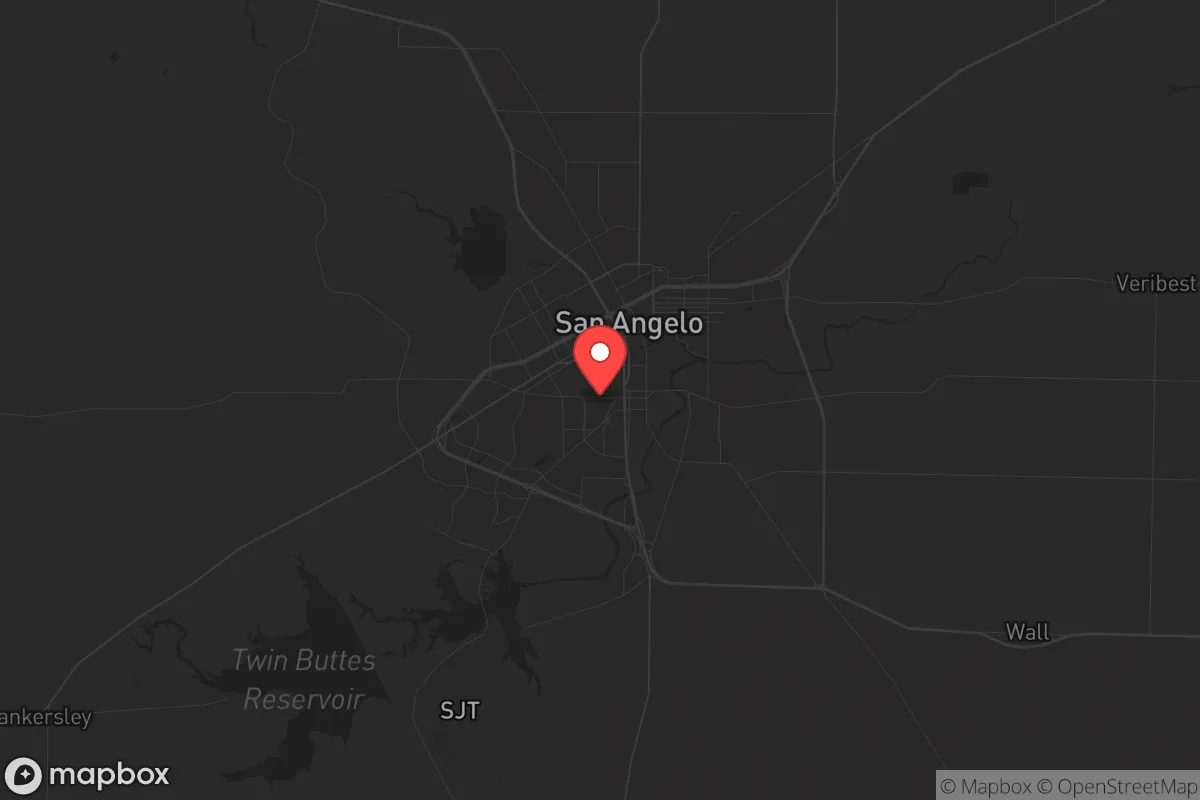
District shown is the primary district for this city’s centroid. Cities may span multiple districts.
Local Political AnalysisPolitical Analysis of San Angelo, TX
San Angelo leans heavily Republican, with a Cook Partisan Voting Index of R+22, making it one of the more conservative cities in Texas. That number means the city votes about 22 points more Republican than the national average, and in practice, it’s been reliably red for decades. The surrounding Tom Green County hasn’t voted for a Democratic presidential candidate since 1964, and local races often go uncontested or are decided in the Republican primary. The trajectory here is steady: San Angelo’s politics have stayed consistently conservative, with no major shift toward the center or left in recent cycles, unlike some fast-growing Texas suburbs that have seen a purple tinge.
How it compares
Compared to Texas as a whole, San Angelo is notably more conservative. The state’s overall Cook PVI is unknown, but major metro areas like Houston, Dallas, and Austin pull Texas toward a more competitive lean—especially Austin, which is a deep-blue island. San Angelo, by contrast, sits in the rural and small-city west-central part of the state, where conservative values dominate. Nearby cities like Abilene (R+26) and Midland (R+33) are even redder, while San Marcos (D+4) and El Paso (D+15) are liberal outliers. Within a two-hour drive, you’ll find stark contrasts: Fredericksburg leans red but with a libertarian streak, while Kerrville is conservative but growing more moderate as retirees move in. San Angelo itself lacks the oil boom energy of Midland or the college-town vibe of San Marcos; its politics feel more like a stable, old-school Texas town where church attendance and hunting licenses are common conversation starters.
What this means for residents
For conservative residents, San Angelo is a comfortable fit. Local policies reflect Republican priorities: low property taxes relative to the state average, a city council that rarely pushes progressive initiatives, and a strong presence of gun rights and pro-life advocacy. The local Republican Party is active, with regular meetings and a visible role in community events like the annual Stock Show and Rodeo. For liberal residents, life is more about finding your niche. There’s a small but vocal Democratic group, and the local university—Angelo State—brings in younger, more diverse perspectives. But don’t expect a progressive city council or a thriving LGBTQ+ nightlife scene; those are in Austin or San Antonio, three hours away. In practice, most political disagreements here are civil—people know their neighbors, and the “live and let live” ethos of West Texas softens some edges. Still, a liberal friend once told me they keep their bumper stickers off their car to avoid side-eye at the grocery store.
Culturally, San Angelo stands out for its strong military and ranching roots. Goodfellow Air Force Base is a major employer and brings in families from across the country, which adds a transient, slightly more moderate element. The city also has a notable arts scene—the San Angelo Museum of Fine Arts and the annual Art in Uncommon Places festival—that feels more cosmopolitan than the politics would suggest. Policy-wise, the city is less likely to pass ordinances on plastic bags or short-term rentals than Austin or Dallas; the focus stays on water rights, infrastructure, and keeping taxes low. For anyone moving here, the political climate is straightforward: it’s a red city in a red state, but with enough local character to keep it from feeling like a monolith. If you’re conservative, you’ll feel at home. If you’re liberal, you’ll find your people—just be ready for a longer drive to the nearest protest.

State Political ClimatePolitical Climate in Texas
State Political AnalysisPolitical Environment in the State
Texas has been a Republican stronghold for over three decades, but the margin has been tightening in every election cycle since 2012. The state’s overall partisan lean is still solidly red at the state level—Republicans control every statewide office and both legislative chambers—but the coalition is shifting. In 2024, Donald Trump won Texas by roughly 9 points, down from 11 points in 2020 and 16 points in 2016. The long-term trajectory is toward a competitive two-party state, driven by explosive growth in the urban-suburban crescent from Dallas-Fort Worth down through Austin to San Antonio and Houston, while rural and exurban counties remain deeply conservative.
Urban vs. rural divide
The political map of Texas is a story of three distinct regions. The big metros—Houston, Dallas, San Antonio, and Austin—are the engine of Democratic growth. Harris County (Houston) and Dallas County have flipped from purple to solid blue over the past decade, while Bexar County (San Antonio) and Travis County (Austin) are deep blue. The suburbs that ring these cities, places like Collin County (north of Dallas) and Williamson County (north of Austin), were once reliably red but are now competitive. Collin County voted for Trump by only 5 points in 2024, down from 15 points in 2016. Meanwhile, rural West Texas and the Panhandle—think Lubbock, Midland, and the Rio Grande Valley’s interior—remain deeply Republican. The Valley itself is a fascinating exception: Hidalgo County (McAllen) has swung back toward Democrats after a brief flirtation with Trump in 2020, but it’s still a working-class Hispanic region where both parties compete hard. The net effect is a state that looks red on a map but feels purple in its population centers.
Policy environment
Texas’s policy environment is defined by a low-tax, low-regulation posture that appeals strongly to conservative relocators. There is no state income tax—funded instead by a reliance on property taxes and a 6.25% state sales tax (local add-ons can push it to 8.25%). The regulatory climate is business-friendly: no state-level minimum wage above the federal $7.25, no state-level paid leave mandate, and a “right-to-work” law that weakens union power. Education policy is a flashpoint: the state funds public schools through a complex Robin Hood system that redistributes property tax revenue from wealthy districts to poor ones, and the school choice debate is ongoing—a universal Education Savings Account bill passed the Senate in 2025 but stalled in the House. Healthcare is largely unregulated; Texas has the highest uninsured rate in the nation (around 17%), and the state has refused to expand Medicaid under the Affordable Care Act. Election laws have been tightened: Senate Bill 1 (2021) restricted mail-in voting, added ID requirements, and banned 24-hour and drive-through voting. For a conservative relocator, the policy environment is largely welcoming; for a liberal one, it’s a landscape of limited public services and few worker protections.
Recent policy direction
The last three legislative sessions (2021, 2023, 2025) have pushed Texas decisively to the right on a broad set of issues. On gun rights, the state enacted permitless carry (HB 1927) in 2021, allowing most adults to carry a handgun without a license. On abortion, Texas passed the nation’s most restrictive law (SB 8) in 2021, banning abortion after roughly six weeks with a private enforcement mechanism, and then a near-total ban (trigger law) in 2023 with no exceptions for rape or incest. On parental rights and education, the state passed the “Parental Bill of Rights” (HB 1012) in 2023, requiring schools to notify parents of curriculum changes and restricting instruction on gender identity and sexual orientation in K-12. On speech and privacy, a 2023 law (HB 20) requires age verification for adult websites and restricts minors’ access to social media. On property rights, Texas has strong eminent domain protections but also allows for “quick take” condemnations for infrastructure projects. On voting, as noted, SB 1 tightened access, and a 2025 bill (HB 123) further restricted third-party ballot collection. On medical and bodily autonomy, the state has banned gender-affirming care for minors (SB 14, 2023) and restricted Medicaid coverage for transgender procedures. For a relocator, the direction is clear: Texas is doubling down on cultural conservatism and individual liberty in the traditional sense (guns, property, low taxes) while restricting it in the modern sense (abortion, LGBTQ+ rights, voting access).
Civil unrest & political movements
Texas has seen its share of political flashpoints. The 2020 Black Lives Matter protests in Austin were among the largest in the country, leading to a city council vote to defund the police by $150 million—a move that was later partially reversed. The “Save Our Schools” movement, a coalition of rural and suburban parents, has been active since 2021, opposing mask mandates and critical race theory in schools. Immigration politics are a constant: Governor Greg Abbott’s Operation Lone Star (2021-present) has deployed state troopers and National Guard to the border, bused migrants to sanctuary cities like New York and Chicago, and installed razor wire along the Rio Grande. This has led to a legal standoff with the Biden administration, with the Supreme Court ruling in 2024 that federal agents could remove the wire. Secession rhetoric is more talk than action—the Texas Nationalist Movement has no serious political power—but the idea of “Texit” resurfaces in conservative media every few years. Election integrity remains a live issue: the 2020 and 2022 cycles saw lawsuits over mail-in ballot deadlines and drop-box locations, and a 2024 audit of Harris County’s election machinery found no evidence of widespread fraud but did identify procedural errors. For a new resident, the most visible flashpoint is likely the border debate, which dominates local news in South Texas and the national conversation.
Projection
Over the next 5-10 years, Texas will continue to trend purple, but it won’t flip blue overnight. The key demographic driver is in-migration: roughly 1,000 people move to Texas every day, many from California and the Northeast. These newcomers tend to be younger, more diverse, and more moderate-to-liberal than the native-born population, especially in the suburbs. The 2030 census is expected to award Texas four additional congressional seats, and redistricting will be a political war. The Republican Party’s base is aging and rural, while the Democratic base is growing in the cities and inner suburbs. However, the state’s gerrymandered maps and restrictive voting laws give Republicans a structural advantage that could persist for another decade. The most likely scenario is a slow, steady shift toward competitiveness, with statewide races becoming toss-ups by 2030 or 2032. A relocator moving in now should expect a state that remains conservative on cultural issues but becomes increasingly contested on economic and governance questions—especially around school funding, property taxes, and infrastructure.
For a new resident, the bottom line is this: if you’re conservative, Texas will feel like home on policy but increasingly crowded and expensive in the cities. If you’re liberal, you’ll find your people in the urban cores and some suburbs, but you’ll be living under a state government that is actively hostile to many of your values. The practical takeaway is to choose your county carefully—your experience of Texas will be radically different in Travis County versus Collin County versus Lubbock County. The state is big enough to contain multiple political realities, and that’s likely to remain true for the foreseeable future.
* Values derived from national, state, county, city and local statistics and may differ in a specific area. Last updated: 2026-10-23T20:55:08.000Z
Narrative content on this page is AI-generated and may contain mistakes. Verify any details that matter before acting on them.
ReloMaps may earn a commission from affiliate links at no extra cost to you.

