
Photo: Wikipedia
Political ClimatePolitical Climate in Rye, NH
District shown is the primary district for this city’s centroid. Cities may span multiple districts.
Local Political AnalysisPolitical Analysis of Rye, NH
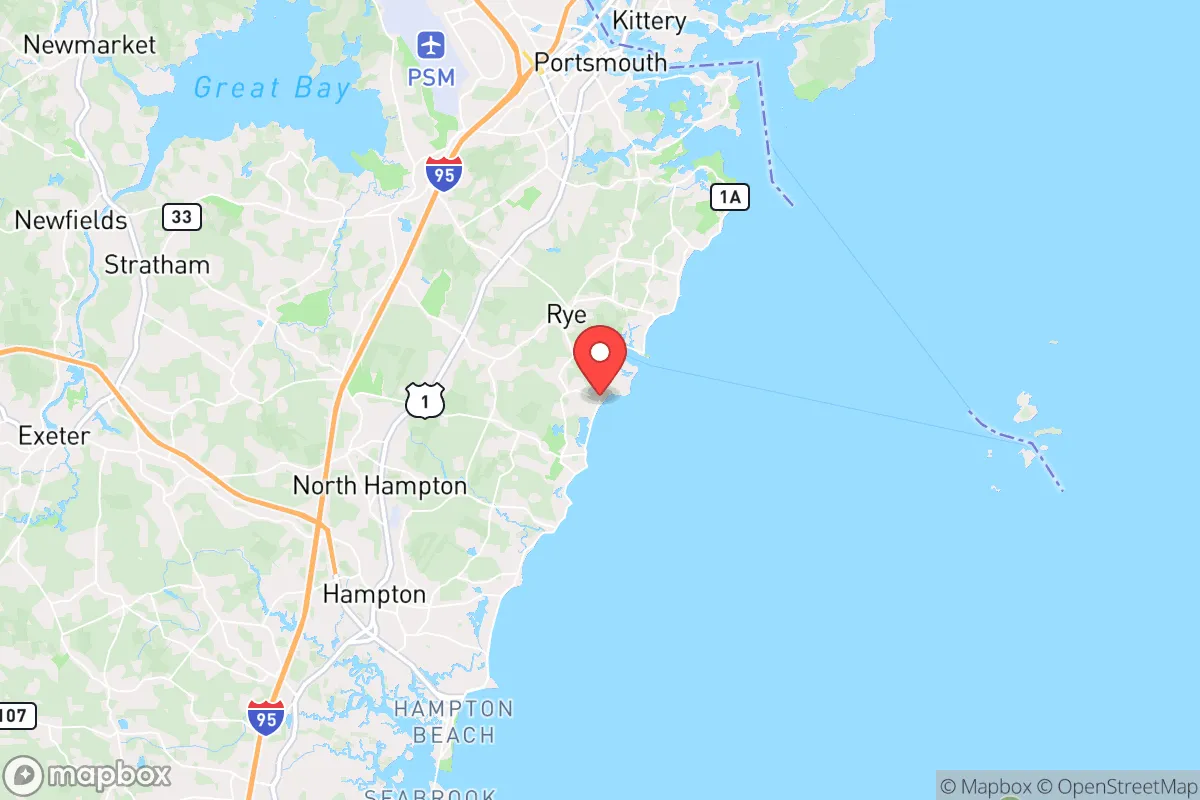
Rye sits right at the political center of New Hampshire, carrying the same D+2 Cook PVI as the state as a whole — a perfect mirror of the Granite State’s famously split personality. This is a town where the presidential vote has swung with the national tide, backing Biden by a modest margin in 2020 and Trump by a similarly modest margin in 2016, making it one of the few places in Rockingham County that doesn’t lean reliably red. The trajectory here is subtle but real: Rye has drifted slightly leftward over the past decade, driven by an influx of remote workers and second-home owners from the Boston metro, even as the surrounding Seacoast towns like Hampton and North Hampton have held firmer to their conservative roots.
How it compares
Rye’s D+2 lean puts it in rare company in Rockingham County, where most municipalities — think Exeter, Stratham, and especially the inland towns like Raymond and Epping — skew more Republican. The contrast with neighboring Portsmouth is the sharpest: Portsmouth is a solid D+15 to D+20 anchor of the Seacoast, while Rye sits just a few miles down Route 1A as a genuine swing town. What makes Rye distinctive is its blend of fiscal conservatism and social moderation — voters here tend to support balanced-budget amendments and local control over land use, but they’ve also backed abortion rights and marijuana legalization at the state level. The town’s independent streak is strong; roughly 40% of registered voters are undeclared, which is higher than the state average and means the primary elections often matter more than the general.
What this means for residents
For conservative residents, Rye’s D+2 lean means their votes carry real weight — a few hundred GOP votes here can flip a state House seat or tip the balance in a close gubernatorial race, since New Hampshire’s 400-member House is decided by razor-thin margins district by district. Republicans in town tend to focus on property tax relief and opposing new state mandates, and they’ve found common ground with moderates on keeping the town’s rural character intact. For liberal residents, the practical reality is that they can’t take victory for granted — every local election is genuinely contested, and the town’s school board and planning board often see 50-50 splits on spending and development questions. Both sides report that the tone stays civil, largely because the undeclared majority forces candidates to run on issues rather than party loyalty.
The cultural distinction that defines Rye is its fierce localism — the town has fought state-level efforts to force denser housing along the coast, and residents of both parties rallied against a proposed offshore wind transmission corridor that would have crossed town land. That instinct to protect the shoreline and the working waterfront unites the community in a way that party labels don’t. Looking ahead, the near-term trajectory points to Rye staying competitive, but the long-term demographic shift toward more educated, higher-income newcomers — many arriving from blue states — suggests the D+2 lean could edge toward D+4 or D+5 by 2030, even as the rest of Rockingham County holds its conservative line. For now, though, Rye remains the truest bellwether in a state that prides itself on being first in the nation for a reason.

State Political ClimatePolitical Climate in New Hampshire
State Political AnalysisPolitical Environment in the State
New Hampshire is the only state in the Northeast that still behaves like a genuine swing state, carrying a Cook PVI of D+2 but electing Republicans to the governorship, Congress, and state legislature with regularity. Over the last 20 years, the state has drifted leftward at the presidential level—Democrats have won the state in every cycle since 2004 except for Donald Trump’s narrow 2016 loss—but the state Senate and Executive Council have flipped back and forth, and the state House remains one of the most competitive legislative bodies in the country. What you’re really looking at is a state that is culturally independent, fiscally conservative, and socially libertarian, with a strong streak of “Live Free or Die” that cuts across party lines.
Urban vs. rural divide
The political map breaks down along a clear geographic spine. The southeastern corner—the Manchester-Nashua corridor, plus the seacoast towns of Portsmouth, Dover, and Durham—is the Democratic engine room, powered by out-of-state transplants, tech workers, and University of New Hampshire faculty. Manchester itself is a bellwether: it’s a working-class city that voted for Trump in 2016, then flipped back to Biden in 2020, and its ward-level results are a microcosm of the state’s volatility. Nashua, the second-largest city, leans Democratic but has a significant conservative blue-collar base in its southern wards.
Everything north and west of that corridor is a different country politically. The Lakes Region, the Monadnock region around Keene, and the entire North Country—Berlin, Littleton, Lancaster—vote Republican by wide margins, often 60-70%. The exurbs of Rockingham County, particularly towns like Salem, Londonderry, and Windham, have become the GOP’s suburban firewall, with voters who are fiscally conservative and increasingly concerned about education policy and school curricula. The 2022 midterms showed this split starkly: Republicans swept the Executive Council and state Senate while losing the governorship, and the state House ended up nearly evenly split.
Policy environment
New Hampshire’s policy environment is defined by what it doesn’t do. There is no state income tax and no state sales tax, which makes it a magnet for retirees and remote workers from Massachusetts, Vermont, and New York. The state relies on property taxes and business taxes, and the overall tax burden is among the lowest in the nation. The regulatory posture is business-friendly, with right-to-work laws on the books and a state government that generally stays out of local land-use decisions. Education policy is hyper-local—there are no county school districts, and the state’s 160-plus school boards have enormous autonomy over curriculum, staffing, and budgets. Healthcare is a mixed bag: the state expanded Medicaid under the Affordable Care Act, but it also has one of the highest rates of private insurance coverage in the country, and the state’s insurance market is competitive. Election laws are famously permissive—same-day voter registration, no voter ID requirement, and a same-day party registration system that lets independents (who make up roughly 40% of the electorate) choose a ballot in the primary.
Recent policy direction
The last few legislative sessions have been a tug-of-war between the two coalitions, with each side winning real victories. On gun rights, New Hampshire is a constitutional carry state—no permit required for open or concealed carry—and the 2021 legislature passed a law prohibiting the enforcement of federal gun restrictions that lack a state equivalent, a direct rebuke to Washington. On education, the 2022 “Parents’ Bill of Rights” (HB 1431) requires schools to notify parents of curriculum changes and gives them the right to opt their children out of sex education; the same session created the state’s Education Freedom Accounts program, which funnels public money to private and homeschool expenses. On abortion, the state codified a 24-week limit in 2021, but the 2022 Dobbs decision triggered a political backlash, and Republicans have been unable to pass further restrictions despite holding the governor’s office. On voting, the state has resisted both voter ID mandates and mail-in ballot expansion, keeping its same-day registration system intact. Property rights are strongly protected—there is no statewide zoning mandate, and the state’s “right-to-farm” law shields agricultural operations from nuisance lawsuits.
Civil unrest & political movements
New Hampshire is not a state of street protests, but it has a long tradition of organized political activism that is more town-meeting than riot. The Free State Project, a libertarian migration movement that has brought thousands of liberty-minded transplants to the state since 2003, has a visible presence in the state House—its members hold a bloc of seats and have pushed for cryptocurrency legalization, drug decriminalization, and the abolition of property taxes. On the left, the 2020 racial justice protests in Manchester and Portsmouth were relatively small but real, and they triggered a backlash that helped Republicans win the 2020 and 2022 elections. Immigration politics are muted—the state has no sanctuary city policies, and the issue rarely dominates legislative debate, though the northern border with Canada has become a talking point for GOP candidates. The state’s most visible flashpoint in recent years has been school board meetings, where debates over critical race theory, book bans, and transgender athlete policies have drawn packed rooms in Bedford, Derry, and Exeter. The 2024 election integrity debate has been quieter than in most states, largely because the same-day registration system is popular across party lines.
Projection
Over the next 5-10 years, New Hampshire is likely to get more competitive, not less. The in-migration trend is real—the state gained roughly 30,000 residents between 2020 and 2024, and most of them are coming from Massachusetts and other blue states, which should help Democrats in the long run. But the Free State Project’s continued growth, plus the exurban flight from Boston’s high taxes and housing costs, is adding a steady stream of conservative and libertarian voters to the southern tier. The wildcard is the state’s aging population—New Hampshire has one of the oldest median ages in the country, and the under-30 cohort is heavily Democratic. If the state’s housing shortage continues to price out young families, the electorate will skew older and more conservative; if the state builds its way out of the crisis, the opposite happens. The most likely outcome is that New Hampshire remains a true swing state, with the governorship and state legislature alternating between parties and the presidential vote staying within 5 points in either direction.
For a new resident, the practical takeaway is that your vote will actually matter here. Whether you’re a conservative who wants low taxes and school choice or a liberal who wants abortion access and clean elections, you’ll find a state where your side wins sometimes and loses sometimes, and where the margin is usually close enough that a few thousand votes decide the outcome. The state’s political culture rewards moderation, independence, and a willingness to show up at town meetings—and punishes anyone who tries to impose a one-size-fits-all agenda from either coast. If you want to live in a place where politics is a contact sport but the neighbors still help you shovel out your driveway, New Hampshire is about as good as it gets.
* Values derived from national, state, county, city and local statistics and may differ in a specific area. Last updated: 2026-10-16T02:09:36.000Z
Narrative content on this page is AI-generated and may contain mistakes. Verify any details that matter before acting on them.
ReloMaps may earn a commission from affiliate links at no extra cost to you.

