Photo: Wikipedia
Demographics of Rockledge, FL
Affluence Level in Rockledge, FL
A middle-class area roughly in line with national averages across income, home values, education, and employment.
People of Rockledge, FL
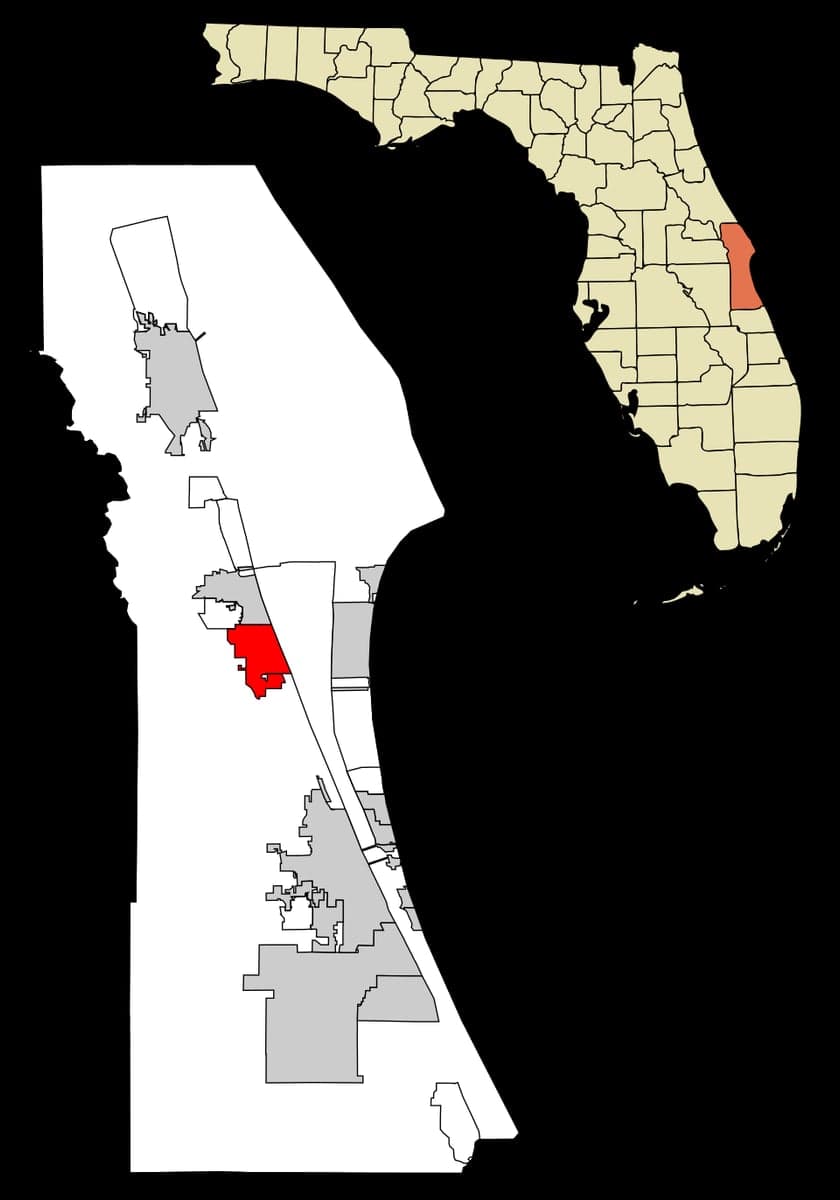
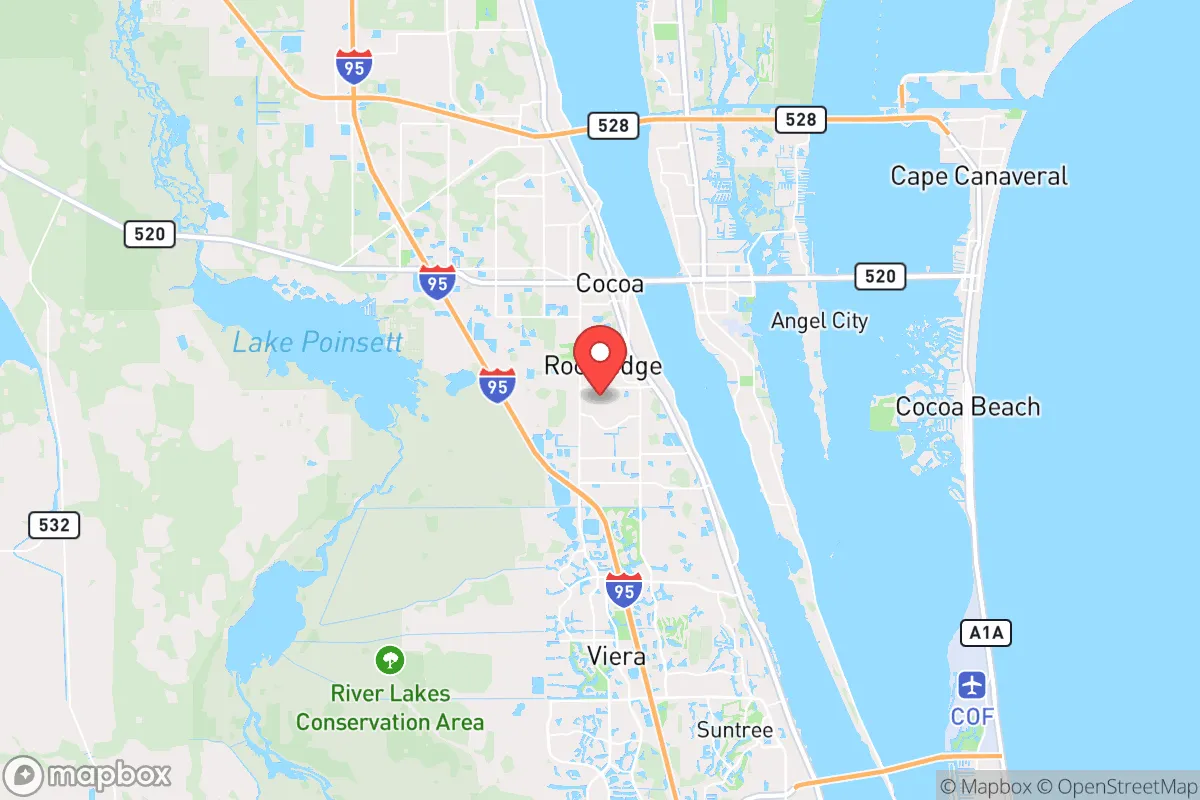
The people of Rockledge, Florida today form a community of 28,279 residents that is notably more established and less transient than many Brevard County suburbs, with a population that is 68.0% White, 16.9% Black, 8.1% Hispanic, and 0.9% East/Southeast Asian. The city carries a distinctive identity as a historic riverfront town that predates the Space Coast boom, giving it a deeper sense of place than neighboring planned communities. With only 2.2% foreign-born residents and 34.8% college-educated adults, Rockledge's population skews toward native-born families and retirees who value its quiet, tree-lined streets and direct access to the Indian River Lagoon.
How the city was settled and grew
Rockledge's human history begins not with the Space Age but with the arrival of former Confederate officers and Northern industrialists in the 1870s and 1880s, drawn by the promise of citrus groves along the Indian River. The original settlement clustered around what is now Rockledge Drive and the historic downtown district, where early families like the Porchers and the Goodes built homes on high bluffs overlooking the river. These first residents were almost exclusively White, Anglo-Saxon Protestants from Georgia, the Carolinas, and New York, who established the city's agricultural economy and its conservative social character. A second wave arrived in the 1910s and 1920s as the Florida land boom brought speculators and new settlers, expanding the town southward into what is now the South Rockledge neighborhood, where modest Craftsman bungalows and early citrus packing houses still stand. The Black population during this era was small and concentrated in a few households working as domestic servants and grove laborers, living primarily along the fringes of what later became the Barton Boulevard corridor.
Modern era (post-1965)
The post-1965 transformation of Rockledge was driven almost entirely by domestic in-migration tied to the Kennedy Space Center and the broader Cape Canaveral aerospace complex, not by foreign immigration. The city's foreign-born share of just 2.2% remains among the lowest in Brevard County, reflecting a population that has grown through internal U.S. migration rather than international flows. During the Apollo and Shuttle eras, engineers and technicians from the Midwest and Northeast moved into new subdivisions such as Plantation Point and the Rockledge Country Club Estates, which filled with ranch-style homes and later with larger custom builds. These arrivals were overwhelmingly White and college-educated, reinforcing the city's professional-class character. The Black population, which had remained small through the 1970s, began to grow more substantially in the 1990s and 2000s as African-American families from elsewhere in Brevard County and from other parts of Florida moved into the neighborhoods around Fiske Boulevard and the Viera East border, drawn by Rockledge's reputation for good schools and lower crime than central Cocoa. The Hispanic share, at 8.1%, is modest compared to statewide averages and is dispersed across the city rather than concentrated in any single neighborhood, with many families arriving from Puerto Rico and Mexico for construction and service jobs during the 2000s housing boom. The East/Southeast Asian community (0.9%) and Indian-subcontinent community (0.8%) remain small but visible, with professionals working at the Space Center and at Health First's Rockledge hospital campus living in newer subdivisions like the Sanctuary at Rockledge.
The future
Rockledge's population is projected to grow slowly but steadily over the next 10-20 years, with the city nearing build-out limits that will constrain large-scale subdivision development. The demographic trend points toward modest diversification: the White share is gradually declining from its historic highs as younger, more diverse families move into infill housing and the few remaining undeveloped parcels near Viera. The Hispanic and Black shares are both expected to rise incrementally, though Rockledge is unlikely to approach the diversity levels of neighboring Cocoa or Melbourne. New residential construction is concentrating in the northern end of the city near the Pineda Causeway extension and in the Rockledge/Viera border area, where townhome and villa developments are attracting empty-nesters and young professionals who want proximity to the Space Coast's job centers without the sprawl of Palm Bay. The city's cultural identity is evolving from an insular, old-Florida citrus town into a more outward-looking bedroom community for the Space Coast economy, but its low foreign-born share and high homeownership rate suggest it will remain a predominantly native-born, family-oriented suburb with a conservative-leaning character.
For someone moving to Rockledge now, the city offers a stable, established community where the population is changing slowly rather than rapidly, and where the dominant culture remains rooted in the values of the original citrus settlers and the Space Coast engineers who followed them. It is becoming slightly more diverse and slightly more connected to the broader Brevard County economy, but it is not becoming a melting pot — it is a place where newcomers are expected to fit into an existing social fabric rather than reshape it.

* Values derived from national, state, county, city and local statistics and may differ in a specific area. Last updated: 2026-08-19T14:45:03.000Z
Narrative content on this page is AI-generated and may contain mistakes. Verify any details that matter before acting on them.
ReloMaps may earn a commission from affiliate links at no extra cost to you.

