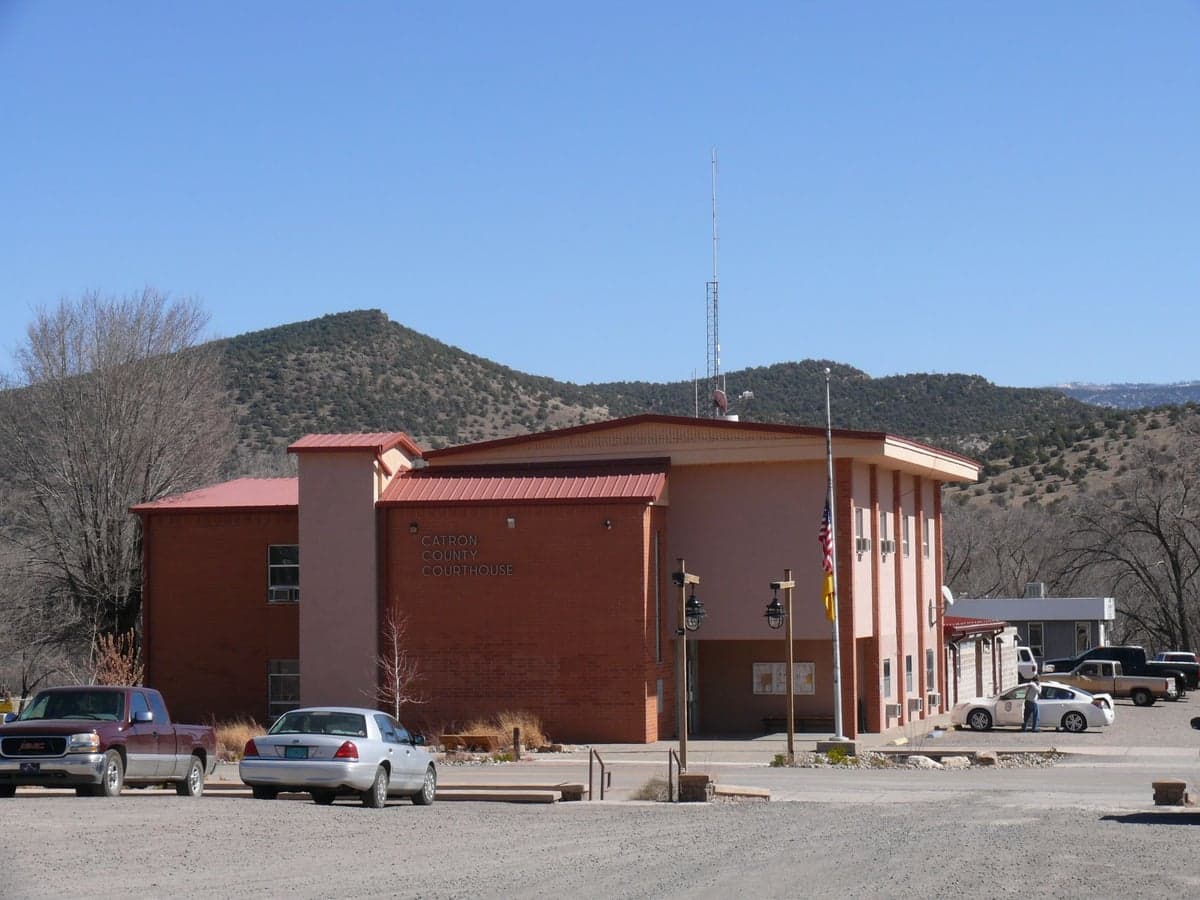
Photo: Wikipedia
Political ClimatePolitical Climate in Reserve, NM
District shown is the primary district for this city’s centroid. Cities may span multiple districts.
Inherited from parent county — no local data available.
* Lean and PVI are calculated from the surrounding county’s 2020 and 2024 presidential results, Cook-style — a finer measure here than its congressional district (NM-2).
Political rankings in New Mexico
- Most Conservative Cities in New Mexico
- Most Liberal Cities in New Mexico
- Best Liberal-Leaning Towns in the Mountain West
- Safest Liberal-Leaning Towns in the Mountain West
- Safest Conservative-Leaning Cities in the Mountain West
- Affordable Small Towns for Conservatives
- Most Affordable Liberal-Leaning Small Towns in the U.S.
- Safest Conservative-Leaning Cities in the U.S.
- Most Conservative Counties in New Mexico
- Most Liberal Counties in New Mexico
Local Political AnalysisPolitical Analysis of Reserve, NM
Reserve, New Mexico, sits in a unique political pocket that feels more like a throwback to the Old West than a reflection of the state’s broader trends. While New Mexico as a whole leans Democratic with a Cook PVI of D+3, Reserve’s own PVI of EVEN tells a different story—this is a place where neither party holds a firm grip, but the ground tilts noticeably rightward in practice. The area has been slowly shifting redder over the past decade, driven by an influx of retirees and remote workers seeking wide-open spaces and lower taxes, though it still retains a stubborn streak of libertarian independence that keeps it from becoming a straight Republican stronghold.
How it compares
Drive an hour east to Silver City, and you’ll find a more liberal enclave, anchored by Western New Mexico University and a thriving arts scene that votes reliably blue. Head north to the more populated areas around Albuquerque, and the contrast sharpens—Reserve feels like a different country politically. In Reserve itself, local elections often hinge on personality and land-use issues rather than party labels, but the cultural default is conservative: gun rights are a given, property taxes are low, and the federal government is viewed with deep suspicion. The EVEN PVI masks a reality where registered Republicans outnumber Democrats by a solid margin, but a significant chunk of voters—maybe 20-25%—register as independents and swing based on who promises to leave them alone the most. Compared to the state’s overall D+3 lean, Reserve is a clear outlier, more aligned with the rural, ranching counties of eastern New Mexico than with the state’s urban centers.
What this means for residents
For conservative residents, Reserve offers a rare refuge in a blue-leaning state. You can openly fly a Trump flag without getting side-eye, and the local county commission will fight federal land-use restrictions tooth and nail. But it’s not a red utopia—the area’s small population means services are limited, and the local economy depends heavily on federal grants and public lands, creating a love-hate relationship with Washington. For liberal residents, life here requires a thick skin. You’ll be in the minority at town hall meetings, and social circles can feel insular. That said, the libertarian streak means most folks practice a live-and-let-live attitude—no one’s knocking on your door to check your bumper stickers. The real friction comes over land management: environmental regulations that liberals might support are often seen as job-killers in a county where ranching and timber are still the backbone.
In practice, the political climate shapes daily life in subtle ways. The local school board tends to lean conservative, so curriculum debates are less heated than in urban districts, but funding is a constant struggle. The county sheriff is a powerful figure, and his office operates with a wide latitude that reflects the area’s distrust of state-level mandates. Looking ahead, Reserve’s trajectory seems set to stay its course—slowly reddening as more people move here for the space and freedom, but never tipping fully into partisan extremes because the population is too small and too independent to fall in line with any party. For anyone moving here, the key is understanding that politics is less about winning arguments and more about getting along with your neighbors, because in a town of 300, you’ll see them at the grocery store every single day.

State Political ClimatePolitical Climate in New Mexico
State Political AnalysisPolitical Environment in the State
New Mexico is a classic swing state that has drifted left over the past two decades, but it remains far more purple than its national reputation suggests. With a Cook PVI of D+3, the state has voted Democratic in every presidential election since 2004, but the margins are often single digits, and Republicans hold significant power at the local level and in the state legislature. The dominant coalition is a mix of urban liberals in Albuquerque and Santa Fe, Hispanic voters who lean moderate-to-conservative on social issues but favor Democratic economic policies, and a small but growing cohort of out-of-state transplants. Over the last 10-20 years, the state has moved from a competitive toss-up to a lean-Democratic state, driven largely by demographic shifts in the Albuquerque metro and the continued growth of Santa Fe's progressive base, while rural and oil-patch counties have become more reliably Republican.
Urban vs. rural divide
The political map of New Mexico is starkly divided between its urban cores and its vast rural expanses. Bernalillo County, home to Albuquerque and about one-third of the state's population, is the Democratic anchor, delivering margins of 15-20 points in statewide races. Santa Fe County is even more liberal, routinely voting 2-to-1 Democratic. On the other side, the southeastern oil patch—Lea, Eddy, and Chaves counties—votes Republican by 40-50 points, with Hobbs and Carlsbad as conservative strongholds. The rural Hispanic counties in the north, like Rio Arriba and Taos, are reliably Democratic but culturally distinct from the urban left, often more focused on land-grant issues and water rights than social liberalism. The I-25 corridor from Las Cruces up through Albuquerque to Santa Fe concentrates nearly 70% of the state's population, and that corridor is where the Democratic majority is built. Suburbs like Rio Rancho and Los Lunas are more competitive, often splitting tickets between Republican state legislators and Democratic statewide candidates.
Policy environment
New Mexico's policy environment is a mixed bag that reflects its purple status. The state has a progressive income tax with rates from 1.7% to 5.9%, and a gross receipts tax (GRT) that functions like a sales tax but applies to many services, with rates varying by locality from around 5% to over 9%. Property taxes are among the lowest in the nation, which is a major draw for conservative relocators. The regulatory posture is moderate—less burdensome than California or Colorado, but more than Texas. Education policy has been a flashpoint: the state has a universal school voucher-like program through the Opportunity Scholarship Act (2022), which provides state-funded scholarships for private school tuition, but it's capped and means-tested. Healthcare is dominated by the state's Medicaid expansion under the Affordable Care Act, which covers about 40% of residents. Election laws are relatively accessible: same-day voter registration, no-excuse absentee voting, and automatic voter registration at the DMV. There is no voter ID law requiring a photo, though voters must provide a signature or last four digits of their Social Security number.
Recent policy direction
Over the last five years, the state has moved left on several fronts. In 2021, the legislature passed the Energy Transition Act, mandating 100% carbon-free electricity by 2045, which has accelerated the shift away from coal in the Four Corners region. Gun laws have tightened: in 2023, the state enacted a red-flag law (extreme risk protection orders) and a ban on firearms at polling places and government buildings. A 2024 law raised the minimum age to purchase a semiautomatic rifle from 18 to 21. On education, the state repealed its ban on "critical race theory" in 2023, though the issue remains contentious in local school board races. Parental rights have seen some wins: the state passed a Parents' Bill of Rights in 2022, requiring school districts to notify parents of curriculum changes and medical services. On medical and bodily autonomy, New Mexico has some of the most protective laws in the country for abortion access, with no gestational limits and state funding for providers. Property rights are generally strong, but the state has been aggressive in using eminent domain for water and infrastructure projects. Voting access has expanded, with automatic voter registration and same-day registration now law.
Civil unrest & political movements
New Mexico has a history of low-grade political tension rather than major civil unrest. The most visible flashpoint in recent years has been the immigration debate, particularly in border communities like Las Cruces and Sunland Park. The state has a "sanctuary" law (the 2019 New Mexico Family Act) that limits local law enforcement from cooperating with federal immigration authorities, which has drawn sharp criticism from rural and oil-patch conservatives. In 2020, the state saw protests over police brutality in Albuquerque, but they were smaller and less destructive than in larger cities. On the right, the Otero County Commission made national headlines in 2022 for refusing to certify primary election results over baseless fraud claims, a sign of the election integrity movement's strength in rural areas. Secession rhetoric is minimal, though some conservative activists in the eastern plains have floated the idea of joining Texas. The most organized political movements are on the left: the Working Families Party and the Sierra Club have strong presences in Santa Fe and Albuquerque, while the conservative side is dominated by oil and gas interests and the state's Catholic bishops, who have been vocal on abortion and school choice.
Projection
Over the next 5-10 years, New Mexico is likely to remain a lean-Democratic state, but the margin could narrow. The key demographic driver is the influx of remote workers and retirees from California and Colorado, who tend to be liberal but also push up housing costs and change local politics in places like Santa Fe and Taos. At the same time, the oil and gas industry in the Permian Basin continues to attract conservative workers to Hobbs and Carlsbad, and the Hispanic population—which is roughly 50% of the state—is slowly trending more Republican, especially among younger men. The state's population growth is anemic (less than 1% annually), so the political balance will be more about internal migration and turnout than massive in-migration. A new resident moving in now should expect a state that is moderately Democratic at the top of the ticket but deeply divided locally, with conservative strongholds in the southeast and liberal bastions in the north. The state's low property taxes and moderate regulatory environment will likely remain, but gun laws and energy policy will continue to be battlegrounds.
For a conservative relocator, the bottom line is that New Mexico offers a lower cost of living and lighter regulation than many blue states, but you'll be living in a state that votes Democratic in presidential elections and has a liberal state government on social issues. For a liberal relocator, the state's progressive policies on healthcare, abortion, and voting access are attractive, but you'll need to accept that much of the state is culturally conservative and that the economy is heavily dependent on oil and gas. The practical takeaway is that New Mexico is a state where your local experience will vary dramatically depending on whether you settle in the Albuquerque suburbs, a rural Hispanic village, or the oil patch—and that the state's political identity is still very much in flux.
* Values derived from national, state, county, city and local statistics and may differ in a specific area. Last updated: 2026-11-08T13:48:48.000Z
Narrative content on this page is AI-generated and may contain mistakes. Verify any details that matter before acting on them.
ReloMaps may earn a commission from affiliate links at no extra cost to you.

