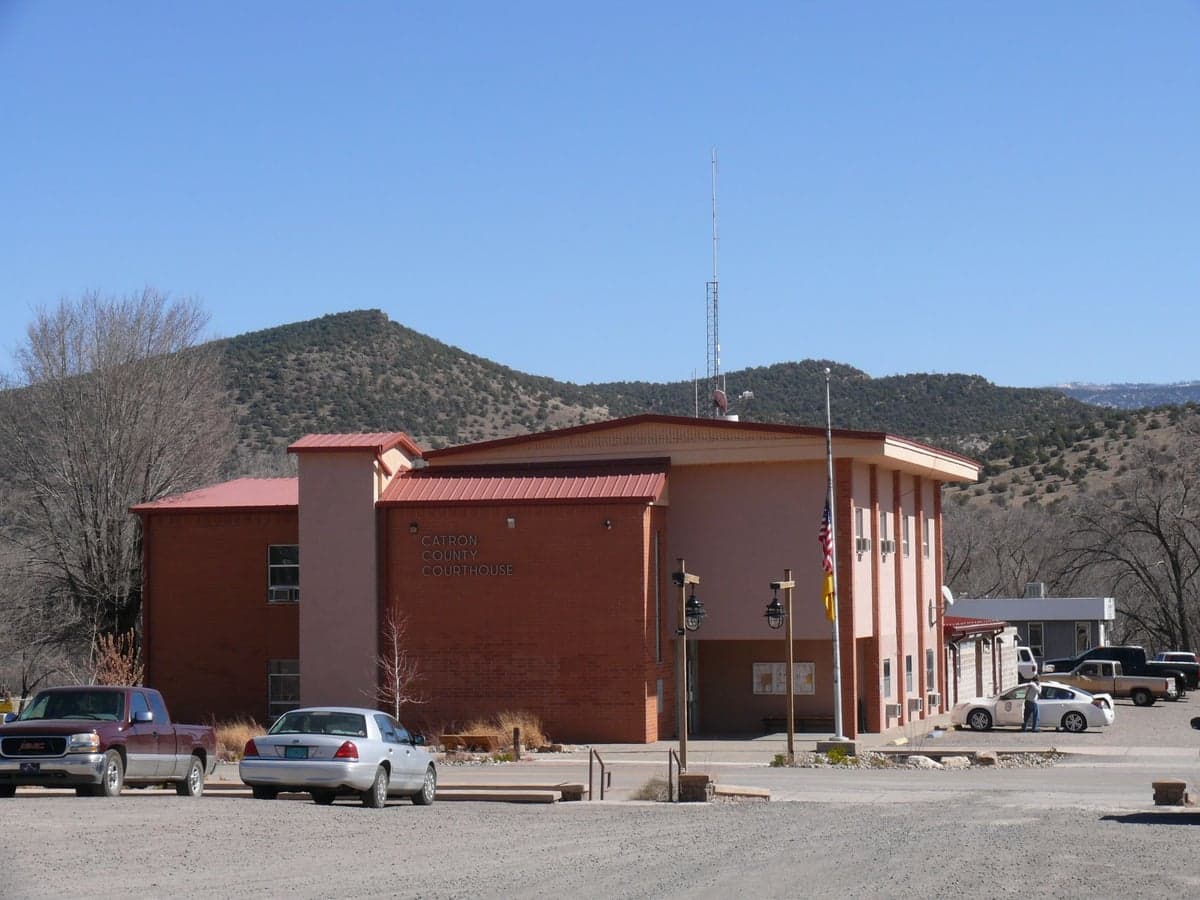
Photo: Wikipedia
Personal Sovereignty in Reserve, NM
Viable for self-reliance. Generally workable, though some barriers may limit total independence.
What does Personal Sovereignty tell us?
Personal Sovereignty measures your capacity for self-reliance and independence with minimal government friction. Higher scores mean fewer barriers between you and the way you want to live... but it assumes you have the space you need and good neighbors.
What does this tell us?
Personal Sovereignty measures your capacity for self-reliance and independence with minimal government friction. Higher scores mean fewer barriers between you and the way you want to live... but it assumes you have the space you need and good neighbors.
State Policy
Energy independence: Net exporter (1246% of energy produced in-state)
Personal Liberty
Homesteading

Personal Liberty Analysis
Reserve, New Mexico, offers one of the most unencumbered personal sovereignty environments in the Southwest, largely because Catron County—the state’s largest and least densely populated county—operates with a distinctly libertarian-leaning ethos. With fewer than 3,000 residents spread across 6,900 square miles, the practical reality is that local government has minimal capacity or inclination to intrude on daily life. For a relocation-minded reader who values autonomy, this translates into a place where the default answer to most regulatory questions is “yes, unless there’s a clear problem,” rather than the reverse. The trade-off is that you are largely responsible for your own infrastructure, safety, and services—a feature, not a bug, for those seeking maximum independence.
Tax burden and regulatory posture in Catron County
New Mexico’s state-level tax structure is moderate, but Catron County’s local implementation is notably light. The state income tax is progressive, topping out at 5.9% for high earners, but the county’s low property tax rate—typically around 0.6% to 0.8% of assessed value—keeps the overall burden well below national averages. There is no local sales tax surcharge beyond the state’s 5.125% base, and the county’s gross receipts tax (the local equivalent of a sales tax) adds only about 1.5%, for a combined rate near 6.625%. Property taxes on a $200,000 home in Reserve run roughly $1,200 to $1,600 annually, a fraction of what you’d pay in most of Texas or California. The regulatory posture is best described as “hands-off by necessity.” Catron County has no building codes outside the small incorporated village of Reserve itself, and even there enforcement is minimal. Zoning is virtually nonexistent at the county level; you can place a manufactured home, a yurt, or a shipping container on your land without seeking permission, provided you meet basic state septic and well requirements. The county’s planning and zoning department is a part-time operation, and the attitude is generally that land use disputes are best resolved between neighbors, not through government intervention.
Self-defense and gun law specifics in Reserve
New Mexico is a shall-issue state for concealed carry, and Catron County is among the most firearm-friendly jurisdictions in the state. No permit is required to open carry a firearm in New Mexico, and the state does not require registration of any firearm, including handguns and long guns. For concealed carry, a permit is required but the process is straightforward: a 16-hour training course, a background check, and a $100 fee. The permit is valid for four years. Catron County’s sheriff is known to be supportive of Second Amendment rights, and there is no local ordinance restricting magazine capacity or specific firearm types. Stand-your-ground laws apply statewide, meaning there is no duty to retreat before using deadly force in self-defense if you are lawfully present. The state also has a Castle Doctrine that creates a legal presumption of reasonable fear if an intruder unlawfully enters your home or vehicle. For a relocation-minded individual, the practical effect is that you can own, carry, and use firearms for self-defense with minimal bureaucratic friction. The nearest gun shops and ranges are in Silver City (about 90 minutes south) or Socorro (about two hours east), so stocking up on ammunition and accessories during supply runs is advisable.
Self-reliance and homesteading viability in Catron County
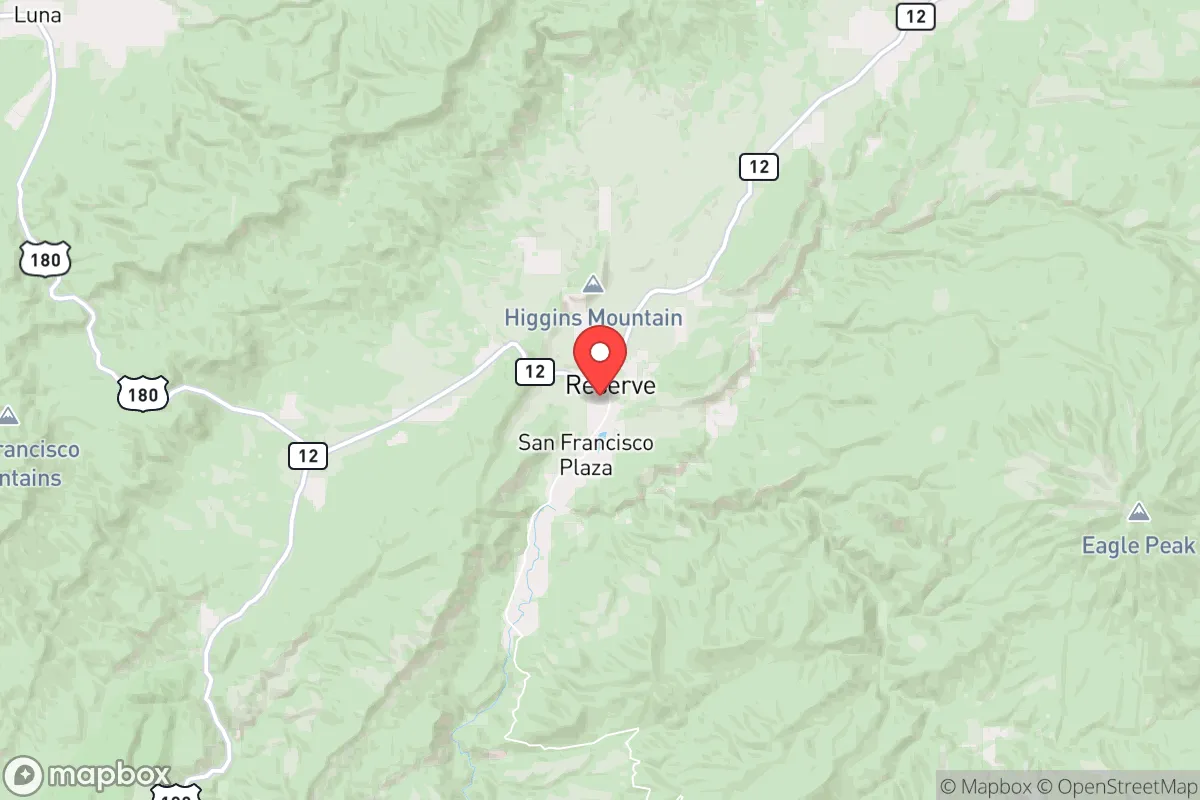
Reserve sits at 5,800 feet elevation in the San Francisco River Valley, with growing conditions that favor hardy crops and livestock over intensive agriculture. The county’s average lot size for rural residential parcels is 40 acres or more, and there are no minimum lot size requirements for building a primary residence on unincorporated land. Off-grid living is not just tolerated but is the norm: many residents rely on solar panels, propane, and rainwater catchment because utility connections are expensive or unavailable. The county does not require a building permit for structures under 200 square feet, and there is no county-wide prohibition on composting toilets or greywater systems, though state environmental regulations apply to septic systems. Water rights are the primary constraint—Catron County is in a semi-arid region, and new wells require a permit from the New Mexico Office of the State Engineer, which can take 6 to 12 months to process. However, the county’s low population density means that water availability is generally better than in more populated parts of the state. Homesteading is entirely feasible here, with the caveat that you must be prepared to handle your own waste, water, and power. The nearest grocery store is in Reserve itself (a small market), and the nearest major shopping is in Silver City or Socorro, so self-sufficiency in food storage and transportation is essential.
Personal liberties in Reserve: parental rights, medical autonomy, speech, and property
New Mexico’s state-level policies on parental rights and medical autonomy are mixed, but Catron County’s local culture leans heavily toward individual choice. The state does not require parental notification for minors seeking abortion, and it has expanded Medicaid under the Affordable Care Act, which some conservative-leaning readers may view as overreach. However, Catron County’s school board and local government have consistently resisted state mandates on curriculum and health policies, and the county’s small population means that local officials are highly responsive to community input. Medical autonomy is a gray area: New Mexico does not have a religious exemption for vaccine mandates in schools, but the county’s low population density means that enforcement is lax and many families homeschool or use private schools. Speech is fully protected under the First Amendment, and there is no local ordinance restricting political expression or assembly. Property rights are robust: the county does not have a comprehensive land-use plan, and there is no county-wide noise ordinance or nuisance law that would restrict activities like shooting on your own land, provided you are not endangering others. Eminent domain is rarely exercised in Catron County, and property taxes are low enough that tax foreclosure is uncommon. For a family or individual who prioritizes the right to raise children according to their own values, speak freely, and use their land as they see fit, Reserve offers a high degree of latitude compared to more regulated urban or suburban environments.
Overall, Reserve, New Mexico, ranks among the most sovereignty-friendly small towns in the United States for those willing to accept the trade-offs of rural isolation. The combination of low taxes, minimal zoning, strong gun rights, and a culture of self-reliance creates an environment where personal autonomy is the default. The primary limitations are state-level policies on medical mandates and water rights, but these are manageable for someone who plans ahead. Compared to similar towns in Arizona or Colorado, Reserve offers a lighter regulatory touch and lower property taxes, though at the cost of fewer services and longer distances to supplies. For the reader who values independence over convenience, this is a place where you can truly live on your own terms.

* Values derived from national, state, county, city and local statistics and may differ in a specific area. Last updated: 2026-11-08T13:48:48.000Z
Narrative content on this page is AI-generated and may contain mistakes. Verify any details that matter before acting on them.
ReloMaps may earn a commission from affiliate links at no extra cost to you.

