Photo: Wikipedia
Demographics of Reserve, NM
Affluence Level in Reserve, NM
A below-average socioeconomic profile. Incomes, home values, and educational attainment trail the U.S., with higher poverty and unemployment.
People of Reserve, NM
The people of Reserve, New Mexico, today form a small, tight-knit community of 323 residents, characterized by a predominantly White (67.5%) and Hispanic (29.1%) population with no foreign-born residents. The town’s identity is rooted in its rural, frontier heritage, with a low college attainment rate of 12.9% reflecting a workforce historically tied to ranching, logging, and government services. Reserve is notably homogeneous, lacking the diversity seen in larger New Mexico towns, and its population is aging, with a median age of 52.7 years, signaling a community that values stability and tradition over rapid change.
How the city was settled and grew
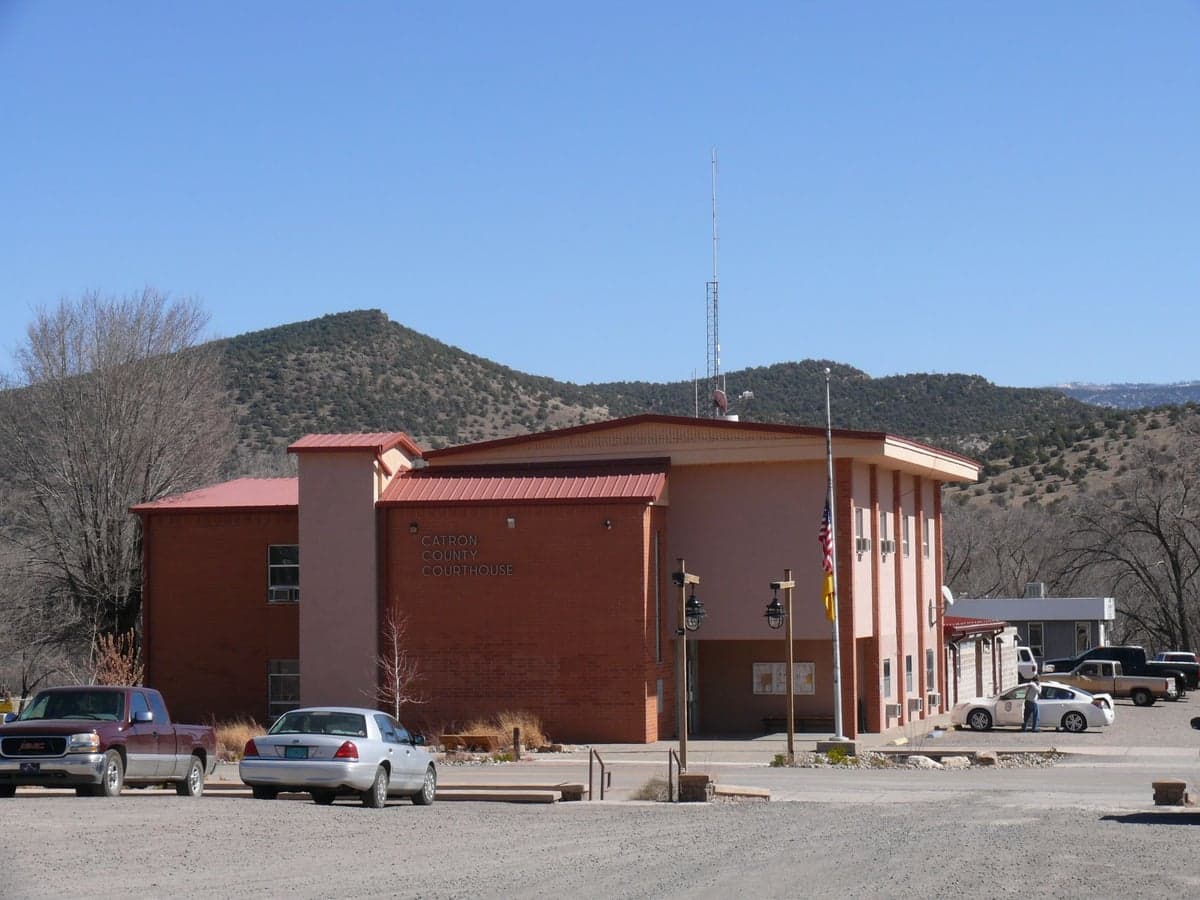
Reserve’s human history begins with the Apache people, who inhabited the surrounding Mogollon Mountains and San Francisco River valley long before European contact. The town itself was formally established in the late 19th century as a supply hub for nearby mining camps and cattle ranches. The original settlers were predominantly Anglo-American ranchers and Hispanic families from northern New Mexico, drawn by the open range and the promise of land under the Homestead Act. The historic Old Town district, centered around the Catron County Courthouse, was built by these early ranchers and merchants, with many original adobe and wood-frame structures still standing. A second wave arrived in the early 1900s with the expansion of the U.S. Forest Service, establishing the Forest Service Flats neighborhood near the ranger station, which housed federal employees managing the Gila National Forest. By the mid-20th century, Reserve’s population peaked near 500, supported by logging and cattle drives, but the decline of the timber industry after the 1960s led to a gradual exodus, leaving the town’s character largely unchanged.
Modern era (post-1965)
After the 1965 Immigration and Nationality Act, Reserve saw virtually no foreign-born influx, with the 2020 census reporting 0.0% foreign-born residents. Domestic in-migration has been minimal, consisting mostly of retirees and a few remote workers seeking a low-cost, rural lifestyle. The Upper San Francisco River area, a string of homes along the river north of town, attracted a small number of out-of-state buyers in the 1990s and 2000s, but these newcomers have not significantly altered the demographic makeup. The Hispanic population, largely descendants of the original Spanish and Mexican settlers, remains concentrated in the Barrio Viejo neighborhood south of Main Street, where multigenerational families maintain ties to the land. The White population, primarily of Anglo-American pioneer stock, is spread across the West Side and Hilltop subdivisions, which were developed in the 1970s and 1980s. Since 2000, the population has declined by roughly 15%, as younger residents leave for job opportunities in Silver City or Albuquerque, leaving an older, more settled populace.
The future
Reserve’s population is projected to continue its slow decline, with no major economic drivers to reverse the trend. The town’s lack of diversity—0.0% Black, 0.0% Asian, and 0.0% Indian—is unlikely to change significantly, as the area offers few attractions for immigrants or younger families. The Baca Flats area, a newer subdivision on the eastern edge of town, has seen a handful of homes built by retirees from Texas and Arizona, but this influx is modest. The cultural identity of Reserve remains deeply tied to its ranching and hunting heritage, with events like the annual Catron County Fair reinforcing a conservative, self-reliant ethos. Over the next 10–20 years, the population may stabilize around 250–300, with an even older median age, as the few remaining young families are outnumbered by retirees. The town’s future hinges on whether it can attract remote workers or niche tourism (e.g., elk hunting, dark-sky stargazing) to offset the loss of traditional industries.
For someone moving in now, Reserve offers a quiet, affordable, and culturally homogeneous environment where neighbors know each other and community ties run deep. It is becoming a retirement and second-home destination for those seeking solitude and a slower pace, but it is not a place of demographic change or economic growth. New residents should expect a population that is aging, predominantly White and Hispanic, and resistant to outside influence—a place where the past still shapes daily life.

* Values derived from national, state, county, city and local statistics and may differ in a specific area. Last updated: 2026-11-08T13:48:48.000Z
Narrative content on this page is AI-generated and may contain mistakes. Verify any details that matter before acting on them.
ReloMaps may earn a commission from affiliate links at no extra cost to you.

