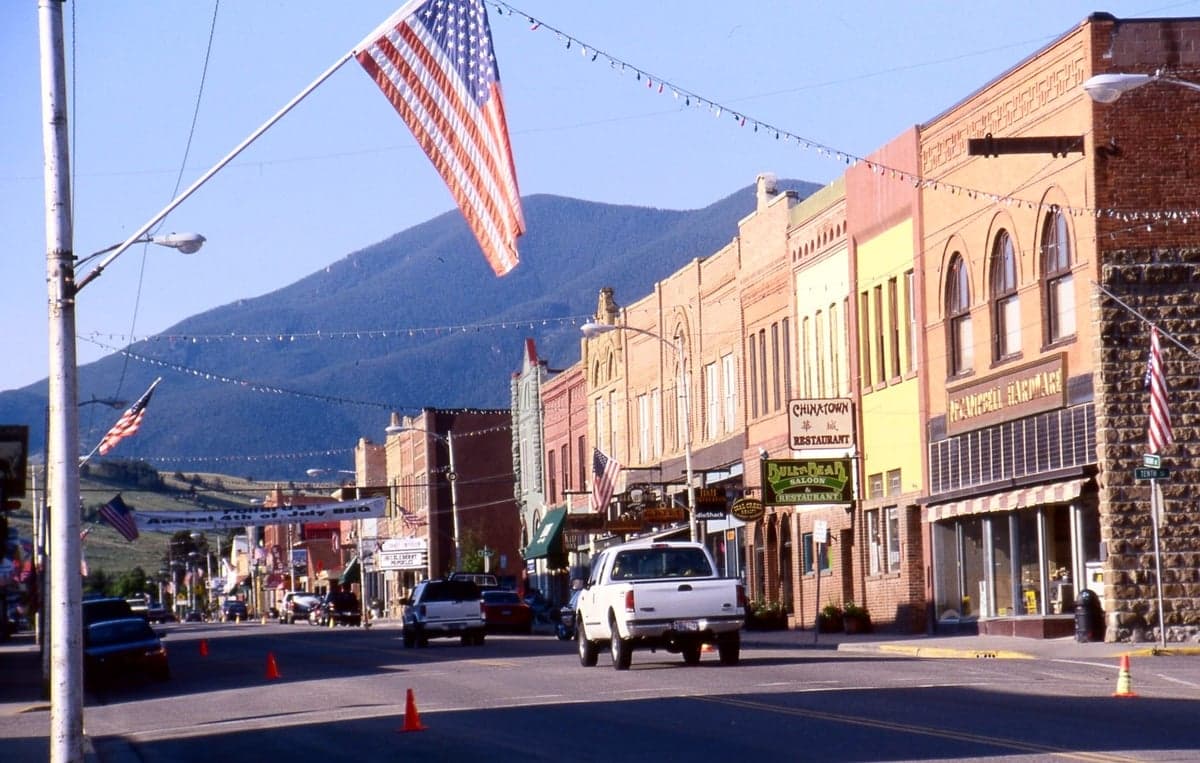
Photo: Wikipedia
Political ClimatePolitical Climate in Red Lodge, MT
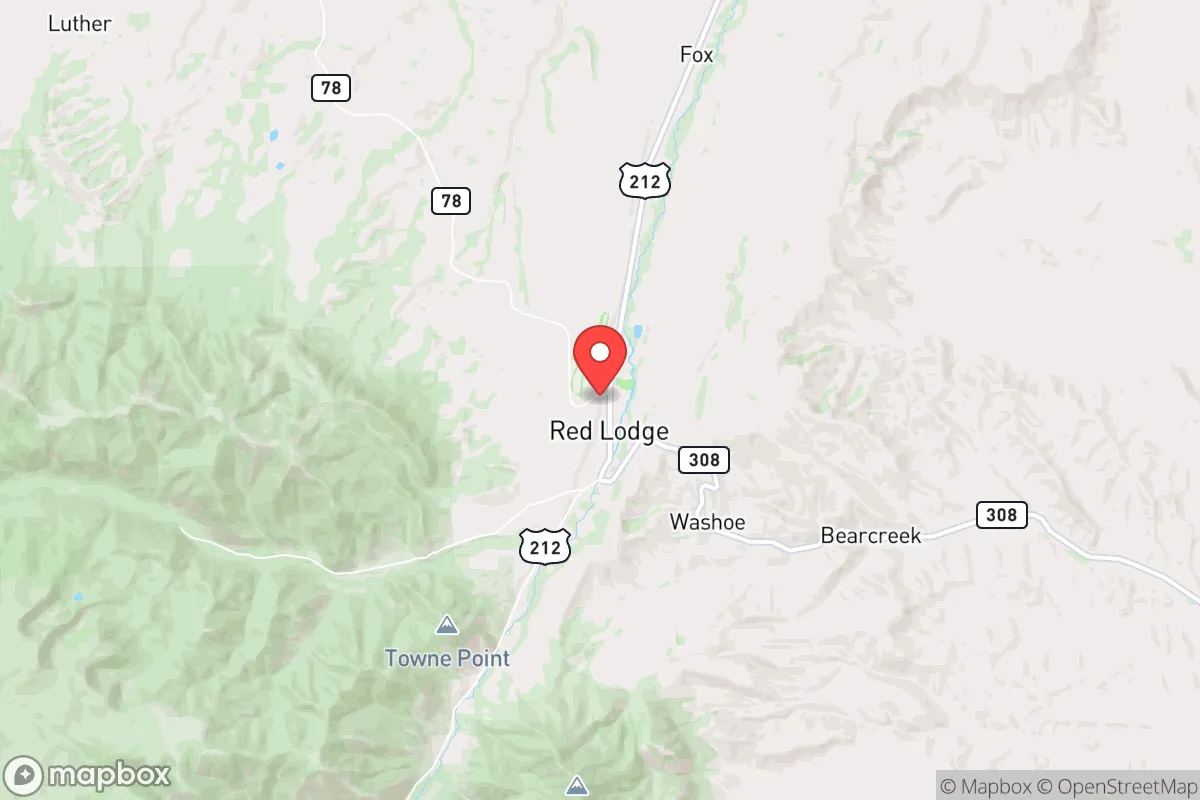
District shown is the primary district for this city’s centroid. Cities may span multiple districts.
Local Political AnalysisPolitical Analysis of Red Lodge, MT
Red Lodge has long been a conservative stronghold in south-central Montana, with a Cook PVI of R+15 that reflects its deep-rooted preference for limited government and individual liberty. The town leans solidly Republican, and while it hasn't seen the dramatic leftward shift of places like Bozeman or Missoula, there's been a noticeable uptick in progressive influence over the last decade—mostly from out-of-state transplants bringing big-city ideas with them. The local political trajectory is still firmly red, but the cracks are starting to show, and longtime residents are keeping a close eye on how newcomers might tip the scales in future elections.
How it compares
Compared to nearby towns like Columbus or Absarokee, Red Lodge is actually more moderate—though that's a relative term in Carbon County. Columbus leans even further right, with a stronger agricultural base and less exposure to tourism-driven growth. On the flip side, Bozeman, just 60 miles northwest, has swung hard toward progressive policies, especially on land use and environmental regulations, which many here see as government overreach into private property rights. Red Lodge sits in a kind of buffer zone: it's conservative enough to feel familiar, but the influx of remote workers and second-home owners from California and Colorado has introduced a subtle shift toward progressive ideology that's concerning for those who value local control and personal freedoms.
What this means for residents
For folks who've lived here a while, the political climate means staying vigilant. Local elections are where the rubber meets the road—school board races, county commission seats, and zoning decisions are increasingly contested by candidates who favor more government involvement in daily life. The push for stricter short-term rental regulations and environmental restrictions on private land feels like a slow creep of the same overreach that's choked places like Boulder or Portland. Residents who value their right to hunt, fish, and develop their property without endless red tape need to stay engaged and vote in every local election, not just the presidential ones. The good news is that the R+15 rating still gives conservatives a solid majority, but that majority can erode fast if people get complacent.
Culturally, Red Lodge still holds onto its Western independence—the annual Fourth of July parade, the rodeo, and the general attitude of "live and let live" are alive and well. But there's a growing tension between the old guard and the new arrivals who want to impose stricter land-use codes and more progressive social policies. The town's policy distinctions are subtle: for example, the local government has resisted adopting the kind of sanctuary city policies seen in larger Montana towns, and there's a strong pushback against state-level mandates that infringe on local decision-making. Long-term, the concern is that if the progressive influx continues, Red Lodge could lose the very character that makes it special—a place where personal responsibility and freedom still mean something. For now, it's a good place to raise a family if you're willing to keep one eye on the ballot box and the other on the horizon.

State Political ClimatePolitical Climate in Montana
State Political AnalysisPolitical Environment in the State
Montana has long been a reliably Republican state at the presidential level, voting for the GOP candidate in every election since 1968 except for Bill Clinton’s 1992 win. However, the state’s political climate is far from monolithic—it’s a battleground between a deeply rooted libertarian-conservative tradition and a growing progressive influence driven by in-migration, particularly in the western mountain valleys. Over the last 10-20 years, the state has shifted from a solid red stronghold to a more competitive purple, with Democrats holding the governorship as recently as 2020 and the state legislature often split or narrowly Republican. The dominant coalition remains conservative, but the flavor of that conservatism is increasingly divided between traditional ranchers and a new wave of tech- and amenity-driven transplants.
Urban vs. rural divide
The political map of Montana is a classic story of urban islands in a rural sea. The state’s largest city, Billings, is a conservative stronghold—Yellowstone County voted +24 points for Trump in 2020 and is the economic engine of the state, dominated by energy, agriculture, and healthcare. Missoula, home to the University of Montana, is the progressive anchor, voting +20 points for Biden and driving left-leaning policy on environmental regulation and social issues. Bozeman and Gallatin County are the most politically volatile: once reliably red, the area has flipped to a swing county due to an influx of wealthy out-of-state transplants, many from California and Colorado. In 2020, Gallatin County voted for Biden by a razor-thin margin, a seismic shift from its +20-point Republican lean in 2000. Helena, the capital, is a moderate blue dot in a red sea, while Great Falls and Butte remain working-class Democratic holdouts that have trended Republican in recent cycles. The rural eastern plains—counties like McCone, Garfield, and Petroleum—routinely deliver 80-90% Republican margins, making them the backbone of the state’s conservative majority.
Policy environment
Montana’s policy environment is a mixed bag for conservatives. On the plus side, the state has no sales tax, a flat income tax rate of 6.75% (recently reduced from a progressive structure), and a strong right-to-work law. Property taxes are moderate, though they vary significantly by county. The regulatory posture is generally business-friendly, with minimal zoning in most rural areas and a “presumption of freedom” in land use. Education policy is a flashpoint: the state has a robust school choice movement, with a new Education Savings Account (ESA) program passed in 2023 that allows parents to use public funds for private or homeschool expenses. However, the state’s public schools remain heavily unionized, and teacher shortages are acute in rural districts. Healthcare policy is libertarian-leaning—Montana expanded Medicaid under the Affordable Care Act in 2015, but the program faces annual reauthorization battles. Election laws are relatively secure: the state requires a photo ID to vote, has no same-day registration, and conducts regular audits. However, a 2021 law restricting ballot drop boxes and banning paid ballot collection was passed to address election integrity concerns, though it faced legal challenges from left-leaning groups.
Trajectory & freedom
Montana is in a tug-of-war between expanding and contracting personal freedom. On the liberty-expanding side, the state has some of the strongest gun rights in the nation: no permit required for concealed carry, no magazine capacity limits, and a 2021 law that prohibits state enforcement of federal gun regulations (the Montana Firearms Freedom Act). Parental rights were bolstered by the 2023 Parental Rights in Education Act, which requires schools to notify parents of any curriculum involving sexuality or gender identity and prohibits instruction on these topics in K-3. Medical autonomy is a mixed bag: Montana legalized recreational marijuana via ballot initiative in 2020, but the state has no right-to-try law for terminally ill patients and maintains strict vaccine mandates for schoolchildren. On the concerning side, the state has seen a surge in property tax increases driven by rising home values, particularly in Gallatin and Missoula counties, which has sparked a backlash from longtime residents. The 2023 Land Use Planning Act gave local governments more power to impose zoning restrictions, a move critics say threatens rural property rights. Overall, Montana remains freer than most states, but the trend is toward more regulation, not less.
Civil unrest & political movements
Montana has a history of low-key civil unrest compared to coastal states, but tensions are rising. The Yellowstone County Republican Party has been a hotbed of internal strife between establishment conservatives and a more populist, anti-establishment wing. In 2021, a “Stop the Steal” rally in Helena drew several thousand protesters, and the state legislature saw a brief occupation of the capitol by armed activists during a special session on vaccine mandates. Immigration politics are relatively quiet—Montana has no sanctuary cities, and the state’s small immigrant population (about 2%) means the issue is less visible. However, the Montana Human Rights Network has documented a rise in white nationalist activity, particularly in the Flathead Valley. The most visible flashpoint for a new resident would be the culture war over public lands: left-leaning groups push for federal control and conservation, while conservatives advocate for state management and resource extraction. This plays out in heated county commission meetings and ballot initiatives, especially in areas like Lewis and Clark County and Park County.
Projection
Over the next 5-10 years, Montana is likely to become more politically competitive and more culturally divided. The in-migration wave—driven by remote work and a desire for outdoor recreation—is disproportionately young, educated, and left-leaning. Gallatin County will likely become a permanent swing county, and Missoula’s influence will grow as its population expands. The state’s rural eastern counties will remain deeply red, but their political weight will diminish as the western valleys grow. The Republican Party will face internal fractures between the traditional libertarian-conservative base and a new wave of “country club” conservatives who prioritize property values and environmental amenities over resource extraction. The most likely outcome is a purple state with a conservative tilt, similar to Arizona or Georgia, where statewide races are close but the legislature remains Republican. A new resident moving in now should expect to see more ballot initiatives on taxes, land use, and education, and a political climate that is less “live and let live” and more “fight for your values.”
Bottom line for a new resident: Montana still offers a high degree of personal freedom, low taxes, and a conservative cultural baseline in most areas outside of Missoula and Bozeman. But the state is changing fast. If you value gun rights, parental control over education, and minimal government interference, you’ll find a welcoming home in the eastern plains or the smaller towns of the west. If you’re looking for a place where your vote will reliably count for conservative values, stick to Billings, Great Falls, or the rural counties. The days of Montana being a sleepy, unchanging red state are over—but for those willing to engage, it remains one of the best bets for freedom in the Lower 48.
* Values derived from national, state, county, city and local statistics and may differ in a specific area. Last updated: 2026-04-30T05:10:48.000Z
Narrative content on this page is AI-generated and may contain mistakes. Verify any details that matter before acting on them.
ReloMaps may earn a commission from affiliate links at no extra cost to you.

